


The Fort Myers permit timeline in 2026 is usually measured in weeks, not days. For a clean new-home application, approval can land in about 4 to 10 weeks, but complex sites can push that to 10 to 16 weeks or more.
What matters most is not one magic number. It is whether your plans are complete, your lot sits in a flood or coastal review area, and the right office has your file.
If you are planning a new build in Southwest Florida, the smart move is to understand each stage of the permit path. That makes the delays easier to spot before they show up.
What the Fort Myers permit timeline looks like in 2026
The calendar usually moves in stages. Some steps are quick, while others slow down when reviewers need corrections or extra documents.
| Stage | Typical timing in 2026 | What happens |
|---|---|---|
| Application intake | Same day to 3 business days | The city, county, or beach office receives the file and checks for basic completeness. |
| First plan review | 2 to 6 weeks | Staff review code, zoning, site, and structural details. |
| Revisions and resubmittal | 3 business days to several weeks | Corrections go back to the builder, designer, or engineer. |
| Final permit issuance | 1 to 5 business days after approval | Fees are paid, conditions are cleared, and the permit is released. |
For many new homes, the full process lands around 4 to 10 weeks if the file is clean. Bigger homes, flood zone lots, and coastal parcels can stretch that to 10 to 16 weeks or longer.
That range sounds wide because it is. A complete file can move in one pass. A messy file can bounce between review comments and revisions for weeks.
Where delays usually start
Most permit delays in Fort Myers are easy to trace once you know what reviewers need. The problem is usually not one big issue. It is several small ones that stack up.
Common hold-ups include:
- Wrong jurisdiction : City of Fort Myers, Lee County, and Fort Myers Beach do not use the same process.
- Missing survey or site plan : Reviewers need setbacks, lot lines, and elevation data before approval.
- Flood or coastal review : Parcels near water may need extra checks, and Fort Myers Beach often takes longer.
- Incomplete engineering : Structural sheets, wind load details, and product approvals have to match the home design.
- Plan corrections : Even one missing note can trigger another round of review.
- Heavy permit volume : Busy seasons add wait time, especially when many new homes hit the queue at once.
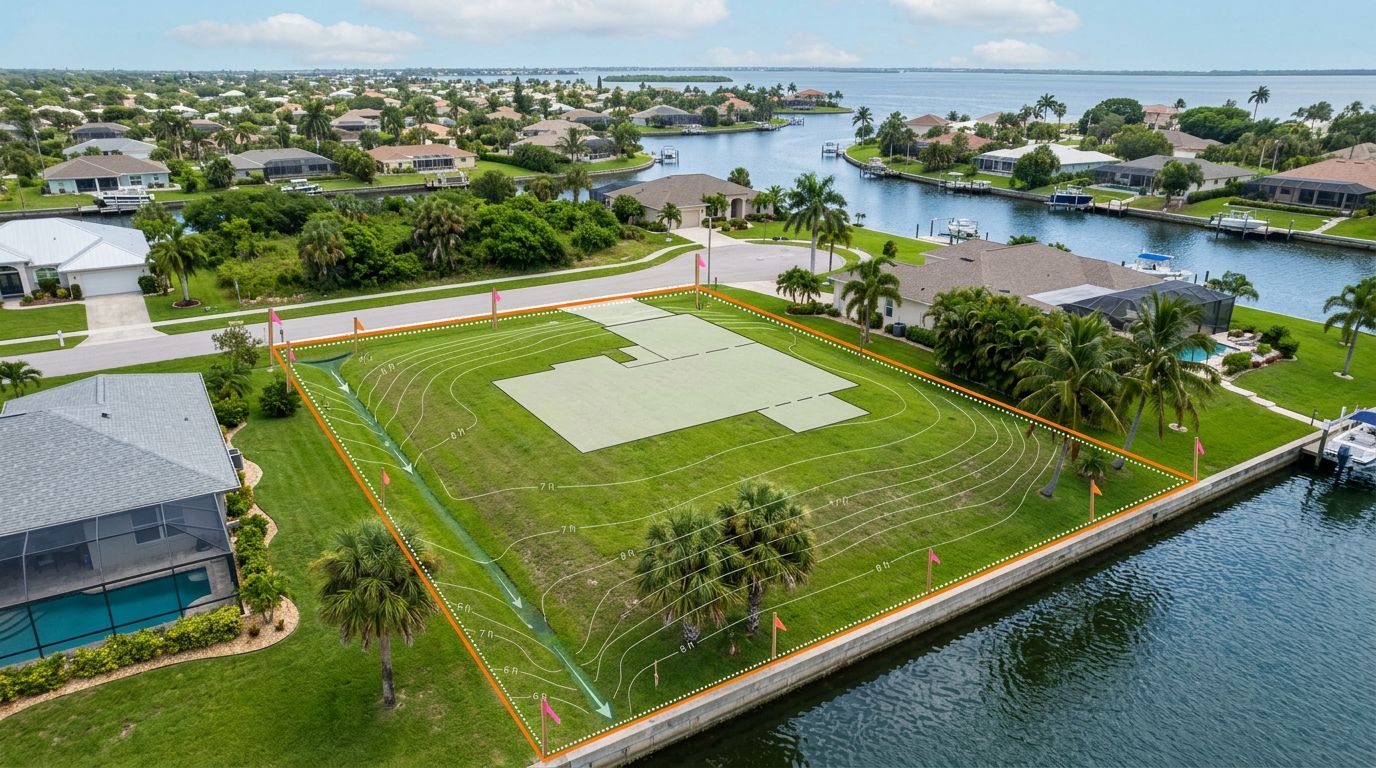
If your lot sits near the coast, expect more steps. Coastal construction control lines, flood zones, and elevation requirements can add review time even when the home design is solid.
A permit file rarely moves faster than its weakest page. Missing one survey can slow the whole project.
A good rule in 2026 is simple. If your lot is straightforward and your plans are complete, expect about 1 to 2 months. If the site is complex, plan for 2 to 4 months or more.
Why the first submission matters so much
The clock does not really start when you dream up the design. It starts when the permit package is complete enough for intake.
For a new home, that package usually includes the permit application, a site plan or survey, construction drawings, structural plans, energy forms, and any local sheets the jurisdiction asks for. If something is missing, staff often pause the file instead of guessing.
That is why the first submittal matters so much. Reviewers are checking more than one thing. They look at zoning, setbacks, lot coverage, drainage, wind design, and code items at the same time.
A clean first pass can save weeks. A partial file usually adds back-and-forth that no one wants.
If you are working with a builder, ask who prepares the permit set, who checks for missing details, and who handles resubmittals. That process matters just as much as the drawings themselves.
How builders help keep the permit moving
A strong builder does not promise a magic date. Instead, the builder controls the parts that tend to stall. That starts before the permit is filed.
Good builders confirm the correct jurisdiction early, order the right survey, check flood zone flags, and match the drawings to the lot before submittal. They also answer plan review comments quickly, which matters more than most people expect.
If you are comparing bids, permit costs in new construction bids should be easy to see, not buried in the fine print. That matters because permit work is not just paperwork. It affects timing, cash flow, and the total build budget.
This is where a cost-plus home builder can be easier to read. With transparent pricing , you should see what is included, what is owner-paid, and what permit items sit outside the base construction fee. That helps you spot delays before they become surprises.
Build type can matter too. A custom plan often needs more review time than a simpler layout, and custom vs spec home timeline tradeoffs can help you understand why one project moves faster than another.
The best builders stay organized on the front end. That alone can save several weeks.
Fees, inspections, and the last step to permit issuance
Fees usually come due before the permit is released. In some projects, impact fees also apply, and they can change the timeline if the paperwork is not ready.
If you want a line-by-line look at local charges, Southwest Florida permit fees is a useful starting point for what tends to show up on Fort Myers and Lee County projects. The key point is that fee payment is part of the timeline, not separate from it.
Once the permit is issued, the schedule is still not finished. Inspections happen during the build, and the home usually needs final inspections before final approval or a certificate of occupancy. That means the permit date and the move-in date are not the same thing.
A project can have an approved permit and still lose time later if inspections are missed or called too early. Good scheduling matters here, especially for framing, mechanical, insulation, and final checks.
For homeowners, the cleanest path is to treat permitting as part of the build, not as a box to check and forget. For builders, it is another reason to keep the paperwork tight from day one.
Conclusion
In 2026, most Fort Myers new home permits fall into a few realistic bands. Clean applications often move in 4 to 10 weeks, while flood zones, coastal parcels, and incomplete files can stretch well past that.
The biggest lesson is simple. The permit timeline gets shorter when the plans are complete, the jurisdiction is right, and the fee picture is clear from the start.
If you want fewer surprises, focus on the first submission , the review comments, and the details that sit behind the final approval. That is where the timeline is won or lost.