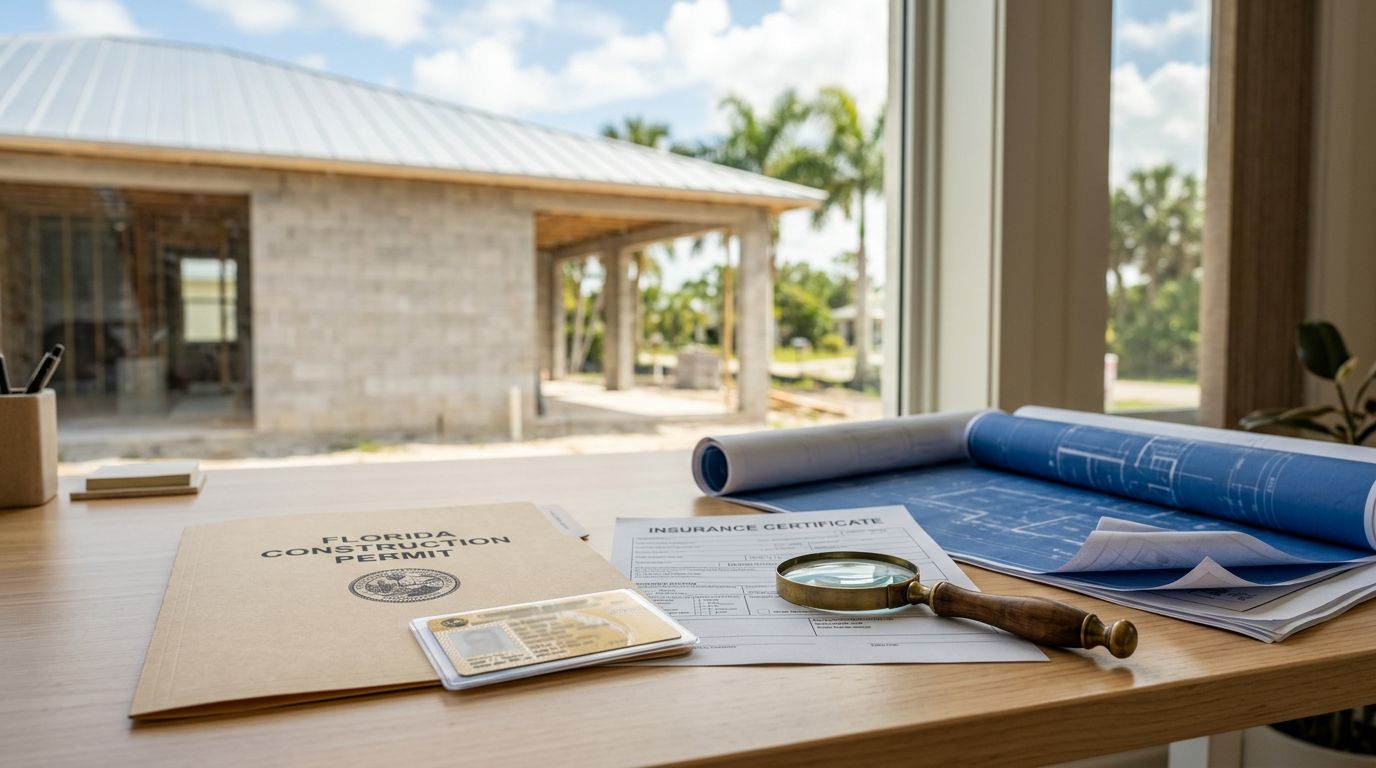



Permit review corrections can slow a Southwest Florida new home before the first footing is poured. Most of the time, the problem is not a bad design. It is a set of plans that leaves one reviewer with a question, while another sheet says something different.
That happens quickly on coastal builds, where flood data, wind design, drainage, and trade documents all meet at once. A cleaner submittal gives reviewers fewer reasons to stop and ask for more. The comments below show up often, and the next steps can save time before you submit.
Why permit corrections happen on new home plans
Reviewers check more than one thing at a time. They look for zoning fit, code compliance, structural detail, flood data, and enough clarity to approve the work. If the survey shows one setback, the site plan shows another, and the floor plan uses a third number, a correction is likely.
Southwest Florida projects add extra pieces to the puzzle. Flood zones, wind loads, drainage, and lot conditions can all change what the building department wants to see. Permit comments vary by jurisdiction, code cycle, flood zone, and project scope, so confirm requirements with the local building department and your design professionals before you submit.
Most delays start with a small mismatch. A missing note, an old form, or a blank field can stop a permit just as fast as a real code issue.
The correction categories that show up most often
Most permit comments fall into a few repeat buckets. Once you know those buckets, the fixes get easier to spot.
| Correction area | What reviewers often flag | What helps prevent it |
|---|---|---|
| Site plan and survey | Setback gaps, easements, driveway changes, finished floor mismatch | Use the current survey and match dimensions across every sheet |
| Flood and elevation data | Missing elevation details, wrong flood zone, unclear drainage notes | Verify flood data early and keep elevations consistent |
| Structural and wind documents | Truss notes, tie-down details, exposure category, opening protection | Match calculations to the plan set and local wind requirements |
| Energy and building envelope forms | Missing window specs, insulation values, or efficiency paperwork | Finish energy forms before submission and match product data |
| Trade coordination | Plumbing, electrical, or HVAC shown too loosely | Coordinate equipment locations and branch runs before filing |
| Signatures and admin forms | Missing seals, dates, licenses, or owner-builder documents | Check every signature block and support form before upload |
The cleanest submittals are the ones where every sheet tells the same story.
Site plans that do not match the survey
The survey is the backbone of the permit set. If it is old, incomplete, or ignored during plan prep, corrections usually follow. A reviewer will notice when a garage, driveway, or house corner shifts outside the setbacks shown on the survey.
Easements and utility corridors cause trouble too. So do lot lines that look close on paper but leave no room for drainage swales, equipment pads, or a future walk. The fix is simple in theory and hard in practice, keep the site plan tied to the latest survey from the start.
Flood, elevation, and drainage details
Flood data matters in a coastal region. Reviewers want to see where the house sits, how high the finished floor lands, and where water goes when the rain is heavy. If the plans don't explain that clearly, expect comments.
Finished floor elevations, garage thresholds, and drainage notes should all work together. If one sheet says the home is raised to one height and another sheet shows a different number, the package looks uncertain. That is enough to trigger a correction even when the design is sound.
Structural and wind design that line up
Wind design is a major review point in Southwest Florida. The structural sheets, truss package, opening protection notes, and roof details should all match. When they do not, reviewers have to stop and ask which version is correct.
Small differences cause big delays. A roof pitch that changes between sheets, a window size that no longer matches the openings, or a wind exposure note that does not fit the site can all create extra comments. The fastest fix is a full cross-check between the architect, engineer, and builder before the permit goes in.
Forms, signatures, and trade notes
A permit can stall on paperwork that feels minor. Missing license numbers, blank signature blocks, outdated seals, or the wrong owner-builder affidavit can hold up the file just as fast as a code issue.
Trade notes matter too. Electrical, plumbing, and mechanical plans do not always need full construction detail, but they do need enough clarity to show how the house will work. If the equipment location, panel schedule, or piping route is vague, the reviewer may ask for a cleaner drawing or a corrected note set.
How to cut down comments before you submit
A strong submittal starts before the permit package is filed. The goal is simple, give the reviewer one complete story, not five half-finished ones.
- Start with the current survey . Use the latest lot survey, flood data, and recorded easements before the first sheet is drawn. If the site changes later, update the plan set before filing.
- Compare every sheet against the others . Setbacks, elevations, window sizes, roof lines, and square footage should match across the civil, architectural, and structural pages. A small mismatch can become a correction that takes days to fix.
- Finish the coordination work with your engineer and trades . Wind design, truss layouts, HVAC equipment placement, plumbing routes, and electrical service needs should all fit together. When those parts are resolved early, reviewers have fewer reasons to pause.
- Complete the forms that often get skipped . Energy compliance paperwork, owner-builder documents, signatures, seals, and license details should be ready before upload. A missing form can send the entire package back, even when the drawings are solid.
- Use one final preflight review . Read the package as if you were the reviewer. Look for blank fields, outdated dates, conflicting notes, and missing attachments. That last pass often catches the errors that cause the most friction.
A permit package is easiest to approve when it is built like a finished set, not a stack of separate parts. For a cost-plus home builder , that also makes budget tracking easier, because transparent pricing works best when permit-related changes and correction time are easy to see.
Fees and issuance holds that can slow the last step
Some files are corrected on paper, then still wait for fee review or payment steps. That is common when permit costs, plan review charges, and related fees are handled separately. A clear budget helps here, and Southwest Florida permit fees for new home construction gives a useful picture of how those charges can stack up.
Impact fees can also affect timing. In some cases, the plan comments are done, but the permit still cannot move until another fee step is complete. Impact fee timing for new construction explains why that stage can come later than people expect.
Conclusion
Permit review corrections usually come from one of three places, a mismatch, a missing document, or a detail that was not fully coordinated. Once you know that pattern, the comments stop feeling random.
The fastest approvals usually come from complete plan sets, clean site data, and drawings that all say the same thing. That saves time, and it keeps the project moving with fewer surprises.
A good permit package does not guess. It answers the questions before the reviewer has to ask them.