A Fort Myers Roof Maintenance Calendar for Every Roof Type
Explore Our Services
Contact Us Today!
(239) 322-9295
Fort Myers roofs endure punishing sun, sudden downpours, salt-laden air, and hurricane-force wind. A small issue at the roofline can become a stained ceiling, wet insulation, or damaged framing after one hard rain.
A practical roof maintenance calendar helps you spot trouble early without turning roof care into a weekend project. Match your routine to the season, document what you find, and bring in a qualified roofer whenever access or damage makes the work unsafe.
Fort Myers Weather Makes Timing Matter
Florida's roof problems rarely arrive on a neat schedule. Ultraviolet exposure can dry and weaken materials during the cooler months. Then summer rain pushes water into loose flashing, open fasteners, and damaged underlayment.
Humidity also encourages algae and mildew on shaded roof areas. Tree branches can scrape surfaces, while leaves and seed pods collect in valleys and gutters. Regular ground-level checks give you a better chance of finding these issues before water reaches the interior.
Start With Ground-Level Safety
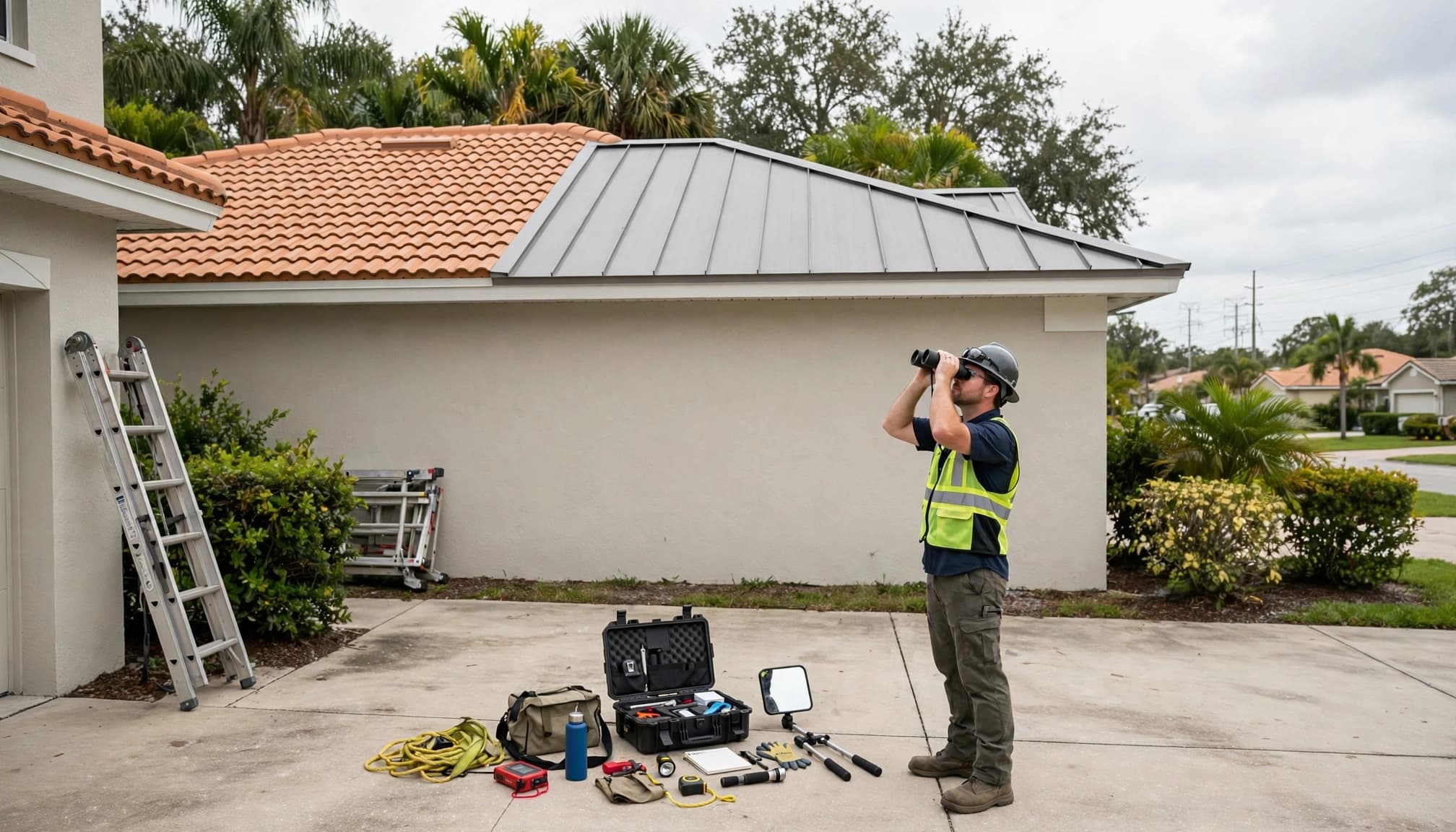
Walk the perimeter with binoculars after a dry day. Look for uneven roof lines, debris, loose material, stained soffits, and gutters pulling away from the fascia.
Avoid climbing a ladder alone or placing one near electrical lines. Keep ladders at least 10 feet from energized power lines. Don't climb onto a steep, wet, damaged, or hard-to-reach roof.
A roof can look sound from the driveway while damaged flashing or underlayment allows water in at a wall, vent, or valley.
Keep a Simple Roof File
Save dated photos, repair invoices, warranties, insurance correspondence, and notes about storm conditions. Photograph each roof slope from the same spots when possible. Those comparisons make lifted shingles, tile movement, and discoloration easier to notice.
A documented history also helps when you schedule Fort Myers roof inspections or need to explain a new issue after a storm.
How to Use a Roof Maintenance Calendar in Fort Myers
Put recurring reminders on your phone or household calendar. Most tasks take only a few minutes when you stay on the ground and focus on visible changes.
| Month | What to Inspect, Clean, or Schedule |
|---|---|
| January | Photograph the roof, gutters, soffits, and ceiling areas below roof lines. |
| February | Trim branches that touch or hang over the roof. Check gutters for dry-season debris. |
| March | Look for heat-related shingle curling, tile cracks, and loose metal fasteners. |
| April | Clear gutters and downspouts before heavy summer rain begins. |
| May | Inspect roof penetrations, flashing, vents, and lanai tie-in areas before storm season. |
| June | Confirm emergency contacts, photograph the roof, and secure loose yard items. |
| July | Check ceilings, attic areas, and exterior walls after heavy rain. |
| August | Watch for algae, blocked gutters, loose shingles, shifted tile, and metal-panel movement. |
| September | Perform a ground-level inspection after every named storm or major wind event. |
| October | Remove leaves and branches from gutters once storm activity slows. |
| November | Schedule a professional inspection if storms, leaks, or visible damage occurred. |
| December | Review repair records and plan needed work during the drier season. |
Use this roof maintenance calendar as a guide, not a reason to postpone repairs. A new ceiling stain, active leak, missing material, or displaced flashing needs attention as soon as you notice it.
January Through April: Prepare Before the Rainy Season
The first part of the year is a good time to assess wear left by the prior hurricane season. It is usually easier to schedule non-emergency maintenance before summer weather arrives.
January and February: Inspect Edges and Clear Debris
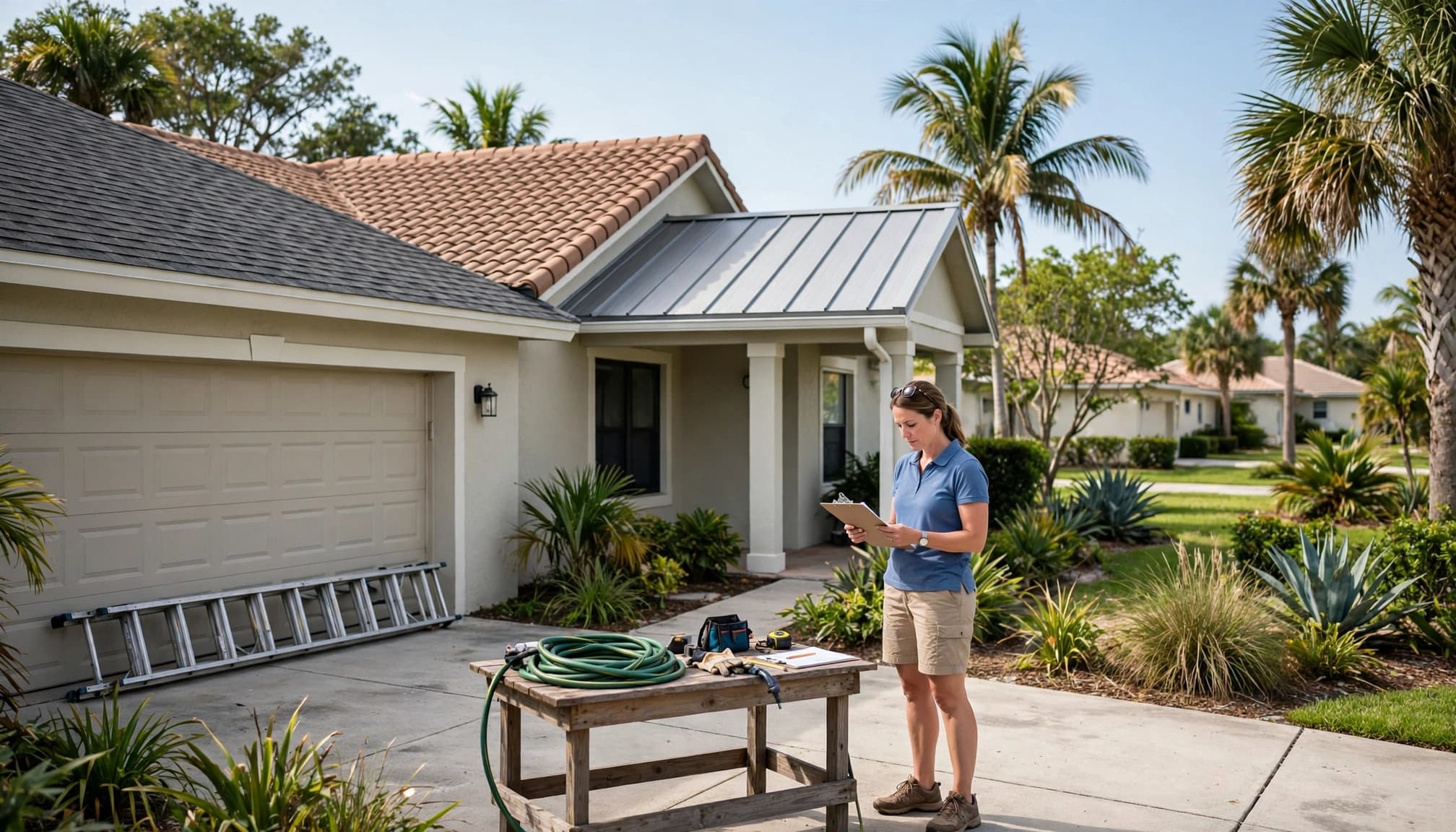
Start at the ground. Check gutter runs, downspout outlets, fascia boards, and the areas where roof planes meet screened lanais or patio covers. Water that backs up in a gutter can wet the roof edge and fascia repeatedly.
Next, trim limbs that rub the roof or drop heavy debris into valleys. Use a qualified tree professional for high branches near service lines. Never drag branches across shingles, tile, or metal panels.
If gutters are inaccessible, have them cleaned professionally. A stable ladder and a second person are necessary for safe elevated work, and neither replaces proper training.
March and April: Check Drainage and Roof Details
Before afternoon storms become routine, inspect visible flashing around chimneys, skylights, plumbing vents, and wall intersections. Flashing is the metal material that directs water away from gaps. A lifted edge, rust, missing sealant, or dark streak below a penetration deserves a closer look.
Look inside the attic only when it is safe and accessible. During daylight, watch for pinpoints of light, damp insulation, musty smells, or wood staining. Then schedule repairs before rain makes a minor opening harder to control.
For homes with an older roof, spring is also a sensible time to arrange a wind mitigation inspection. The inspection evaluates features that affect a home's wind resistance, including roof-related connections and coverings.
May Through November: Watch Rain, Wind, and Humidity
Atlantic hurricane season runs from June 1 through November 30. However, Fort Myers homeowners should begin preparation in May, before the first tropical system puts contractors and suppliers under heavy demand.
May and June: Address Small Problems Early
Clear gutters, check downspouts, and make sure water flows away from the foundation. Inspect lanai roofs, patio connections, and any roof area altered during a room addition, pool project, or outdoor renovation. These intersections need properly integrated flashing and drainage.
Take fresh exterior photos before storm season. Include the roof, soffits, screens, fences, pool cage, and nearby trees. Clear records help show the condition of your property before a weather event.
July Through September: Check After Heavy Weather
After every strong storm, inspect from the ground when conditions are dry and safe. Look for shingles on the lawn, fresh tile pieces, exposed underlayment, bent metal trim, displaced gutters, or debris lodged in valleys.
Inside, check upper-level ceilings, closets, and attic access points for dampness. Water may travel along framing before it appears as a ceiling stain, so the drip is not always directly below the roof opening.
If rain is entering the home, limit interior damage and arrange emergency roof tarp installation. A tarp is temporary protection, not a finished repair.
October and November: Close Out Storm Season
As storms taper off, remove loose debris from accessible gutters and inspect the roofline again. Compare new photos with your May or June records. Schedule repairs while the weather is generally more cooperative.
This part of the roof maintenance calendar is also the right time to check pool cages, gutters, and paver areas for signs that storm runoff changed drainage around the home.
Warning Signs on Shingle, Tile, and Metal Roofs
Each roofing material ages differently. Knowing the basic signs helps you describe the issue clearly when you call for service.
Asphalt Shingles Can Lift or Lose Granules
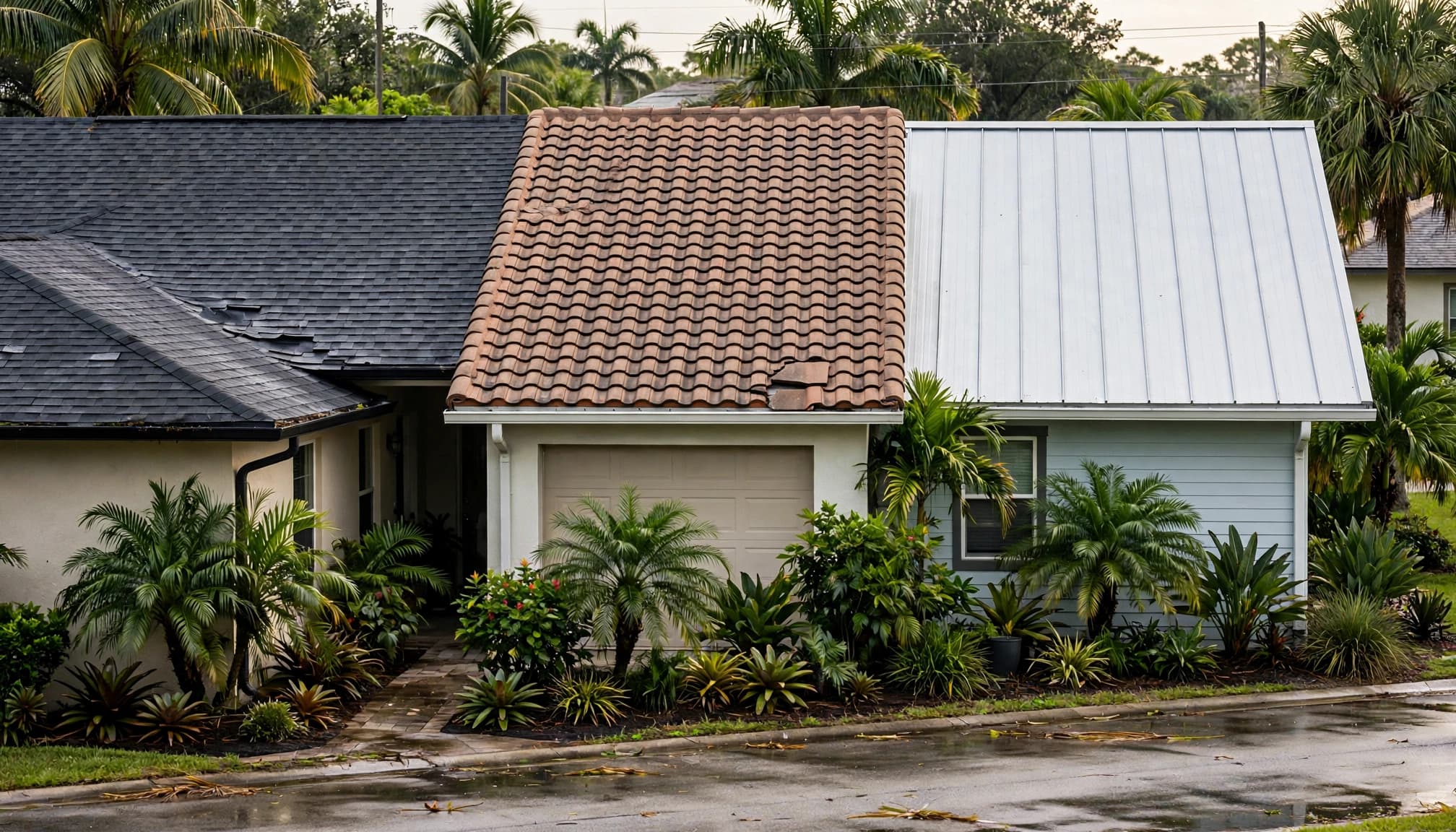
Watch for missing tabs, curled corners, cracked shingles, or a patch that looks darker than the surrounding roof. Granules may collect in gutters, although a small amount can be normal on a newer roof.
Wind can loosen shingles without tearing them off completely. Therefore, a roof may need repair even when you do not see shingles on the ground. Prompt Fort Myers roof repair can stop water from reaching the underlayment and decking.
Tile Roofs Need Careful Visual Checks
Concrete and clay tile roofs can last a long time, yet individual tiles can crack, shift, or break under impact. Look for a changed pattern, exposed gaps, broken pieces near downspouts, or tiles that sit higher than neighboring rows.
Do not walk on tile to inspect or clean it. Foot traffic can crack tiles and damage the waterproof layer below. Also, never pressure wash a tile roof. A qualified roofing professional can recommend an appropriate cleaning method if algae or staining becomes a concern.
Metal Roofs Depend on Secure Panels and Flashing
Metal roofs need attention at fasteners, seams, trim, and penetrations. Look for loose panels, lifted edge flashing, missing screws, rust spots, worn sealant, or scratches that expose bare metal.
A few marks after a storm do not always mean a leak. Still, panel movement or separated flashing needs professional review. Metal expands and contracts in Florida heat, so repairs must match the roof system rather than rely on a quick bead of caulk.
Know When a Professional Should Take Over
Homeowners can handle ground-level observation, basic recordkeeping, and safe debris removal from reachable areas. Roof repairs require a different level of access, material knowledge, and fall protection.
Call a professional for active leaks, missing shingles, cracked or displaced tile, loose metal panels, sagging roof areas, damaged flashing, or storm impact. Also schedule help when the roof is steep, high, slippery, or blocked by a pool cage, trees, solar equipment, or power lines.
A professional can inspect the full system, including roof covering, underlayment, deck condition, flashing, vents, and drainage. If replacement becomes necessary, select materials and installation details that meet current Florida code and fit your home's structure.
A Calendar Builds Better Roof Decisions
Your roof works hardest when Fort Myers weather turns rough. A consistent roof maintenance calendar gives you a clear routine for noticing changes, keeping drainage paths open, and documenting what each season leaves behind.
Small checks never replace skilled roof work, but they can prevent a small opening from becoming a larger repair. Stay on the ground when conditions are unsafe, protect fragile tile from foot traffic, and act quickly when water or storm damage appears.