Can a Cape Coral Kitchen Remodel Reuse Its Gas Line?
Explore Our Services
Contact Us Today!
(239) 322-9295
A Cape Coral kitchen remodel may be able to reuse the existing gas line, but its age alone doesn't prove it's safe or suitable. A qualified professional needs to assess the pipe's condition, material, size, route, and compatibility with the new appliance.
The answer can change if you're replacing a range, adding another gas appliance, or moving the cooking area. Plan the gas review alongside the kitchen layout, before demolition or cabinet orders lock in the design.
Can a Cape Coral kitchen remodel reuse the existing gas line?
Often, yes, if the line is in suitable condition and meets the requirements for the appliance it will serve. However, a connection that worked for an older range may not have the capacity or location needed for new equipment.
Reuse depends on the whole system
A professional evaluates more than the visible pipe near the appliance. The review may include the gas source, shutoff, pipe material and size, route, fittings, and any other appliances connected to the same system. The new appliance's specifications matter too.
An existing line that appears intact still needs to be assessed for its intended use. A qualified professional can determine whether to keep it, alter part of it, or replace it.
Reuse isn't a DIY decision
Gas-line work can create risks of leaks, fire, or carbon monoxide exposure. Don't disconnect, extend, cap, or pressure-test a line yourself. Hire an appropriately licensed professional to assess and perform the work, then coordinate permits and inspections for the project scope.
What a professional needs to inspect
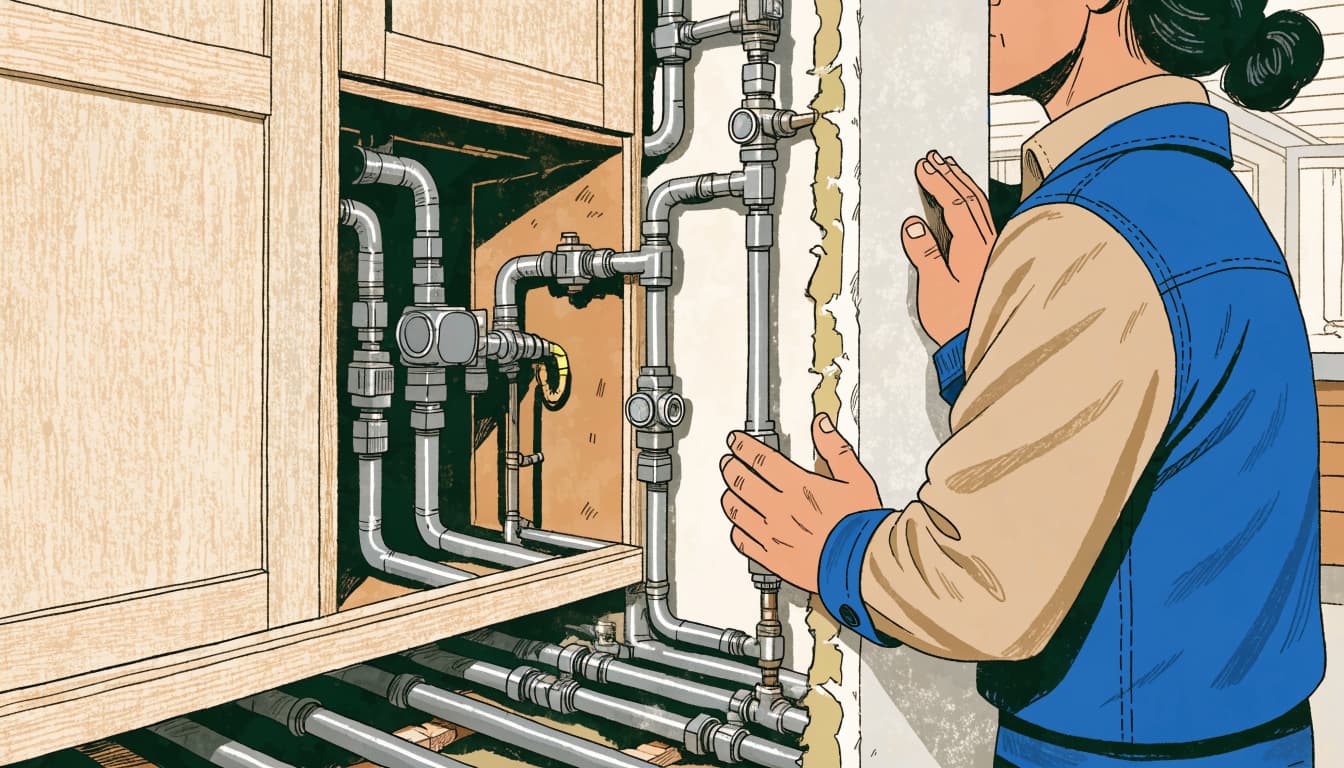
The line's physical condition is only one part of the decision. Its material, size, and route must also work for the planned appliance and the home's existing gas system.
Condition and material
A professional looks for damage, corrosion, poor connections, or other signs that the pipe needs repair or replacement. They also identify the pipe material and determine whether it is suitable for the installation and connections involved.
The pipe route matters because remodeling can expose sections that were previously hidden behind cabinets, walls, or flooring. That access can help with inspection, but it doesn't make the work a homeowner task. A specialist needs to evaluate the full relevant system, not only the exposed end.
Size, route, and access
Pipe sizing depends on more than the distance from the shutoff to the range. The professional considers the pipe's length and layout, the gas appliances connected to it, and the appliance's required fuel supply. They also assess whether the shutoff and connection can be reached as required for the installation.
If cabinets or an island will conceal the route, discuss access before construction begins. A design change made after rough-in work can mean opening finished surfaces and revising the plan.
Does the existing line have enough capacity?
The new range needs adequate gas supply at the pressure its manufacturer specifies. An existing line may need changes even when it appears undamaged, especially if the remodel adds appliances or changes how the system is used.
Connected appliances affect sizing
The 2023 Florida Building Code, Fuel Gas, 8th Edition, requires piping to supply the connected appliances' gas demand and meet their minimum inlet-pressure needs. Sizing generally accounts for the maximum input of appliances that could operate at the same time, subject to the code's provisions for established load diversity.
That means the review should include the full connected load, not just the range. A cooktop, oven, water heater, fireplace, or other gas appliance may draw from the same system. The Florida Fuel Gas Code provisions for gas piping describe the supply and sizing criteria.
Appliance specifications shape the decision
Before the gas work is planned, the professional needs the new appliance's model or specifications. A larger or different type of range may have a different input requirement than the unit it replaces. Installation instructions also set requirements for connection and clearances.
For this reason, don't finalize the gas plan based only on a general appliance category, such as "36-inch range." Share the actual model information when it's available, or have the design team plan around a clearly defined appliance allowance.
How moving a range changes the decision
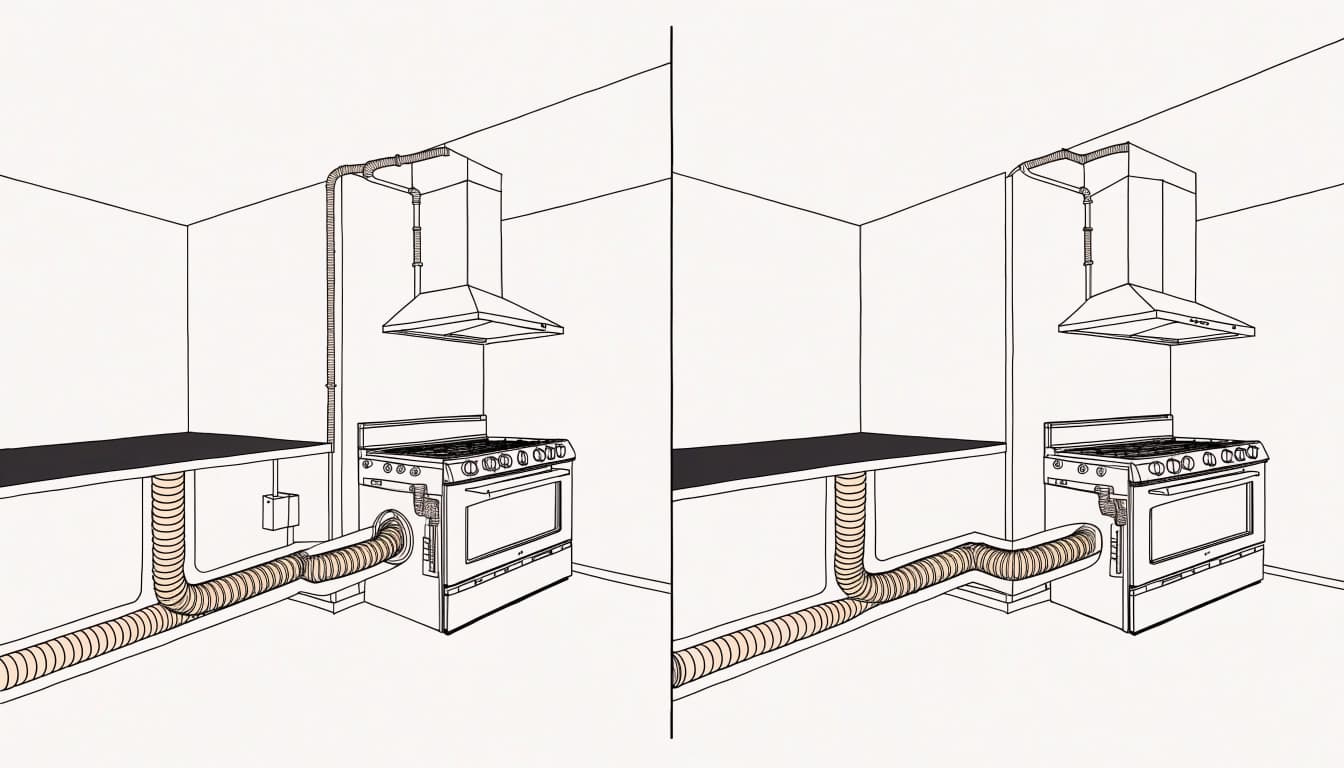
Keeping the range in the same location may make it easier to reuse an existing route, but the line still needs review. Moving the range can require a new route or changes to the existing one, particularly when the new position is farther away or separated by an island.
Finalize the layout before rough-in
An island or major cabinet change can affect where the gas connection needs to end up. The route may have to cross a wall, floor, or other part of the kitchen, so the remodeling team should coordinate it before surfaces are closed.
Set the range location and model early, then coordinate the gas plan with cabinets, ventilation, electrical work, and other utilities. Our guide to planning appliance clearances before ordering kitchen cabinets covers the layout decisions that should happen before cabinet orders.
Consider the value of keeping the location
If the current range position works well, retaining it may avoid unnecessary rerouting. If a new layout solves a genuine circulation or workspace problem, moving the range may be worth the added coordination. The gas route should be part of that decision, rather than an afterthought once cabinets arrive.
Cape Coral permits and Florida requirements
The permit path depends on the actual work and the project's jurisdiction. Reusing a line without changing its route is not automatically the same scope as extending or relocating it, so don't assume one permit answer applies to every kitchen.
What Cape Coral information establishes
Cape Coral's Permit Document Center lists a Gas Piping Guideline - Residential . The city also says licensed contractors apply for building permits through its EnerGov Customer Self-Service portal, and contractors must be identified, licensed, and registered with the City for permit applications.
The city's published information should guide permit planning for work in Cape Coral. A licensed professional and the remodeling team can coordinate the project scope, applications, and required inspections with the City.
Statewide rules apply to gas work
Florida law includes natural-gas and LP-gas piping within the scope of plumbing contracting, including installation, repair, alteration, and extension. The Florida statute defining contractor classifications provides that scope.
As of October 2026, the applicable statewide code is the 2023 Florida Building Code, Fuel Gas, 8th Edition, effective through December 30, 2026. Gas-piping pressure tests must follow the applicable code procedure. The code sets a test pressure of at least 1.5 times the proposed maximum working pressure, and not less than 3 psig, with requirements for pressure measurement and protecting appliances that aren't designed for the test pressure. A qualified professional handles testing and any required inspection.
How reuse affects budget and schedule
Reusing a suitable line may avoid some new piping work, but it doesn't remove the need to inspect, plan, and coordinate the gas connection. The estimate depends on the line's condition, the appliance requirements, whether the range moves, and what access or finish repairs the work requires.
Budgeting should account for the gas evaluation and any needed piping changes, permit preparation, inspection coordination, and repairs to opened walls, floors, or cabinets. A range relocation can add complexity if the new route conflicts with other systems or is difficult to access.
Resolve the appliance and layout decisions before demolition wherever possible. Our Cape Coral kitchen remodel timeline explains how early planning and permit coordination fit into the broader schedule. Changes made after rough-in work can add labor and push back later installation steps.
Key takeaways
- An existing gas line may be reusable if its condition, material, size, route, and capacity suit the new appliance.
- The professional's review should account for every appliance connected to the system, not only the range.
- Moving the range or choosing a higher-demand appliance may change the piping plan.
- Cape Coral and Florida requirements apply to the work, so use an appropriately licensed professional and coordinate permits and inspections.
- Don't perform gas-line alterations or testing yourself.
Frequently asked questions
Can I keep the gas line if I'm replacing the range in the same spot?
Possibly. Keeping the location can reduce the need for rerouting, but a qualified professional still needs to assess the line and confirm it can supply the replacement appliance at the required pressure.
Does an old gas line automatically need to be replaced?
No. Age by itself doesn't determine whether the line can stay. Its condition, material, size, route, and suitability for the new appliance all factor into the professional's assessment.
Does moving a gas range always require a new line?
Not necessarily, but moving the range can require a revised route or other piping changes. The final layout, the existing system, and the new appliance's requirements determine what work is appropriate.
Plan the gas line with the kitchen layout
Reusing an existing gas line can be practical, but only when the installation suits the appliance and meets applicable requirements. Have a qualified professional assess it before construction hides the route or fixes the range location.
Early coordination helps keep the appliance plan, cabinet layout, gas work, and permit process aligned. In a Cape Coral kitchen remodel, that decision is best made before demolition begins.