Can a Punta Gorda Custom Home Use a Shared Well?
Explore Our Services
Contact Us Today!
(239) 322-9295
Yes, a Punta Gorda custom home can use a shared private well if the property, water system, and proposed arrangement meet applicable requirements. A well serving two non-rental homes generally fits Florida's private-well definition, but rental status and the number of users can change the rules.
Before buying land or finalizing your plans, look beyond the presence of a well. Water rights, capacity, and access matter as much as the physical connection.
Key Takeaways
- Florida's private potable well definition includes a well serving one or two residences, with no more than one rental residence.
- A new well needs a construction permit, while some shared systems also need an operating permit.
- A Punta Gorda mailing address doesn't establish whether the City or Charlotte County handles local building review.
- A survey and written legal documents can clarify the well's location, water lines, access rights, and repair responsibilities.
- Water testing and a capacity assessment help determine whether the existing system can support another home.
When Is a Shared Well Considered Private?
The number and use of homes connected to a well affect its classification. Florida's private potable well definition, found in the state's septic rules, covers a well serving one or two residences, one of which may be a rental.
For example, a well serving two non-rental homes fits that definition. A system serving two rental residences can fall under Florida's limited-use system rules instead.
Limited-use systems have different obligations
Florida's limited-use rules address systems serving two or more rental residences or five or more non-rental residences, subject to the rules' limits on connections and people. For covered systems, the Florida Department of Health in Charlotte County, known as DOH-Charlotte, requires an operating permit and routine water sampling.
Public water system thresholds are separate
Under Florida Statutes section 403.852, a public water system generally meets either of two thresholds: at least 15 service connections, or regularly serving at least 25 people daily for at least 60 days a year.
These categories shouldn't be treated as interchangeable. The proposed number of residences, rental use, connections, and people all matter when evaluating a Punta Gorda shared well.
Which Agencies Are Involved?
A homebuilding permit, a well-construction permit, and an operating permit address different parts of a project. One approval doesn't automatically replace another.
Well construction and operation
The Southwest Florida Water Management District, or SWFWMD, is the well-construction authority identified for Charlotte County. A construction permit is required before a new well is built.
An existing well may already serve a neighboring home, but its history and physical condition still matter when planning another connection. That review is separate from the operating permit process for systems classified as limited-use.
For a covered limited-use system, DOH-Charlotte's requirements include an operating permit before operation and routine sampling for bacteria, nitrate, and lead. Those operating requirements shouldn't be assumed to apply to every two-home private well.
Local building and site review
The City of Punta Gorda handles local building and development matters for parcels inside city limits. Charlotte County handles those matters for properties in unincorporated areas. A Punta Gorda postal address alone doesn't determine which jurisdiction applies.
Public utility availability, past approvals, and the proposed site layout can also affect the project. Our Southwest Florida new home construction services include coordinating the homebuilding process around the property's conditions.
Plan the Well With the Entire Lot
A shared well affects more than the plumbing connection. Its location and supply lines compete for space with the house, driveway, drainage features, and any future pool.
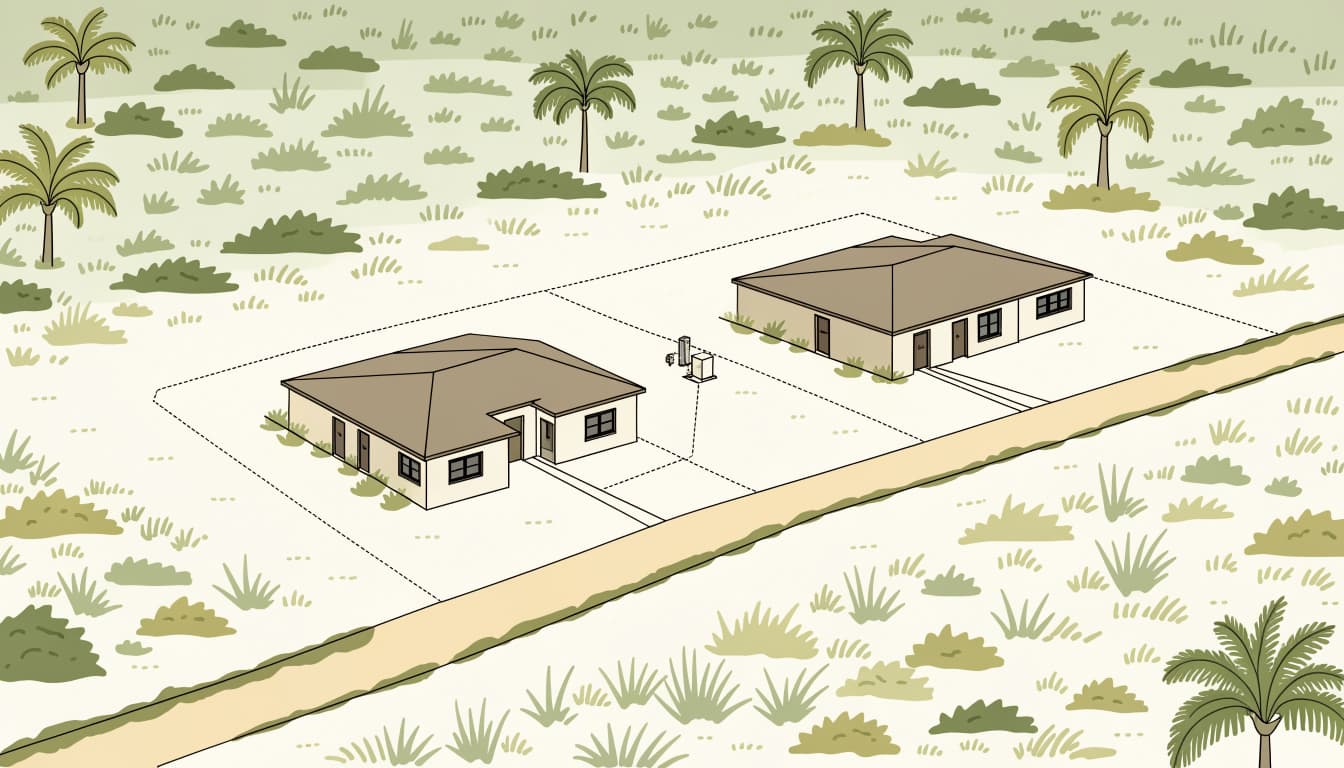
A current survey and site plan can show the property boundaries, existing improvements, recorded easements, and proposed construction. Existing underground water lines may require additional field locating because they won't necessarily appear on a survey.
If the home will use septic, coordinate the well, supply piping, septic tank, and drain field before settling on a floor plan. Florida's plumbing rules restrict potable water piping in relation to septic components, and the septic system has its own location requirements.
Our guide to Punta Gorda septic tank placement rules covers how septic planning fits into the site review. DOH-Charlotte handles permitting for residential septic systems under its jurisdiction, separate from local building approval.
Also leave room for equipment access and drainage. A fence, pool deck, or driveway shouldn't make the well impossible to service.
Can the Existing Well Supply Another Home?
A working well at a neighboring house doesn't automatically have enough capacity for a second home. A well contractor can evaluate the system's production and equipment against the expected demand.
Flow and pressure
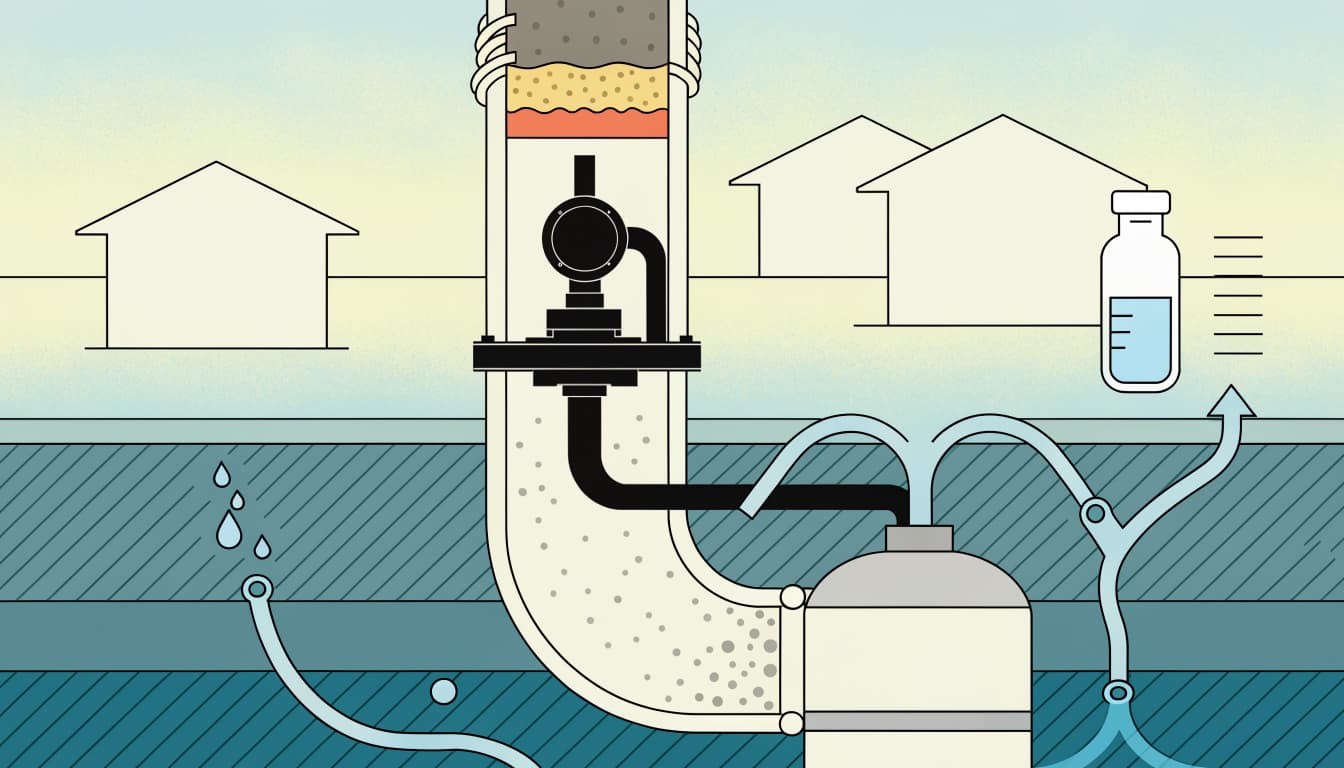
The evaluation should consider the well's yield, pump capacity, pressure tank, pipe sizes, and distance to the new house. Two homes may draw water at the same time, so adequate pressure at one fixture doesn't establish that the system can handle combined demand.
A contractor can also identify whether a pump, pressure tank, or supply line needs an upgrade. The cost and feasibility of those changes belong in the land and construction budget.
Household and outdoor demand
Include the proposed home's bathrooms and appliances in the assessment. Irrigation, outdoor fixtures, and filling a pool can add demand, especially when several uses overlap.
If one home has irrigation and the other doesn't, the owners may also want usage rules that protect household water pressure. Those expectations are easier to address before the connection is built.
Test Water Quality Before Relying on the Well
Clear water isn't proof that it's safe to drink. A laboratory test can identify problems that appearance, taste, or smell won't reveal.
At a minimum, discuss bacteria and nitrate testing with a qualified water-testing professional. Depending on the property's conditions and the intended use, additional testing may be appropriate for contaminants or water characteristics that affect treatment equipment.
A water sample can also help identify practical issues such as hardness, iron, or sulfur odors. Treatment may add equipment, maintenance, and electricity costs, so account for it before designing the utility space.
Decide where treatment equipment belongs
A shared system may treat water before it reaches either home, or each owner may maintain equipment on their own line. The choice affects access, maintenance responsibilities, and how costs are divided.
Plan for flooding and storm interruptions
Floodwater can contaminate a well, and a power outage can stop an electric pump. After flooding, keep a safe drinking-water supply available while the well is assessed. Boiling water doesn't remove chemical contamination, so the response depends on the problem identified.
Put Ownership and Access Terms in Writing
A shared well is a relationship between properties as well as a piece of equipment. A handshake with the current neighbor may not protect a future owner or resolve a major repair bill.
A Florida real estate attorney can review the title and prepare or evaluate documents suited to the properties. The arrangement may involve shared ownership of equipment, a right to receive water, or both.
Cover maintenance and costs
A written agreement can identify who pays for electricity, water testing, routine maintenance, and emergency repairs. It can also address how owners approve pump replacement, treatment upgrades, or a new connection.
Decide who arranges service when the pump fails and how quickly the owners must contribute. If one home uses significantly more water for irrigation, the agreement can address that difference rather than leaving it to a later dispute.
Protect access and water-line routes
The well may sit on a neighboring parcel, while supply lines cross land owned by someone else. Recorded easements or other property rights can provide a way to reach equipment and maintain buried lines.
The documents should describe the areas involved and allow practical access for repair vehicles and replacement equipment. A survey can help connect the legal description to the physical site.
Also consider future sales. Clear, recorded rights are more useful to a buyer than an informal promise that may be difficult to enforce.
Budget for More Than the Initial Connection
Shared-well costs vary with the distance between homes, equipment condition, water quality, and the legal work needed to establish the arrangement. The available information doesn't establish a standard private-well construction fee, so a project-specific estimate is more useful than a generic price.
A written budget should separate the connection work from upgrades to shared equipment. It may include trenching, supply piping, electrical work, a pressure tank, treatment equipment, testing, and site restoration. Survey and legal work can add costs before construction starts.
Ongoing expenses deserve equal attention. Pump electricity, filter replacements, testing, and eventual equipment replacement may continue long after the home is complete.
If the system qualifies as limited-use, permitting and sampling obligations can add operating costs. Don't automatically apply those costs to a two-home private-well arrangement.
Finally, identify which expenses the builder's contract includes and which remain the owner's responsibility. A low construction allowance can leave a sizable gap if the existing well needs work.
Review the Property Before You Buy
The best time to investigate a shared well is during the land purchase, while you can still account for limitations in the deal. A real estate attorney can help structure a purchase agreement with enough time for the necessary review.
Gather the well's available records, existing agreements, survey, and title information. Compare them with the proposed house site and the physical location of the equipment and water lines.
A water test and professional capacity assessment can reveal whether the system needs treatment or upgrades. Review those findings alongside the septic layout, drainage conditions, and the planned route to the house.
The key question is whether the property has a dependable, documented path to water service at a cost that fits your project. If the records or physical system don't support that path, the findings may affect the price, design, or purchase decision.
Frequently Asked Questions
Can two houses share one well in Punta Gorda?
Yes. Florida's private potable well definition includes a well serving two residences when no more than one is a rental. The property and proposed connection still need to meet applicable requirements.
Does a shared well make the water supply public?
Not automatically. Public water system thresholds depend on service connections or the number of people served. Limited-use rules are a separate category that can apply to certain shared systems, including systems serving two or more rental residences.
Who pays when a shared well pump fails?
That depends on the ownership and cost-sharing arrangement. A written agreement can spell out each owner's share and establish how emergency repairs are arranged.
Build With a Clear Water Plan
A shared private well can support a Punta Gorda custom home when the system and property arrangement fit the project. The classification, physical capacity, and legal rights all deserve attention before construction plans are final.
Start with documented access and reliable water . Those details give your builder a clearer basis for placing the home and pricing the work.