Cloudy Pool Water After Rain in Fort Myers
Explore Our Services
Contact Us Today!
(239) 322-9295
Cloudy pool water after rain calls for debris removal, water testing, and a close look at the filtration system. The water's appearance alone can't tell you which problem needs attention, so start with testing rather than adding chemicals by guesswork.
Fort Myers storms can leave a pool with extra debris and water that needs balancing. Here's how to work through the cleanup and recognize when to call a pool professional.
What cloudy pool water after rain can tell you
A heavy storm can affect more than the pool surface. Wind may carry leaves and grass clippings into the water, while runoff can bring soil and other material across the deck. Rainwater can also dilute the chemicals already in the pool.
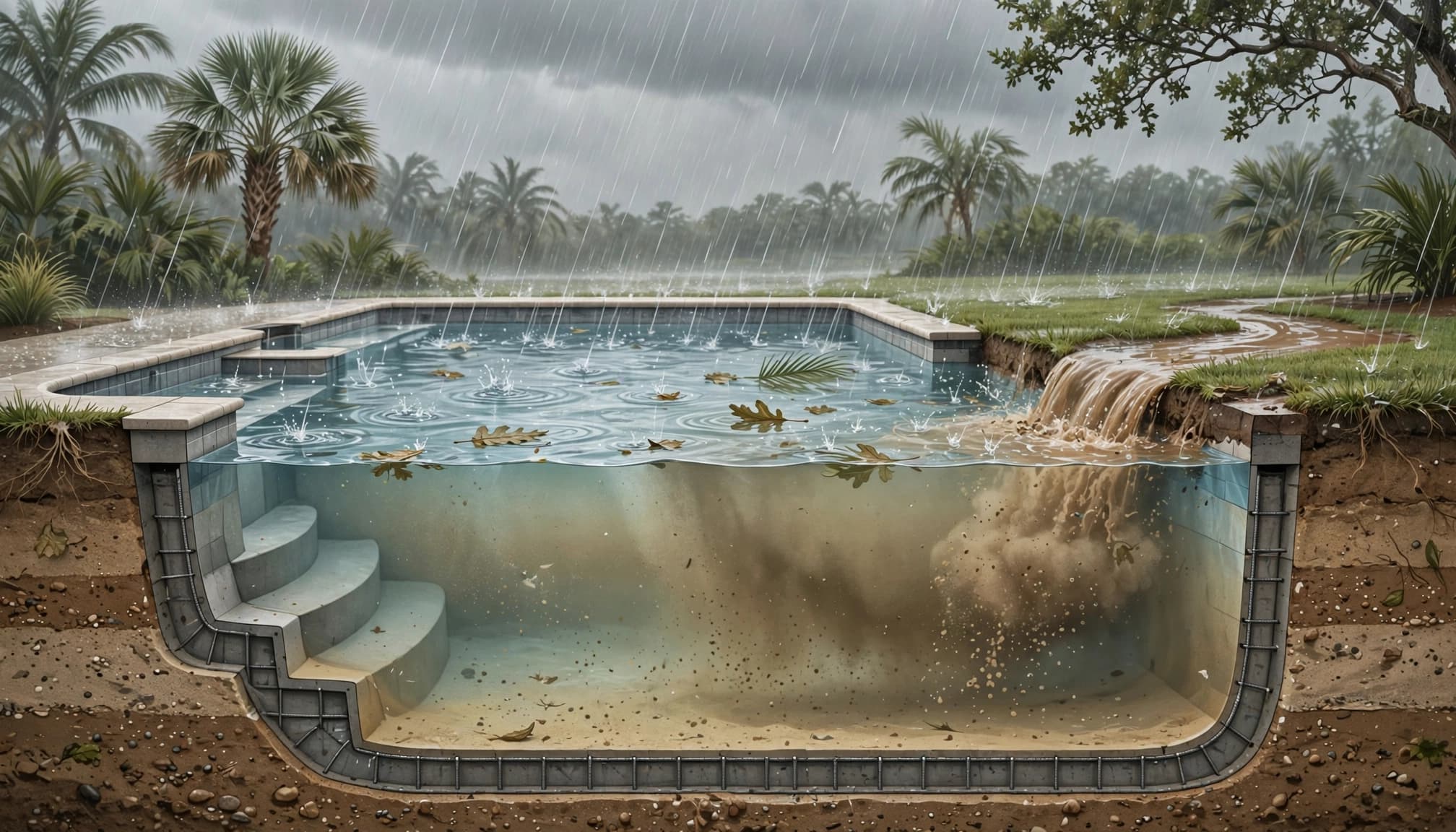
Those changes make a post-storm inspection worthwhile, but they don't establish the cause of a particular cloudy pool. Check the water, equipment, and surrounding yard before choosing a treatment.
Look at the pool and the yard
Start by noting what you can see. Leaves may collect at the surface, while heavier material can settle on the floor. Fine sediment can be harder to spot, particularly if you can't see the deep end clearly.
Look at the deck and landscaping, too. Muddy tracks near the pool edge can show where water traveled during the storm. Keep that area in mind when planning drainage improvements.
Consider the finish and pool layout
A gunite pool has a concrete shell covered by an interior finish. The pool's shape can include steps, benches, tanning ledges, and other areas where debris collects.
Give those features attention during cleanup. A pool cleaner may cover much of the floor but miss a ledge or a tight corner. Brush only with a tool suitable for your particular finish.
Keep swimmers out until you can see clearly
Don't swim while the water is too cloudy to see the bottom. Clear visibility matters because a person or object on the pool floor can be difficult to locate in an emergency.
After a strong storm, also look for hazards around the pool. Broken screen material, branches, and loose deck objects should be removed before anyone enters the area. Keep children and pets away while you inspect and clean.
If electrical equipment was submerged, damaged, or exposed to floodwater, stay away from it and call a qualified professional. Don't operate switches or touch equipment while standing in water. Wait until storm conditions have passed before beginning outdoor cleanup.
Remove storm debris before treating the water
Clearing out visible material gives you a better view of the pool and makes the rest of the work easier. Start at the surface and work toward the floor, taking care around a finish that could be scratched by trapped grit.
Skim, brush, and empty baskets
Use a leaf net to remove floating debris. Empty the skimmer and pump baskets as needed, following the equipment's instructions for shutting down the pump before opening its basket.
Next, brush the walls, steps, benches, and floor with a brush recommended for the finish. Pay attention to corners and areas behind ladders where a cleaner may not reach.
Vacuum settled material
A pool vacuum can collect debris that has settled on the bottom. Move slowly so you can see where you've cleaned, and inspect the vacuum head for anything that could scratch the surface.
If the pool contains a large amount of mud or debris, a pool service can assess the safest cleanup method for your equipment. Avoid sending heavy debris through equipment that isn't designed to handle it.
A robotic cleaner can help with routine cleanup, but it doesn't replace brushing or basket maintenance. After a storm, its collection basket or filter may need attention before the job is complete.
Test and balance the pool water
Once you've removed the larger debris, use a pool test kit to measure the water. Test strips or a liquid test kit can give you a starting point. Follow the kit instructions closely, including where to collect the sample and how long to wait before reading it.
Check sanitizer and pH
Free chlorine is the active sanitizer to measure in a chlorine pool. Check pH as well, because it affects water comfort and chlorine performance.
A saltwater pool still needs these tests. Its salt-chlorine generator produces chlorine, but the system doesn't replace routine water testing or balancing.
Use your test results and the treatment product's directions to decide what to add. If the readings are difficult to interpret, a pool professional can test the water and recommend a treatment plan.
Include alkalinity and calcium
Total alkalinity helps buffer changes in pH, so it belongs in your regular testing routine. Calcium hardness also matters for a gunite pool's interior finish and equipment.
Test cyanuric acid, sometimes called stabilizer, if your pool uses stabilized chlorine or has outdoor sun exposure. Keep a record of the readings and any products added. That information can help a pool technician understand what has already been done.
Never mix pool chemicals together. Add and store each product according to its label, and keep chemicals away from children and pets. If you aren't comfortable handling a product, leave treatment to a professional.
Run and clean the filtration system
After cleanup and testing, run the pump and filter according to the equipment instructions. The filtration system moves pool water through the filter, where it can collect particles.
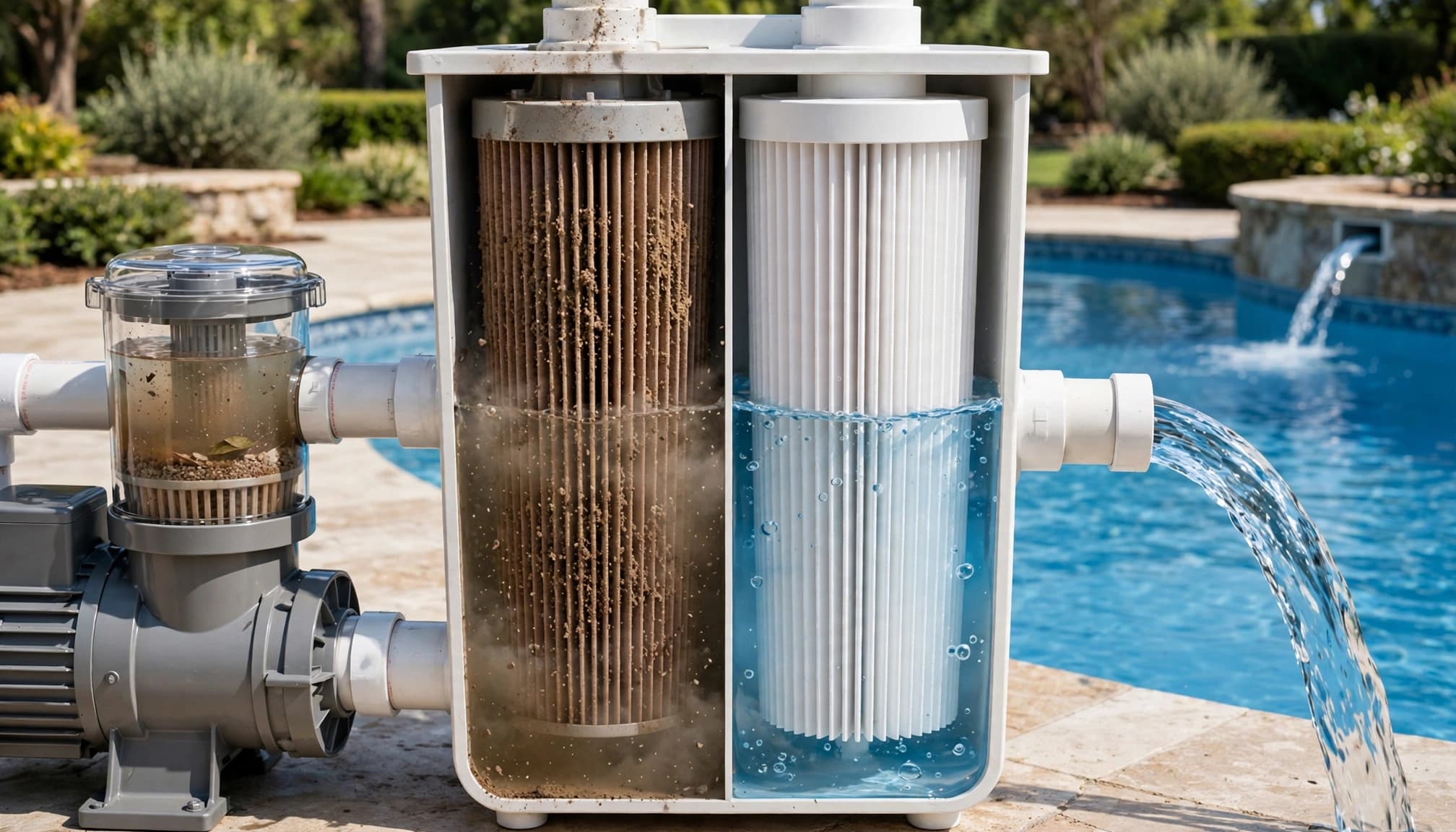
Look at the return flow and the filter pressure gauge while the system is operating. A useful reference is the clean starting pressure recorded for your equipment. If the reading or flow seems unusual, follow the manufacturer's maintenance instructions or arrange a service visit.
Clean the filter type you have
Cartridge, sand, and diatomaceous earth filters need different care. A cartridge may need to be removed and rinsed, while a sand or diatomaceous earth filter may have a backwash procedure.
Don't open a pressurized filter. Shut the system off and follow its instructions for releasing pressure before removing a lid or clamp. If you're unfamiliar with the procedure, have a pool technician handle it.
Watch the water level and circulation
Heavy rain can raise the water level. If it reaches above the skimmer opening, the skimmer may have trouble collecting floating debris. Follow your pool equipment's operating instructions for the proper level.
Don't drain an inground pool as a routine storm cleanup measure. Southwest Florida properties can have high groundwater, and draining requires an assessment of the pool and site. A pool professional can advise on removing excess water safely.
Be careful with shock and clarifiers
A cloudy appearance alone doesn't tell you how much treatment product the pool needs. Adding several products at once also makes it harder to identify what helped or whether the water is ready for swimming.
If your test results or a pool professional indicate that shock treatment is appropriate, follow the product label for your pool's volume and conditions. Keep swimmers out until the label's re-entry requirements are met and the water is clear.
Clarifiers are another product homeowners may consider. They're not a substitute for testing, sanitation, or a working filter. Before adding one, read its label and make sure it's compatible with your equipment and finish. Keep a record of any treatment you use.
Know when to call a pool professional
Some post-storm cleanup is manageable with a net, brush, and test kit. Other conditions deserve a closer inspection, especially when equipment has been damaged or water conditions aren't improving.
Call a qualified pool service if you notice any of these signs:
- The water remains cloudy after debris removal, testing, and filtration.
- Your test results stay outside the treatment product's recommended range, or you can't get consistent readings.
- The pump won't start, the return flow is weak, or the filter shows an unusual pressure reading.
- Mud, floodwater, or a large amount of debris has entered the pool.
- Electrical components or equipment appear damaged after the storm.
Also seek an assessment if the pool finish has new rough spots, staining, or discoloration. A cleaner alone won't address an underlying surface problem.
For an existing pool with worn surfaces or broader upgrade needs, we provide pool renovation services in Fort Myers. A renovation assessment is different from routine water treatment, so describe what you've observed when arranging help.
Reduce the cleanup after the next storm
A little preparation around the pool can make storm cleanup more manageable. Keep baskets and filters maintained during normal use, and store loose outdoor items before severe weather reaches your property.
Pay attention to drainage
Watch how rainwater moves across the yard and deck. Soil, mulch, and grass clippings near the pool edge can be carried by runoff. Repeated muddy water near the same section of deck is a reason to look at the surrounding grading and drainage.
Avoid blocking an existing swale or redirecting water toward a neighbor or the house. If drainage work is needed, have a qualified professional assess the property before making changes.
Plan maintenance around the pool design
Curves, raised features, and tanning ledges add places to enjoy the water, but they also create surfaces that need brushing. During a renovation or new build, consider how skimmers, returns, landscaping, and cleaning equipment will work with the layout.
Our pool construction and renovation services include planning for the pool and its surrounding outdoor space.
A note about pools under construction
A fresh gunite shell needs different care from a finished, filled pool. Heavy rain can damage uncured areas or wash material from a fresh surface.
If a major storm hits during construction, have the builder inspect the shell before work moves forward. Report cracks, soft spots, exposed reinforcing steel, or unusual marks rather than assuming they'll disappear under the finish.
Restore clarity with a measured approach
Cloudy water after a Fort Myers storm is a reason to pause swimming and inspect the pool. Remove debris, test the water, and maintain the filter before deciding what treatment is needed.
If the water stays cloudy or the equipment shows signs of trouble, call a pool professional. A careful diagnosis protects both your swimmers and your pool.