


If you’ve ever priced a custom home in Southwest Florida, you already know the hard part isn’t picking tile. It’s figuring out what you’re really paying for, and what might change once permits, sitework, and long lead items collide with reality.
That’s why cost plus home building is popular across Cape Coral, Fort Myers, Naples, Bonita Springs, and beyond. Done right, it replaces “trust me” with receipts, bids, and a clear contractor fee. Done wrong, it can feel like a blank check with a nicer label.
Below is a practical guide to how cost-plus works, what “open book” should include, and the contract details that protect your budget.
What cost-plus means in Southwest Florida (and why homeowners choose it)
In a cost-plus contract, you (the owner) pay the actual construction costs, plus a set fee to the builder. The fee can be a percentage, a fixed dollar amount, or a hybrid (fixed fee with a percentage for certain items). The key idea is visibility: you can see where the money goes, line by line, as the job moves along.
This structure fits Southwest Florida for a few reasons:
Material pricing and lead times still swing. Even when the “headline” price of lumber calms down, windows, trusses, generators, and specialty items can jump or get delayed. Cost-plus avoids forcing a builder to guess and pad every line item.
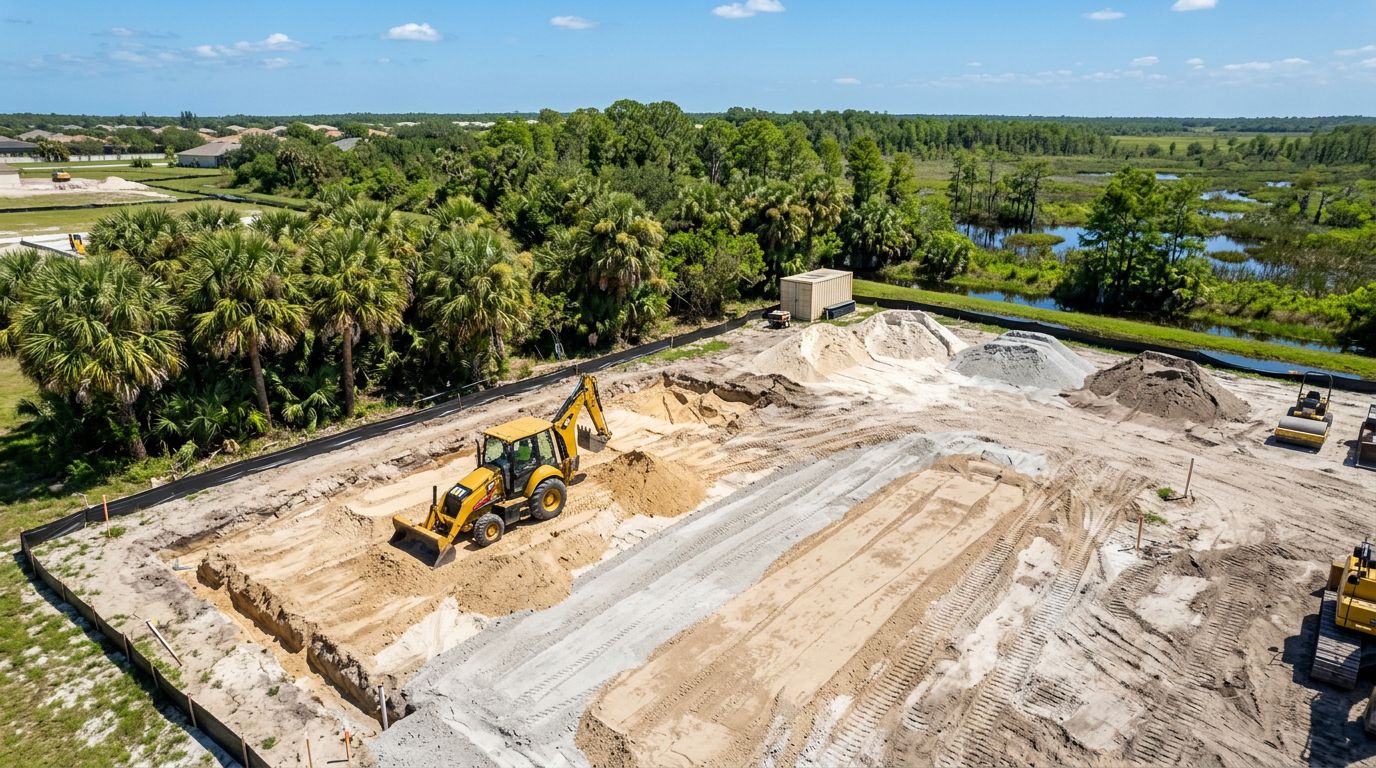
Sitework can be a wild card. Fill, compaction, stem wall height, drainage, and utility connections change fast based on soil, survey, and flood requirements. A cost-plus setup keeps those real costs visible instead of buried inside a fixed number.
Owners want control. With a good cost-plus home builder , you can approve selections, track allowances, and understand change orders in real time. That’s the heart of transparent pricing .
If you’re comparing contract styles, it helps to also understand the lifestyle and timeline tradeoffs in Custom Home vs. Spec Home in Southwest Florida.
How the cost-plus fee is calculated (simple example included)
Most homeowners picture the fee like a tip at a restaurant: costs plus 12 percent, done. In real contracts, the math depends on what counts as “Cost of the Work” and what the fee is applied to.
Common approaches include:
- Fee applies to all direct costs (subs, materials, equipment, dumpsters, etc.).
- Fee applies to direct costs plus approved change orders.
- Some items are excluded from fee (permit fees, impact fees, owner-paid purchases, or allowances), but only if the contract says so.
A simple numeric example (with allowances and contingency)
Let’s say your project has $800,000 in direct construction costs (labor, materials, subcontractors). The builder charges a 12 percent fee.
| Item | Example amount | Notes |
|---|---|---|
| Direct construction costs | $800,000 | Actual invoices, subcontractor bills, approved purchases |
| Builder fee (12%) | $96,000 | $800,000 × 0.12 |
| Subtotal | $896,000 | Costs + fee |
Now add the two budget “placeholders” most people see in Southwest Florida: allowances and contingency.
Allowances are not extra money. They’re placeholders for not-yet-selected items (cabinets, plumbing fixtures, lighting, tile). If you pick higher finishes, you pay the difference.
Contingency is a buffer for unknowns (rock excavation, extra fill, engineering revisions, code-driven upgrades). On coastal and flood-prone lots, contingency can be the difference between a calm build and constant stress.
Here’s one way it might look:
| Item | Example amount | Notes |
|---|---|---|
| Subtotal (costs + fee) | $896,000 | From above |
| Allowances (included inside the $800,000) | $60,000 | Example: cabinets, tile, fixtures, appliances |
| Contingency (owner budget) | $45,000 | Example 5% of direct costs, spent only if needed |
| If contingency is not used | -$45,000 | It stays with you |
| Potential total if contingency is used | $941,000 | $896,000 + $45,000 |
Two contract details decide whether this stays fair: how often you get updated cost reports , and whether you must approve spending beyond allowances and contingency before it happens .
For a broader planning view, The Ultimate Guide to Building Your Dream Home in Southwest Florida helps you think through budget, timeline, and Florida-specific steps.
What “open book” should include (your documentation checklist)
“Open book” should mean more than a spreadsheet that shows round numbers. You’re hiring a professional to manage trades, scheduling, quality, and compliance, but you should also be able to verify the money trail without chasing people down.
Here’s a practical open-book documentation checklist to ask for up front:
- Signed contract with exhibits : Scope, plans, specs, allowances, exclusions, and the exact fee language.
- Detailed estimate and cost codes : A line-item budget grouped by trade (sitework, concrete, framing, roofing, MEP, drywall, finishes).
- Subcontractor bids and awarded proposals : Not just totals, include scope notes and what’s excluded.
- Vendor quotes and purchase orders : Windows, doors, trusses, cabinets, HVAC equipment, plumbing fixtures, pool equipment (if applicable).
- Invoices and receipts : Materials, rentals, delivery fees, dump fees, equipment.
- Change order log : Each change with description, price, fee treatment (does the fee apply?), and owner approval signature.
- Draw requests with backup : If your lender requires draws, each draw should tie back to invoices and percent complete.
- Insurance certificates : Builder’s general liability, workers’ comp (or exemptions where legal), and key subs’ coverage.
- Lien paperwork : Notice to Owner tracking, conditional lien releases with payments, and final lien releases at closeout.
When a builder truly commits to transparent pricing, the paperwork doesn’t feel like a fight. It feels like a system.
If you’re still choosing a contractor, start with a clear services overview like Southwest Florida custom home builder services , then ask how their open-book process works in real life.
What to watch for before you sign (fee surprises, liens, and fuzzy “costs”)
Cost-plus can be fair, but it’s not self-policing. The contract has to close the gaps that cause most budget blowups.
Red flags that deserve a hard pause
- Fee applied in ways you didn’t expect : Fee on change orders, fee on contingency use, or fee on owner-selected allowances, without clear disclosure.
- Markup stacked on top of the fee : A percentage fee plus additional “handling” markups on subcontractors or materials.
- Vague supervision or project management costs : Undefined “jobsite overhead” or “supervision” charges with no rate, cap, or schedule.
- Unclear exclusions : Permits, impact fees, surveys, engineering, seawalls, utility taps, driveway aprons, and landscaping are common surprise items in SWFL.
- No real-time cost reporting : If you only see costs at the end of the month, you’re always driving by looking in the rearview mirror.
- Weak lien release process : If the builder can’t produce lien releases, your property can still be exposed even if you paid the builder.
Florida lien law is not optional homework
Florida’s Construction Lien Law exists to protect subcontractors and suppliers, but homeowners need to understand it too. A good starting point is the state’s plain-language handout, Florida’s Construction Lien Law (PDF). Many city building departments also publish homeowner summaries, including Cape Coral’s lien law overview.
In plain terms, lien risk comes from money flow. If a sub or supplier isn’t paid, they may have rights against the property. That’s why clean documentation matters, especially on cost-plus where payments happen throughout the job.
Also verify licensing and scope. Florida regulates contractors under Chapter 489, and you can review the statutory framework at Florida Statutes, Chapter 489 (Contracting). For your specific builder, confirm their license status through the state’s DBPR tools and match the license type to the work (general contractor, roofing, pool, etc.).
Conclusion
Cost-plus home building can be a strong fit in Southwest Florida when you want control, clean documentation, and transparent pricing that matches real costs. The builder fee is only “simple” when the contract defines what costs count, what’s excluded, and how changes and allowances are handled.
Before you sign, ask to see what their open-book package looks like on a real project, and make sure lien releases and approvals are part of the process, not an afterthought. This article is general information, not legal advice , so review your contract terms with a Florida construction attorney if anything feels unclear.