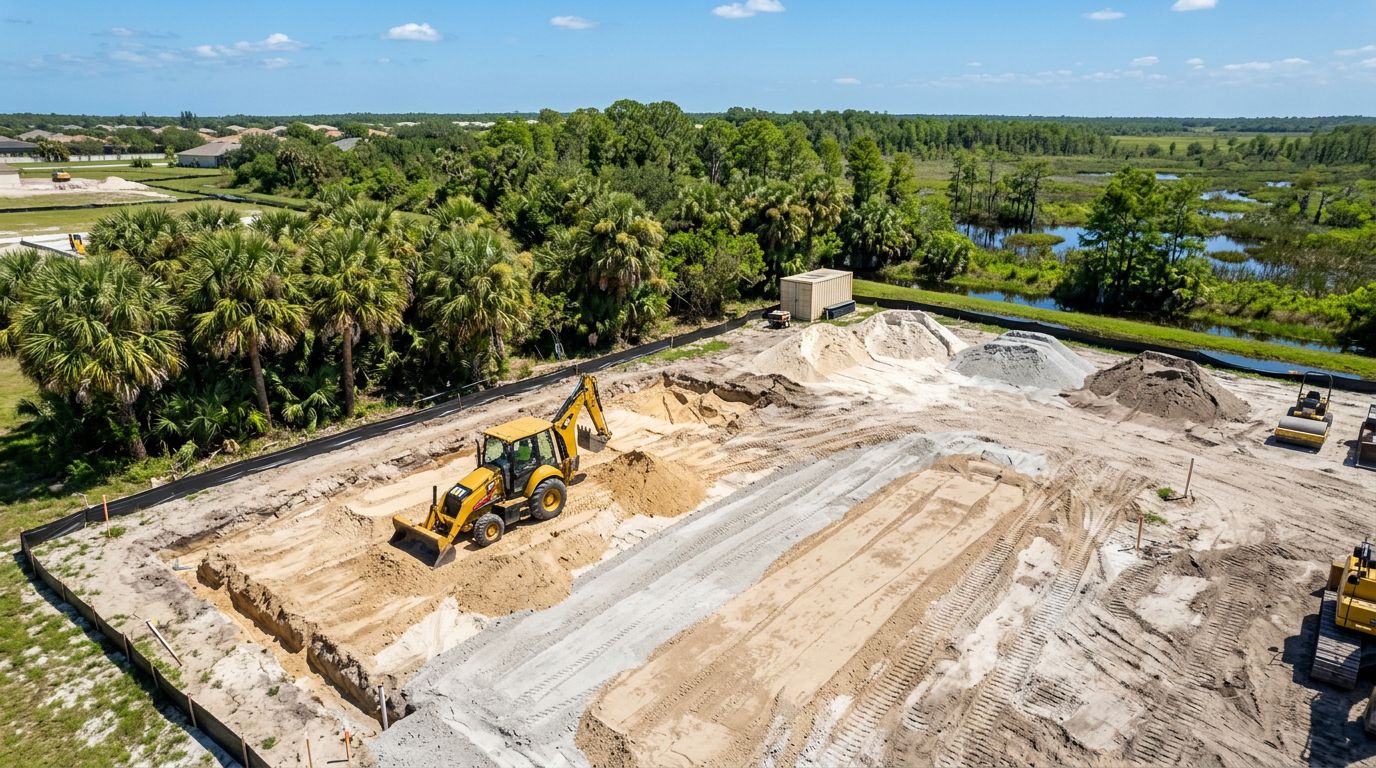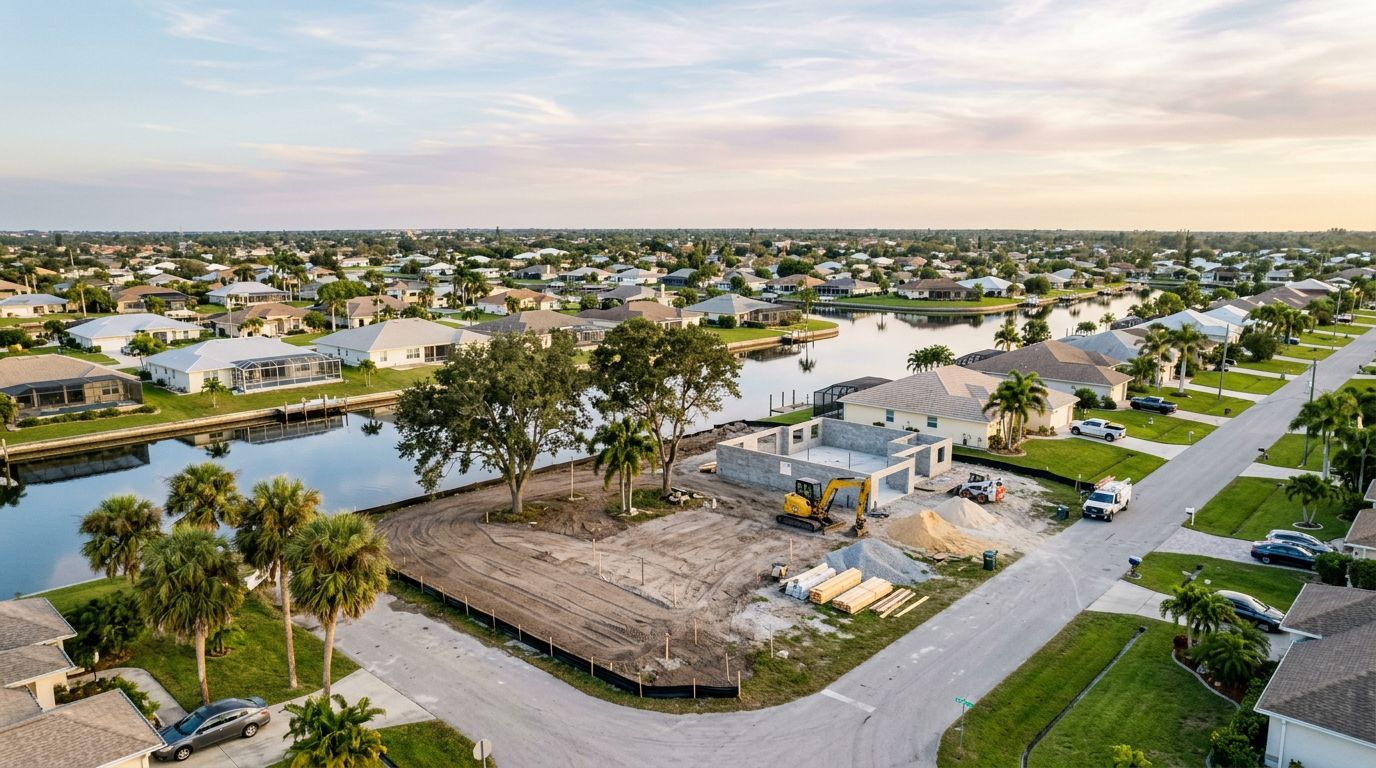



That perfect lot in Cape Coral or Fort Myers can look dry as a bone, until one document changes your whole plan: FEMA flood zones .
Flood zones don’t just affect flood insurance. They shape your foundation type, finished floor height, permit requirements, site costs, and even where you can place HVAC equipment. The good news is you can learn to read the map yourself and ask smarter questions before you buy land or finalize plans.
What FEMA flood zones mean for a new build in Southwest Florida (2026 context)
A FEMA flood zone is FEMA’s best estimate of flood risk for an area, shown on Flood Insurance Rate Maps (FIRMs). In Southwest Florida, the zones you’ll hear most are X , AE , and VE . If your lot is in AE or VE , it’s usually in the Special Flood Hazard Area (SFHA), where lenders typically require flood insurance and building rules get stricter.
In 2026, it’s also smart to watch for map updates. For example, Lee County has proposed map changes near Mullock Creek , with final effective dates expected after the appeal process wrapped in 2025. That matters because a map revision can shift a property into or out of a higher-risk zone, and that can change required elevations and design details.
One more thing that trips people up: FEMA flood zones are not the same as hurricane evacuation zones. Evacuation zones are set locally for storm surge planning and can change based on the storm. FEMA zones are used for building standards and flood insurance. And neither one fully captures local drainage flooding , like heavy rain backing up canals or swales, which can hit homes even in Zone X.
How to use FEMA Map Service Center to find your zone and read the FIRM panel
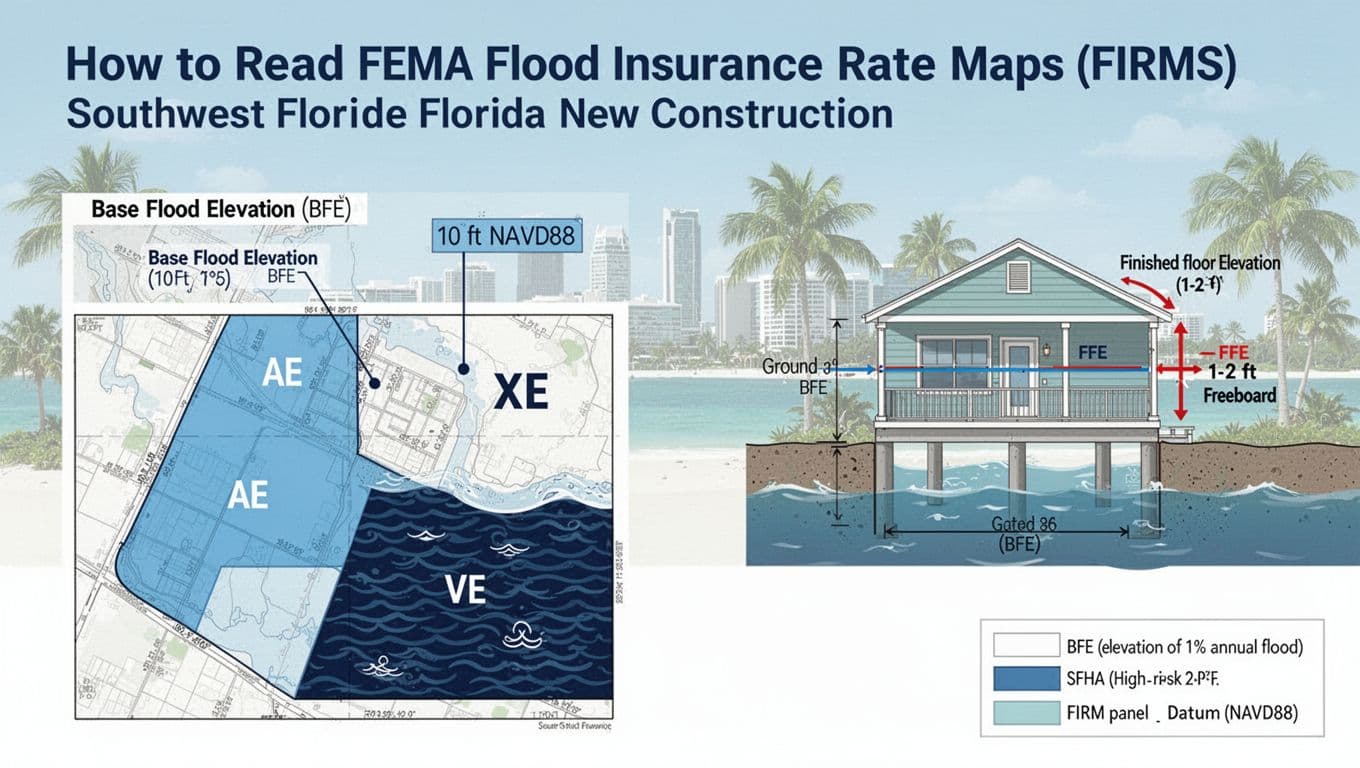 Simplified visual of common FIRM items you’ll see when checking flood zones, created with AI.
Here’s a practical, repeatable way to check your lot using FEMA’s Map Service Center (MSC). Do this early, before you price plans or sign on land.
- Search the address (or coordinates). If it’s a vacant lot with no address, use the nearest cross street or GPS coordinates from the listing.
- Open the map and confirm the pin is correct. Zoom in and make sure the marker is on the right parcel, not the neighbor’s lot across a canal.
- Find the flood zone label for the exact spot. You’re looking for labels like X, AE, VE , or shaded floodplain boundaries that cut across a parcel.
- Open the FIRM panel details. Note the panel number and the map effective date . These two items tell you which official map the jurisdiction is using for permits.
- Look for a Base Flood Elevation (BFE). In many AE and VE areas, the map shows a BFE as a number along wavy lines or as a labeled elevation. If no BFE is shown, you may need local data or an elevation study.
- Check for a floodway. Floodway areas are often shown with a separate boundary. Building in or near a floodway can add engineering and permitting steps.
- Verify the vertical datum. Most modern FIRMs reference NAVD88 , but don’t assume. The datum affects survey elevations and the final Finished Floor Elevation you build to.
- Save a PDF for your records. Bring it to your builder, surveyor, and designer so everyone is working from the same panel and date.
A simple habit that prevents headaches is writing down these four items each time: zone, BFE (if shown), panel number, effective date.
BFE vs FFE (and why freeboard usually shows up in plan sets)
Flood zones become real when you get to elevations. Two terms do most of the heavy lifting:
Base Flood Elevation (BFE) is the predicted height floodwater may reach during a 1 percent annual chance flood. Think of it as the “target line” your build needs to clear.
Finished Floor Elevation (FFE) is the height of the lowest livable floor. Garages, storage, and open enclosures below the living area are treated differently, depending on the zone.
In much of Southwest Florida, new construction in AE and VE commonly needs FFE at least BFE plus 1 foot of freeboard . Freeboard is extra height above the minimum, like wearing a seatbelt even on a short drive. It gives breathing room for map updates, storm uncertainty, and future insurance rating.
To build to the right number, you also need the right paperwork. Your surveyor establishes site elevations on the correct datum, and your design team uses that to set the house pad, stem wall height, piles, and steps. Many owners also order an Elevation Certificate (EC) during or after construction, since it can support accurate flood insurance rating.
AE vs VE vs X, what your FEMA flood zone changes in the build
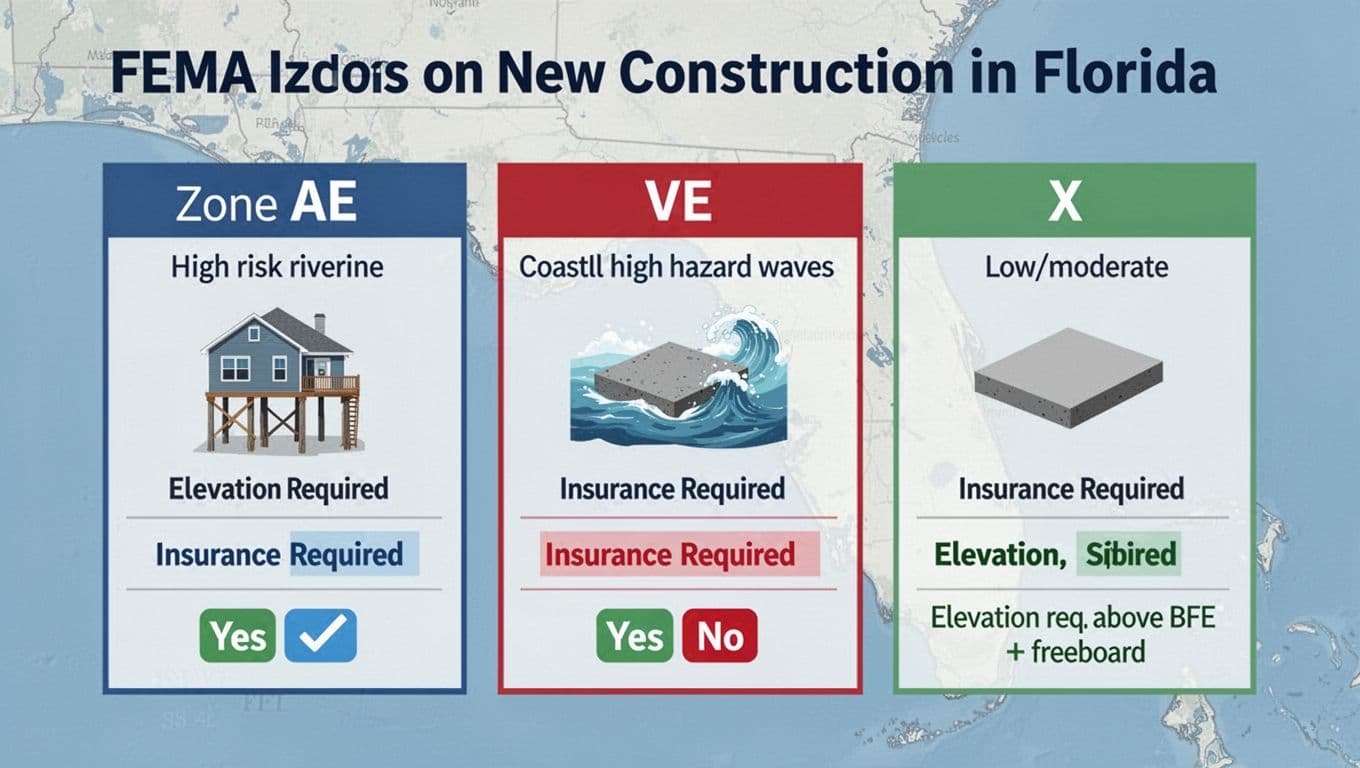 Quick comparison of common zones and what they tend to change for new builds, created with AI.
Here’s a quick-reference snapshot for new construction. Always confirm final requirements with your permit office and floodplain manager, since local rules can be stricter than FEMA minimums.
| FEMA zone | What it means (plain English) | Typical new construction impacts |
|---|---|---|
| X | Lower to moderate mapped risk | Often no BFE on map, slab-on-grade may be allowed, smart grading and drainage still matter |
| AE | High-risk flood area, BFEs usually apply | Elevate the living floor to BFE plus freeboard, flood openings for certain enclosed areas, utilities placed higher |
| VE | Coastal high hazard with wave action | Usually piles or columns, stricter breakaway wall rules, limited enclosures below, strongest load and corrosion planning |
Zone choice can also change how you spend money. Elevation can add fill, longer piles, more steps and ramps, taller stem walls, and extra engineering. VE zones can push you toward a foundation and structural package that’s closer to a stilted coastal home than a standard inland slab.
This is where working with a cost-plus home builder can feel less stressful. When elevation and foundation details shift during permitting, transparent pricing and itemized costs make it easier to see what changed and why. If you’re comparing build approaches in the Cape Coral and Fort Myers area, start with a builder who’s used to these conversations, like a new home builder Cape Coral owners can talk to early in the lot review stage.
Builder checklist for flood-smart Southwest Florida new construction
Use this as a tight pre-build check, especially if your lot is near canals, rivers, or the coast:
- Boundary and topographic survey with spot elevations across the lot
- Confirm the vertical datum used by the map and survey (don’t mix datums)
- FIRM panel and effective date documented for the permit file
- Floodway check and any no-rise or added engineering needs
- Elevation strategy set early (fill, stem wall, piers, piles, columns)
- Utilities placed above risk (HVAC, electrical panels, generators, water heaters)
- Materials planned for wet areas (flood-damage-resistant finishes where allowed)
- Permit coordination with local floodplain and building staff
- Insurance conversation early (flood policy timing and EC needs)
Who to call locally, floodplain managers and permit guidance
If something doesn’t line up between your survey, the map, and what the permit reviewer wants, call the local floodplain office. As of 2026, contacts include: Cape Coral (Wyatt Daltry, (239) 573-3160), Fort Myers (Brent T. Brewster, (239) 321-7918), Fort Myers Beach (Megan Will, (239) 765-0202), Collier County flood info ((239) 252-2942).
Wind and insurance paperwork often runs alongside flood compliance. If you’re planning for insurance requirements on a completed home, these guides can help: wind mitigation inspection Cape Coral and 4-point inspection Florida.
Disclaimer: This article is informational only. For site-specific decisions, consult a licensed Florida surveyor or engineer, your local permit office or floodplain manager, and your insurance agent.
Conclusion
Building in FEMA flood zones doesn’t mean you shouldn’t build, it means you should build with the map in hand. Read the FIRM panel, confirm your BFE and datum, plan your FFE with freeboard, and verify local rules before you commit to final plans. When your builder, surveyor, and permit office are aligned early, the rest of the project gets a lot simpler.