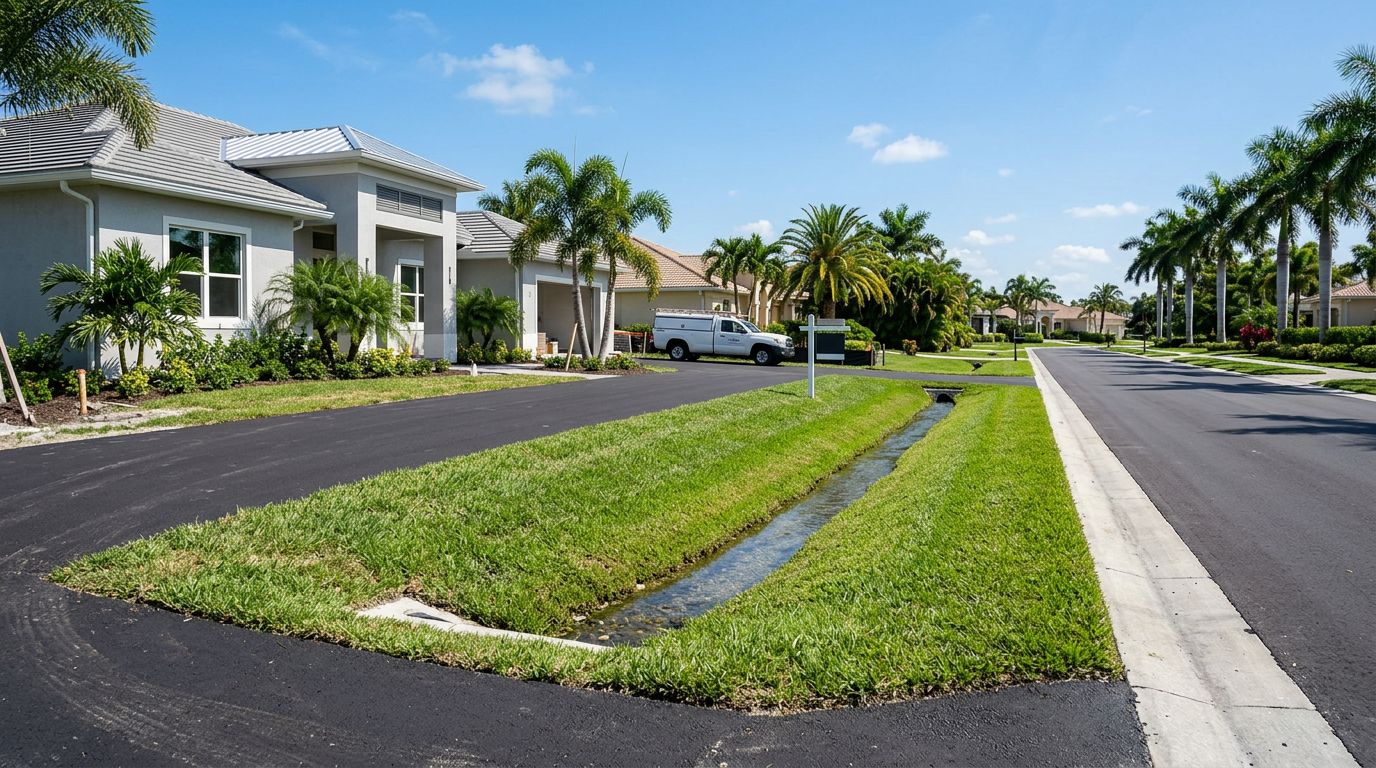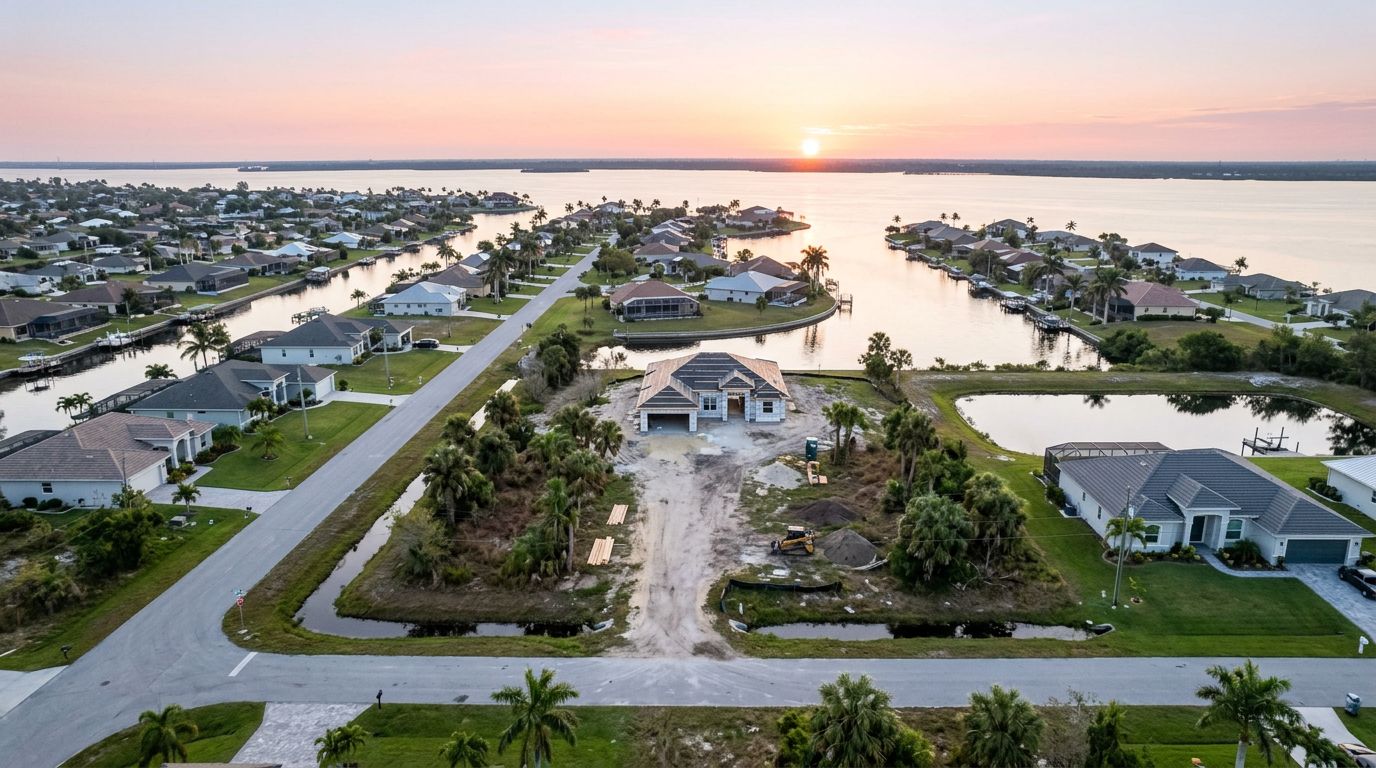



A driveway culvert can add a few thousand dollars to a Southwest Florida new-home budget, and the bill can climb fast on a wide or wet lot. In 2026, the pipe is only part of the story. Permits, engineering, grading, soil conditions, and driveway restoration often matter more than the culvert itself.
If you're buying land or planning a build, the smart move is to price the site work before you lock in the house plan.
What pushes culvert pricing up in Southwest Florida
A culvert looks simple from the road. The price rarely is. In Southwest Florida, the final number depends on how much water the site has to move, how the driveway meets the street, and what the county or city wants on paper.
The biggest cost drivers are easy to spot once you know where to look:
- Diameter and material : Larger pipe costs more, and material choice changes the bill fast. HDPE often costs less up front than heavier-duty concrete.
- Lot frontage and driveway length : A longer frontage or wider driveway usually means more pipe, more digging, and more backfill.
- Soil and drainage : Soft sand, saturated ground, or poor slope can mean extra fill, undercutting, or dewatering.
- Permit and engineering needs : Many SWFL lots need site plans, drainage calculations, and inspection steps before work begins.
- Restoration : Asphalt, concrete, sod, and driveway apron repairs all add to the total.
That is why two lots in the same neighborhood can get very different quotes. One may need a short, clean install. Another may need a longer run, more grading, and more paperwork. If you want the full budget picture, the Southwest Florida home building budget breakdown shows how drainage, fill, and permits fit beside the rest of the project.
Realistic 2026 culvert installation price ranges
For many new-home lots in Cape Coral, Fort Myers, and nearby Southwest Florida areas, a permitted driveway culvert often lands in the low thousands. A simple site can stay near the bottom of the range. A tougher lot can move much higher.
Use these ranges as planning numbers, not fixed quotes.
| Project type | Typical 2026 planning range | What it often involves |
|---|---|---|
| Simple permitted install | $2,000 to $5,000+ | Short run, standard pipe, basic excavation, backfill, and restoration |
| New-home lot with longer frontage | $4,500 to $8,500+ | More pipe, deeper trenching, grading adjustments, permit work, and driveway tie-in |
| Complex drainage site | $8,000 to $15,000+ | Engineering, larger pipe, utility coordination, extra restoration, or wetter soils |
A basic job may also include permit fees in the low hundreds and engineering charges that can run from several hundred dollars to more than a thousand, depending on the scope. The pipe itself is rarely the only cost.
The pipe is the easy part. The hard part is proving the water will move where the city wants it to go.
That is why a low quote can be misleading. If it leaves out engineering, inspections, or restoration, the final bill can climb later.
What a good quote should include
A clean estimate should read like a parts list, not a guess. You want to know what the contractor is covering and what still belongs to you or the civil engineer.
| Usually included | Often excluded |
|---|---|
| Pipe, bedding, trenching, backfill, and compaction | Survey work and civil design |
| Basic permit handling and inspection coordination | Traffic control, if needed |
| Driveway tie-in and simple restoration | Utility relocation |
| Headwall or end treatment, if listed in the scope | Extra sod, landscaping, or decorative pavement repairs |
| Removal and replacement of damaged pavement | Dewatering or extra fill if soils are poor |
If a bid does not spell out these items, ask for a revised version. A cost-plus home builder with transparent pricing should be able to separate the culvert line from the rest of sitework. That makes it easier to see where the money goes and which parts can change later.
When you are comparing the whole budget, the house shell matters too. If you want context for that side of the project, the construction performance and pricing for Florida houses article helps show how shell choices affect the bigger number.
Permits, drainage rules, and county differences
In Southwest Florida, most new driveway culverts need approval when they affect a public right-of-way, a drainage swale, or water flow near the street. That includes many lots in Cape Coral and Fort Myers. The permit office may ask for a site plan, survey, drainage calculations, and erosion control details before work starts.
In May 2026, builders are still working around Florida's 8th Edition Building Code. The 9th Edition is expected later in 2026, and stormwater and drainage rules are part of the conversation. That matters because local reviewers want proof that the culvert will not send water onto a neighbor's lot or back toward the road.
County and city rules can also change the price in quiet ways. A lot in Lee County may need a different review path than one in Charlotte County or Collier County. Even nearby parcels can have different stormwater standards, frontage widths, or elevation needs.
Soil and season matter too. A wet summer job can take longer. Soft ground may need more base prep. A site with a shallow ditch may need a different pipe size than a lot with a deeper swale. In some cases, utility conflicts or a need to shift the driveway entrance can push costs up fast.
A cheap culvert bid can turn expensive if the lot needs extra grading, engineering, or restoration after the pipe goes in.
Some drainage districts on specific roads have lower-cost replacement programs, but those prices do not apply to most new-home driveway installs. For buyers, the safest move is to check the local permit path before closing on the lot.
How to budget the work before you buy the lot
The best time to price a culvert is before you buy dirt, not after. A lot may look ready for a house, yet still need several thousand dollars of drainage work.
Start with a few direct questions:
- What pipe diameter is needed for this driveway?
- How long is the culvert run?
- Are permits, engineering, and inspections part of the quote?
- What restoration is included after the trench is backfilled?
- Does the bid assume good soil, or does it include a dewatering or fill allowance?
Those answers tell you if the number is realistic. They also show whether the contractor understands local drainage rules. If the proposal gives you one lump sum with no detail, ask for line items.
That step matters even more when you are balancing sitework against the rest of the house. A bigger culvert bill can change what you spend on finishes, pool work, or outdoor spaces. Clear site numbers help you make those tradeoffs with less stress.
A practical approach is to treat culvert work as a budget allowance until the survey and permit plan are done. Then refine it once the driveway location, pipe size, and county requirements are clear. That is the kind of detail a homeowner wants early, especially when comparing a cost-plus build model with fixed-price assumptions.
Conclusion
Culvert installation costs for Southwest Florida new homes in 2026 are shaped by far more than pipe size. Lot frontage, driveway length, soil, grading, permits, and engineering all move the number.
If you price the site work early, you avoid the biggest surprises. A clean, itemized estimate is worth more than a low bid with missing pieces, especially on lots where drainage rules are strict and the ground stays wet for part of the year.