
Fort Myers Chimney Flashing Leaks: Causes and Repair Options
Explore Our Services
Contact Us Today!
(239) 322-9295
A ceiling stain near your fireplace can appear after one hard rain, then stay dry through the next storm. That pattern makes Fort Myers chimney flashing a sensible place to investigate, but it doesn't prove the flashing is leaking. Water can enter elsewhere on the roof or chimney and travel before it becomes visible indoors.
The safest next step is a roof and chimney inspection , not a bead of sealant applied to the nearest visible gap. Understanding how the joint works will help you ask better questions when a professional arrives.
How chimney flashing keeps rain out
A chimney interrupts the roof's surface, creating a joint where water needs a controlled path around the structure. Flashing covers that joint and works with the roofing and underlayment to direct rain downhill. The exact arrangement depends on the chimney and roof materials.
The roof and chimney meet in layers
On a shingle roof, flashing may include pieces along the sides, an uphill section behind the chimney, and a downhill section at its front. Counterflashing, where present, covers the upper edges of the roof-side flashing.
Each layer has to shed water onto the next one below it. If water reaches behind an overlap, a neat-looking exterior joint may still leak. Tile and metal roofs use different details, so a repair suited to shingles shouldn't be assumed suitable for every Fort Myers home.
The leak may start beyond the flashing
A cracked chimney crown, deteriorated mortar, damaged roof covering, or a nearby roof penetration can produce a stain that looks like a flashing leak. Water may also follow framing before it reaches the ceiling.
That uncertainty matters when you request a repair. Ask the inspector to identify where water appears to enter and which surrounding materials were checked, rather than treating the stain's location as the answer.
Why Fort Myers chimney flashing faces extra stress
Fort Myers roofs deal with intense sun, heavy downpours, humidity, and occasional wind-driven rain. Those conditions can expose a weak roof-to-chimney joint, particularly after storm damage. They don't, by themselves, identify which component has failed.
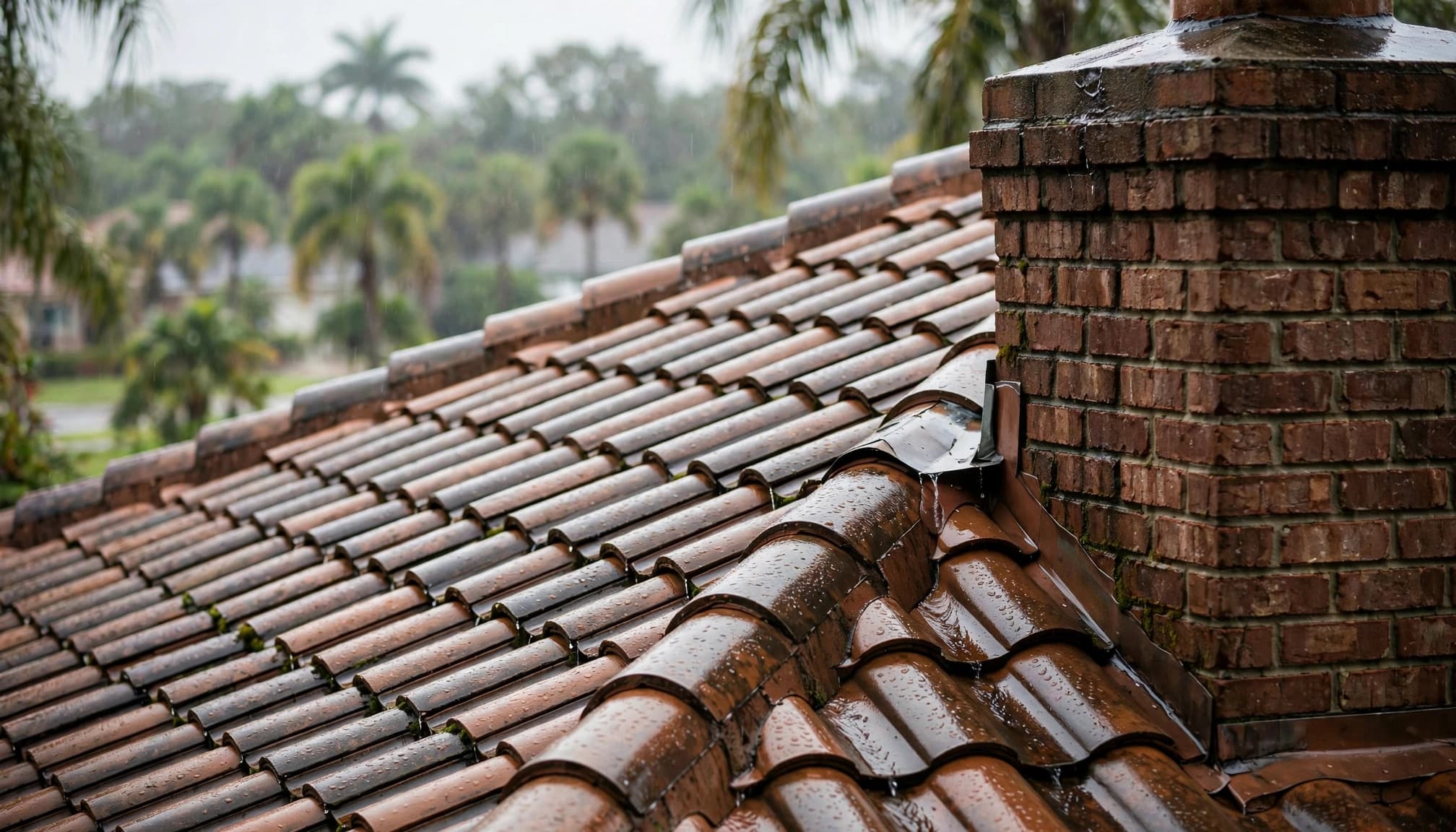
Heavy rain can reveal a drainage problem
Rain falling straight down may behave differently from rain pushed across a roof during a squall. An uphill joint can also see more water if leaves and debris collect behind the chimney.
If a stain appears only during prolonged or wind-driven rain, record that pattern for the inspector. It offers a clue about conditions to investigate, not a reliable diagnosis on its own.
Storm exposure can affect adjacent materials
After strong winds, the problem may involve roof covering or underlayment near the chimney as well as the metal flashing. Movement or damage at a neighboring joint can redirect water into the same interior area.
Humidity then makes slow leaks harder to dismiss. Damp insulation and concealed wood may remain wet after the visible stain stops growing. Prompt assessment limits the time water has to spread.
Clues worth documenting before an inspection
You don't need to climb onto the roof to provide useful information. Photos and a short record of when moisture appears can help a professional trace an intermittent leak.
Watch for changes indoors
New ceiling discoloration, peeling paint, damp drywall, or a musty smell near the chimney all warrant attention. Check the attic from a safe access point if you can do so without stepping on ceiling drywall or approaching electrical hazards.
A mark beside the fireplace doesn't pinpoint the entry point above it. Still, photographs taken before and after rain show whether the affected area is changing.
Look from the ground after a storm
From a safe location, you may notice displaced shingles or tiles, debris piled behind the chimney, or visibly bent metal. Binoculars can help you look without getting on a wet roof.
Avoid pulling at roofing materials to investigate. Disturbing an overlap may create another opening, and a roof that looks dry can still be slippery. Note what you see, then leave close inspection to a qualified roofer or chimney professional.
What a qualified inspection should establish
A useful inspection looks beyond the most obvious stain. It considers the chimney, the surrounding roof materials, and the route water could take between them.
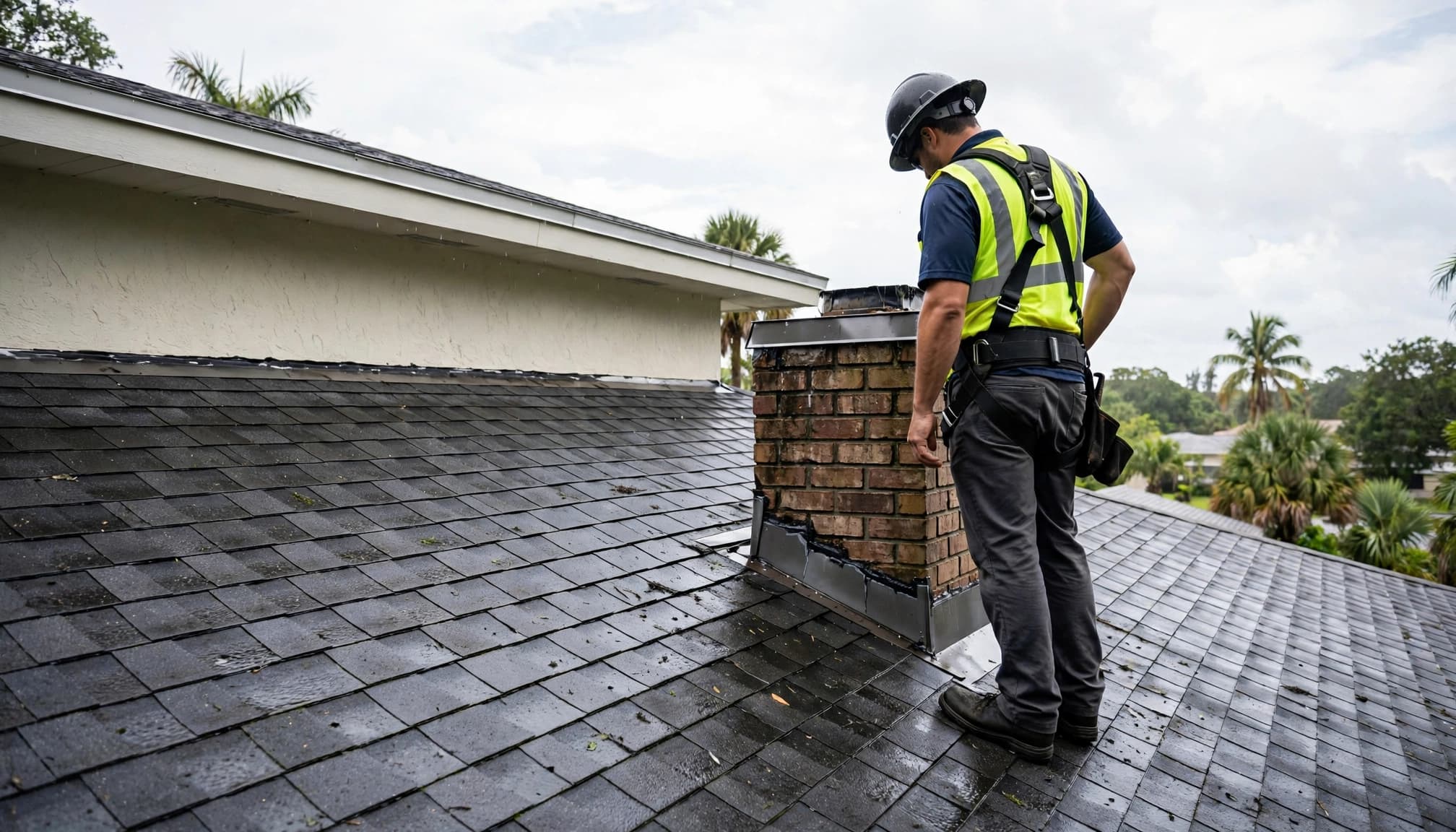
Check the whole roof-to-chimney connection
A roofer can assess the visible flashing, nearby roofing, underlayment where accessible, and signs of weather damage. If the chimney itself shows deterioration, a qualified chimney professional may need to assess its masonry, crown, or other components.
Cutting Edge Homes & Renovations offers roof inspection services in Southwest Florida that assess roof condition and potential leaks. Tell the inspector when the problem began, whether it followed a storm, and which rooms show moisture.
Ask what the proposed work will address
Before approving work, ask which defect the contractor found and whether the repair includes the adjacent roofing. Photos of accessible conditions can make the recommendation easier to understand.
Also ask how the repaired area will shed water and whether any concealed damage needs further evaluation. If the source remains uncertain, an inspection should say so rather than present a guess as a confirmed cause.
Chimney flashing repair options depend on the findings
A flashing leak doesn't automatically require a new roof, but a small surface patch isn't always enough. The sound repair depends on what the inspection finds and how much of the surrounding assembly is affected.
Localized repair may suit a limited defect
If a professional finds an isolated issue and the neighboring materials are sound, localized work may be appropriate. That could involve correcting a flashing connection and restoring roofing disturbed to reach it.
Sealant has a role at joints designed to use it. However, applying it over an unidentified leak can hide the entry point while water continues to reach underlying materials. Ask how the proposed repair handles water through the full joint, rather than only at its visible edge.
Replacement may be needed where layers have failed
If flashing was installed incorrectly, has extensive damage, or can't be repaired without removing surrounding materials, a contractor may recommend replacing the affected assembly. The work should account for the roof covering, flashing, and underlayment as a connected system.
Cutting Edge Homes & Renovations provides residential roof repair in Fort Myers, including work involving damaged flashing and roof leaks. Request a written scope that identifies what will be removed, replaced, and checked before the job is complete.
A broader roof project changes the decision
An aging roof or widespread storm damage may make an isolated chimney repair less practical. In that situation, discuss how the chimney detail would be handled as part of the larger job. The inspector's findings should guide the choice, rather than the age of one stain.
Repair costs vary with access, roof material, chimney condition, and the amount of concealed damage. A site-specific assessment is more useful than a price given before anyone examines the joint.
What to do while the leak is active
First, protect belongings below the wet area and document visible damage. If water is close to a light fixture, outlet, or electrical equipment, keep clear and seek appropriate professional help. Don't open wet ceiling material or climb onto the roof during a storm.
Request temporary protection when needed
If storm damage has left the roof open to more rain, ask a roofing professional whether temporary protection is appropriate. Emergency roof tarping can help limit further intrusion while permanent work is arranged.
A tarp doesn't repair chimney flashing. Its placement also depends on the roof's condition, so avoid improvising one around an active leak. Arrange a follow-up inspection and a permanent repair plan.
Keep a record without guessing at the cause
Photograph stains, note the date and weather, and save the contractor's findings. If you plan to contact your insurer, ask what documentation it needs before discarding damaged materials.
These records help separate new moisture from old marks. They also give the repair team a clearer picture when a leak doesn't appear during the appointment.
Preventing trouble during roof work
A roof replacement or new-home build offers access to details that are harder to see later. The chimney joint deserves attention while the surrounding materials are exposed.
Review the water-shedding sequence
Ask how the roofing, underlayment, and chimney flashing will overlap so water moves outward and downhill. The principle resembles other exterior flashing details: upper layers should direct water onto lower layers, not behind them. The installation method must still match the actual roof and chimney assembly.
For a larger project, roof installation with flashing and underlayment should be discussed as part of the complete roofing system. Ask the contractor to explain the chimney detail before it disappears beneath finished materials.
Document the finished joint
During a remodel or roof replacement, request photos of accessible flashing stages and keep them with your project records. Bring up any concern about damaged roofing or an unfinished chimney joint before the crew leaves.
For existing homes, look over the roof from the ground after major storms. If you see damage or notice a new stain, arrange an inspection rather than waiting for the next heavy rain.
Key takeaways
- A stain near the chimney suggests a water-entry problem, but it doesn't confirm a flashing failure.
- Fort Myers rain and storm exposure make sound roof-to-chimney details especially important.
- A qualified inspection should consider the chimney, flashing, and surrounding roof together.
- Repairs range from localized work to replacement of affected layers. Temporary protection only buys time.
Frequently asked questions
Can chimney flashing leak only during heavy rain?
Yes, a leak may appear only under certain rain or wind conditions. That pattern helps an inspector investigate, but it doesn't establish that flashing is the source. Share dates, weather conditions, and photographs of any new stains.
Will caulk fix a leak around the chimney?
Sealant can support a properly designed joint, but a surface application won't correct failed overlaps or damaged roofing beneath it. Have a professional identify the entry point before treating a visible gap as the whole problem.
Should a roofer or chimney professional inspect it?
Start with a qualified roofer when the concern involves the roof-to-chimney joint or nearby roofing. If the inspection points to the chimney structure itself, a qualified chimney professional should assess that portion. Some leaks require both trades.
Does leaking flashing mean I need a new roof?
No single stain establishes that need. A localized repair may be enough when surrounding materials are sound. If damage extends across the roof or the existing assembly can't be repaired reliably, ask for a comparison of repair and replacement scopes.
The right repair starts with the right source
A stain that comes and goes with Fort Myers rain deserves attention, even when the ceiling dries between storms. Confirm the water's entry point before choosing a flashing repair.
Once the chimney and surrounding roof have been assessed together, you can address the damaged materials without relying on a surface patch or replacing more than the findings support.