Fort Myers pet-friendly custom homes: Features to Plan Early
Explore Our Services
Contact Us Today!
(239) 322-9295
A beautiful Fort Myers home can become frustrating when wet paws, shedding, and pet supplies have no practical place to go. The right layout handles those daily problems without making the house feel like a kennel.
Pet-friendly custom homes give you time to plan for animals before slabs, walls, cabinets, and outdoor surfaces are fixed. That early planning matters in Southwest Florida, where heat, rain, screened lanais, pools, and sandy yards affect how pets use the property. Start with daily routines, then build the details around them.
Why pet-friendly custom homes need a routine-based floor plan
When you design around your pets' movement, small decisions become easier. Watch where dogs enter after walks, where cats prefer to settle, and where food, litter, leashes, and towels tend to collect. Those observations should influence room connections before the floor plan is finalized.
A side entry near the laundry room can create a cleaner arrival path. Add a durable landing area, a utility sink or hand shower, and closed storage for towels and grooming supplies. If the main entrance is the daily route, a built-in bench and nearby cabinet can keep leashes and shoes contained.
A wide hallway also helps larger dogs move without bumping furniture. Clear sightlines make pet gates easier to position, while a door between the living area and bedroom can offer more control than a gate alone. Consider these details alongside furniture placement, not after the rooms are complete.
Give pets a calm place to settle
Dogs often benefit from a quiet resting area near the household without sitting in the middle of foot traffic. A crate niche in a mudroom, laundry room, or home office can keep the crate off the floor and leave enough room for cleaning.
Cats may need a separate solution. A high perch near a window, a quiet feeding area, or a vented litter cabinet can make the home more comfortable. Keep litter away from food, door swings, and loud equipment. The cabinet should have service access, adequate airflow, and enough room for the actual litter box you plan to use.
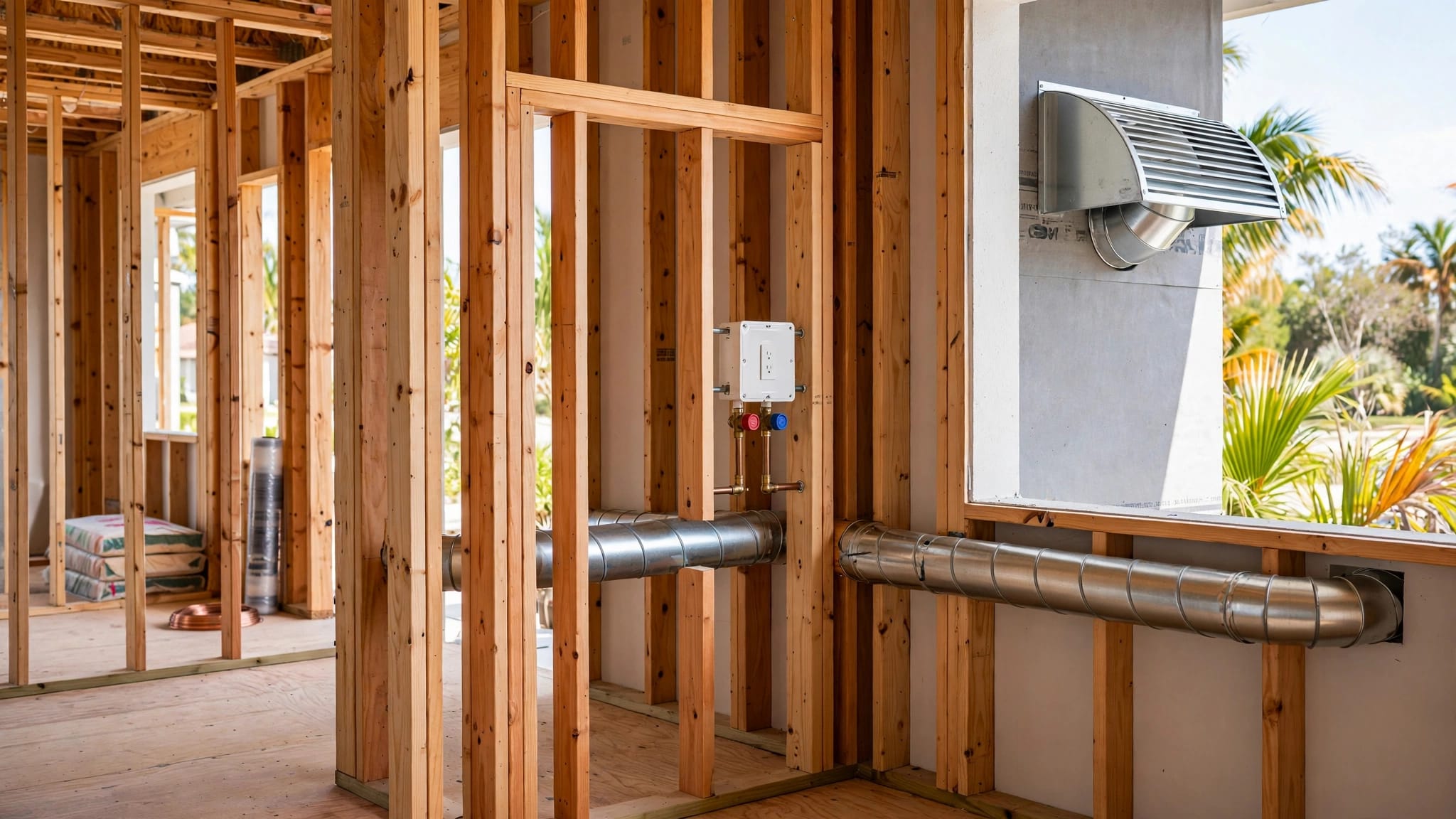
If a feature needs water, power, drainage, or structural framing, decide on it before the walls close.
Choose Fort Myers finishes that handle paws, water, and sand
Flooring takes daily abuse in a pet-friendly home. Wet paws, tracked sand, claws, food spills, and frequent cleaning can expose weak material choices quickly. Porcelain tile is a durable option for entryways, laundry rooms, kitchens, and lanai transitions. Luxury vinyl plank can also work well when you select a product rated for the moisture and traffic in that area.
High-gloss flooring may show scratches and paw marks more clearly. Very smooth surfaces can also feel uncomfortable for older pets or animals with limited traction. Ask to see large flooring samples in natural light, then consider how the color, texture, and grout pattern will look beside your cabinets and furniture.
A continuous floor through the main living areas can reduce thresholds where dirt gathers. In wet zones, use properly installed waterproofing and transitions that don't create a raised edge. The goal is a finish that looks intentional while allowing quick cleanup after a rainy walk.

Photo by Impact Dog Crates
Walls and trim deserve attention, too. Washable paint in a practical sheen can make marks easier to remove. Semi-gloss trim often handles wiping better than delicate wood finishes, while rounded or simple baseboards collect less dust than ornate profiles.
Cabinet design can hide pet supplies without sacrificing style. Use a lower drawer for leashes and medications, a tall cabinet for food, and a pull-out bin for towels. Closed storage keeps bags and treats away from curious animals and gives the room a cleaner appearance.
Build the pet zone before plumbing and electrical work
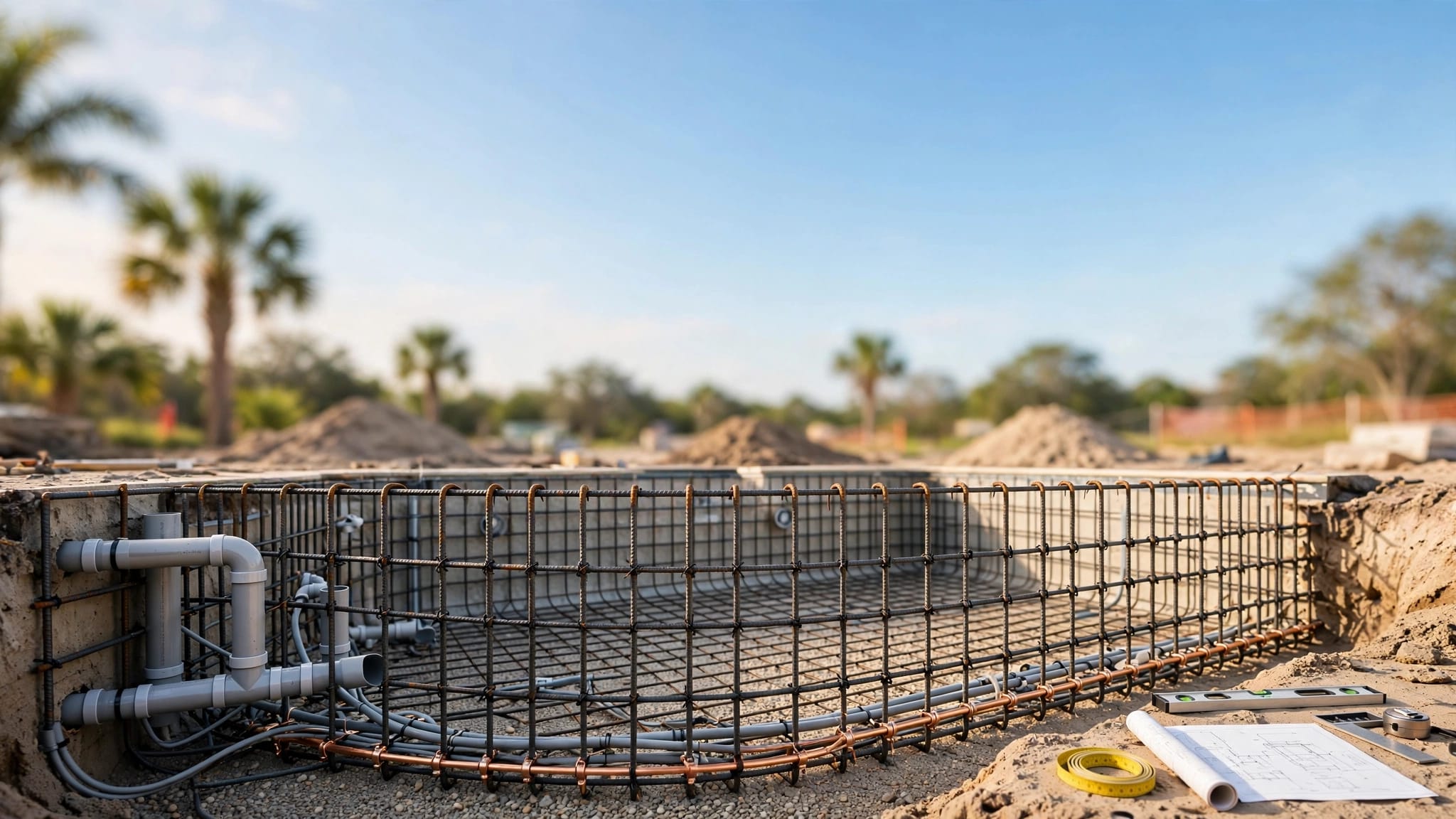
A dedicated wash station is one of the most useful pet-friendly custom home features to plan early. Adding a drain or water supply after concrete, tile, and drywall are complete can lead to demolition and patching.
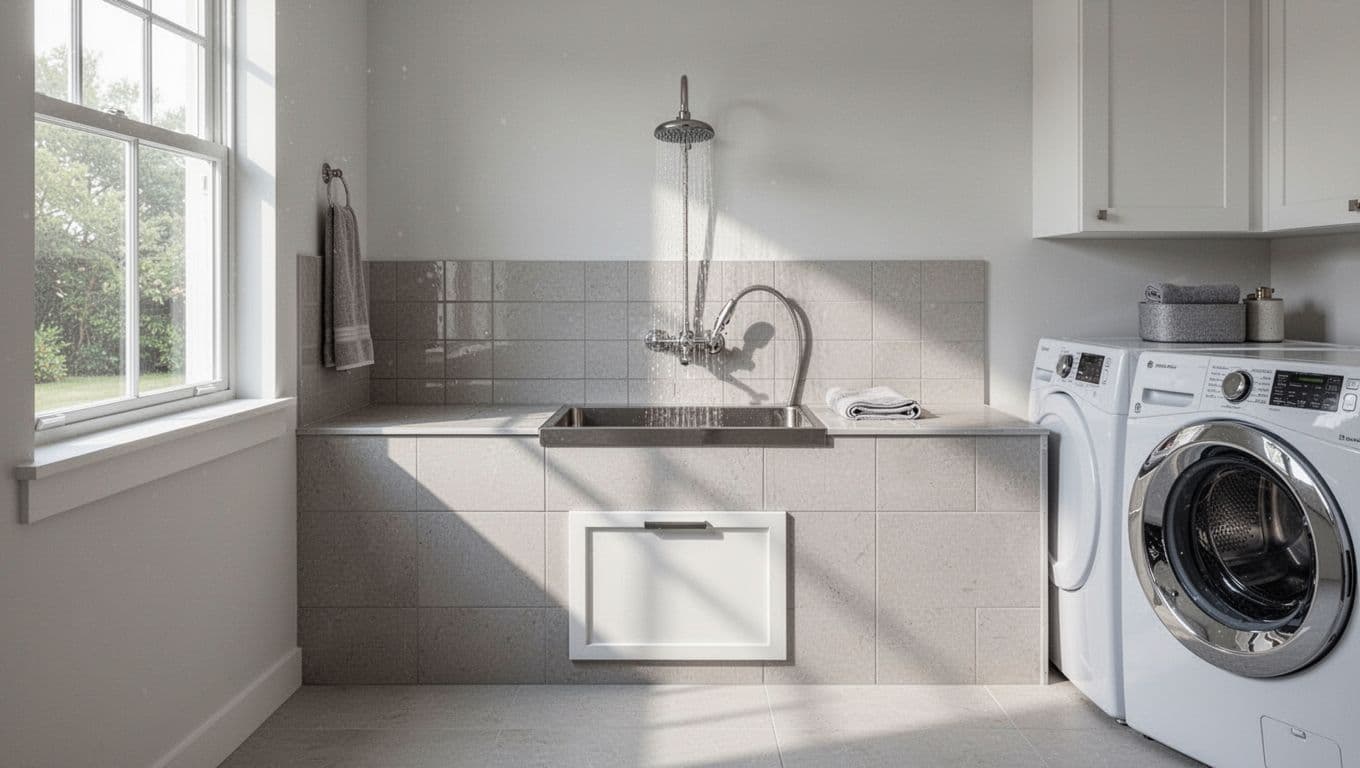
A compact station can fit inside a laundry room, mudroom, or oversized garage utility area. Plan for a handheld sprayer, hot and cold water, a nearby drain, waterproof wall surfaces, and slip-resistant tile. A raised basin may reduce bending for some homeowners, while a lower wash area may work better for larger dogs.
Storage should sit within reach but remain secure. Shelves or cabinets can hold shampoo, towels, brushes, and cleaning products. Keep electrical outlets away from splash areas, and ask the builder or electrician to place them according to the room's wet-area layout.
The same zone can support everyday feeding and storage. A shallow drawer for bowls, a sealed food container, and a washable mat can keep the kitchen less cluttered. If you plan to use an automatic feeder or water fountain, include outlet locations before cabinets are ordered.
Cats need a different kind of planning. A litter area may fit in a laundry room or ventilated utility cabinet, but it should not be buried in a space with no airflow or difficult access. Leave enough clearance to remove the box, clean the floor, and replace supplies without moving other fixtures.
A pet door deserves early attention as well. Decide whether it will connect the interior to a screened lanai, an enclosed patio, or a fenced yard. The wall, door, screen enclosure, and security plan all need to work together.
Make the lanai, yard, and pool area easier to manage
Southwest Florida homes often make outdoor living part of the floor plan. For pet owners, the screened lanai can become a comfortable transition area between the house and yard, but it needs more than a door and a patch of tile.
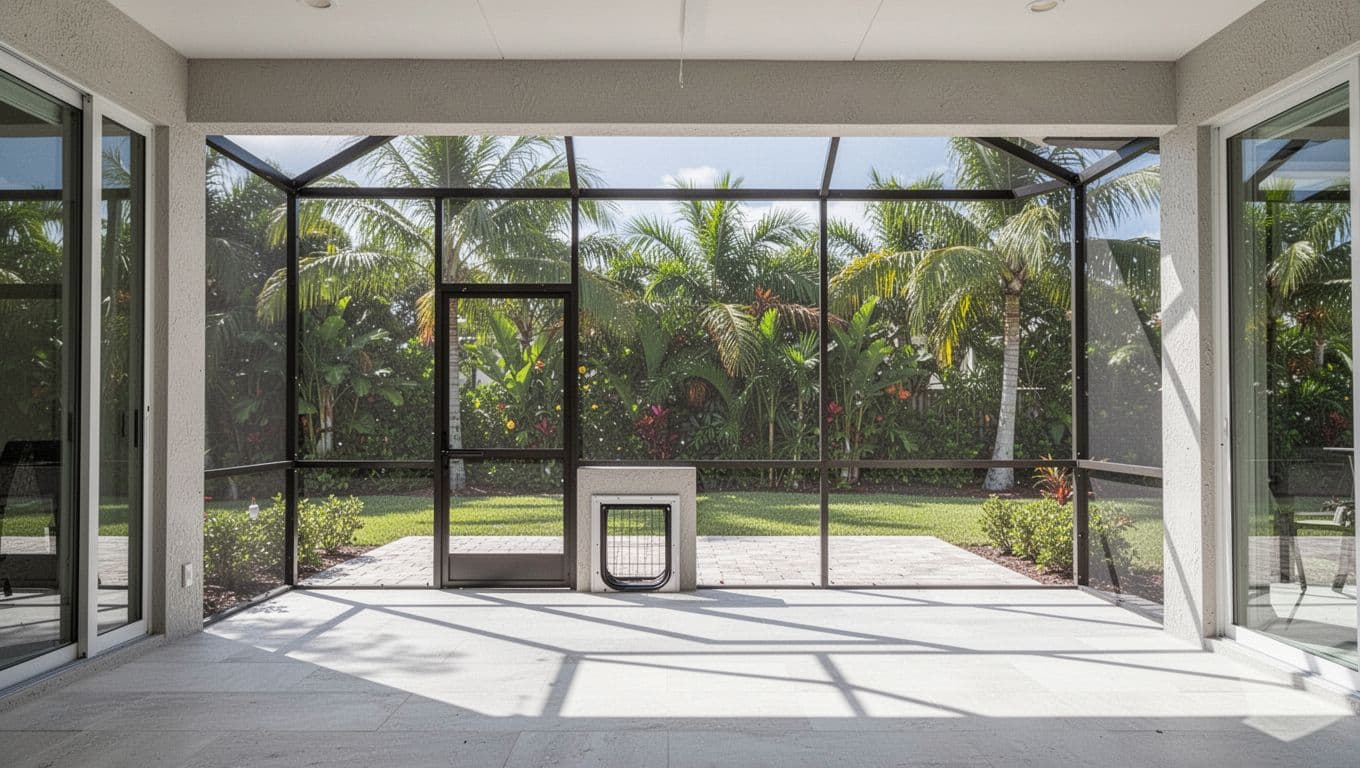
Place the pet door where it won't conflict with furniture, pool equipment, or the primary walking path. A lockable model with a weather seal can give you more control, especially when pets need to stay indoors. Ask how the door will be secured when the home is closed for severe weather.
Screen doors and enclosure panels should receive the same attention as the pet door. Look for a layout that lets you inspect lower sections, clean them, and reach the latch without squeezing between furniture. A shaded corner, water station, and non-slip surface can make the lanai more useful during warm weather.
If an inground pool is part of the project, decide early how pets will move around it. Pool steps or a broad exit area may help a dog leave the water, but the pool designer should coordinate that detail with the overall safety plan. Gates, barriers, alarms, and access controls must follow current local requirements and the products selected for the property.
Yard planning also affects daily maintenance. Set fence lines before planting beds, irrigation, and hardscape are installed. Include a self-closing gate, a hose connection near the pet route, and a surface that drains well after rain. Avoid tight corners where a gate, planter, or pool equipment enclosure could create a difficult space to clean.
Fort Myers heat adds another consideration. Provide shade near outdoor routes and avoid making pets cross large areas of hot paving to reach water or the door. A covered walkway, planted shade, or screened sitting area can improve comfort without changing the home's overall style.
Set the pet budget before construction begins
Early planning protects more than convenience. It also helps you see the full cost of each feature before selections are locked. A pet wash station may affect plumbing, drainage, waterproofing, tile, cabinetry, and electrical work. A pet door may affect an exterior door, wall framing, screen panels, security, and weather protection.
Before construction, review these items with the design and building team:
- Mark the daily pet route on the floor plan, including door swings and furniture clearances.
- Confirm locations for water, drainage, outlets, storage, crates, litter boxes, and feeding stations.
- Coordinate the lanai, pool, fence, gates, hardscape, and yard drainage as one outdoor plan.
- Separate must-have features from upgrades that can wait until after move-in.
A written allowance can help you compare choices, but ask what each allowance includes. On a cost-plus project, review how material invoices, subcontractor costs, allowances, and change orders will appear in the project records. An experienced Southwest Florida custom home builder can help coordinate these decisions while plans are still flexible.
Bring the actual dimensions of your crate, litter box, food containers, and preferred storage bins to the design meeting. A few minutes with a tape measure can prevent cabinets that are too shallow, doors that open into a pet station, or a niche that cannot fit the equipment you own.
Give your pets a better home by planning before the build
The best pet-friendly custom homes begin with ordinary routines. Muddy paws should have a logical path, supplies should have assigned storage, and outdoor access should work with the lanai, yard, and pool plan.
Choosing durable finishes and reserving plumbing, electrical, and drainage early can prevent expensive rework later. With those details settled before construction, your Fort Myers home can stay attractive, comfortable, and easier to maintain for the people and pets who use it every day.