Why a Gunite Pool's Skimmer Weir Door Gets Stuck
Explore Our Services
Contact Us Today!
(239) 322-9295
A pool skimmer weir door that stays in one position deserves a closer look, especially if floating debris is collecting at the waterline. Start with a visual inspection and note how the door behaves when the pump is running and when it's off.
The door is only one part of the skimmer system. Water level, basket condition, and circulation can also affect how well the pool collects debris, so it's useful to observe those separately before arranging service.
What a Pool Skimmer Weir Door Does
The weir door is the flap at the opening between the pool and the skimmer. As the pump draws water through the skimmer, surface water passes over the door and into the basket, where larger debris can be collected.
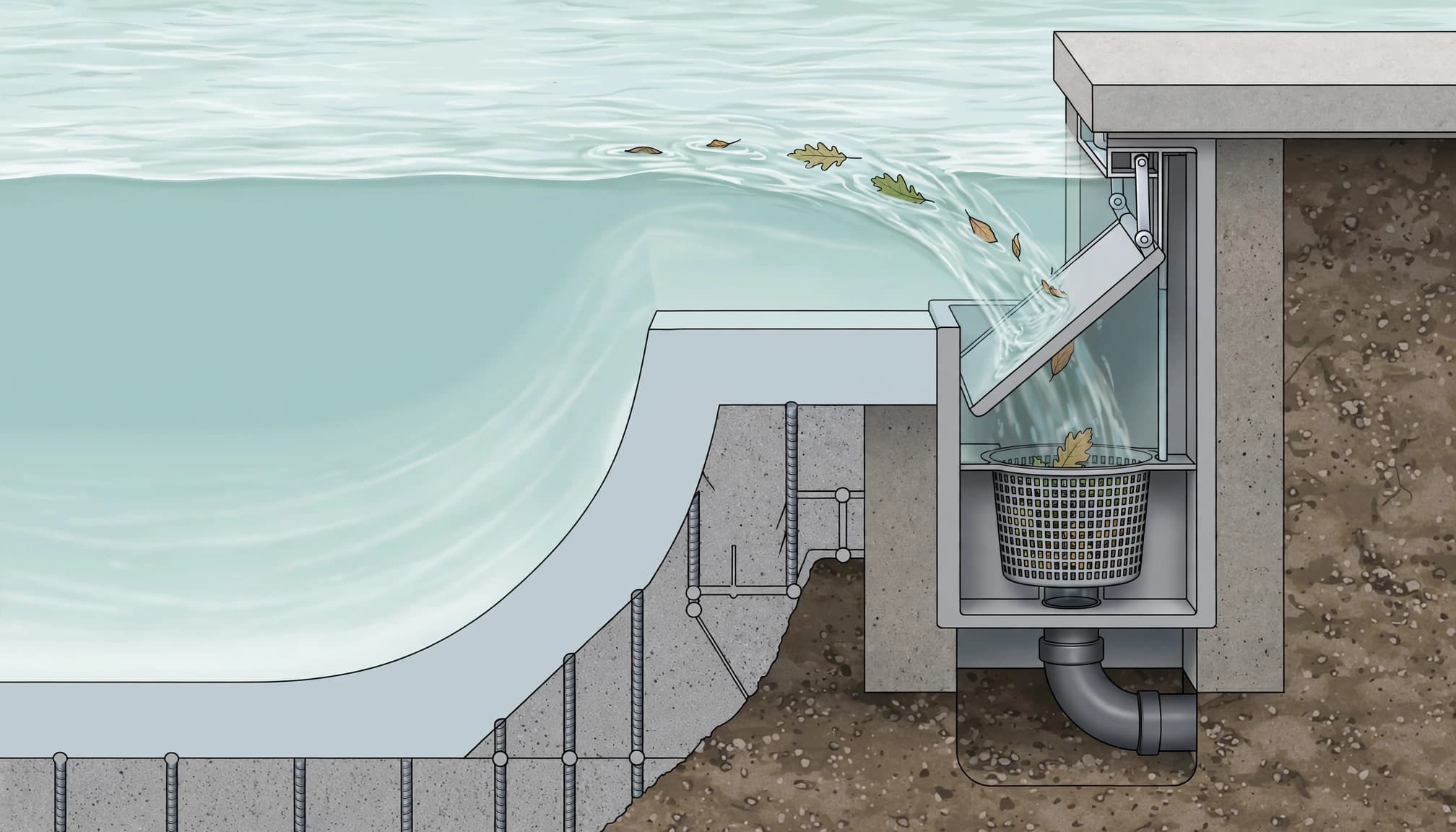
The flap moves with the water rather than remaining in one fixed position. When the pump stops, the door can also help keep collected debris from drifting back into the pool.
A gunite pool has a concrete shell, but the skimmer is a separate fitting built into the pool wall. That distinction matters when describing a problem: a door that doesn't move normally is a reason to inspect the skimmer, not evidence by itself of damage to the gunite shell.
The door's position can change with the pump's operating cycle. Watch it for a short time under normal conditions before deciding that one position indicates a problem.
Signs the Weir Door Needs Attention
A door that's consistently motionless is easier to assess when you record its position and the conditions around it. Look at the opening from the pool deck and compare what you see during ordinary filtration with what you see after the pump stops.
The door stays in one position
Note whether the door remains upright, lies down in the opening, or appears tilted to one side. Also look for an edge that appears to touch the side of the skimmer opening.
You don't need to force the flap to make these observations. If its position looks unusual, a photo taken straight across the opening can help a pool professional see what you're describing.
Debris remains on the surface
Leaves or insects left on the water can point to a broader circulation concern. On their own, however, they don't establish that the weir door is stuck.
Notice where floating material gathers. It might remain near the skimmer, collect in a corner, or move toward the opening without entering it. Wind, return-jet direction, and pool features can all affect that path.
A useful observation includes both details: what the flap is doing and where the surface debris ends up.
How to Inspect the Skimmer Safely
Begin with the pump off, and keep it off during a close visual inspection. If the system uses an automatic schedule or remote control, prevent it from starting while you're near the skimmer.
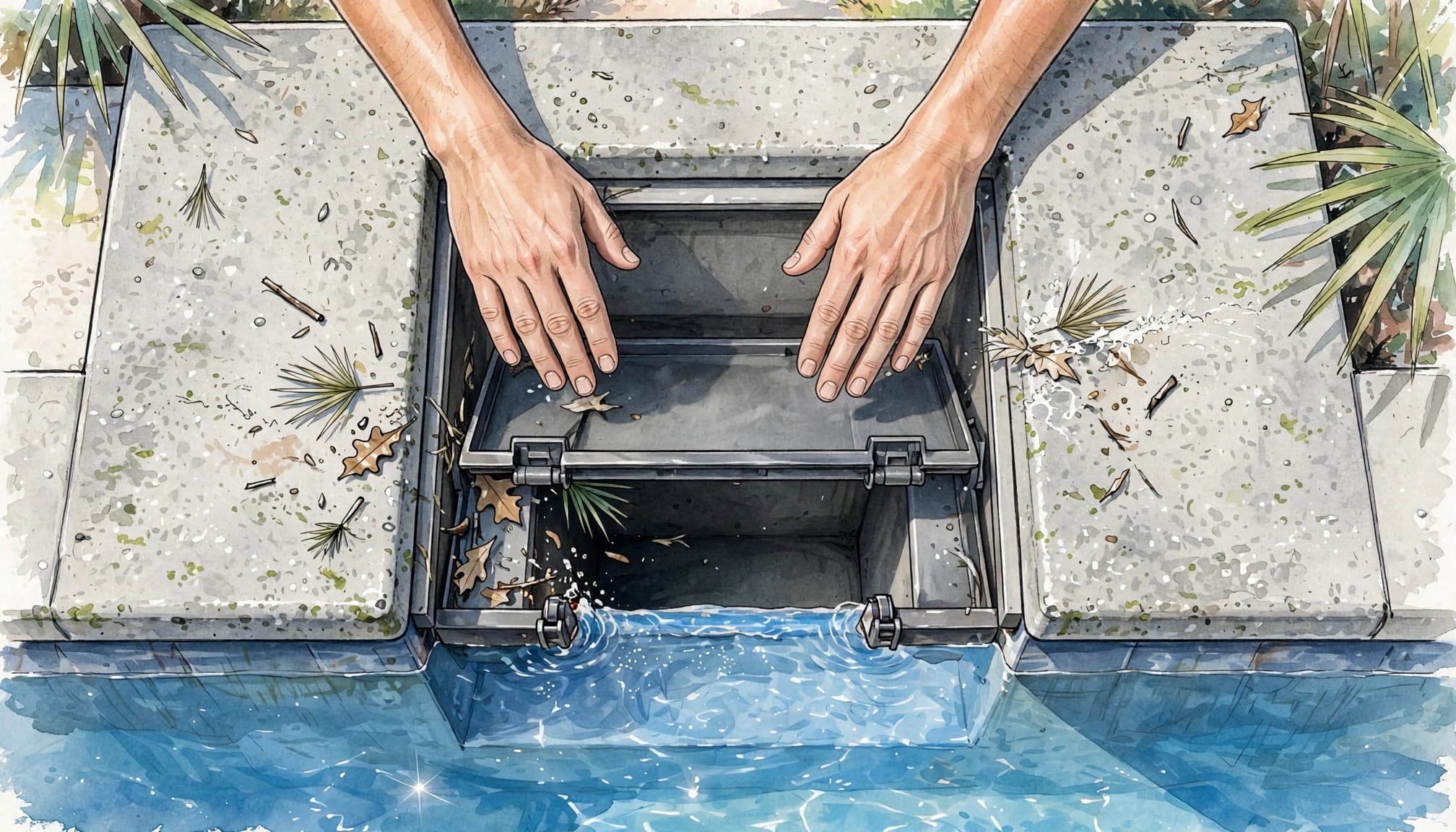
Don't put your hand into a suction opening or remove a drain cover. Suction fittings are safety components, and tampering with them can create an entrapment hazard.
Look at the door and opening
From a safe position at the deck, look for visible leaves, surface deposits, cracks, chipped edges, or an uneven-looking door. If you can see the hinge area, note its condition without forcing the flap or reaching into the suction plumbing.
Keep your observations separate. For example, record that you see debris near the opening and that the door appears tilted, rather than assuming one observation explains the other.
A flashlight can help you see into shaded areas. You can also take photos before moving anything, which gives a service professional a record of the original position.
Look inside the skimmer basket
With the pump off, remove the accessible skimmer lid and look at the basket. A basket full of leaves is useful information because restricted flow can affect pool operation.
Make sure you can safely reach the lid from the deck. Furniture, planters, and landscaping should leave enough room to lift the lid and handle the basket without leaning over the pool.
Compare the Door With the Water Level
The waterline is an important part of any skimmer observation. A skimmer needs enough water at its opening to draw from the pool without pulling air.
Watch for a low waterline
Evaporation, splashing, and backwashing can lower the pool level. If the water is below the pool's normal operating range, bring it back to that range before assessing ordinary skimmer performance.
A low waterline can also be relevant when the pump struggles to maintain prime. If the level repeatedly drops, treat that as a separate water-loss concern rather than assuming the pump is responsible.
Our guide to pool pump priming problems covers other observations that can help narrow down a circulation issue.
Note changes after heavy rain
Southwest Florida rain can raise the waterline, sometimes substantially after a storm. Compare the level with the pool's normal operating range and record whether the skimmer's performance changes as the level returns to normal.
A high or low waterline is useful context for a service visit. It doesn't, by itself, identify a fault in the weir door. Photos taken at the waterline can help show the conditions you observed.
Check Basket Condition and Overall Flow
The skimmer basket collects larger material before it travels farther into the circulation system. When the basket is loaded with leaves, grass clippings, or other debris, water movement through the system can be restricted.
Pay attention after wind and storms
Nearby trees, landscaping, and seasonal shedding can add to the material that reaches the pool. A screen enclosure reduces some larger debris, but it doesn't eliminate the need to inspect the basket.
With the pump off, empty and rinse an accessible basket as part of normal pool care. Return it and secure the lid before restarting the equipment. Don't run the system with the basket or lid removed.
Separate surface flow from pump symptoms
A pool can have more than one circulation symptom at the same time. For example, you may notice floating leaves while also hearing the pump struggle or seeing air in the system.
Record when each symptom appears. A problem during ordinary filtration is useful to distinguish from one that appears only when a spa, cleaner, or water feature is operating. Those details give a pool professional a better starting point than a description of the door alone.
Don't open the filter while it's under pressure. Leave inspection of closed equipment and suction plumbing to a qualified professional.
Consider Where Surface Debris Travels
A gunite pool's custom shape affects how water moves around the backyard. Benches, sun shelves, spa spillways, and curves can interrupt the surface current or create places where debris gathers.
Return jets also affect that current. Their direction should help move surface water toward the skimmers, while the pool's geometry and surrounding structures influence the final pattern.
Wind adds another variable. A privacy wall, house, screen cage, or mature landscaping can redirect airflow around the pool. After a storm, observe whether leaves follow the usual route or collect somewhere different.
Our guide to pool fitting placement and circulation explains how skimmers and returns work together in a pool layout.
Debris collecting in one corner tells you where the surface current is weak. It doesn't identify a weir-door fault on its own.
If the same area repeatedly collects leaves, include that detail when discussing the pool with a professional. The circulation pattern may need its own review.
When to Call a Pool Professional
A service visit is a sensible next step when the door continues to sit unusually, you see damage around the opening, or the skimmer isn't performing normally after basic pool care.
Share what you observed
Give the professional a clear account of the door's position, the water level, and the pump's operating state. Mention whether the symptoms occur during routine filtration or only with a particular feature running.
Photos can help, especially if conditions change before the visit. Include a view of the whole skimmer opening and a wider view showing the waterline.
Also mention any persistent air in the system, repeated loss of prime, or water loss. Those symptoms may call for a broader look at the equipment and plumbing.
Include changes around the skimmer
Tell the professional about recent resurfacing, tile work, deck changes, or other work near the pool edge. Changes in the surrounding area provide context for inspecting the skimmer and its opening.
Cracks, loose materials, or separation around a fitting deserve attention as observations in their own right. A professional can assess the area rather than relying on the appearance of the door to judge the condition of the shell.
For aging pools that need a broader update, our Southwest Florida pool renovation services can address more than the skimmer alone.
Keep the Rest of the Pool in View
A working skimmer is one part of a pool-care routine. Brushing the walls, floor, steps, and ledges helps address material that settles below the surface, where a skimmer can't collect it.
Care for the finish and water
Follow the care instructions for your pool's interior finish, and test and adjust the water according to the pool's needs. Water chemistry and surface materials both affect how the finish wears.
A cleaner can help collect debris, but it won't resolve an underlying rough, stained, or discolored finish. Those conditions deserve a separate assessment. Our guide to gunite pool resurfacing explains the difference between finish wear and concerns that may involve the structure beneath it.
Keep access open
Leave a clear route to the skimmer lid and equipment area. Easy access makes it simpler to observe the opening, empty the basket, and describe changes during a service call.
That access matters after backyard improvements, too. Pavers, planters, outdoor furniture, and landscaping should leave room for routine pool care rather than covering the lid.
Start With What You Can See
A weir door that stays in one position is worth documenting alongside the water level and the pool's circulation symptoms. Those observations give you a clearer picture of the skimmer without guessing at a repair.
Keep the pump off for close inspection and leave suction fittings alone. When the door or surrounding opening needs further attention, a pool professional can assess the specific conditions at your pool.