Naples Pool Resurfacing for Aging Gunite Shells
Explore Our Services
Contact Us Today!
(239) 322-9295
An aging gunite pool can look worn long before its concrete shell fails. Rough plaster, stains, exposed aggregate, and chipped steps often point to a tired finish, while moving cracks and recurring water loss call for more than a cosmetic refresh.
For Naples homeowners, Naples pool resurfacing can restore the pool's appearance and comfort. However, the new finish must match the shell's condition, your budget, and your maintenance habits. The first decision is whether you need a new surface or a professional diagnosis of the structure underneath.
How to Tell Whether Your Gunite Pool Needs Resurfacing
A gunite pool has two main layers. The gunite or shotcrete forms the structural shell. Plaster, quartz, or pebble aggregate covers that shell and creates the waterproof interior surface.
That distinction matters. Resurfacing replaces the worn interior finish, but it doesn't correct a shell that has shifted, cracked, or developed a leak. A qualified pool professional should inspect the pool before anyone gives you a final resurfacing recommendation.
Signs that usually point to surface wear
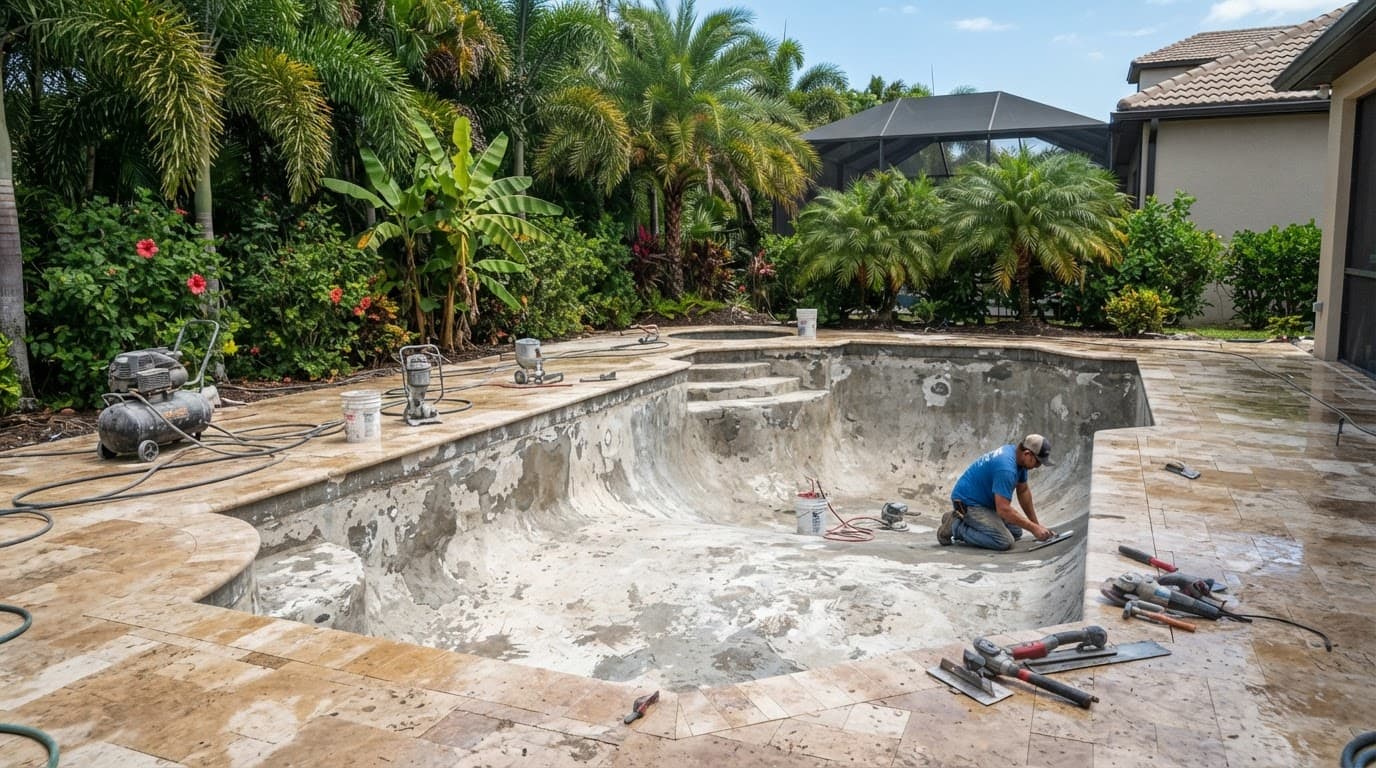
Normal finish wear often appears gradually. You may notice rough areas under your feet, discoloration that doesn't respond to cleaning, or small stains around the waterline. The finish may also look thin, faded, or uneven across the floor and walls.
Small chips around steps, benches, and returns can develop after years of use. If the shell remains stable and the damage stays limited to the finish, a complete Naples pool resurfacing project may solve the problem.
Many gunite pools reach a resurfacing point in roughly seven to ten years , but that range is only a planning guide. Water chemistry, pool usage, maintenance, sunlight, installation quality, and the selected finish all affect service life.
Signs that require a professional inspection
Some symptoms suggest a deeper issue. Have the pool evaluated before selecting a finish if you notice:
- Cracks that widen, run through several areas, or reappear after patching.
- A hollow sound beneath the finish, which can indicate delamination or loss of bond.
- Water loss that exceeds normal evaporation and splash-out.
- Rust-colored stains that may come from rebar corrosion.
- Separation around fittings, skimmers, drains, or expansion areas.
- Uneven areas that suggest shell movement or settlement.
A leak detection test, visual shell inspection, dye testing, or pressure testing may be appropriate depending on the symptoms. The contractor should explain what the inspection found and separate structural repairs from finish work in the written estimate.
A new finish can make a damaged pool look better for a short time, but it won't repair a leaking pipe or a moving gunite shell.
Naples Pool Resurfacing Options for Gunite Pools
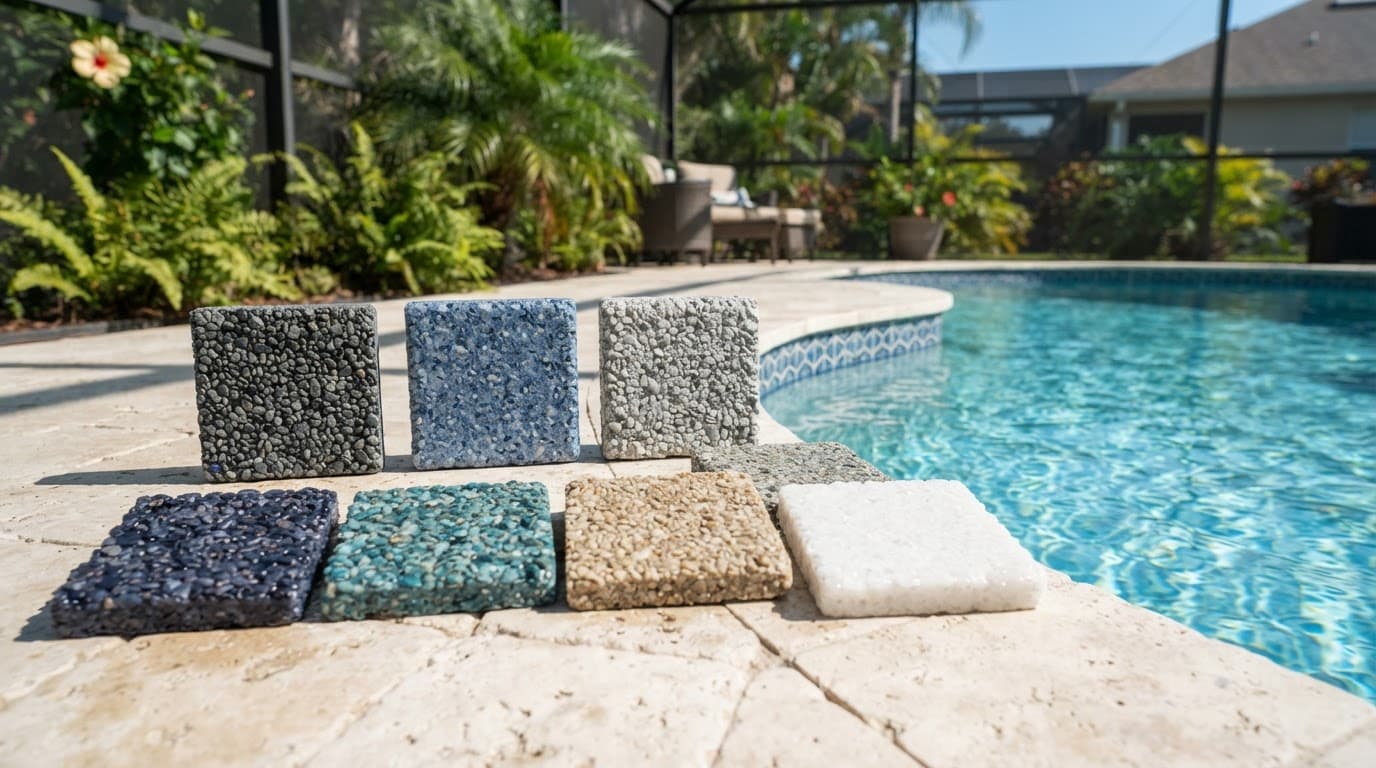
The right surface depends on the look you want, the way you use the pool, and how closely you maintain the water. Each material has a different texture, color range, and tolerance for wear.
| Finish | Appearance and feel | Good fit for | Main consideration |
|---|---|---|---|
| White marble plaster | Smooth, bright, and traditional | Homeowners who want a clean classic pool | Shows staining and chemistry problems more easily |
| Quartz aggregate | Smooth with added color and small mineral pieces | Pools needing more visual depth and surface durability | Costs more than basic plaster |
| Pebble aggregate | Textured, natural, and highly varied | Homeowners who prefer a resort-style appearance | Texture can feel rougher under bare feet |
| Tile accents | Decorative bands, steps, or waterline details | Adding color or detail during a larger renovation | Tile usually complements, rather than replaces, the interior finish |
White plaster
Traditional white plaster remains a practical choice for many residential pools. It creates a bright interior and can make the water appear light blue in full sun. The smooth surface also feels comfortable on bare feet.
The tradeoff is maintenance sensitivity. Poor pH, alkalinity, sanitizer, or calcium balance can contribute to staining, scaling, etching, and early deterioration. White plaster also makes discoloration easier to see, so it works best for homeowners who stay consistent with testing and chemical adjustments.
Quartz aggregate
Quartz finishes combine plaster with small quartz particles. They offer more color variation and visual depth than plain white plaster while keeping a relatively smooth feel.
This option fits a homeowner who wants added durability and a more customized appearance without choosing a heavily textured pebble finish. Color selection still matters. Darker finishes can show mineral deposits, discoloration, or uneven application more clearly than lighter colors.
Pebble aggregate
Pebble finishes use small natural or manufactured aggregate pieces set into a cement-based surface. They create a textured appearance that can resemble a natural lagoon or resort pool.
Pebble is often selected for its visual character and resistance to ordinary surface wear. However, the texture may feel less comfortable on feet than plaster or quartz. Proper installation and water care remain important because aggregate does not eliminate problems caused by unbalanced chemistry.
How Naples Conditions Affect Finish Life
Southwest Florida pools face intense sun, heavy rain, humidity, and long swimming seasons. Salt systems, traditional chlorine programs, pool heaters, and frequent use can each affect how a finish ages.
Water chemistry has one of the largest effects. Low pH can etch cement-based surfaces. High calcium levels can create scale. Poorly controlled alkalinity can make pH harder to manage, while insufficient sanitizer allows organic staining and algae growth. Saltwater systems also require regular testing, even though they reduce the need to add chlorine manually.
Rain creates another maintenance challenge. Heavy rainfall can dilute chemicals and introduce debris into the pool. The right response is regular testing and adjustment, not waiting until the water looks cloudy.
Usage matters as well. A pool used daily by a large family experiences more chemical demand and physical wear than a pool used occasionally. Sunscreen, body oils, debris, and cleaning equipment can all affect the surface over time.
Installation quality also affects results. The shell must be prepared correctly, repairs need compatible materials, and the finish requires an appropriate startup process. Ask who will perform the work, how the surface will be prepared, and what water-care instructions you'll receive after filling.
What a Professional Resurfacing Project Includes
A proper project begins with an evaluation, not a finish catalog. The contractor should document cracks, hollow areas, fittings, drains, steps, and visible plumbing concerns before draining the pool.
Draining requires care in Naples because groundwater conditions can create pressure beneath an empty pool. A pool should not be emptied casually, especially after heavy rain or when the water table is high. The contractor should plan water removal and confirm any local requirements before work begins.
The usual work sequence includes:
- The crew drains the pool and removes loose or damaged finish material.
- Workers clean and prepare the exposed surface, then repair approved cracks, voids, fittings, or other identified defects.
- The new plaster, quartz, or pebble finish is applied at the specified thickness and texture.
- The pool is filled according to the contractor's instructions.
- A startup process balances the water while the finish cures.
During startup, avoid adding chemicals based on guesswork. Follow the written instructions for brushing, testing, circulation, and the timing of salt-system or heater use. The first days can affect the final appearance of the finish.
Budget, Timing, and Choosing a Contractor
The cost of Naples pool resurfacing depends on pool size, access, surface condition, repairs, finish type, tile work, and water removal. As a rough Southwest Florida planning figure, a published Cape Coral guide places many gunite resurfacing projects around $5,000 to $15,000 , depending on the selected finish. Naples pricing may differ, so use that range only as an early budgeting reference.
A written estimate should separate:
- Drainage and preparation.
- Removal of the old finish.
- Crack, hollow-spot, plumbing, or structural repairs.
- The new finish and selected color.
- Tile, coping, or deck work.
- Filling, startup chemicals, and cleanup.
- Warranty terms and exclusions.
Ask whether the company has experience with aging gunite pools in Naples, who will inspect the shell, and what happens if additional damage appears after removal. Also confirm licensing, insurance, references, payment terms, and the expected schedule.
If you're comparing broader pool work or planning a backyard renovation, review the company's pool construction services alongside its resurfacing scope. A contractor who understands drainage, equipment, decking, and surrounding improvements can identify conflicts before work starts.
The pool may be unavailable for several days or longer, depending on preparation, repairs, weather, finish selection, and curing requirements. A rushed schedule can create problems, so prioritize a clear process over a promised completion date.
Conclusion
A worn gunite finish doesn't always mean the pool shell has failed. Roughness, stains, and widespread plaster wear may call for resurfacing, while cracks, leaks, hollow spots, and rebar stains require inspection before cosmetic work begins.
The best Naples pool resurfacing choice balances finish texture, appearance, water-care habits, and the condition of the shell. A detailed inspection and itemized proposal will help you restore the pool without covering up a problem that needs a different repair.