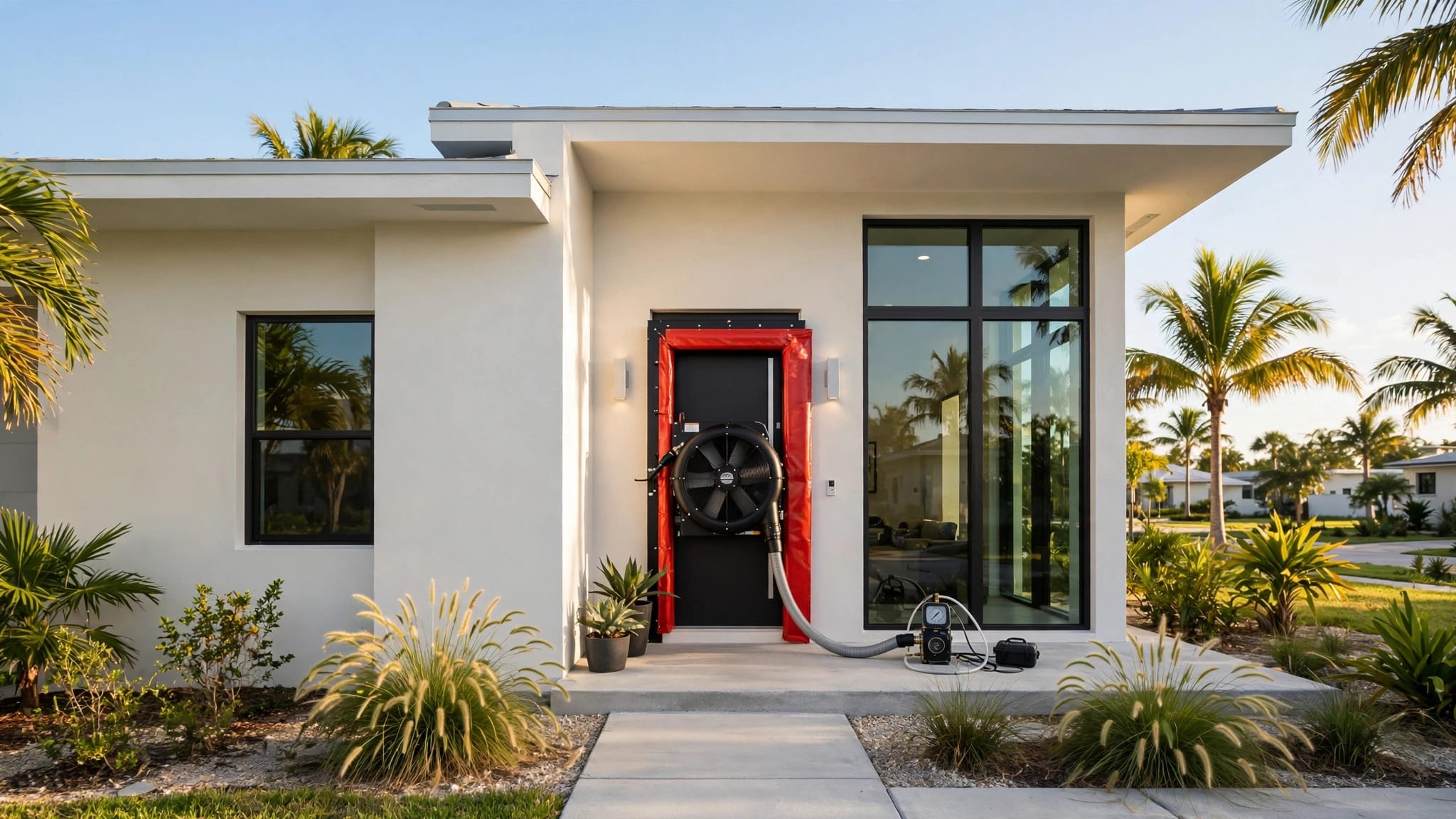
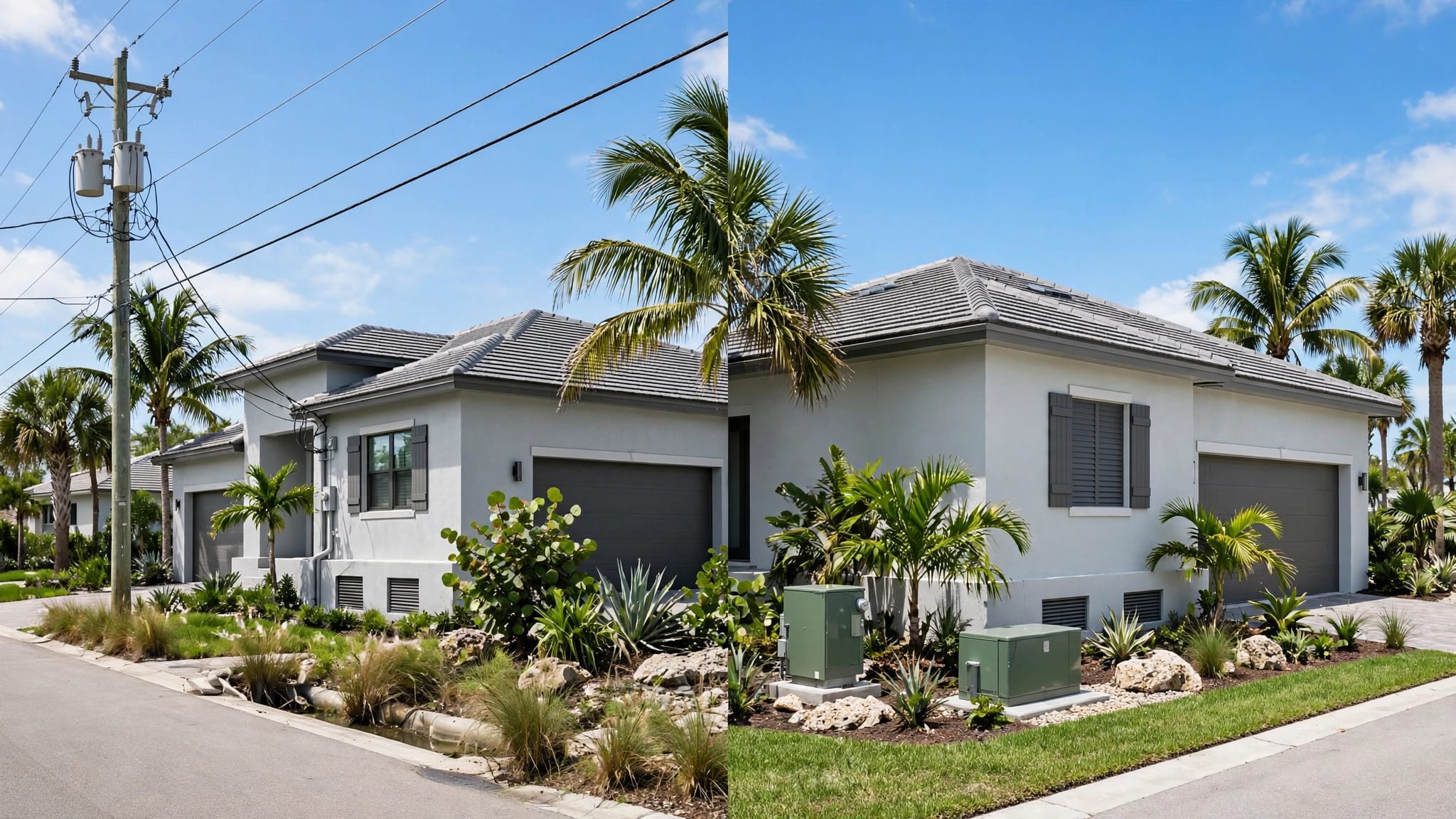
Can You Build a Gunite Pool in a Naples Flood Zone?
Explore Our Services
Contact Us Today!
(239) 322-9295
Yes, a gunite pool can be built in a Naples flood zone, provided the site and design meet the requirements that apply to the property. A flood-zone designation doesn't automatically prevent construction, but it can affect the permit review , site plan, engineering, and placement of equipment.
Your property's exact location matters more than its Naples mailing address. Before you settle on a pool design, start with the parcel's flood information and the local permitting process.
Key Takeaways
- A property inside the City of Naples follows a different pool-permit process from one in unincorporated Collier County.
- FEMA flood maps provide a starting point, but the pool plan must also account for elevations, setbacks, drainage, and site conditions.
- Groundwater can affect excavation and the forces on an empty pool shell, so the design should address the actual lot.
- Pool decks and landscaping can change runoff patterns, even when the pool itself fits within the property lines.
- Coastal permits, local building permits, and floodplain review address different requirements.
Start With the Property's Flood Zone and Jurisdiction
A Naples address doesn't always mean a property is inside Naples city limits. Some homes with Naples mailing addresses are in unincorporated Collier County, where the county handles local pool permitting.
That distinction affects the application and supporting documents. The current survey, parcel information, and FEMA flood map give the design team a starting point before the pool shape and deck are finalized.
What FEMA zones mean for a pool project
FEMA maps identify areas with different flood hazards. Zone AE generally identifies an area with a 1% annual chance of flooding. Zone VE also has that flood probability, with additional coastal wave hazards. Zone X covers areas outside the high-risk zones, though flooding can still occur there.
The map may also show a base flood elevation , or BFE. That's the estimated elevation of a flood with a 1% chance of occurring in any given year. It gives the design team useful context for evaluating the property and proposed improvements.
Why the survey matters
A survey shows the physical limits that a flood map doesn't fully describe. Property lines, easements, existing structures, and features near the water can all affect where a pool fits.
For a new home, the pool layout should work with the house's approved site plan. For an existing home, it must also account for foundations, utilities, and established drainage.
Collier County's Pool Permit Requirements
In unincorporated Collier County, the residential pool application checklist calls for a site plan, construction plans, engineered structural details, and a dimensioned pool design for the property.
The submission also includes hydraulic calculations and proposed pump information. Deck material, the pool-safety form, and the proposed barrier method are part of the package.
The county's checklist contains several site-specific conditions:
- When new impervious area exceeds 400 square feet, the site plan may need certification. When certification is required, the plan must meet the county's age and professional-signature requirements.
- For a property with a septic system, the checklist cites a minimum 5-foot pool-to-septic separation.
- A stormwater plan is required for lots with one- and two-family dwellings, subject to the exceptions in the checklist.
These details belong in the design process, before excavation. A pool shell may fit in the backyard while its deck, drainage, or proximity to a septic system requires a layout change.
City of Naples Pool Permits and Elevations
Inside city limits, the City of Naples private-pool application asks for the property's flood zone, actual setbacks, pool-pilings information, and heater information. It also requires a site plan and designer affidavits.
The application addresses the height of residential pools, spas, and decks outside the primary structure's building envelope. It states a maximum of 30 inches above the crown of the road, or 36 inches in the R1-15A zoning district, unless the improvement is within the building envelope.
Those height limits are separate from flood elevation information. Raising a deck may affect drainage and access, while the property's zoning and building envelope also affect the plan.
The City's construction handout describes an elevation certificate and spot survey process following slab placement. It also addresses pool safety and electrical requirements. These documents should be coordinated with the approved plans and the project's inspection sequence rather than treated as an afterthought.
Coastal Lots Can Need Additional Review
A home can meet a local pool setback and still need coastal approval. The City of Naples pool application states that projects west of the Coastal Construction Control Line require a Florida Department of Environmental Protection permit.
The Coastal Construction Control Line, often called the CCCL, is separate from the FEMA flood-zone designation. Coastal review can address construction and site disturbance near sensitive shoreline areas, including dunes and vegetation.
A state coastal permit doesn't replace the local building permit. Likewise, a local pool permit doesn't substitute for any coastal approval the project requires. On waterfront property, these reviews should be part of the pool layout discussion before the design is complete.
Engineering a Gunite Pool for the Site
Gunite is concrete applied by spraying it into place over reinforcing steel. It allows for custom shapes, but the finished shell still has to be designed for the soil, groundwater, and conditions around it.
Groundwater and excavation
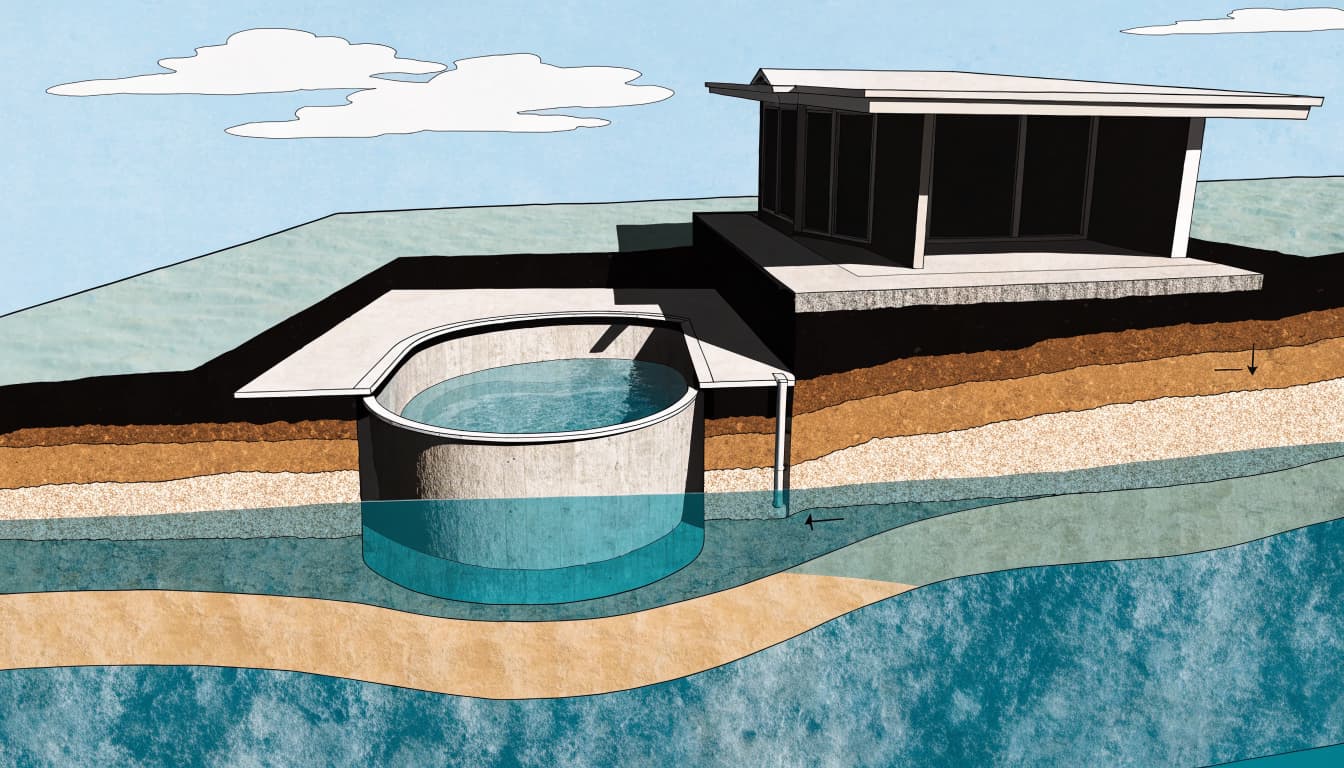
A yard can appear dry at the surface while groundwater sits much closer to the planned pool floor. During excavation, high groundwater may require temporary pumping so crews can work and prepare the shell.
The plan for that water matters as much as the pumping itself. Discharge needs a suitable destination that doesn't undermine nearby soil or send a problem onto a neighboring property.
Groundwater also matters after construction. If a pool is emptied when water pressure outside the shell is high, that pressure can increase the risk of shell movement or damage. Don't drain a gunite pool without a qualified pool professional assessing the conditions.
Shell design and nearby foundations
The structural design should account for the pool's depth, reinforcement, and position relative to the house. A narrow backyard or a pool close to a foundation may require more attention than a wide, open lot.
Coastal exposure and the property's flood conditions also belong in the engineering discussion. The appropriate design depends on the site, not just on a standard pool shape selected from a catalog.
Plan Drainage Before Adding the Deck
A pool changes how much of the yard is available to absorb rainfall. The surrounding deck can also redirect water toward the house or a neighboring lot if its finished elevations aren't planned carefully.
Protect existing drainage paths
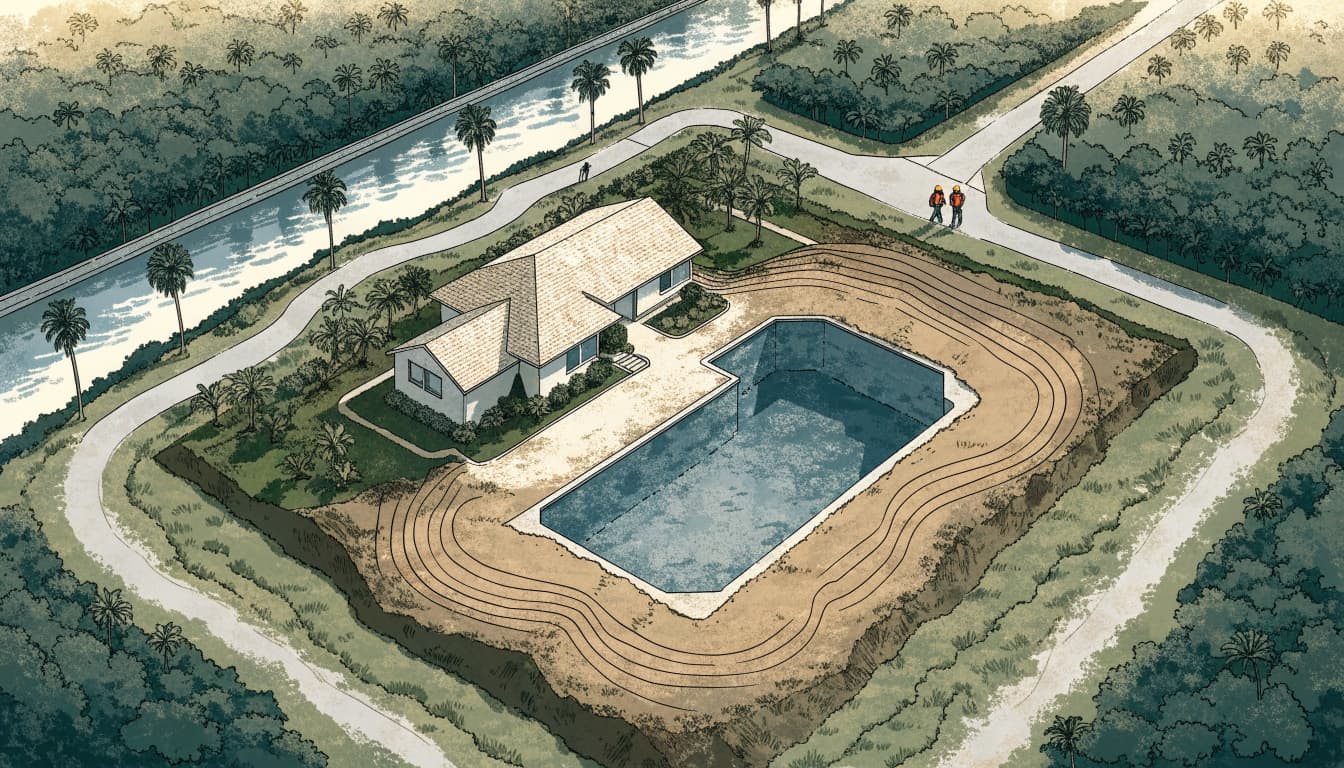
Many Southwest Florida yards rely on shallow swales to move rainwater through or around a property. A new pool, screen enclosure, or raised deck can interrupt that route.
The site plan should show how the finished yard will handle runoff, including water from the roof and deck. If an existing swale can't remain, the project needs an appropriate alternative that fits the local approval process.
Coordinate the finished backyard
Drainage planning continues beyond the shell. Deck elevations, coping, landscaping, irrigation, and the equipment pad all affect the finished site.
During planning, look at the deck height in relation to the home's finished floor and consider where water will go after a heavy rain. Restoring grading and irrigation after construction also belongs in the project scope, not as an unspecified final task.
Understand the 50% Rule for House Improvements
Homeowners planning a pool alongside a remodel may hear about the floodplain 50% rule . City of Naples guidance describes substantial improvement as work costing at least 50% of a structure's market value before the work.
The City's calculation excludes land and the pool or spa from the structure's market value. Its guidance also lists pools among outside improvements excluded from its cost examples.
That distinction matters when a project includes both a pool and changes to the house. The house work and the pool work should be clearly separated in the scope and cost documentation. The City's guidance applies to its calculation; a county property follows the county's review process.
Budget for Site Work and Insurance Considerations
A pool estimate should describe more than the shell and finish. Flood-prone or constrained lots may need additional engineering, excavation work, water management, grading, or equipment placement.
Construction costs
New custom gunite pool construction in Southwest Florida often falls around $60,000 to $150,000 or more , before unusual site conditions and extensive backyard features. That range is a starting point, not a price for a particular Naples property.
An itemized proposal helps you distinguish the pool itself from deck work, drainage changes, landscaping restoration, and optional features. It also makes allowances for uncertain site work easier to understand before construction begins.
If you already have a pool, compare the condition of its shell with the cost of replacement. Naples gunite pool resurfacing may be an option when the existing structure remains suitable.
Insurance and repair planning
Flood and homeowners policies can use different terms for buildings and exterior improvements. A pool, deck, pump, and screen enclosure may each receive different treatment under a policy.
Keep the approved plans, project costs, and photographs with your property records. Also leave room in the household budget for deductibles and potential repair costs rather than assuming every part of the backyard has the same protection.
Frequently Asked Questions
Does a flood zone automatically prevent a new pool?
No. A flood-zone designation calls for site-specific review; it doesn't establish a universal prohibition on gunite pools. The applicable requirements depend on the property, its jurisdiction, and the proposed work.
Can pool equipment go anywhere in the backyard?
Equipment placement should be part of the site plan. Access, drainage, electrical work, and the property's flood conditions all matter. A location that fits the pump may still interfere with a drainage route or future maintenance.
Is renovation an option for an existing gunite pool?
It can be. The right scope depends on the condition of the shell, plumbing, equipment, and surrounding deck. Our Southwest Florida pool renovation services include work on existing pools as well as backyard upgrades.
Build Around the Property's Conditions
A Naples flood zone doesn't automatically rule out a gunite pool. It does make the property's elevations, groundwater, drainage, and permit path important parts of the design.
Start with the parcel information and a site-specific plan. A pool that fits the lot on paper should also fit the way water moves through the finished backyard.
We offer free estimates for pool construction and can discuss the site's conditions as part of your project planning.