Underground vs. Overhead Utility Service in Cape Coral
Explore Our Services
Contact Us Today!
(239) 322-9295
Underground electric service gives a new Cape Coral home fewer exposed wires, while overhead service can cost less where poles already serve the lot. The right choice depends on existing infrastructure , construction costs, storm exposure, and the space available for equipment.
You may not be free to choose either option: the utility's service standards and the property layout affect what's practical. Start comparing the two approaches before the house and site plans are final.
Key Takeaways
- Underground lines are less exposed to wind and falling branches, but they can still be affected by flooding and upstream outages.
- Lee County Electric Cooperative's posted underground service fees are $3,185 or $345 , depending on who installs the trench and conduit. Neither figure is a complete project price.
- The best route depends on the nearby connection point, easements, driveway, pool plans, and meter location.
How Electric Service Reaches a Cape Coral Home
Lee County Electric Cooperative, or LCEC, supplies electric service in Cape Coral. Its service standards and the infrastructure near the lot influence how power reaches a new home. City of Cape Coral water and sewer charges are separate from electric service costs.
Overhead service
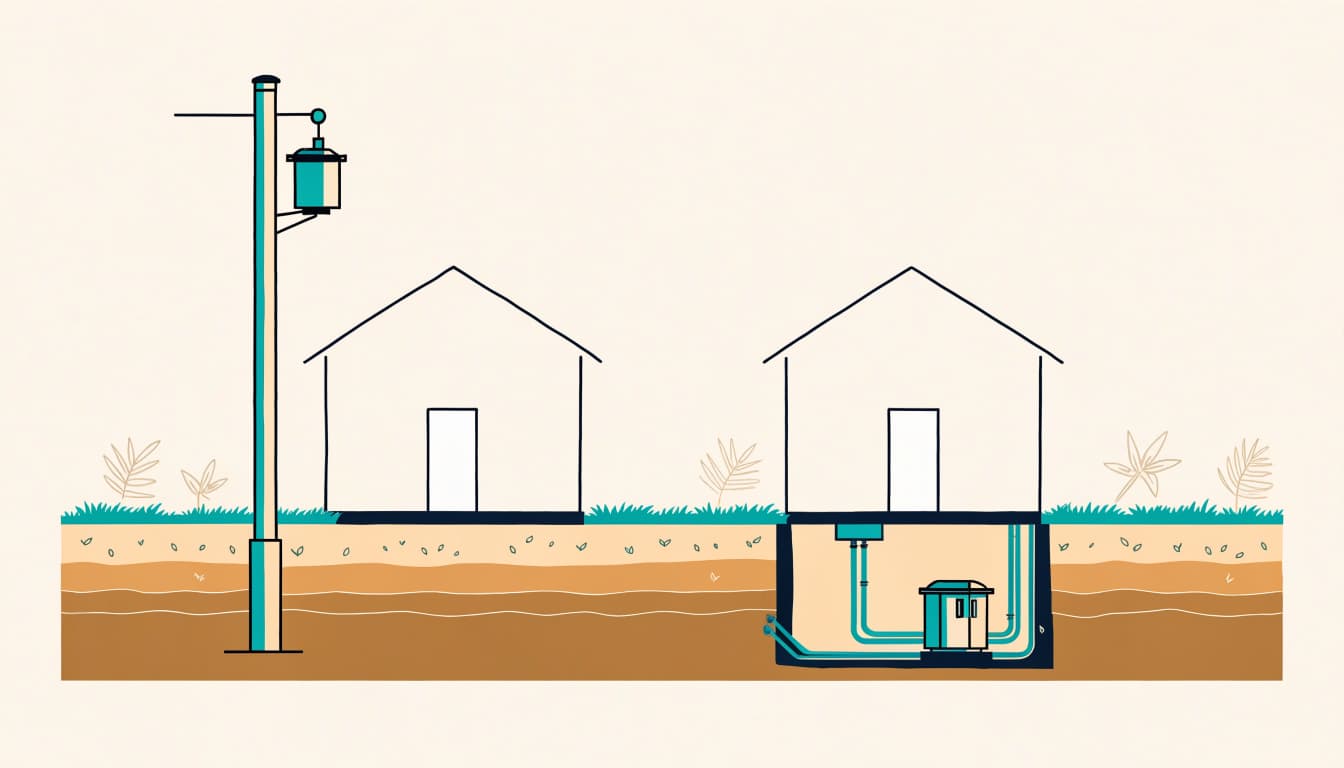
An overhead connection carries electricity on wires supported above ground, typically with a service drop between a utility pole and the home. The house needs an approved attachment and service equipment, including a meter.
LCEC's handbook describes standard residential service as single-phase, 120/240-volt, three-wire overhead service. The handbook says it is offered to the delivery point without charge except where line-extension charges apply. The home's electrical work remains a separate part of the construction budget.
Underground service
An underground connection routes service conductors below grade to the home. Depending on the utility's design, the connection may begin at a pole or at ground-level utility equipment.
The route still needs a meter and accessible equipment. A temporary overhead construction pole may also be part of a project that ultimately receives permanent underground service.
What Underground Service May Cost
Underground service often involves more site work than an overhead connection because someone must prepare a route below grade. The distance, surface conditions, utility design, and responsibility for trenching all affect the final cost.
LCEC's posted underground fees
As of October 23, 2026, LCEC's published fees list:
- $3,185 when LCEC installs the trench and conduit.
- $345 when the customer installs the trench and conduit.
These are posted service fees, not all-inclusive construction prices. The lower fee leaves the customer responsible for trench and conduit work, which has its own labor and material costs.
Neither amount includes every possible electrical or site expense. Meter equipment, electrical contractor work, excavation complications, and restoration can add to the budget, depending on the scope.
Construction contributions and extensions
LCEC's 2026 rate tariff provides for a construction contribution in certain cases when underground service is requested or required where the cooperative considers overhead service appropriate. The calculation can involve the estimated difference between underground and overhead construction.
A line extension can also affect the price of either approach. For a meaningful comparison, the construction estimate needs to separate the utility's charges from the electrician's work and any customer-paid trenching.
Storm Risks and Power Restoration
For many Southwest Florida homeowners, storm performance is the strongest reason to consider underground utilities in Cape Coral. Buried lines avoid some damage caused by windblown branches and falling poles. However, the connection still depends on the wider electrical network.
Underground lines reduce some exposure
Research prepared by Lawrence Berkeley National Laboratory for the U.S. Department of Energy found that Duke Energy Florida's underground lines were less vulnerable during the 2016 and 2017 hurricane seasons.
That finding doesn't predict the outcome for an individual LCEC customer. A home with a buried service line can still lose power when a substation, feeder, or other upstream equipment is damaged.
Buried equipment has risks too
Floodwater can damage underground electrical equipment, and uprooted trees can disturb buried infrastructure. Locating and repairing an underground fault can also take longer than repairing an exposed line.
Overhead lines are easier to see and access, but wind, vegetation, and damaged poles can interrupt service. Neither approach replaces a household outage plan. If backup power matters, include generator placement and fuel planning in the site design.
Appearance and Equipment Placement
Underground service removes the overhead drop between the distribution system and the house. That can leave a cleaner view of the front elevation and reduce visible wires across the lot.
However, underground service doesn't make every component disappear. A meter remains visible, and the utility design may include a ground-level transformer or other equipment. Those components need access and shouldn't be hidden behind permanent obstructions.
Overhead service places more equipment in view, including the service drop and its attachment point. For some lots, an existing pole and a short connection may make that a reasonable tradeoff. On others, the location of the pole or wires may interfere with the desired exterior layout.
Lot Layout Can Decide the Better Route
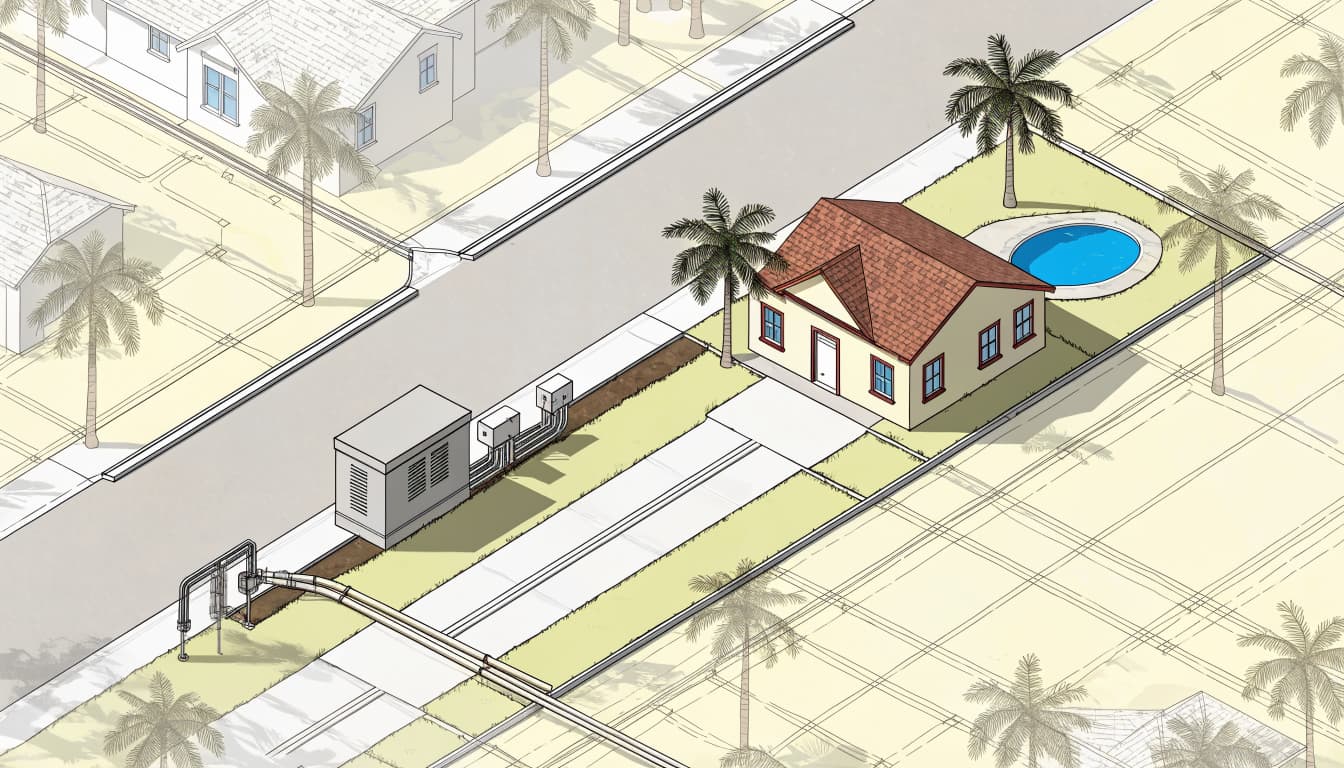
The available space on a Cape Coral lot is shared by more than the house. Driveways, swales, pool areas, drainage, and utility easements all influence where a service route can go.
Start with the survey and nearby infrastructure
A pole across the street doesn't automatically make a connection simple. The utility's proposed delivery point, any road crossing, and the available path to the meter affect the design and cost.
A survey helps the project team place the house alongside easements, property lines, and other restrictions. On waterfront lots, a seawall and canal-side conditions can further limit working room. Our guide to Cape Coral custom home plan sets covers how these site details fit into the drawings.
Coordinate the driveway and future pool
A buried route that crosses a future driveway needs to be planned before paving. Otherwise, access or changes could disturb finished concrete, pavers, irrigation, or landscaping.
Pool plans matter for either service type. Cape Coral's pool guidance identifies a minimum distance of 18 feet from overhead power lines in all directions. Underground routes also need coordination with the pool shell, deck, equipment, and excavation area.
Keep the meter and service equipment accessible after the lanai, fence, screen enclosure, and planting are complete. The route that looks convenient on an empty lot may compete with those features once the home is built.
Maintenance and Repair Access
Overhead service is visible, so damage to an exposed wire or attachment may be easier to spot. That visibility doesn't make it safe for a homeowner to touch. Stay away from damaged or fallen lines and report them to the utility.
Underground service avoids overhead exposure along the buried route, but later excavation can create risks. Before digging, contact 811 so participating utilities can locate their underground facilities. Private lines may require separate locating.
Keep records of the approved site plan and available installation photos. They can help future contractors understand where the route was installed, although they don't replace professional locating.
Both systems have equipment that needs access. Avoid building permanent features around a meter or utility cabinet, and leave room for qualified workers to reach the service area.
A Decision Framework for Your New Home
Use the lot's actual constraints to compare options before selecting a service route:
- Identify the available connection. Nearby overhead or underground infrastructure affects what LCEC can provide and whether an extension is needed.
- Compare complete scopes. Include utility fees, any construction contribution, electrician work, trenching, and surface restoration rather than comparing service fees alone.
- Review the whole site. Place the proposed route beside the driveway, drainage plan, pool, easements, and meter location.
- Choose the tradeoff that fits. Underground service may be appealing when fewer exposed wires and reduced wind exposure justify the added site work. Overhead service may fit when existing infrastructure supports a straightforward connection and the visible wires don't conflict with the plan.
The service route should also work with the home's electrical load. Pool equipment, an EV charger, or a planned generator can affect equipment and pathway decisions even though they don't by themselves determine whether the service is overhead or underground.
Build the Utility Decision Into the Schedule
Early electrical planning before finalizing home plans gives the builder, electrician, and utility room to coordinate the meter, service equipment, and route. A change made after the driveway or landscaping is finished can require extra work.
Cape Coral directs permit applications through its EnerGov Customer Self-Service portal. Licensed contractors involved in an application must be identified, licensed, and registered with the City. The construction team can coordinate the electrical scope, permit documents, and inspections alongside utility work.
At Cutting Edge Homes & Renovations, our new home construction services include coordinating the work that brings a home plan together. Utility planning is most useful when it happens alongside the rest of the site design.
Frequently Asked Questions
Can I switch to underground service after the house is built?
A later conversion may be possible, but it can require a new service design, trenching, electrical work, and restoration of finished surfaces. Existing utility infrastructure and the available route still govern the work. Planning underground service during construction can avoid disturbing a completed driveway or landscape.
Does underground service keep the power on during a hurricane?
No service type guarantees uninterrupted power. Underground lines are less exposed to windblown debris, but flooding, equipment damage, or an outage elsewhere on the grid can still interrupt electricity. A professionally designed backup system addresses a different need than the utility connection.
Choose the Route That Fits the Lot
Underground and overhead service each have a place in Cape Coral construction. The strongest choice balances the full installation scope with storm exposure and the way you plan to use the property.
Settle the route while the survey, house plans, and outdoor features can still be coordinated. That gives your construction team a clearer basis for pricing and avoids letting a finished driveway or pool dictate the decision later.