Fort Myers Home Generator Placement Before Construction
Explore Our Services
Contact Us Today!
(239) 322-9295
An automatic generator can keep a new Fort Myers home livable during a long outage, but only if its location and fuel supply are designed before the lot is finished. Good home generator placement must account for exhaust, flood exposure, salt air, service access, the transfer switch, and the gas-line route.
Moving a generator after the slab, driveway, or landscaping is complete can mean cutting concrete, disturbing drainage, or changing a permit set. Put the decision into the construction plans early, alongside the home's utilities and storm-water layout. A practical Southwest Florida preconstruction checklist helps keep those decisions together.
Home generator placement begins with the site plan
On a new build, the generator pad is part of the site plan. Start with the survey, property lines, easements, flood-zone information, finished grades, nearby openings, driveway, and planned landscaping.
The right home generator placement keeps the unit safe without sacrificing access or future use of the lot.
Why home generator placement belongs before the slab
Before concrete is poured, decide whether the generator will sit on a dedicated pad or another approved support. The electrical contractor can coordinate conduit, grounding, and the transfer switch with the service design. At the same time, the gas contractor can plan the fuel route and required sleeves or stub-outs.
This early coordination avoids surface-mounted work across finished areas. It also reduces the chance of cutting a new slab or opening walls after construction has progressed.
If a fuel line or electrical conduit must cross a future driveway, install the approved sleeve and route before paving. Keep trenches out of drainage swales and away from the area reserved for a pool, screen enclosure, or outdoor kitchen. Confirm the final route against the grading plan before crews close the trench.
Keep the service side usable
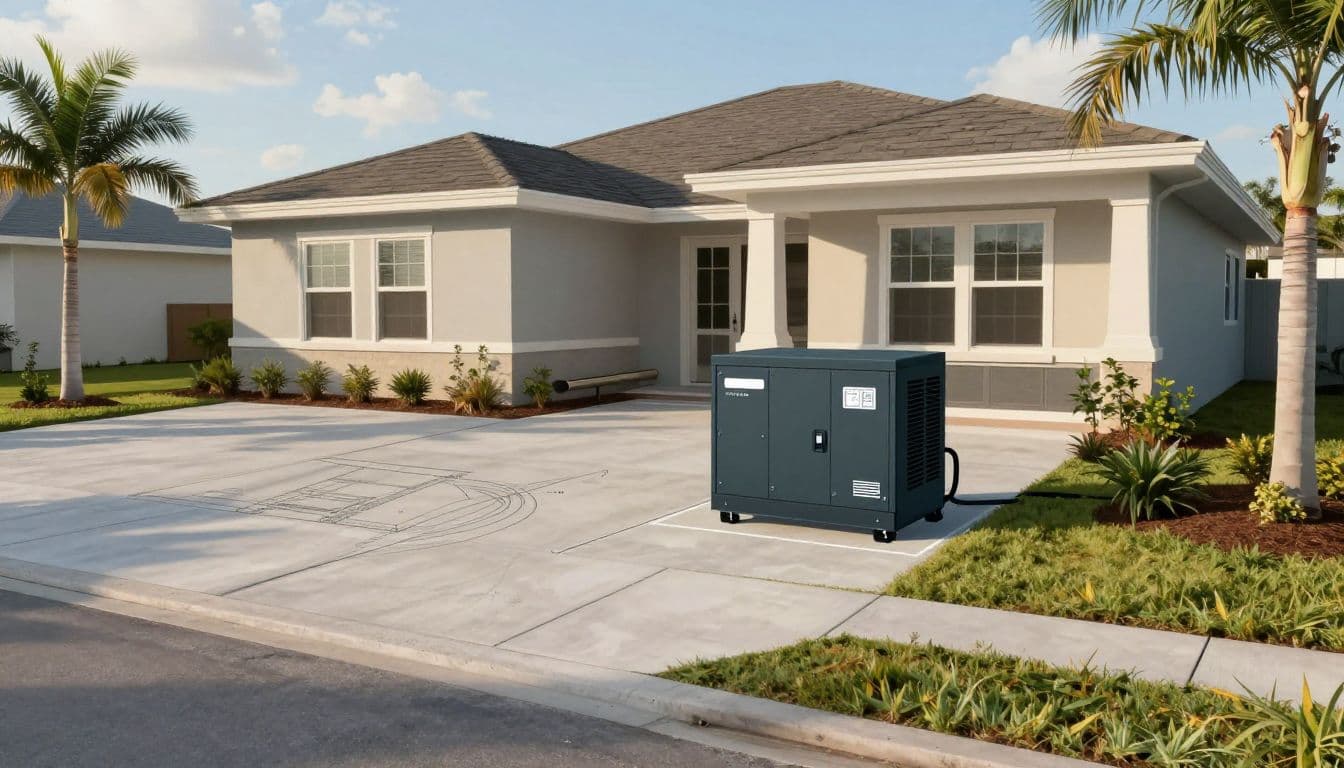
A generator needs working space for oil and filter changes, battery checks, control-panel access, and repairs. Leave a clear path from a gate or side yard to the equipment.
A hedge may hide the generator, but it can also block airflow and make routine maintenance harder. Place the unit where technicians can reach every service door without climbing over a pool deck or moving outdoor furniture.
The City of Fort Myers generator checklist asks the site plan to show distances to building openings, property lines, windows, doors, and air-conditioning units. This drawing catches conflicts before they become construction changes.
Florida weather should shape the generator location
Fort Myers weather changes where an outdoor generator can work safely. Coastal salt air, wind-driven rain, standing water, and storm debris all affect the site. A location that looks convenient on a dry day may be poor after a tropical storm.
Plan around salt air, rain, and flooding
Salt air can corrode metal enclosures, fasteners, fittings, and electrical connections faster than inland conditions. Ask the equipment manufacturer and licensed installer about corrosion-resistant options and the correct service environment.
Avoid placing the unit beneath roof edges that dump water onto it. Heavy rain also makes drainage important. Keep the pad out of swales, low points, and planned runoff paths.
Elevation, anchoring, and flood-zone details depend on the lot and adopted local requirements. Confirm them with the building department and the licensed contractor. The generator should remain dry and stable after severe weather, while still sitting in an open area with proper airflow.
A generator pad that stays dry during ordinary rain may still sit in the path of stormwater after the lot is fully graded.
Keep exhaust away from occupied spaces
A standby generator belongs outdoors, with exhaust directed away from doors, windows, vents, and other occupied spaces. A garage, carport, storage room, or screened porch can't provide safe generator ventilation.
Follow the manufacturer's installation instructions and the requirements reviewed by the local authority. Don't copy a clearance number from a portable-generator article because permanently installed equipment can follow different listing and installation requirements.
Local storm guidance also tells residents to keep generators away from rain and floodwaters. After a flood, don't start the equipment until a qualified professional checks the generator, fuel system, and electrical connections. Install carbon monoxide alarms inside the home as required by current safety guidance.
Plan the fuel line before trenching
Fuel choice affects more than the generator model. It determines tank space, trench length, utility coordination, delivery access, and the cost of rough-ins. Choose the source before the slab, driveway, and final grades are approved.
Natural gas requires utility confirmation
A gas main near the property doesn't prove that the service can support a standby generator. Ask the gas utility or supplier to confirm availability, meter and regulator capacity, inlet pressure, and expected pressure drop at the generator.
The review should include the home's other gas loads, such as cooking equipment or a pool heater, if they share the service. A generator can place a substantial demand on the system when it starts, so the contractor needs the correct load information before sizing the line.
The licensed gas contractor then sizes the piping based on demand, pipe material, route, and length. For a City of Fort Myers permit, the generator checklist asks for a gas-piping diagram that identifies pipe size, material, and length. That information belongs in the plans, not in a field change after drywall.
Propane tank location affects the lot
Propane adds fuel-storage decisions to the site plan. An above-ground tank needs fill-truck access, protection from vehicle impact, and room around its valves and regulator. An underground tank can change excavation, drainage, and future service plans.
The City checklist requires the propane tank location and capacity on the submittal. Size the system for the generator's demand, runtime goals, and any other planned propane appliances.
Confirm tank clearances, burial conditions, fill access, shutoff locations, and flood-related requirements with the building department, propane supplier, and licensed installer. This propane generator fuel line planning resource can help you prepare questions about tank and piping costs before selections are final.
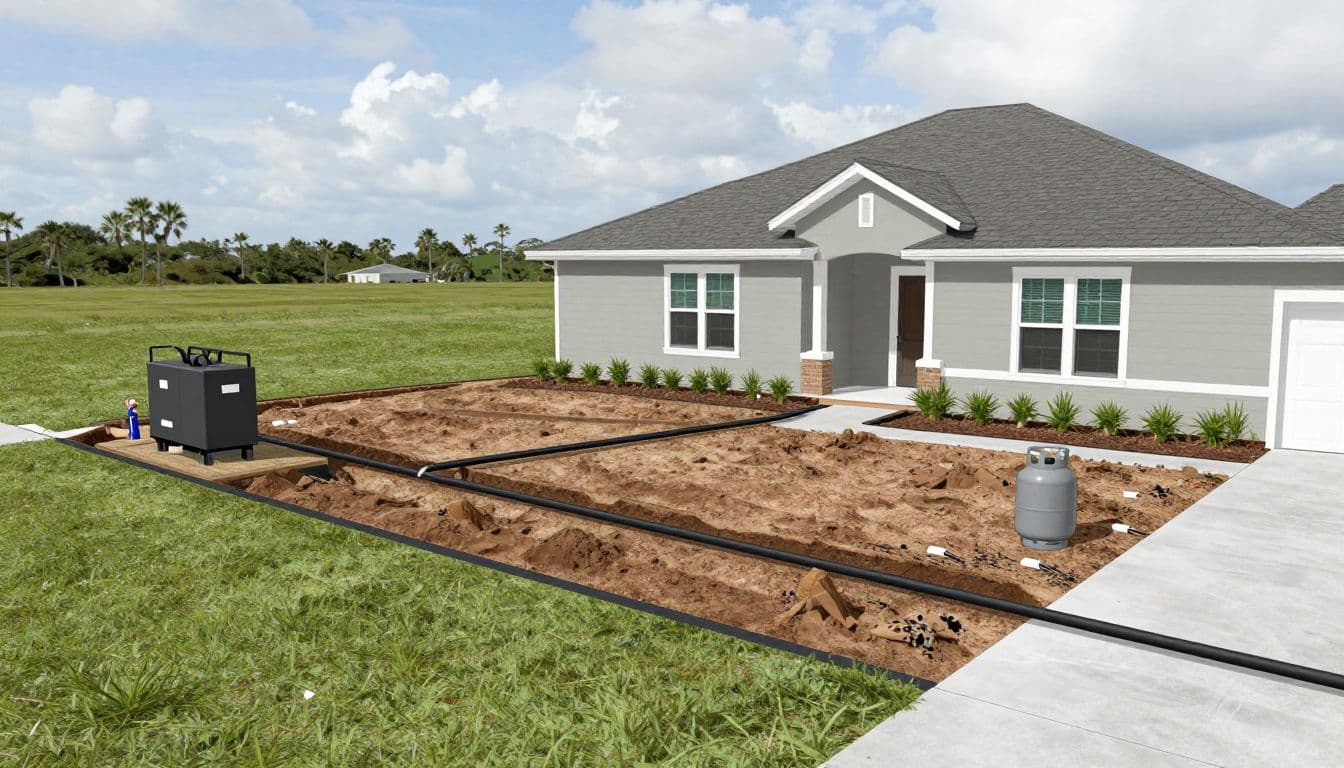
A manual fuel shutoff must remain accessible after landscaping, fencing, and other backyard improvements are complete. The design should also show any emergency shutdown switch required for review.
Coordinate the transfer switch with construction
A transfer switch connects the generator to the home's electrical system and prevents utility and generator power from feeding the same circuits at once. Its location and rating should match the main service equipment, load calculation, grounding plan, and generator model.
Match generator capacity to the electrical design
A whole-home label doesn't mean every load can start at once. HVAC startup demand, pool pumps, water heaters, electric ranges, EV chargers, and solar equipment can affect the calculation.
Decide whether the generator will carry the full home or use load management for selected circuits. The electrical contractor should coordinate the service entrance, panel schedule, generator breaker, transfer switch, and monitoring equipment before rough-in.
Changing the generator model after wiring begins can alter conduit sizes, breaker protection, pad dimensions, and fuel demand. Reserve space for the equipment shown on the approved plans.
Build the permit and inspection path early
Generator and fuel-line work must be professionally designed, permitted, and inspected. The correct process depends on whether the property sits inside City of Fort Myers limits or in unincorporated Lee County.
For city properties, the current generator checklist asks for an application, plans, site plan, manufacturer instructions, electrical load calculations and riser diagrams when required, and fuel details. It also calls for contractor information, a fuel or gas subcontractor worksheet when applicable, and an emergency shutdown switch location for Fire Department review.
Natural-gas plans show pipe size, material, and length. Propane plans show tank location and capacity. For projects over $5,000, the checklist references a recorded, notarized Notice of Commencement under Florida law.
For unincorporated parcels, confirm the current Lee County eConnect and electrical permit process. City permit staff work from 1825 Hendry Street, while county permitting is handled at 1500 Monroe Street in Fort Myers. Review the current Fort Myers home permit checklist and ask the general contractor, electrician, and gas contractor who pulls each permit and schedules each inspection.
Requirements and fees can change, so verify current details directly with the jurisdiction having authority.
Leave room for delivery and future maintenance
A generator can be screened by thoughtful planting, but it still needs a clear path for inspection, fuel delivery, repairs, and storm preparation. Include that access in the site plan instead of relying on whatever space remains.
Protect access after landscaping
Plan the route for a propane delivery truck, utility or gas inspection, and a service technician. Fences, gates, pool decks, screen walls, shrubs, and outdoor kitchens can make a workable installation difficult to reach later.
Keep the generator's service doors clear. Maintain access to the manual shutoff, emergency stop, fuel regulator, and electrical equipment. Landscaping should soften the view without blocking ventilation or trapping exhaust.
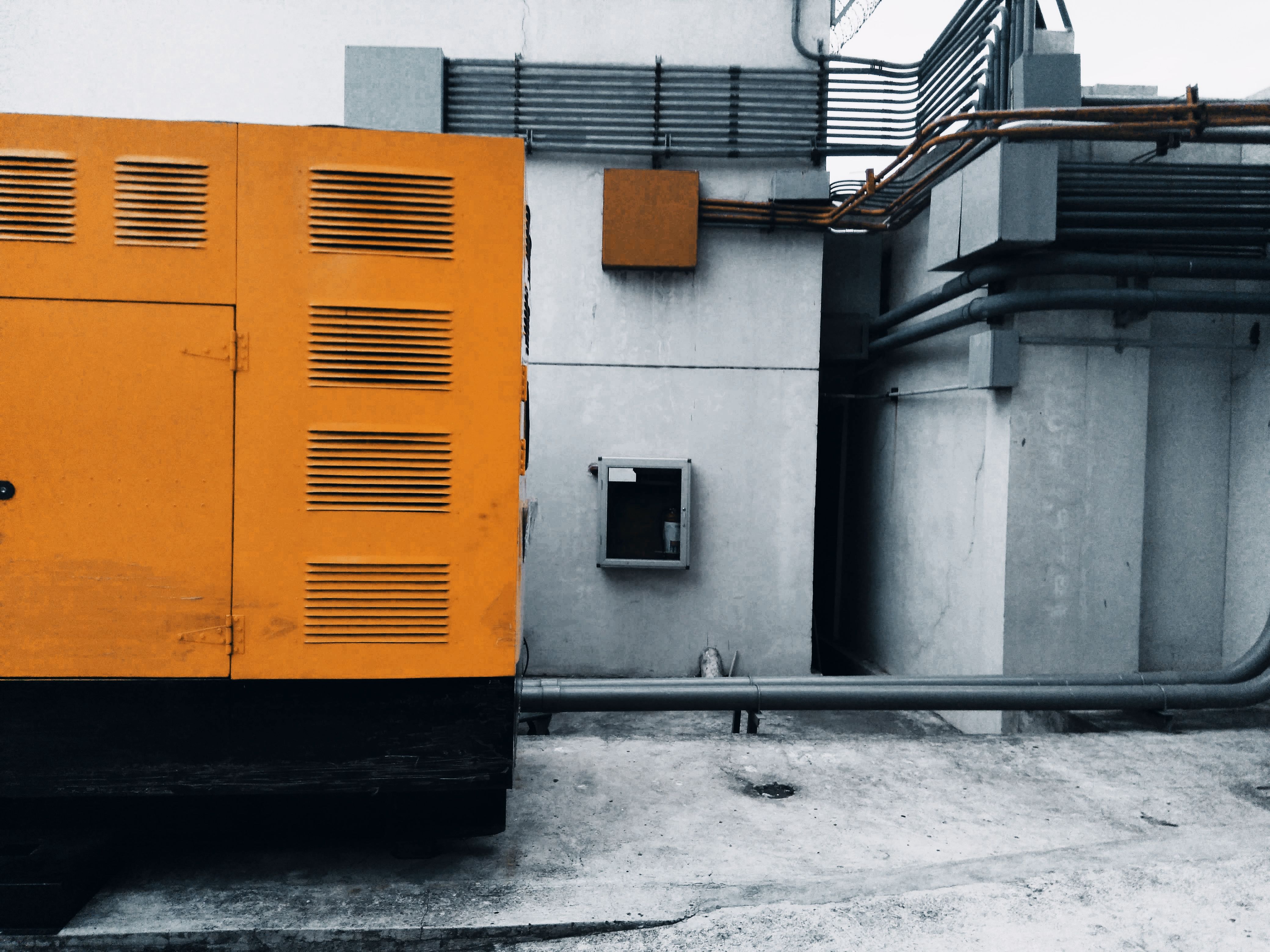
Photo by ezrah lane
Put the full cost in the budget
The generator itself is only one line item. Budget for the pad or support, automatic transfer switch, electrical conduit, fuel piping, trenching, regulators, propane tank work, permits, inspections, and any approved storm-related support.
Gas-line work often becomes a major variable when the route is long, crosses a driveway, or must avoid drainage and other utilities. Keep those items visible in the estimate instead of assuming the equipment quote covers them. This guide to Southwest Florida generator costs can help you compare the major installation components.
Conclusion
The right Fort Myers home generator plan starts before concrete, paving, landscaping, and utility work lock the property into place. Confirm the generator pad, exhaust direction, fuel route, tank location, transfer switch, shutoffs, drainage, and service access on the same coordinated plan.
Home generator placement should be professionally designed for the home's electrical load and the lot's weather conditions. Have licensed electrical and gas contractors pull the required permits, then confirm inspections with the City of Fort Myers or Lee County before work begins. A careful plan protects the home, the budget, and the people who will service the system after the next storm.