Fort Myers Site Work Costs: Clearing, Fill and Drainage
Explore Our Services
Contact Us Today!
(239) 322-9295
Fort Myers site work costs need separate budget lines for clearing, fill and grading, and drainage. Published local clearing estimates range from $2,000 to $4,000 for a lightly vegetated quarter-acre lot, while major drainage work can exceed $25,000.
Those figures cover different work, so they shouldn't become a single allowance for every property. Your lot's elevation, soil, access, and proposed layout determine the actual scope .
Start by separating the work, then connect each allowance to the plans for your home.
Key Takeaways
- Clearing prices depend on vegetation, stump removal, hauling, and equipment access, not acreage alone.
- Fill material prices don't include every cost of delivery, placement, compaction, grading, or testing.
- Drainage belongs in the original site design alongside the house, driveway, pool, and lanai.
- A complete construction budget separates site work, utilities, permits, and impact fees unless the contract already includes them.
Land Clearing: Budget for More Than Brush Removal
Clearing prepares the construction area, but proposals can describe different end results. Removing vegetation is one task; leaving a buildable, properly graded site requires additional work.
Published Fort Myers clearing estimates
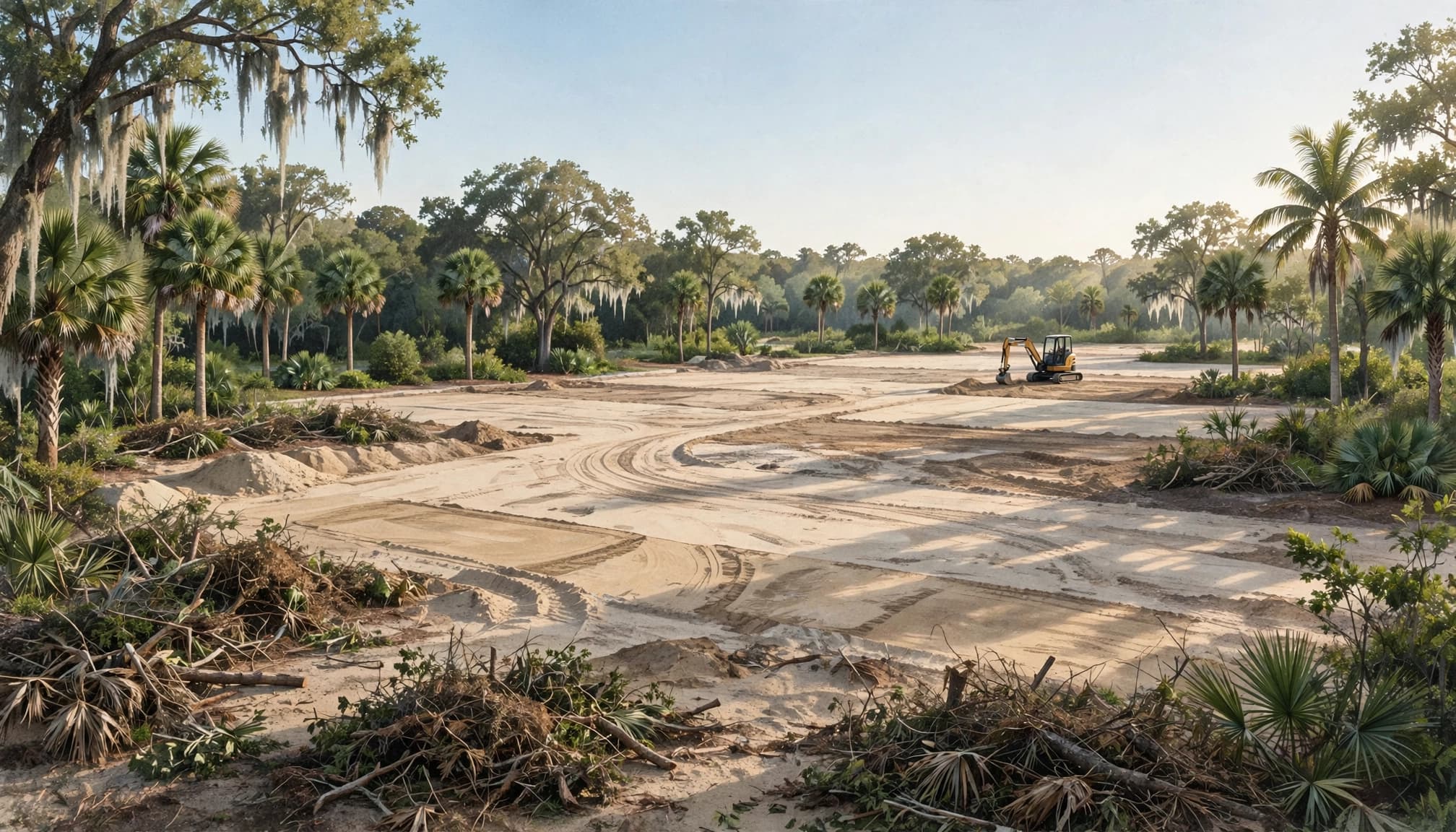
Published Fort Myers land-clearing estimates put a lightly vegetated quarter-acre lot at approximately $2,000 to $4,000 . The same provider estimates $8,000 to $12,000 for a densely overgrown half-acre lot.
The higher estimate includes mature trees, stump grinding, and finish grading. That broader scope explains why comparing the totals by acreage alone would be misleading.
These are provider estimates, not fixed prices for every residential parcel. A smaller property with large trees can require more work than a larger, lightly vegetated lot.
Define what stays and what leaves
Your clearing proposal should identify retained trees, the construction footprint, stump treatment, and debris disposal. Dense Brazilian pepper, mature hardwoods, and buried roots create different equipment and hauling requirements.
Also distinguish stump grinding from complete root removal where construction requires it. Ground-up organic material doesn't automatically become suitable structural fill.
Finally, narrow frontage or limited truck access can increase handling time. Our guide to construction entrance planning explains why stable access and runoff control belong in the site budget.
Fill and Grading: Separate Material From Installation
Fill raises or rebuilds portions of the site. Grading shapes the surface to the designed elevations. Both affect the budget, but a delivered dirt price doesn't cover a completed building pad.
Start with the material quantity
In November 2026, Unplugged Designs lists fill dirt at $40 per cubic yard, with a three-cubic-yard minimum. Delivery costs depend on the ZIP code.
At that listed rate, 100 cubic yards costs $4,000 for material alone. Trucking, spreading, compaction, testing, and final grading remain separate unless the proposal includes them.
These figures describe different parts of the work.
| Published item | Price benchmark | Important limitation |
|---|---|---|
| Unplugged Designs fill dirt | $40 per cubic yard | Delivery is additional; not an installed price |
| Hello Gravel basic placement and compaction estimate | About $6 to $20 per cubic yard | Generalized guidance, not a local contractor bid |
| Hello Gravel complex placement and compaction estimate | About $25 to $50+ per cubic yard | Scope and site conditions affect applicability |
Don't add these figures together and treat the result as a complete Fort Myers site-work quote.
Include the work around the dirt
Hello Gravel's North Fort Myers fill guidance separates basic placement from more complex work. That distinction matters because restricted access, unsuitable soil removal, and water control can increase handling.
A useful proposal also states the material specification, estimated quantity, measurement basis, and compaction requirements. Loose delivered volume and compacted in-place volume aren't interchangeable.
Finish grading should have its own scope when it isn't already included elsewhere.
Drainage: Price the Entire Water Route
Drainage costs depend on where water collects, how it moves, and where the approved design sends it. Adding a drain opening without a workable outlet doesn't complete the system.
Published local drainage ranges
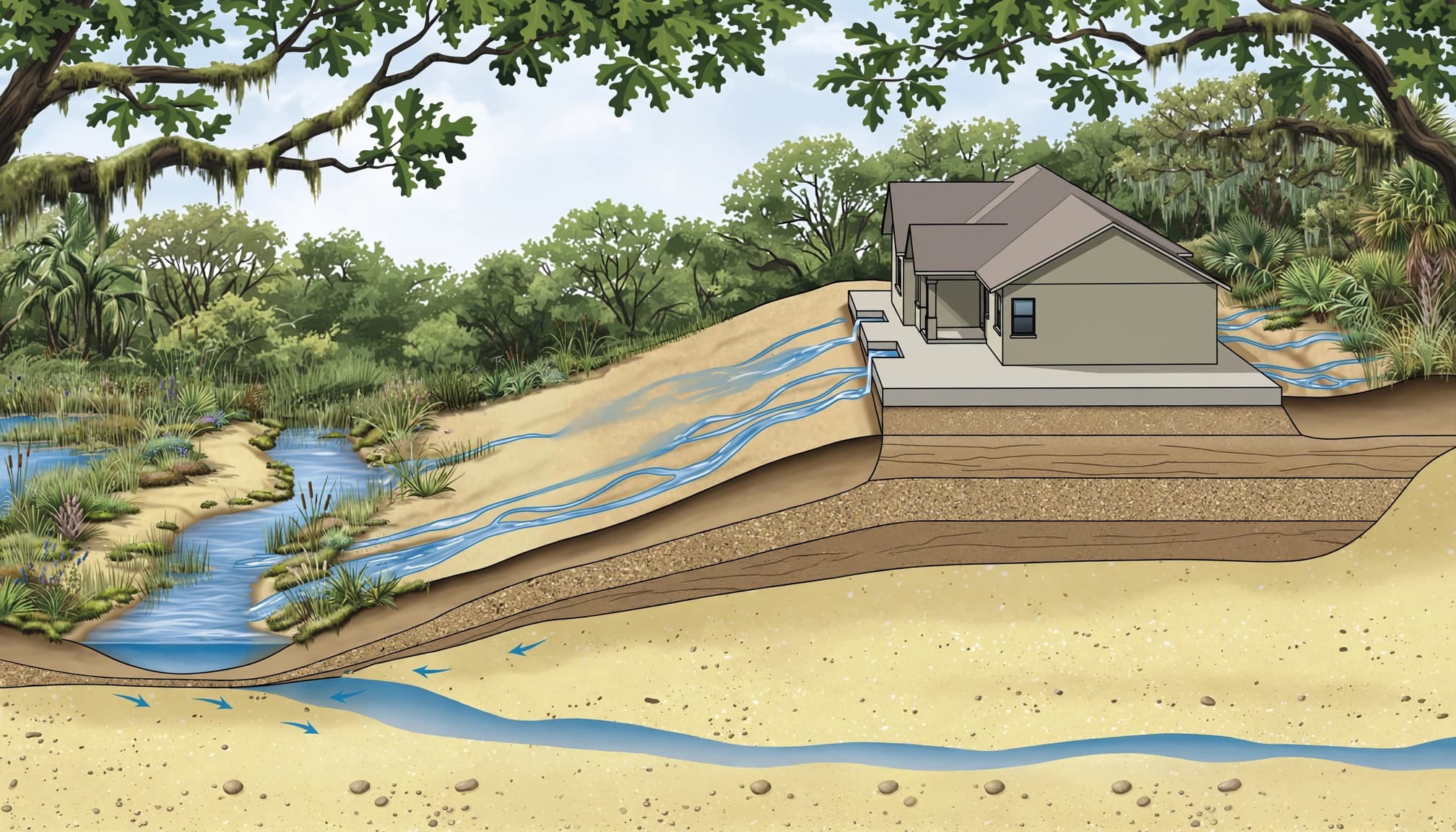
Wildwood Landscape's Fort Myers drainage pricing places French drains at approximately $5,000 to $12,000 or more . Its broader drainage guidance reports complete property systems reaching $25,000 or more.
Length, excavation depth, soil, discharge requirements, and surface restoration affect those figures. However, these residential drainage estimates don't establish a standard price for a new home's swales or stormwater design.
For new construction, drainage may combine grading, shallow swales, collection structures, and piping. The approved layout determines which components belong in the estimate.
Coordinate the house and backyard
The driveway, roof runoff, pool deck, and lanai all influence water movement. Because these surfaces work together, pricing the backyard later can leave gaps in the original drainage allowance.
A pool can also affect access, excavation, and final elevations. Include its planned location before final grading, even when construction will happen later.
Raising the house pad changes the surrounding grading problem. The plan still needs a workable transition to property boundaries and an approved drainage route.
Why Elevation and Soil Change the Budget
A flat-looking lot can still require substantial preparation. The important comparison is between existing elevations, proposed grades, groundwater conditions, and the foundation design.
Finished elevation controls fill demand
A higher building pad generally requires more material, but the footprint alone doesn't establish the quantity. Side slopes and transitions also occupy space.
Likewise, raising the entire lot isn't automatically the right solution. Boundary conditions, neighboring improvements, and drainage routes can limit how the site is shaped.
Our guide to reading a custom-home site plan explains how elevations, easements, and setbacks affect the available building area.
Soil conditions control preparation
Southwest Florida sites may contain sandy soil, shallow groundwater, limestone, buried debris, or unsuitable organic material. Each condition can change excavation and preparation requirements.
For example, unsuitable material may need removal before acceptable fill goes back in. Temporary dewatering can add another scope when groundwater interferes with excavation.
Compaction testing provides information about prepared soil before the foundation covers it. Keep testing and possible retesting visible in the budget rather than assuming every dirt-work price includes them.
Local Rules Can Add Design and Inspection Work
A Fort Myers mailing address doesn't establish the permitting jurisdiction. Properties inside city limits follow City of Fort Myers procedures; unincorporated properties follow Lee County procedures.
That distinction matters when budgeting plans, reviews, and inspections.
Lee County's grading-plan threshold
Lee County Land Development Code Section 34-3104 requires a grading and drainage plan with the building-permit application when proposed final grades exceed its threshold.
The trigger is more than 18 inches above the adjacent street centerline or an adjacent developed lot, measured at the property line. The section also requires grading to follow the plan and pass final inspection before a certificate of occupancy.
This is a county provision, not a substitute for the city's review process.
Flood-related fill needs documentation
Lee County's flood-hazard ordinance calls for applicable flood and elevation information. Proposed fill documentation includes its amount, type, source, purpose, compaction specifications, and final grades.
These requirements explain why a truckload estimate alone can't establish the complete scope. The plans must connect the fill to the property's flood conditions and foundation design.
Fit Site Work Into Pre-Construction Planning
The useful time to address site costs is before the house layout becomes difficult to change. Early survey and soil information help turn broad allowances into quantities and defined work.
Build the budget around the whole property
Begin with the boundary survey, existing elevations, soil information, and proposed site layout. Then coordinate the house, driveway, utilities, pool, and outdoor living areas.
Keep land purchase, design, permits, impact fees, and utility connections separate from physical site preparation unless the contract includes them. Otherwise, a house price per square foot can appear more complete than it is.
Our Southwest Florida home construction planning guide covers how those decisions fit into the broader project.
Compare scope before comparing totals
Use the same drawings and quantities for competing proposals. Each estimate should describe debris removal, fill delivery, compaction, testing, drainage installation, and final grading.
Identify overlapping allowances, too. If clearing already includes finish grading, another grading line shouldn't charge for identical work.
Keep a separate contingency for unresolved subsurface conditions. The change-order process should explain how additional fill, unsuitable soil removal, or water-control work will be measured and priced. As design information improves, replace allowances with defined amounts rather than carrying every early estimate forward.
Frequently Asked Questions
Is site work included in a custom-home price per square foot?
Only when the proposal says it is. A construction rate may exclude clearing, imported fill, drainage, utility connections, permits, or impact fees.
Compare the written inclusions before using a square-foot rate to estimate the total investment. Site work should appear as a defined scope or allowance.
Can soil excavated for a pool reduce fill costs?
Possibly, but excavated material must suit its intended use. Organic debris, unsuitable material, and excess moisture can limit reuse.
Also, excavation timing must match the construction sequence. Don't count pool spoil as a fill-cost credit unless the material, quantity, handling, and placement are part of the plan.
Build the Budget Around the Lot
Fort Myers site work costs become clearer when clearing, fill and grading, and drainage have separate scopes. Published prices provide context, but the property's elevations and soil determine the work.
The strongest budget connects measured quantities to approved plans. That makes exclusions easier to spot before construction begins.
We offer free estimates and consultations for homeowners planning custom construction in Southwest Florida. Early site planning helps keep the home design and the overall budget aligned.