Fort Myers Construction Entrance: Plan Safe Lot Access
Explore Our Services
Contact Us Today!
(239) 322-9295
One heavy downpour can turn an unprepared job-site entrance into muddy pavement and delayed deliveries. A safe Fort Myers construction entrance needs stable access , controlled runoff, and enough room for trucks to move without endangering neighbors.
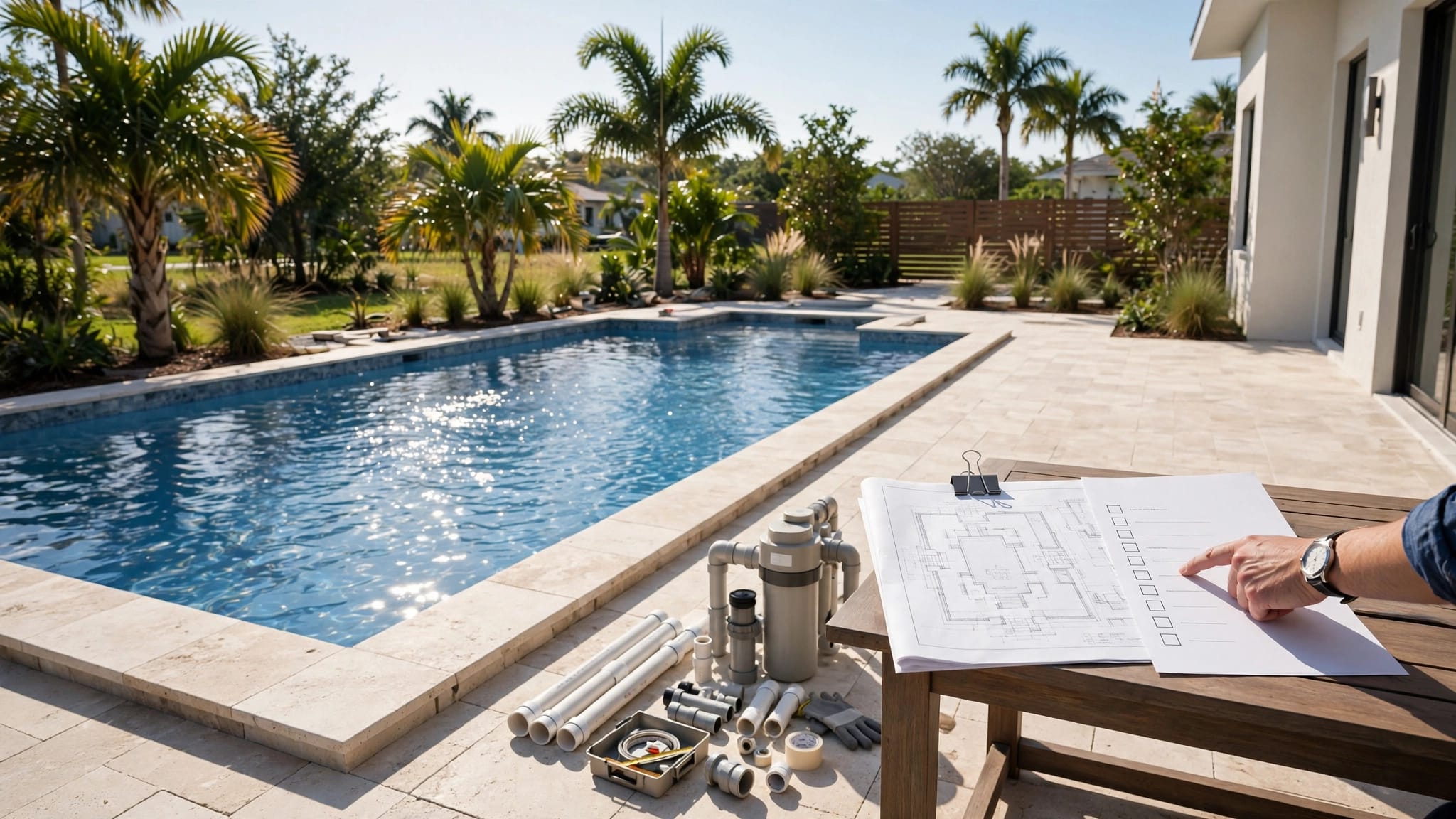
Your lot's drainage, street frontage, and planned work all shape the layout, whether you're building a home, remodeling, replacing a roof, or adding a pool. Start by confirming who controls the property and road, then coordinate access with the full site plan.
Confirm Jurisdiction and Road Ownership First
A Fort Myers mailing address doesn't establish which government reviews your project. Also, the agency maintaining the road may differ from the building-permit authority.
Identify the Building-Permit Authority
Properties within City of Fort Myers limits follow the city's permitting process. Unincorporated properties follow Lee County procedures. Your contractor should verify the parcel's jurisdiction before pricing site work or scheduling equipment.
Ask which approvals cover temporary access, grading, drainage changes, and work near the street. A building permit shouldn't be treated as permission to alter every part of the frontage.
For budgeting, review Fort Myers construction permit costs, then have your contractor confirm the approvals and fees for your property.
Confirm Who Maintains the Frontage Road
Lee County requires a Residential Driveway Permit for improvements other than mowing within a county-maintained road right-of-way, including installing or upgrading a residential driveway.
County road permits can apply within a municipality when the county maintains that road. City-maintained streets require confirmation through the appropriate city office.
The right-of-way may extend beyond the pavement into the roadside area. Therefore, don't assume that a grassy strip, ditch, or sidewalk is available for private construction use. Get approval before changing that area.
Map the Entrance Before Equipment Arrives
Choose the entrance location using a current survey and site plan. An open patch beside the road can still contain an easement, drainage feature, or underground utility.
Check Boundaries, Utilities, and Drainage
Mark property lines, easements, swales, sidewalks, nearby inlets, and the proposed driveway. Also identify utility service routes and any trees or existing features that must remain.
Arrange utility locating before excavation. Meanwhile, check overhead lines against truck beds, cranes, and roofing equipment.
Review survey requirements before building permits early enough to resolve missing information. Boundary information and elevations help the team avoid placing access where it conflicts with drainage or future improvements.
Match Access to the Actual Construction Work
Ask subcontractors which vehicles will arrive and how they'll unload. Concrete trucks, excavation equipment, roofing deliveries, and dumpsters create different access demands.
For pool construction, preserve a route to the backyard without compromising the house, utilities, or neighboring property. Narrow side yards and seawalls can limit equipment choices.
For occupied remodels, keep a separate pedestrian path whenever practical. Finally, show staging areas on the plan so deliveries don't occupy the entrance itself. A usable gate provides little value if stored materials block the route beyond it.
Build a Stable Fort Myers Construction Entrance
A stabilized entrance helps remove soil from vehicle tires before they reach the public road. It also provides a more reliable transition between pavement and disturbed ground.
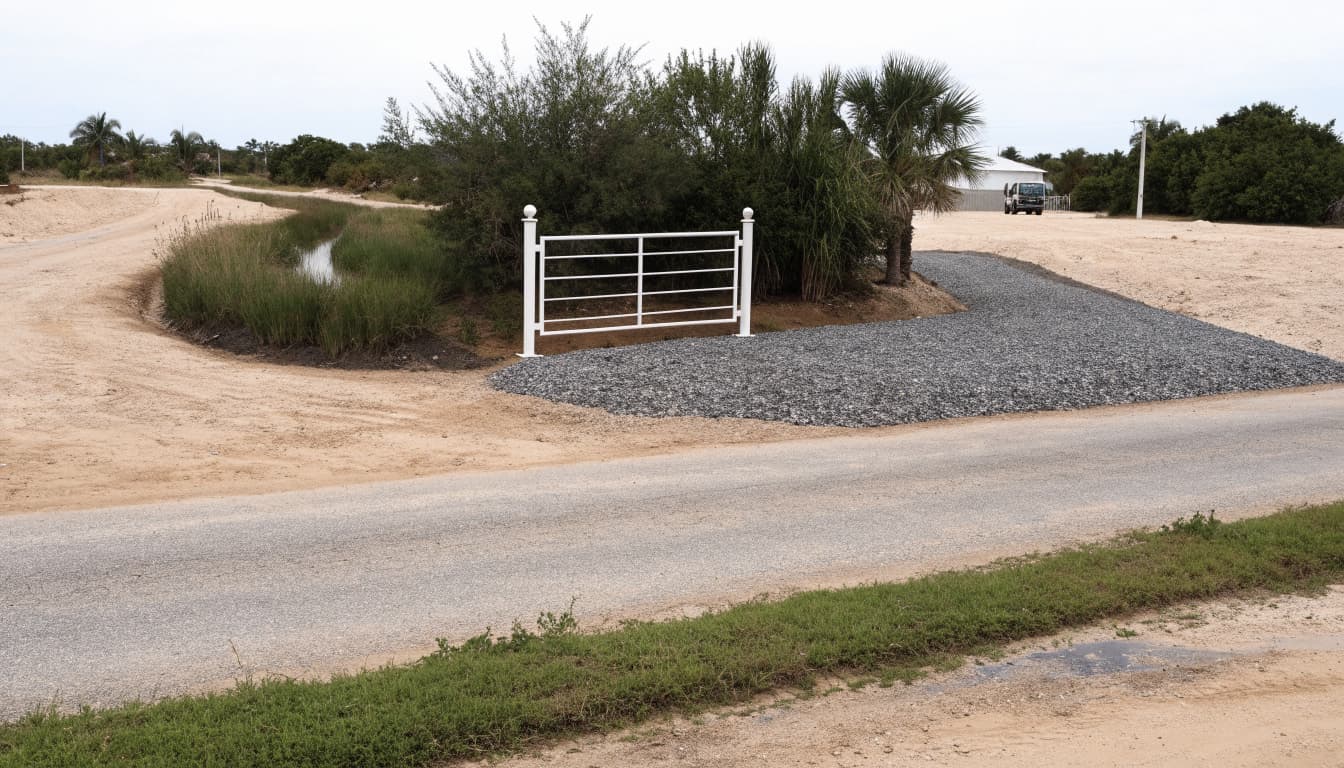
Clean, coarse aggregate is a common approach, sometimes with geotextile beneath it to separate stone from the underlying soil. However, the design must suit the ground conditions and expected vehicle loads.
Don't copy entrance dimensions or stone specifications from an unrelated project. Length, width, aggregate size, and thickness should follow the approved plans and applicable authority's requirements.
The contractor should evaluate soft ground, turning movements, repeated loading, and the transition at the road edge. Vehicles should pass through the stabilized area rather than bypass it onto exposed soil.
Where access crosses a ditch or swale, confirm the approved crossing detail. A load of stone placed across a drainage path can block flow and send water elsewhere.
Keep the pad clear of stockpiles and parked equipment. Also, plan for replenishment because tires and tracked machines can push aggregate aside or bury it in mud.
A Fort Myers construction entrance remains effective only while crews maintain it throughout the job.
Keep Heavy Rain From Overwhelming the Lot
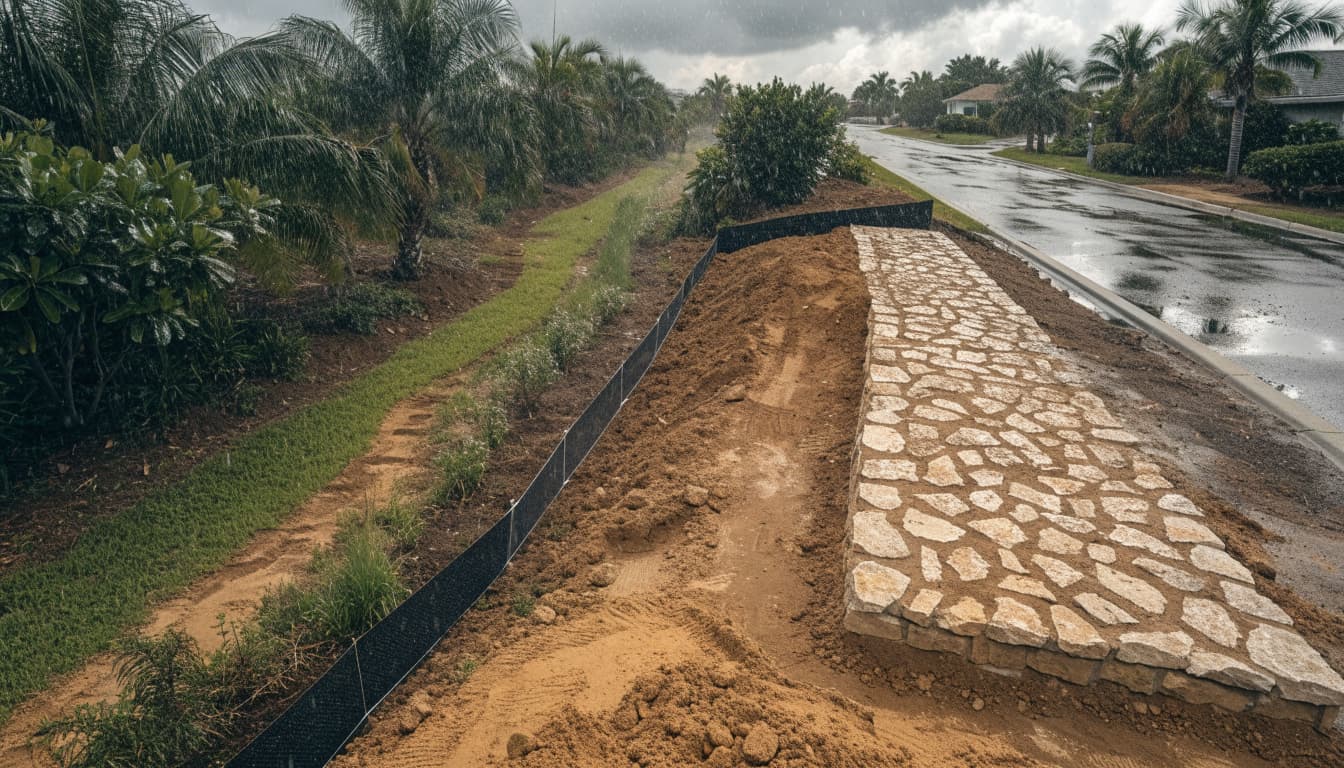
Southwest Florida downpours can move loose sand and sediment quickly. Because many lots have limited slope and shallow groundwater, small grading changes can affect where water collects.
Protect Existing Drainage Paths
Coordinate entrance elevations with the approved drainage plan. Preserve roadside swales and avoid directing runoff toward neighboring yards, garages, or foundations.
Where appropriate, route cleaner runoff around disturbed areas rather than through loose soil. Your contractor or civil engineer should select the approach for the lot.
Pool excavation may require temporary dewatering when crews encounter groundwater. Confirm how that water will be handled before digging. Pumping water toward the street or adjoining property without a reviewed discharge plan can create sediment, erosion, and drainage problems.
Pair the Entrance With Other Sediment Controls
Florida DEP and Lee County guidance identify stabilized entrances, silt fence, inlet protection, swales, and sediment traps as possible controls. Their suitability depends on site conditions.
Silt fence shouldn't obstruct a ditch or other concentrated-flow path. Likewise, inlet protection needs an appropriate design so it doesn't create unsafe ponding.
A stone entrance reduces tire track-out, but it doesn't capture sediment carried off the lot by runoff.
Install the selected controls before disturbing the areas they protect. Then reassess them as excavation, fill placement, and construction change the site's drainage.
Check Whether State Stormwater Coverage Applies
Florida DEP's Construction Generic Permit generally applies when construction disturbs 1 acre or more and stormwater discharges to state surface waters or a municipal separate storm sewer system.
It can also apply to a smaller lot within a larger common plan of development that disturbs at least 1 acre. Therefore, a single home's lot size doesn't settle the question.
When coverage applies, the operator must prepare and implement a Stormwater Pollution Prevention Plan, commonly called a SWPPP. The operator is responsible for permit coverage and compliance.
Florida DEP requires the Notice of Intent and application fee at least two calendar days before construction begins. The municipal storm sewer operator must receive notification within seven days of coverage.
Have your contractor confirm applicability, responsibility, and timing before clearing starts. Keep the stormwater plan coordinated with the entrance layout.
Even when state permit coverage doesn't apply, local erosion-control and drainage requirements may still govern the work. A small project still needs a plan to keep mud and runoff off neighboring property and public roads.
Protect People and Coordinate Deliveries
The entrance connects construction activity with a street that neighbors still use. Good visibility and controlled vehicle movements matter as much as the surface beneath the tires.
Position access where drivers can see approaching traffic and pedestrians. However, confirm allowable locations and any traffic-control requirements with the road authority before committing to a layout.
Use a trained spotter when backing or maneuvering creates visibility problems. Also, avoid scheduling multiple large deliveries when the lot cannot accommodate them.
Keep sidewalks usable unless an authorized closure or alternate route is in place. Residents, children, pets, and visitors need separation from equipment paths, especially during occupied renovations.
Agree on these operating details before the first delivery:
- Give suppliers the approved entrance location and unloading instructions.
- Keep staging, dumpsters, and parked vehicles away from sight lines and pedestrian routes.
- Assign someone to manage unexpected deliveries and stop unsafe vehicle movements.
For roofing work, verify where delivery equipment will stand and whether existing paving can support the load. For pools, protect excavation areas and maintain the required safety arrangements as construction progresses.
Inspect, Clean, and Repair the Entrance
A Fort Myers construction entrance needs routine attention, especially after storms and heavy deliveries. Assign maintenance responsibility to a named contractor representative rather than leaving it to whichever crew notices a problem.
Check for rutting, displaced stone, muddy tires, clogged controls, and sediment on the road. If the entrance no longer performs, repair it before continuing the vehicle movements that caused the problem.
Remove tracked sediment promptly using suitable sweeping or collection methods. Don't hose mud into storm drains or roadside drainage features.
For projects covered by Florida DEP's Construction Generic Permit, inspections are required at least every seven calendar days. They must also occur within 24 hours after a storm event ends when rainfall reaches 0.50 inch or more. Document those inspections.
These stormwater inspections are separate from building, driveway, drainage, and right-of-way permit inspections. Confirm each schedule rather than assuming one inspection covers everything.
Lee County requires the driveway or right-of-way permit job copy in a weatherproof container. Keep applicable approved documents accessible, too.
During hurricane preparation, follow the project's storm plan. Secure loose materials, clear drainage obstructions, and reassess access before deliveries resume after severe weather.
Set the Budget and Close Out Temporary Access
Price the entrance as a maintained site feature rather than a one-time stone delivery. The scope should cover preparation, stabilization, drainage coordination, repairs, cleanup, and eventual removal or conversion.
Costs depend on soil conditions, equipment loads, frontage constraints, and the duration of construction. There isn't a reliable universal price for every residential lot.
Include entrance work in your broader Southwest Florida site preparation budget. Ask the contractor to identify what the base scope includes and how additional maintenance will be handled.
Before final landscaping, confirm whether temporary materials must be removed. Restore disturbed roadside areas according to permit conditions and complete the permanent driveway and drainage details shown on the plans.
Also preserve access for remaining inspections. Pool gates, equipment, electrical service, and unfinished exterior work shouldn't become inaccessible behind material stacks or newly installed landscaping.
A final property walk should check road cleanliness, functioning swales, stabilized soil, and any damage to sidewalks or existing paving. Resolve those items before treating temporary access as finished.
A Safe Entrance Starts With the Whole Lot
Safe access depends on drainage, vehicle movement, and ongoing maintenance working together. A stone pad can help keep the street clean, but its location and upkeep determine whether it performs.
Before equipment arrives, review the entrance plan with your contractor and confirm the applicable approvals. That preparation helps your project handle Fort Myers rain while protecting your property, neighboring yards, and the road everyone shares.