

Permits in Southwest Florida can feel like a domino line. One missing document and everything stops. For many new builds and rebuilds, the two documents that cause the most surprise are the survey and the elevation certificate .
In 2026, demand is still high across Lee, Collier, and Charlotte counties, especially where post-hurricane rebuilding continues. That matters because busy survey schedules can stretch timelines, and rush requests can raise pricing.
Below is a practical guide to typical costs, what impacts them, and what to gather before you submit for permits.
Surveys vs. elevation certificates, what they do for permits
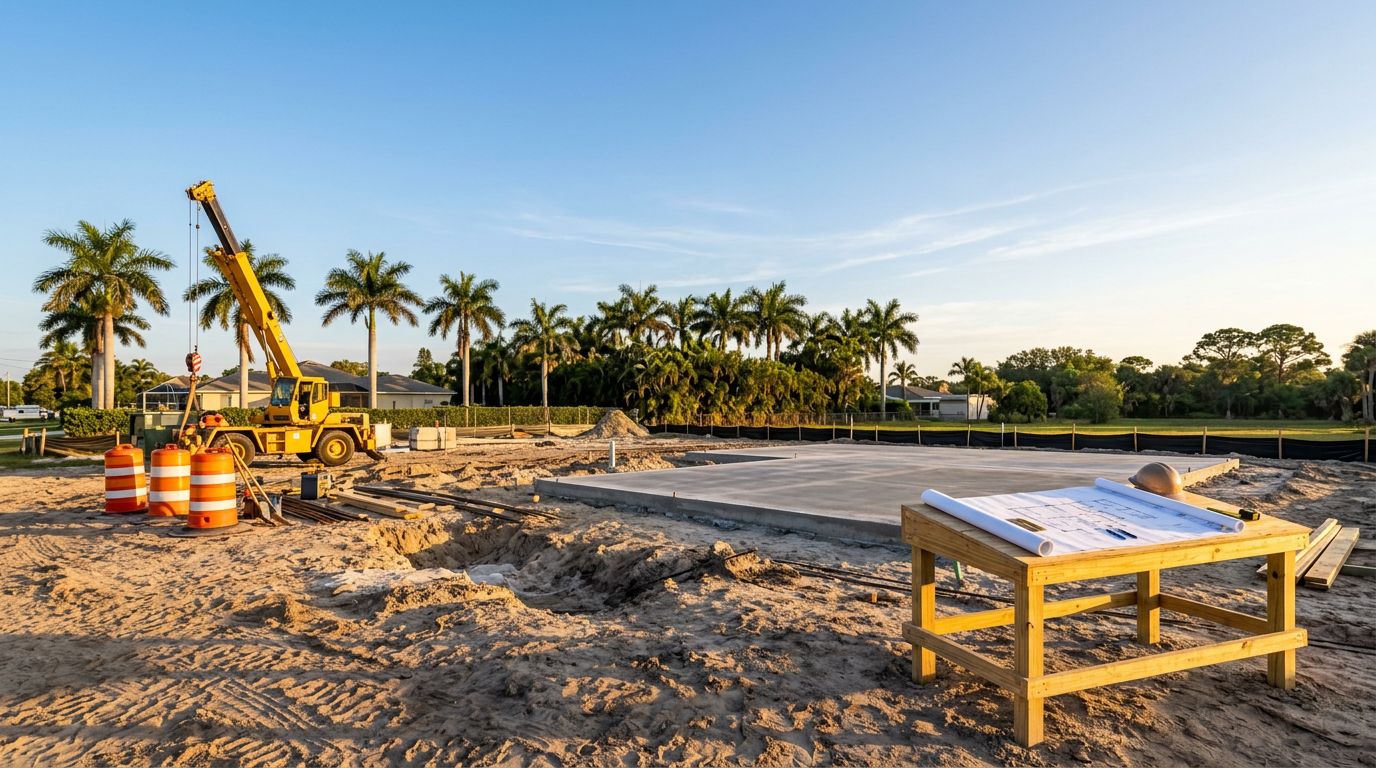
 Photo by Joice Rivas
A survey and an elevation certificate aren't the same thing, even though people mix them up all the time. Think of a survey as the property's "where," and an elevation certificate as the structure's "how high."
Most building departments (city or county) want a current survey to confirm setbacks, lot lines, easements, and site constraints before they'll approve a site plan. On a vacant lot, the survey often becomes the base layer for civil and architectural work.
An elevation certificate, on the other hand, documents key elevations for a specific building. It's often tied to floodplain rules and flood insurance rating. If your lot is in or near a mapped flood zone, your lender, insurer, or local floodplain manager may require it.
Gotcha: Ask your building department what stage they need. Some jurisdictions want elevation documentation early, then an updated certificate after the finished floor is set.
If you're still in the planning phase, it helps to read a broader local overview like the Ultimate Guide to Building in Southwest Florida , because survey timing affects the entire schedule.
Elevation certificate cost and survey cost ranges in Southwest Florida (2026)
Homeowners usually ask for one number. The honest answer is a range, because site conditions and urgency matter as much as square footage.
Here are common 2026 ranges used for early budgeting in Southwest Florida (Lee, Collier, and Charlotte counties), based on regional norms and typical project scopes:
| Service (typical residential) | Common 2026 range | Why the range is wide |
|---|---|---|
| Boundary survey (often up to 1/2 acre) | $400 to $860 | Lot size, monument condition, access, records research |
| Elevation certificate (standalone) | $150 to $2,000 | Foundation type, complexity, travel, required turnaround |
| Elevation certificate bundled with survey | $300 to $600 (often) | Efficiency when one crew visit covers both needs |
The phrase most people search is elevation certificate cost, but the better budgeting move is to plan for the certificate plus whatever support work makes it valid for your permit path (survey, benchmarks, site access, and sometimes follow-up).
Also, don't forget the schedule cost. In 2026, many licensed surveyors are booking weeks out, and in peak demand pockets it can stretch longer. If you're trying to hit a permit deadline, ask about rush availability before you assume it's possible.
When you choose a builder, ask how they handle these pre-permit items. Many owners prefer a cost-plus home builder because each line item stays visible. Paired with transparent pricing , you can see survey invoices and avoid mystery markups. If you're comparing build approaches, this breakdown of custom vs spec homes in Southwest Florida helps explain why pre-construction paperwork can differ.
What drives your price and lead time in 2026
Two neighbors can pay different amounts for the same "survey" because the work behind it isn't identical. In Southwest Florida, these variables tend to move the needle most:
- Lot and access conditions : Overgrowth, fencing, standing water, and gated communities can slow fieldwork.
- Records and corners : Missing or disturbed monuments, old plats, and prior revisions can add research time.
- Structure details (for ECs) : Multi-level homes, complex foundations, and hard-to-reach crawl areas take longer to measure.
- Post-hurricane rebuild volume : Ongoing rebuild demand keeps qualified crews busy, which can extend lead times and increase rush pricing.
- What your jurisdiction accepts : Some building departments want specific formats, signatures, or supporting documents.
A simple way to avoid paying twice is to match the deliverable to the actual need. If your permit reviewer wants a signed and sealed survey dated within a certain window, an older copy from a prior owner might not work. If your insurance agent needs an elevation certificate based on finished construction, ordering one too early can mean paying again later.
For new construction, aligning the surveyor's timing with the builder's schedule matters. If you're looking for a local new build partner, see Southwest Florida custom home construction to understand how a GC typically coordinates surveys, site plans, and permit submittals.
FEMA terms you'll hear (BFE, FIRM, LOMA/LOMR) and why ECs affect flood insurance
Floodplain language is full of acronyms, yet the basics are simple once you translate them:
- FIRM (Flood Insurance Rate Map) : FEMA's official map that shows flood zones and flood risk areas.
- BFE (Base Flood Elevation) : The predicted water height during the "1 percent annual chance flood" (often called the 100-year flood).
- LOMA (Letter of Map Amendment) : FEMA's determination that a property or structure is removed from a mapped special flood hazard area, usually because it sits higher than the mapped flood elevation.
- LOMR (Letter of Map Revision) : FEMA's official change to a map, based on updated data (often broader than one lot).
An elevation certificate connects your building elevations to the flood map. If the finished floor is higher than the BFE, the paperwork can support lower-risk rating with many insurance scenarios. Even when flood insurance is still required, correct elevation data can prevent overpricing.
For FEMA background, start with Understanding Elevation Certificates. If you want the NFIP view on how ECs tie into rating and compliance, read the NFIP elevation certificate fact sheet PDF.
If you're exploring map changes, FEMA's tool FAQs are also useful, including the eLOMA frequently asked questions.
Pre-permit checklist (and the call-your-building-department reminder)
Permitting goes faster when you show up prepared. Use this as a starting point, then confirm local rules before you spend money.
- Property info : Parcel ID, address, legal description, and any recorded plat.
- Current survey : Ask your designer or GC what type and how recent it must be.
- Flood zone info : Identify the mapped zone and any listed BFE for the site.
- Elevation certificate needs : Clarify whether you need one for permitting, insurance, or both.
- Site plan inputs : Easements, setbacks, driveway location, and drainage notes.
- Utility details : Water, sewer, septic, well, and power, because they impact site layout.
- Builder and design coordination : Make sure survey deliverables match the plan set.
- Schedule reality : Call surveyors early, because lead times can be the hidden delay.
Most importantly, call your building department before you order documents. Requirements vary between Lee County, Collier County, Charlotte County, and individual cities inside them. What passes in one place can get rejected in another.
Small disclaimer: This article shares common 2026 budgeting ranges and practices, but requirements vary by jurisdiction and project , so always verify your local rules.
Conclusion
Surveys and elevation certificates aren't exciting, but they're the paperwork that keeps your permit moving. In 2026 Southwest Florida, the biggest risks are ordering the wrong deliverable, or ordering it at the wrong time. Budget for a realistic elevation certificate cost range, expect scheduling pressure in high-demand areas, and confirm your flood and permit requirements early. If you line up the right documents first, the rest of the build has room to breathe.