How Deep Should a Garage Be for Fort Myers Trucks?
Explore Our Services
Contact Us Today!
(239) 322-9295
One extra foot of garage depth can decide whether your truck fits comfortably or leaves the tailgate hanging outside. The right garage depth for trucks depends on the vehicle's length, bed size, accessories, and the storage space you want around it.
A Fort Myers homeowner also needs to consider the finished interior measurement, driveway length, garage door size, and space for hurricane supplies or tools. A 24-foot garage is a practical starting point for many full-size pickups, while heavy-duty trucks and accessory-loaded vehicles often need 26 to 30 feet. Start with the truck you own, then plan for how you use it.
What garage depth for trucks works in Fort Myers?
Truck measurements vary by cab, bed, drivetrain, tires, and bumper package. A full-size crew-cab pickup with a standard bed often measures about 19 to 21 feet long. A heavy-duty crew-cab truck with a long bed can reach 22 feet or more.
The table below provides practical interior-depth targets for a home garage.
| Truck setup | Approximate vehicle length | Recommended clear garage depth |
|---|---|---|
| Full-size pickup, short or standard bed | 19 to 21 feet | 24 to 25 feet |
| Full-size pickup with front accessories | 20 to 22 feet | 25 to 26 feet |
| Heavy-duty crew cab with long bed | 21 to 23 feet | 26 to 28 feet |
| Truck with extended hitch equipment | 21 to 24 feet | 28 to 30 feet |
| Truck with bed rack or shell | Varies by truck | 26 feet or more |
These recommendations provide room for the garage door, walking space, and modest storage. They don't mean the truck should be parked tightly against either wall.
When builders discuss a "24-foot garage," ask whether they mean the finished clear depth or the outside foundation dimension. Framing, drywall, block walls, and built-in storage can reduce the usable measurement by several inches or more.
A 24-foot exterior dimension may produce less than 24 feet of usable parking depth. Always confirm the measurement from the inside face of the garage door to the finished rear wall.
A garage depth for trucks should also account for anything mounted behind the bumper. A standard receiver hitch may add little length, but a cargo carrier, spare tire mount, or extended hitch assembly can take away valuable clearance.
Why 24 feet is a practical starting point
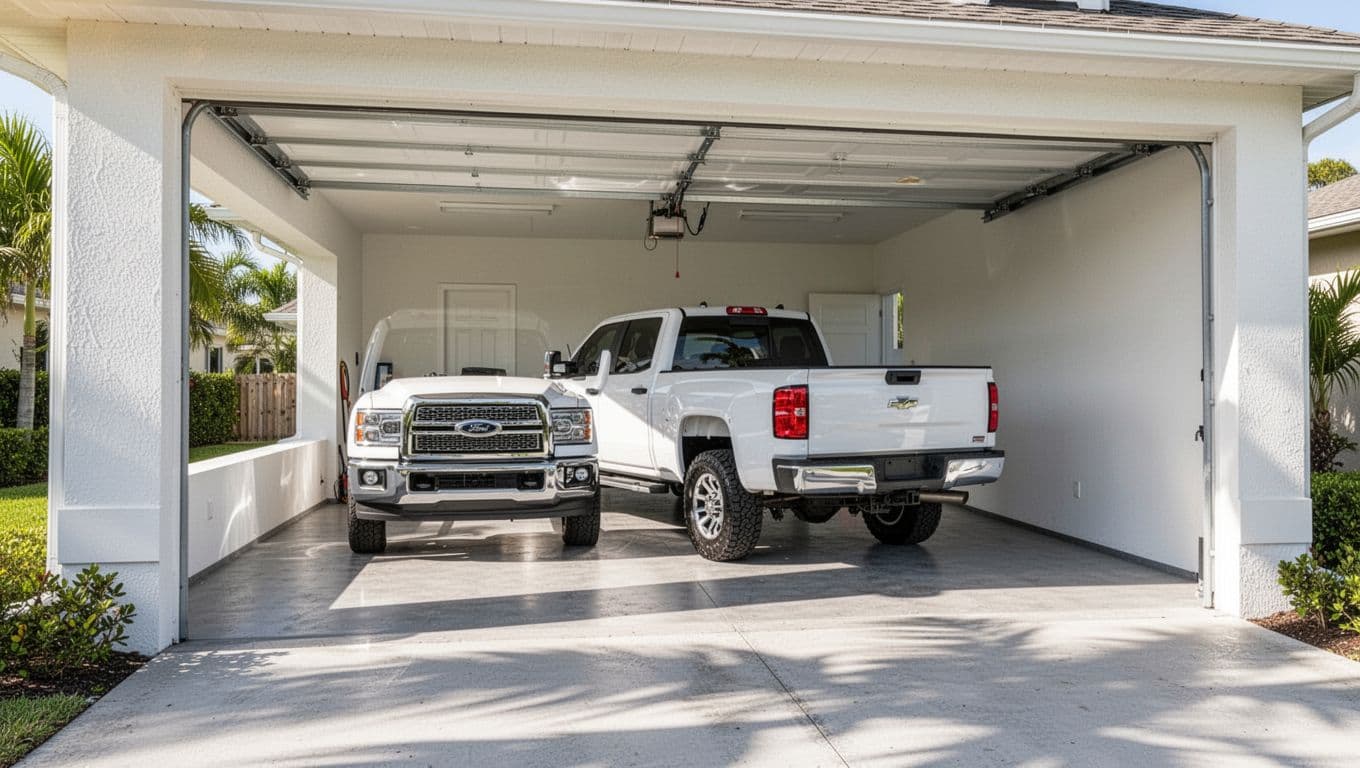
A 24-foot clear garage depth works well for many half-ton trucks, including common models such as the Ford F-150, Chevrolet Silverado 1500, and Ram 1500. A truck around 19 or 20 feet long leaves roughly 4 to 5 feet of combined space at the front and rear.
That clearance is enough for ordinary parking, but it can feel tight when you add shelves, a workbench, a freezer, or stored materials. Two feet behind the truck may also feel uncomfortable when you need to walk around the tailgate.
For a new Fort Myers home, 25 or 26 feet often creates a more useful garage. It gives you flexibility if you change trucks later or add a front brush guard. It also leaves room for a narrow storage zone without forcing the vehicle onto the driveway.
Depth is only one part of the fit. Full-size trucks can be difficult to use in a narrow bay, even when the front and rear clearances look acceptable. Many truck owners prefer a 12-foot-wide bay for easier door opening and mirror clearance. A double garage should also leave enough space between vehicles for people to enter and exit safely.
Height matters when the truck has a bed rack, ladder rack, camper shell, roof-mounted equipment, or oversized tires. An 8-foot garage door may work better than a standard 7-foot opening, but measure the truck and accessories before finalizing the plans. The garage door opener and tracks also need overhead clearance.
How much depth do different truck setups need?
Full-size pickups with standard equipment
A full-size crew-cab pickup with a short or standard bed usually fits best in a 24 to 25-foot garage. That size provides a reasonable margin at both ends without making the garage unnecessarily large.
The exact fit depends on the trim. A short-bed truck may measure closer to 19 feet, while a longer bed can push the vehicle beyond 20 feet. Running boards, aftermarket bumpers, spare tires, and front-mounted equipment can change the measurement.
If you plan to keep the truck inside every night, don't design around a perfect measurement. Leave enough room to open the tailgate, walk behind the truck, and reach the rear wall without touching the vehicle.
Heavy-duty and long-bed trucks
Heavy-duty models such as the Ford F-250, Chevrolet Silverado 2500, and Ram 2500 or 3500 often need more room. A crew cab paired with a long bed can approach 22 or 23 feet, depending on the configuration.
For these trucks, a 26-foot garage depth is a reasonable minimum target . A 27 or 28-foot interior is more comfortable if the garage will hold storage, a water softener, a freezer, or lawn equipment.
Long-bed trucks also have greater turning and door-opening demands. Even if the truck fits front to back, a narrow garage can make daily use frustrating. Plan the bay width and door opening at the same time as the depth.
Trucks with hitches, brush guards, and bed racks
Accessories change the calculation in different ways.
A brush guard or heavy front bumper may extend the truck by several inches. That often moves a 24-foot recommendation closer to 25 or 26 feet. A standard trailer hitch usually stays within the truck's original footprint, but an extended hitch mount can project much farther.
A hitch cargo carrier, motorcycle platform, or rear-mounted spare tire may require 28 to 30 feet of clear depth. Measure the truck with the equipment installed, not the truck's factory length.
A bed rack usually affects height more than length. However, you may need additional rear clearance if you regularly open the tailgate, load long equipment, or access gear from behind. Plan at least 26 feet when a bed rack or camper shell is part of the long-term setup.
If your truck carries a trailer, measure the driveway as well. Garage depth won't help if the driveway is too short to close the garage door while the trailer remains connected.
How to measure your truck and plan clearance
Use the actual vehicle whenever possible. Manufacturer specifications help, but they may not include dealer-installed accessories or equipment added after purchase.
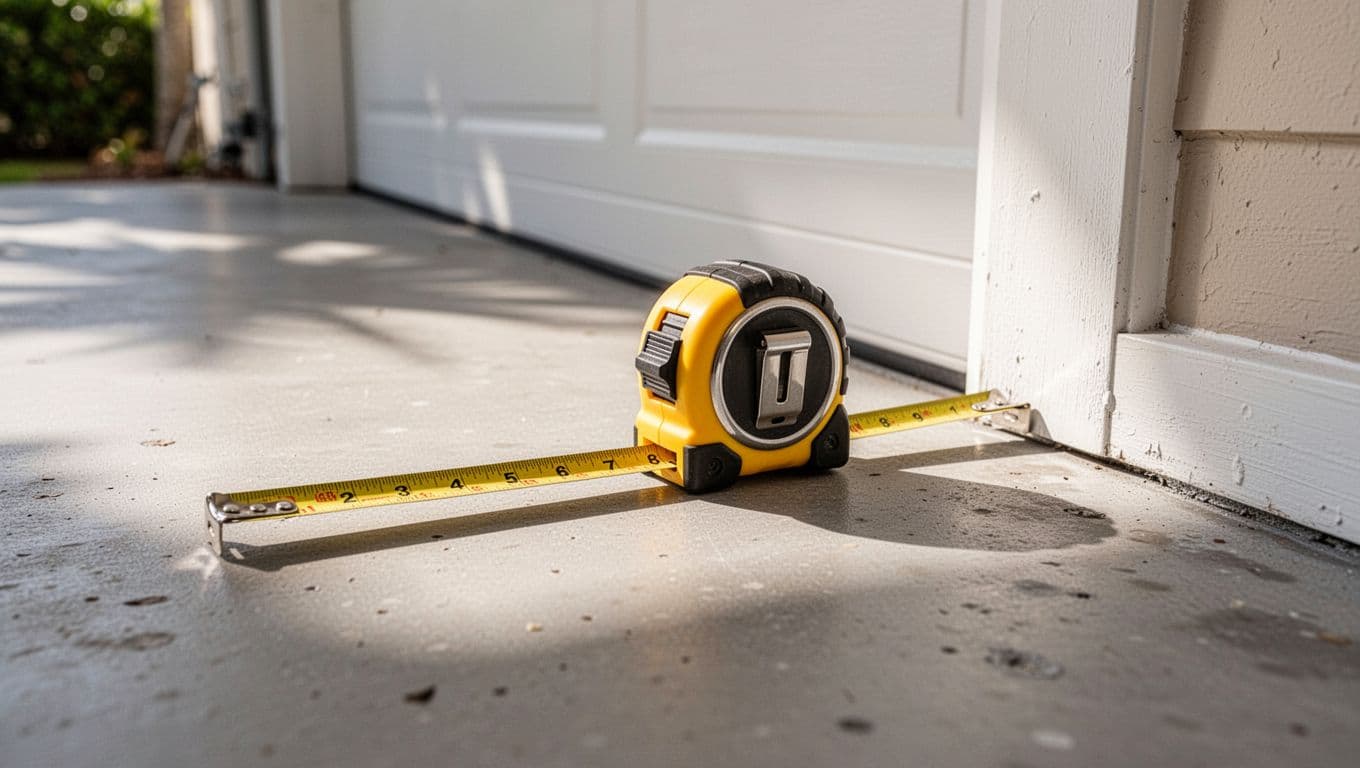
- Measure bumper to bumper. Park the truck on level ground and measure from the farthest front point to the farthest rear point. Include a brush guard, aftermarket bumper, spare tire, hitch attachment, or other permanent equipment.
- Measure with the tailgate closed and open. The closed measurement determines whether the truck fits. The open measurement tells you how much space you need for loading and unloading inside the garage.
- Check the actual garage depth. Measure from the inside face of the closed overhead door to the finished rear wall. If the garage isn't built yet, ask for the finished clear dimension on the plans.
- Mark fixed obstacles. Water heaters, stairs, cabinets, shelving, electrical panels, and air-conditioning equipment can reduce usable space. A shelf that projects 18 inches into the garage can make a comfortable fit feel cramped.
- Measure width and height too. Check mirror-to-mirror width, door clearance, antenna height, roof racks, and bed accessories. A truck needs room for people to move around it, not only enough space for the tires.
A useful planning formula is:
Required garage depth = truck length + front clearance + rear clearance + fixed storage depth
For daily comfort, allow about 2 to 3 feet of open space at each end. If you want a workbench or deep cabinets along the rear wall, add their projection to the calculation.
For example, a 20-foot pickup may fit in a 24-foot garage, but a 26-foot garage leaves a more usable margin. A 22-foot heavy-duty truck may need 27 or 28 feet once storage and access space are included.
Fort Myers planning details homeowners should consider
Southwest Florida garages often store more than vehicles. Homeowners may need room for storm shutters, generators, coolers, beach equipment, pool supplies, landscaping tools, and seasonal items. A garage sized only for the truck can become crowded quickly.
The driveway also affects how deep the garage needs to be. A short driveway may leave the truck's hitch or rear bumper near the sidewalk when the garage door is open. Check the full approach, including the distance from the street, the driveway slope, and any side walls or columns near the garage opening.
Fort Myers properties can also fall under different local jurisdictions and site conditions. A home inside the City of Fort Myers may follow different review procedures than a property in unincorporated Lee County. Flood-zone requirements, lot setbacks, drainage, and finished-floor elevations can affect the overall garage design. Confirm those items with your builder and the applicable building department before finalizing the footprint.
Garage doors need careful planning too. A wider or taller opening can affect the header, wall framing, wind design, and exterior elevations. If you're changing an existing opening, review the likely garage door and exterior structural changes before construction begins.
For a new build, decide where storage will go before choosing the final depth. Wall-mounted cabinets and organized shelving can preserve floor space, but they still reduce the clear distance available for the truck. Planning storage early is easier than trying to recover parking room after the drywall is finished.
Choose the depth based on how you will use the garage
A homeowner who only parks a half-ton pickup may be satisfied with 24 feet. Someone who washes the truck inside, loads tools, stores equipment, or plans to buy an HD model should consider 26 to 28 feet.
A 28 to 30-foot garage can make sense when the truck has an extended hitch setup, when a workshop shares the space, or when the property has limited outdoor storage. That extra depth adds cost and consumes part of the home's footprint, so it should match a real need.
Keep storage organized with wall systems, overhead racks, and cabinets that don't interfere with the truck's doors or tailgate. Garage organization systems can also improve the usability of the space, a point covered in this guide to maximizing home value with garage storage.
Before signing a new-home plan, ask for three measurements in writing:
- The finished interior garage depth.
- The clear width between finished walls.
- The height and width of the finished garage door opening.
Those figures give you something concrete to compare with your truck's measurements.
Conclusion
For most Fort Myers homeowners, 24 to 25 feet of clear interior depth is a solid target for a full-size pickup. Heavy-duty long-bed trucks usually need 26 to 28 feet, while extended hitch equipment or a shared workshop may justify 28 to 30 feet.
Measure the truck's longest points, account for accessories and storage, and confirm the finished garage dimensions rather than relying on exterior plan measurements. A few extra feet planned during construction can prevent years of difficult parking and limited storage.