Does Your Fort Myers Gunite Pool Need a Soil Report?
Explore Our Services
Contact Us Today!
(239) 322-9295
A geotechnical report isn't automatically required for every gunite pool in Fort Myers. The city's pool checklist and Lee County's required-document matrix don't list one as a universal submission, but your pool's design or site conditions may make testing necessary.
The answer depends on your property , including its soil, groundwater and nearby structures. Here's how those factors fit into the permit and construction process.
Key Takeaways
- The City of Fort Myers requires signed and sealed plans for site-built pools, even when a separate soil report isn't listed.
- Loose fill, groundwater or a pool close to a home's foundation may prompt a closer site evaluation.
- A geotechnical report, structural pool plan and construction inspection each answer different questions.
What Fort Myers Pool Permit Documents Require
A Fort Myers mailing address doesn't always mean a property is inside city limits. The City of Fort Myers and unincorporated Lee County have separate permit processes.
Inside the City of Fort Myers
The city's pool checklist requires signed and sealed plans for site-built pools. Those plans include structural details such as reinforcement, concrete thickness, pool depth and the pool's position relative to nearby foundations.
The city also calls for a boundary survey and a site plan showing the pool location and drainage flow. Its checklist doesn't list a geotechnical report as a submission for every pool.
In unincorporated Lee County
Lee County requires a permit for an in-ground pool. Its required-document matrix identifies engineered plans for certain below-ground permit applications, with conditions that vary by permit type and plan-review method.
Neither jurisdiction's general document list rules out a site-specific request during review. The project's engineer may also need soil information to complete the design. Our guide to Fort Myers pool permits and inspections covers the approval process in more detail.
When Soil Testing May Be Useful
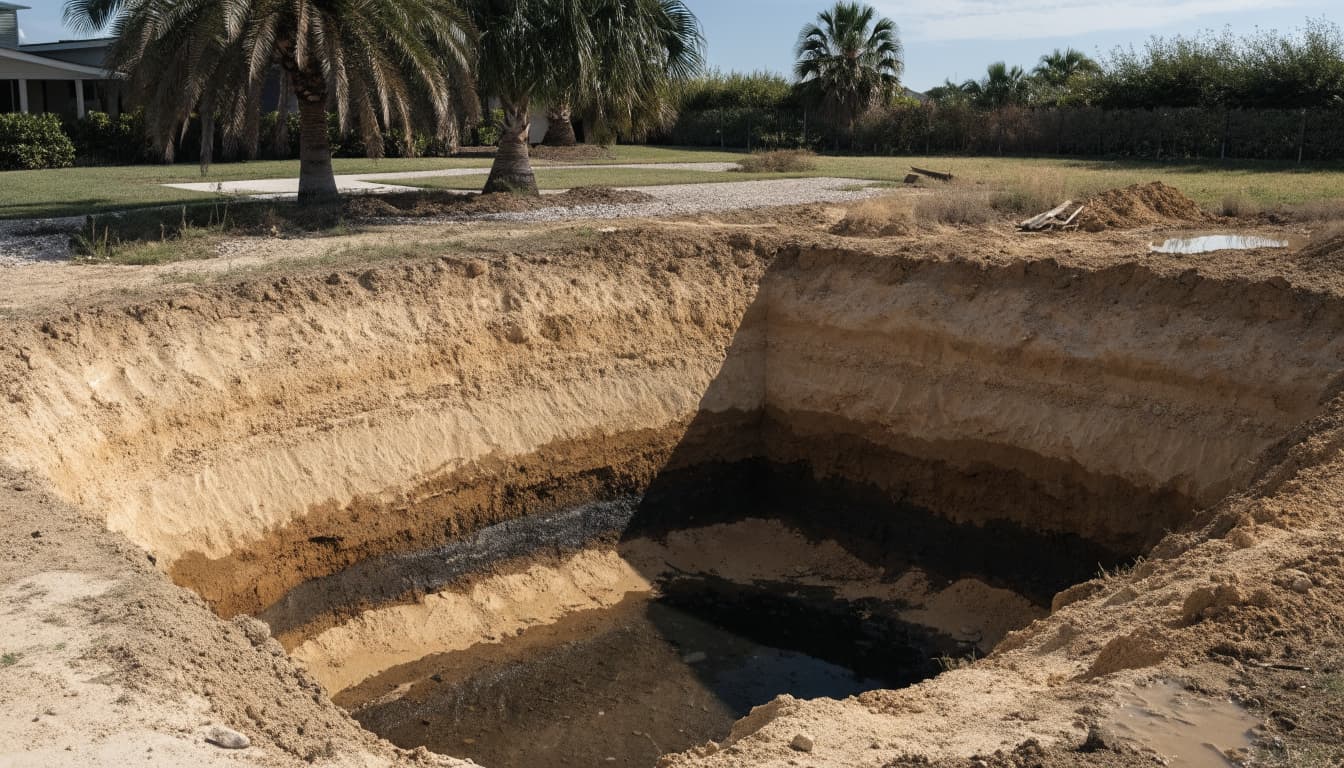
Southwest Florida properties can have sandy soil, imported fill, limestone or shallow groundwater. Conditions can differ between nearby lots, so a neighbor's pool project doesn't establish what lies beneath your proposed excavation.
Fill, weak soil or a complex design
Testing can be useful when a site has unknown fill, signs of settlement or soil conditions that aren't clear from available records. An engineer may also want more information for a deep pool, raised features or a design with unusual loads.
A geotechnical investigation can help the design team evaluate soil support and potential settlement. That information may influence the pool's structural design or preparation of the ground beneath it.
Excavation near a foundation
A pool close to a house can affect the soil supporting its foundation. The city requires additional engineering when excavation falls within the angle of repose of an existing foundation. The plans must show how the foundation will remain supported.
In that situation, the engineer may need site-specific soil information to evaluate the excavation and protection measures. Moving the pool farther away may also be an option, depending on the lot and design.
What a Geotechnical Report Adds to Pool Plans
A geotechnical report describes subsurface conditions at the locations investigated. Depending on its scope, it may include soil borings, observed groundwater, laboratory results and recommendations for design or construction.
For example, a boring may record soil layers and Standard Penetration Test results, often called SPT N-values. An engineer uses those findings alongside the proposed pool design. Our explanation of how soil borings guide foundation design provides more detail on those measurements.
The report is different from the structural pool plan , which shows how the shell is designed and reinforced. It's also different from a permit inspection. Inspections review work at required stages, such as steel and bonding; they don't replace an investigation of the ground beneath the pool.
Plan for Groundwater and Drainage
A dry-looking yard doesn't guarantee a dry excavation. Groundwater levels can vary, and water may enter the hole once crews dig below the surface.
If groundwater is present, the construction plan may need temporary pumping or another approach to manage it. Water handling should protect nearby soil and properties. Groundwater outside an empty pool shell can also create upward pressure, which the pool design must address where applicable.
Temporary excavation water management and permanent backyard drainage are separate concerns. The finished deck and grading still need to direct rainwater appropriately. Our guide to pool drainage before excavation explains how those plans fit together.
Questions to Ask Before Construction
Before the design is finalized, ask your pool contractor or engineer:
- Does the proposed pool sit close enough to the house or another structure to need additional engineering?
- What is known about fill, groundwater and soil at the proposed pool location?
- Would a site-specific investigation help the engineer design the shell or plan the excavation?
- Who will manage unexpected water or unsuitable soil, and how would that work affect the contract?
Ask for the answers alongside the pool plans and scope of work. If testing is recommended, the engineer can define where borings are needed and what the report should address.
Frequently Asked Questions
Can existing home soil reports be used for a pool?
An existing report can give the pool engineer useful background. However, its borings may be in a different part of the lot or may not address the proposed pool depth. The engineer can decide whether it provides enough information for the pool design.
Does a sealed pool plan replace a soil report?
A sealed plan and a geotechnical report have different purposes. The plan documents the pool design; a soil report provides subsurface information that may inform that design. A project can need one, both or additional engineering, depending on its conditions.
Make the Decision Before You Dig
A geotechnical report isn't a universal pool-permit requirement in the cited Fort Myers and Lee County documents. It can still be valuable when the ground, groundwater or nearby foundations raise questions about the design.
Discuss those conditions while there's still room to adjust the layout and scope. We offer pool construction consultations for homeowners planning a new backyard in Southwest Florida.