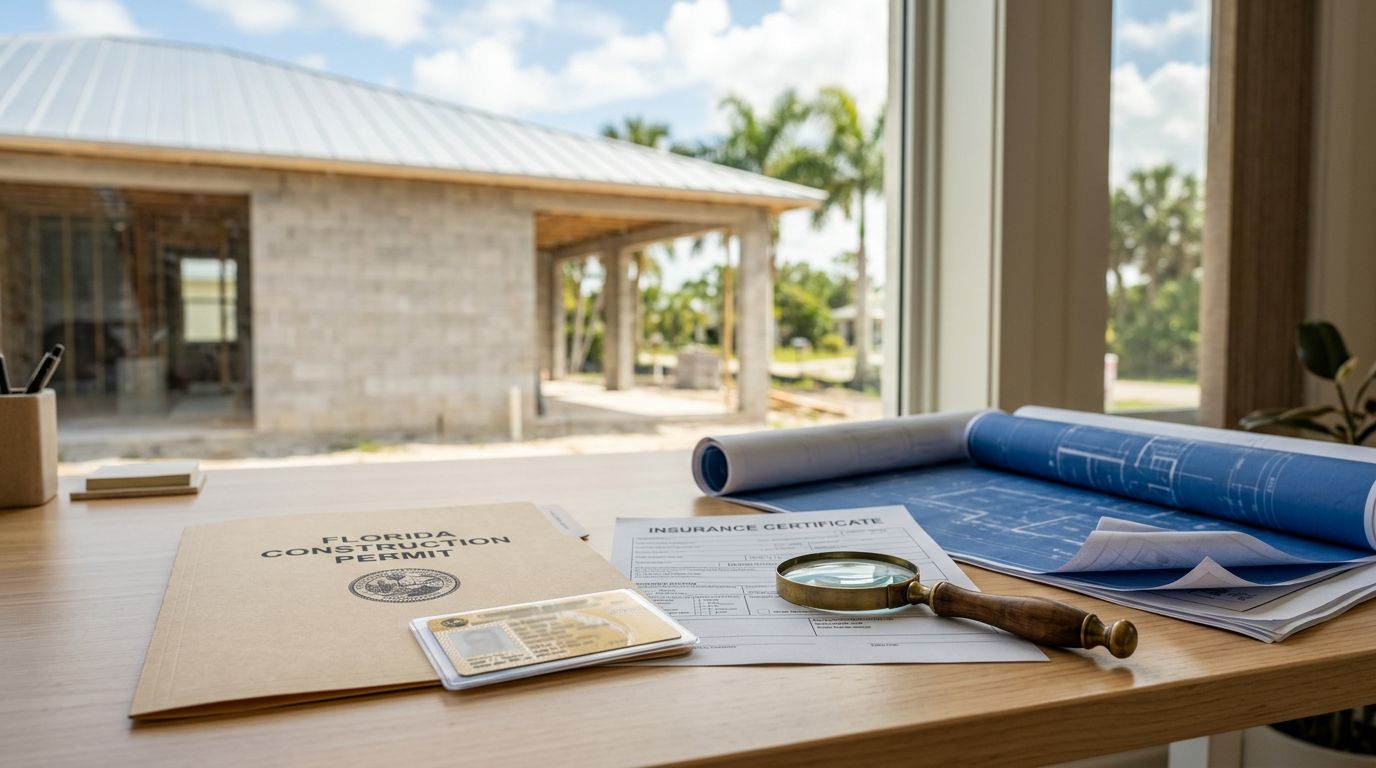
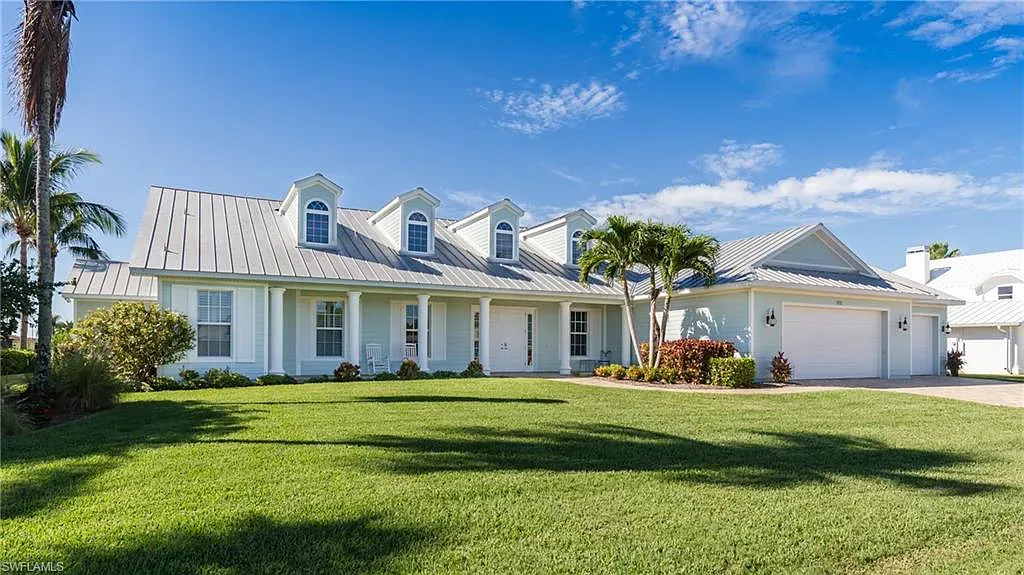



Building a new home in Southwest Florida starts with the lot, and the lot can run out of room faster than many owners expect. Lee County lot coverage is one of the first limits that shapes the size, layout, and style of a new house.
In 2026, the key question is simple: how much of the parcel can your home and other structures occupy? The answer depends on where the lot sits, because county rules, city rules, overlays, and zoning districts do not all match.
What lot coverage means in plain English
Lot coverage is the portion of a property that is covered by buildings or other structures. In most home plans, that means the ground footprint of the house, garage, and other roofed areas.
It is different from floor area. A two-story house can have the same lot coverage as a one-story house if the footprint is the same. It is also different from setbacks, which control how close the building can sit to the lot line.
A simple way to think about it is this:
lot coverage = building footprint ÷ total lot area
If your lot is 10,000 square feet and the allowed coverage is 25%, the building footprint can total 2,500 square feet, before any other site rules are applied.
A plan can fit the coverage limit and still fail if it sits too close to a property line.
That is why survey work matters early. A tax record or online map is not a substitute for a real survey and a zoning check.
The 2026 Lee County lot coverage baseline
For unincorporated Lee County, the main rule found in 2026 is a 25% maximum lot coverage unless a specific zoning district or plan section says otherwise. That means the county starts with a quarter of the lot as the general cap, then applies district-specific rules where needed.
Setbacks still apply. A home can stay under the coverage cap and still fail if it breaks a front, side, rear, or corner-lot setback. That is one reason site plans need to be checked as a whole, not pieced together one rule at a time.
The rule can also shift for special cases such as courtyard lots, alleys, lanes, or other zoning types. In other words, the number is a baseline, not a promise.
If your project is still in the budget stage, the permit side matters too. A broader site plan can affect fees, review time, and utility-related costs, so it helps to see the full picture early. Our 2026 permit fee breakdown for Lee County construction gives a useful starting point.
What usually counts toward lot coverage, and what often does not
Local reviewers usually focus on permanent, roofed structures. Open areas often get treated differently, but the exact count depends on the code and the parcel.
| Feature | Common treatment in lot coverage review | Notes |
|---|---|---|
| Main house footprint | Usually counts | The base footprint of the home is the starting point. |
| Attached garage | Usually counts | Attached roofed space is often included. |
| Covered porch or lanai | Often counts | Roofed, permanent projections may add to coverage. |
| Screen enclosure with a roof | Often counts | The roofed footprint matters more than the screen. |
| Detached shed or cabana | Often counts | Permanent accessory buildings may be included. |
| Open patio or pavers | Often does not count | Other rules can still apply. |
| Driveway or walk | Usually does not count | Stormwater or hardscape rules may still matter. |
| Pool | Usually does not count | Decks and enclosures can be treated differently. |
| Pergola or trellis | Depends | Solid roofs and permanent covers are more likely to count. |
The safest habit is to treat any permanent roofed structure as a possible part of the footprint until the local reviewer says otherwise. A covered lanai that feels small in the field can still push a plan over the line on paper.
For many Southwest Florida homes, the hard part is not the main house. It is the collection of extras, such as a larger garage, a front porch, a rear lanai, or a detached storage building.
How to measure coverage before you design
A clean measurement process saves redraws. It also keeps the plan aligned with the lot before the builder, designer, or permit office spends time on details.
- Confirm whether the parcel is in unincorporated Lee County or inside a city.
- Find the zoning district and any overlay that affects the site.
- Use the survey to get the true lot area.
- Add up the footprints of the house, garage, and other structures that may count.
- Compare the total footprint to the allowed percentage, then check setbacks.
A quick example shows how fast the math changes.
| Item | Square feet |
|---|---|
| Lot size | 10,000 |
| 25% maximum coverage | 2,500 |
| House footprint | 1,850 |
| Attached garage | 400 |
| Covered porch | 180 |
| Total footprint | 2,430 |
That plan stays under the 2,500 square-foot cap, but only by 70 square feet. If the porch grows, or if the county counts another feature, the plan can go over.
This is where a measured site plan beats guesswork. A plan that looks roomy on a sketch can be tight once the footprint is drawn to scale.
How lot coverage affects real design choices
Lot coverage rules shape more than the final permit set. They affect what kind of house makes sense on the lot in the first place.
A wider single-story plan uses more ground area. A taller home can preserve yard space because coverage looks at the footprint, not the number of floors. That is why some tight lots work better with a second floor, a narrower garage, or a smaller covered porch.
A few design choices matter fast:
- A large front porch can eat into the footprint sooner than expected.
- A deep lanai can push a plan over the limit.
- A detached cabana may fit well on one parcel and fail on the next.
- A pool can fit the site, but the surrounding deck and screen enclosure still need review.
If you work with a cost-plus home builder, transparent pricing helps here. You can see how changes to the footprint affect the rest of the budget before the plans are locked. That matters when a few extra square feet at the ground level change framing, roofing, and permit work.
It also helps to talk early with a builder who understands local site limits. If you want that conversation to start with the lot, not after a redline, you can talk to our licensed contractors.
What to verify before submitting plans
Before a set of plans goes to review, the local authority should confirm the items that matter most. A short checklist can keep the process moving.
- The exact zoning district for the parcel
- Whether the lot is in unincorporated Lee County or a city
- Any overlay, conservation, flood, or access rule on the site
- Which structures count toward coverage on that lot
- The survey, setbacks, and easements shown on the plan
If anything is unclear, ask the zoning or permitting office before the design is final. That is especially important for corner lots, narrow lots, and parcels with unusual access.
A HOA may add its own limits too, although those are separate from county or city code. Even when the local government approves a plan, a neighborhood rule can still slow the project.
Conclusion
Lee County lot coverage rules in 2026 are straightforward at the highest level, but the details matter. In unincorporated Lee County, the common baseline is a 25% maximum, yet zoning districts, overlays, and municipal boundaries can change the answer.
The safest path is to check the survey, confirm the zoning, and measure the full footprint before the design gets too far along. That one step can save time, protect the budget, and keep the plan inside both the coverage limit and the setback lines.