Salt Chlorine Generator Sizing for Port Charlotte Pools
Explore Our Services
Contact Us Today!
(239) 322-9295
Salt chlorine generator sizing starts with your pool's water volume and the amount of chlorine your household needs. For a gunite pool in Port Charlotte, the shell material doesn't determine the generator size. The water it holds and the conditions around it matter more.
Start with finished water dimensions , then compare equipment ratings and production capacity. A little planning now can make the system easier to operate throughout the swimming season.
Estimate Your Gunite Pool's Water Volume
Water volume gives you a starting point for comparing generators. For a new pool, look at the finished interior dimensions on the construction plans. For an existing pool, use measurements of the water area rather than the outside edges of the shell or deck.
Measure the Water, Not the Pool Walls
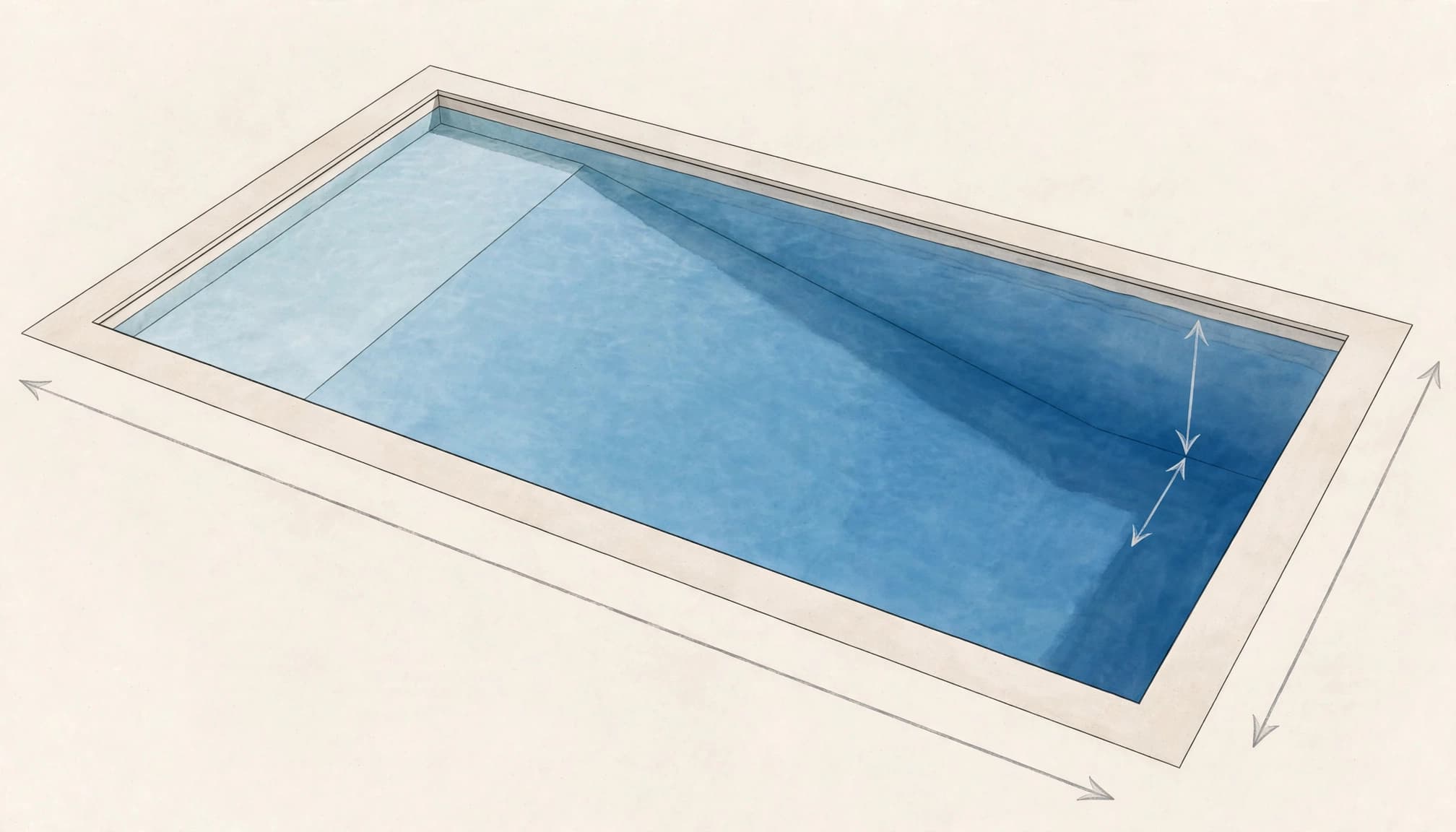
For a rectangular pool, you'll need the interior length, width, and water depth. Measure depth from the waterline to the finished floor. Wall height alone can overstate the amount of water in the pool.
A sloped floor needs an estimated average depth. If the bottom slopes evenly between a shallow end and a deep end, the midpoint between those depths is a useful starting estimate. A long shallow section or a short deep pocket changes that average, so the floor profile matters.
Account for Shelves, Curves, and a Spa
Benches, steps, and sun shelves occupy space that would otherwise hold water. Freeform pools also need more care because their width changes along the shell. Construction drawings or as-built measurements can help divide the pool into smaller, more regular areas for an estimate.
Include a connected spa when its water shares the pool's circulation system. A spillover spa adds water to the system and can affect the way the equipment operates.
Compare Generator Ratings and Chlorine Production
A salt chlorine generator has a salt cell and controls that work with the pool's circulation system. As water passes through the cell, the system uses electricity to produce chlorine. The pool still contains chlorine, even though you may add less of it manually.
Our guide to how saltwater pools sanitize water explains the difference between salt systems and traditional chlorine treatment.
Understand the Pool Capacity Rating
Manufacturers list a pool capacity for their systems. That number is a useful comparison point, but it isn't a measurement of your pool's actual water volume.
A capacity rating also doesn't describe every condition the generator will face. Two pools holding the same amount of water can have different sanitation needs because one gets more sun or more swimmers.
Look at Chlorine Production, Too
The generator's published chlorine production capacity tells you more than the pool-capacity label alone. Compare production information on the same basis when looking at different systems.
Actual production depends on operation. The cell makes chlorine while the system runs under suitable conditions. Its output setting, operating schedule, water flow, and condition all affect how much chlorine reaches the pool.
A larger production capacity can give an owner room to adjust the system as demand changes. It doesn't remove the need to test the water or correct a circulation problem.
Two Pool Volume Examples
These examples show how dimensions can lead to different water volumes, even when both pools have gunite shells. Finished steps, benches, shelves, and other features can change the estimates.
A Compact Rectangular Pool
A rectangular pool with an interior water area of 30 feet by 15 feet and a consistent water depth of 4 feet holds approximately 13,500 gallons before accounting for features that displace water.
That estimate gives you a figure to use when comparing generator labels. It also gives your pool professional a starting point for discussing how the pool will be used. An enclosed pool used by a couple may have a different daily chlorine demand than an uncovered pool that hosts frequent gatherings.
A Larger Pool With a Sloped Floor
Consider a 40-foot by 20-foot rectangular pool with an evenly sloped floor and an average water depth of 4.5 feet. Its estimated volume is approximately 26,900 gallons before adjustments for steps, benches, or other features.
The larger volume gives this pool a different starting point for the equipment comparison. If it also has a connected spa, the shared water volume needs to be included. The generator's published production information remains important alongside its pool-capacity rating.
Why Generator Reserve Capacity Matters
Pool conditions don't stay constant. A generator that handles an ordinary day may need a higher output setting when more people swim or the water receives more sunlight.
Equipment with capacity beyond the pool's estimated volume can offer reserve capacity . That reserve gives the owner more room to adjust production instead of relying on a system that must work near its limit during routine use.
Reserve capacity doesn't mean you can ignore the water. A salt cell produces chlorine over time, and a sudden drop after heavy use may call for a separate treatment. A pool professional can help address an abnormal reading rather than relying on the generator to correct it immediately.
Consider Port Charlotte's Sun and Seasonal Use
Port Charlotte's outdoor pools face strong sunlight, warm weather, and periods of heavy rain. Those conditions affect water care even when the pool isn't busy.
Sunlight and Warm Water
Sunlight breaks down chlorine in outdoor pool water. Cyanuric acid, often called stabilizer, helps protect chlorine from sunlight, but its level still needs attention as part of the pool's water balance.
Warm water can encourage algae growth when sanitizer falls too low. Shade and screen enclosures can affect the sunlight reaching the pool, so two neighboring backyards may not have identical maintenance patterns.
Rain, Debris, and More Swimmers
Rain can dilute pool water and lower its salt concentration. Storms can also leave leaves and other organic material in the pool, adding to the work the sanitizer must do.
Seasonal use matters as well. A home used more heavily during visits and holidays may need a different output setting during those periods. After a busy weekend or storm, test the water rather than assuming the previous setting is still appropriate.
Plan the Cell Around Your Pool Equipment
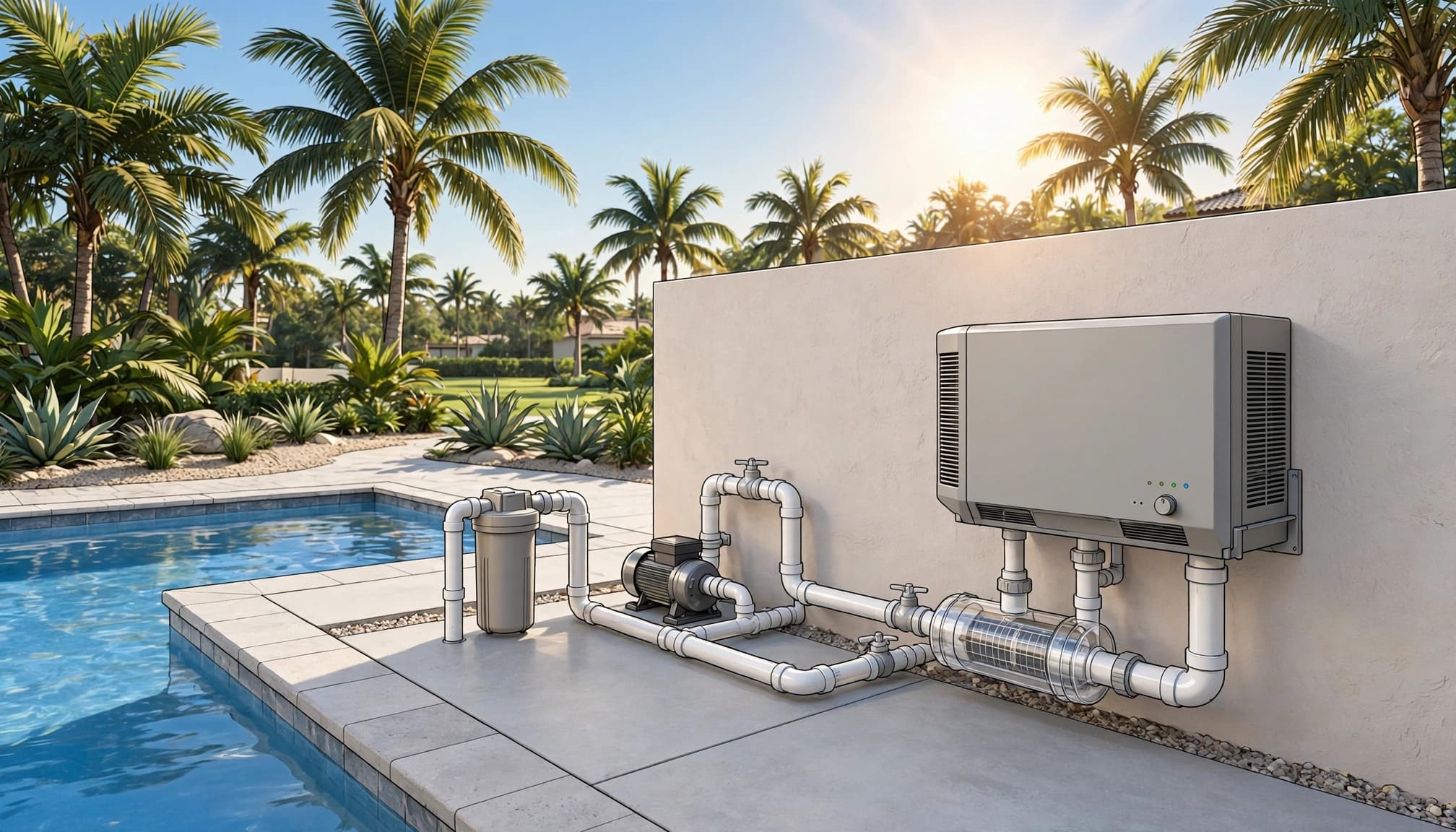
A salt cell is part of the equipment system, not a substitute for the pump or filter. Water needs to circulate through the cell for it to produce chlorine, and that chlorine needs to reach the rest of the pool.
Circulation Affects Daily Operation
The generator connects to the plumbing after the pump and filter. Its operation depends on suitable flow and the equipment schedule. A variable-speed pump can run at different speeds, but the cell still needs the flow required by its system.
A longer operating schedule may provide more time for chlorine production, but it also affects pump energy use. The schedule should support circulation and filtration as well as sanitation.
Leave Room for Service
The cell needs access for inspection, cleaning, and eventual replacement. Controls also need a practical location, while filters and other equipment need their own service space.
Our guide to pool equipment access and service clearances covers layout considerations for a Southwest Florida equipment pad. Plan the plumbing and electrical work with the equipment, especially before a new deck limits access.
Keep the Salt System Working Well
The right equipment capacity helps with daily chlorine production, but water testing and cell care remain part of pool ownership.
Test More Than Salt
Monitor free chlorine and pH along with salt. Total alkalinity, calcium hardness, and cyanuric acid also affect water balance. Salt systems can cause pH to rise over time, so a good chlorine reading alone doesn't tell you everything about the water.
The appropriate salt level depends on the equipment. A salt display can alert you to a problem, but a separate water test is useful before adding salt. Excess salt is harder to correct than a low reading because reducing it generally requires replacing some pool water.
Watch for Scale and Wear
Calcium scale can build up on the cell plates, particularly when water chemistry drifts out of range. Scale interferes with operation, while unnecessary or aggressive cleaning can damage the cell. Follow the cell's cleaning directions and inspect it as part of the pool's maintenance routine.
Salt cells eventually need replacement. Keeping the cell accessible makes that future work easier, whether the system is part of a new pool or an equipment upgrade.
Coordinate Salt Equipment With New Pool Construction
For a new gunite pool, the generator decision belongs alongside the plumbing and equipment plan. Pool dimensions, the depth profile, a connected spa, and water features all affect the completed system.
The interior finish needs attention during startup, too. New plaster has its own care schedule, and salt system use may need to wait while the finish cures. Follow the written startup directions for the selected finish rather than treating a new pool like an established one.
At Cutting Edge Homes & Renovations, our custom gunite pool construction work includes planning the pool and its equipment for the property. Bringing those decisions together early helps avoid crowded equipment areas and changes after construction.
Choose Around the Water Your Pool Holds
A gunite shell can hold many different volumes, so the shell material alone won't tell you which salt system fits. Start with the finished water dimensions, account for connected water, and compare both the equipment's capacity rating and its chlorine production information.
Good water testing and circulation remain important after installation. They show you how the pool is responding as sunlight, weather, and family use change.