Saltwater Pools vs Chlorine for Estero Homes
Explore Our Services
Contact Us Today!
(239) 322-9295
A pool can look simple from the patio, yet the sanitation system affects your budget, maintenance routine, water feel, and equipment choices for years. When you compare saltwater pools vs chlorine , the biggest difference is how chlorine enters the water, not whether chlorine is present.
Saltwater systems generate chlorine automatically, while traditional systems depend on tablets, liquid chlorine, or a chemical feeder. Both can keep an Estero pool clean and safe when the water stays balanced. The right choice depends on how much automation you want, your installation budget, and how carefully the system matches your backyard design.
saltwater pools vs chlorine: what actually changes
A saltwater pool contains dissolved salt, usually in the range of 2,500 to 3,500 parts per million, depending on the equipment manufacturer. Ocean water contains roughly 35,000 parts per million, so a residential salt pool doesn't taste or feel like seawater.
The salt passes through a salt chlorine generator, also called a salt cell. Electrolysis separates the salt into chlorine, which sanitizes the water. After the chlorine does its work, it eventually converts back into salt, and the cycle continues.
A saltwater pool is still a chlorine pool. The generator makes chlorine on site instead of requiring you to add most of it manually.
Traditional chlorine systems add sanitizer directly. Homeowners may use chlorine tablets in a floating dispenser or inline feeder, liquid chlorine, or granular shock. A service company can also manage dosing on a regular schedule.
Neither system eliminates testing. Both require attention to free chlorine, pH, total alkalinity, and cyanuric acid. A salt generator handles chlorine production, but it doesn't correct poor circulation, high calcium hardness, debris, or an overloaded filter.
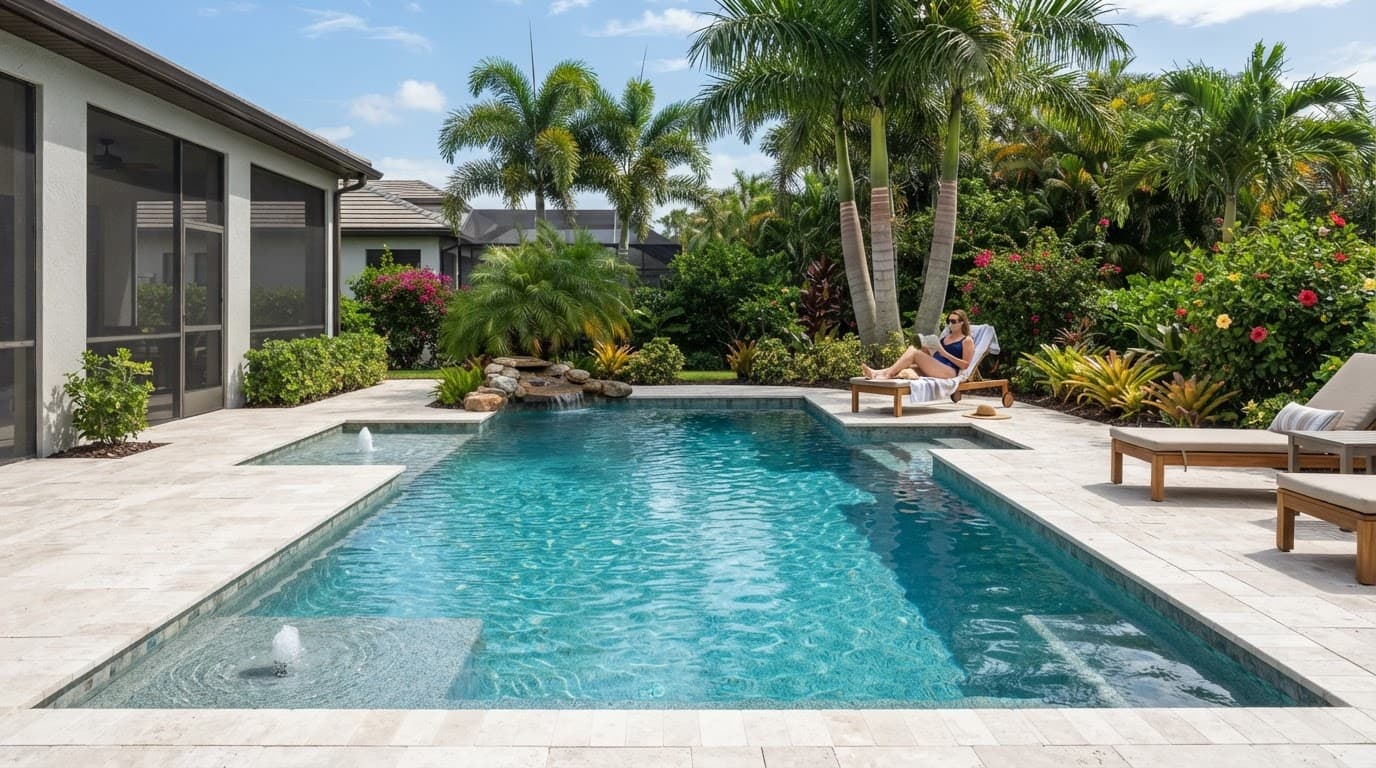
How a salt chlorine generator works
The generator connects to the pool's plumbing after the pump and filter. As water passes through the cell, an electrical current produces chlorine from the dissolved salt. You can adjust the generator's output to match the pool's demand.
That demand changes with sunlight, temperature, rainfall, pool use, and debris. Southwest Florida's strong sun can consume chlorine quickly, while heavy rain can dilute the water and lower the salt level. A properly sized generator gives you more consistent daily production, but it cannot respond perfectly to every weather change.
Salt systems also have a cell that requires cleaning and eventual replacement. Calcium scale can build up on the plates, especially when water chemistry drifts out of range. Regular testing helps prevent that buildup.
How a traditional chlorine system works
A traditional setup gives you more direct control over the sanitizer. You can add chlorine after a storm, before a gathering, or when testing shows a low reading. That flexibility is useful for pools with changing use patterns.
The tradeoff is a more hands-on routine. Tablets can raise cyanuric acid over time, and liquid chlorine requires careful storage and frequent dosing. A chlorine feeder reduces daily work, but you still need to monitor the water and refill the supply.
Comparing the two systems side by side
The saltwater pools vs chlorine decision becomes easier when you compare the factors that matter after construction, not only the equipment price.
| Factor | Saltwater system | Traditional chlorine system |
|---|---|---|
| Sanitizer source | Generator produces chlorine from salt | Owner or service company adds chlorine |
| Upfront cost | Higher because of the salt cell and controls | Lower in most installations |
| Daily maintenance | Usually less manual dosing | Requires regular chemical additions |
| Water chemistry | Still needs testing and pH control | Still needs testing and pH control |
| Equipment needs | Salt cell, control unit, compatible plumbing | Feeder, tablet storage, or liquid dosing setup |
| Long-term expenses | Cell cleaning and replacement, salt additions | Ongoing chlorine purchases and shock |
| Response to heavy use | Output can be increased, but not instantly | Chlorine can be added immediately |
| Corrosion concerns | Requires careful material selection and water balance | Generally fewer salt-related concerns |
The table shows the central tradeoff. Salt systems cost more at installation but can reduce the routine handling of chlorine. Traditional systems cost less to install and give you fast manual control, but they usually demand more frequent attention.
Neither choice guarantees softer water. Saltwater may feel smoother to some swimmers because the salt changes the water's texture, but it isn't a substitute for balanced chemistry. Swimmer comfort depends on chlorine levels, pH, chloramines, water temperature, and cleanliness.
Maintenance in Southwest Florida's heat and rain
Estero pool owners deal with conditions that can change water chemistry quickly. Bright sun increases chlorine demand. Afternoon storms add fresh water, debris, and sometimes organic material. High temperatures also encourage algae growth when sanitizer levels fall.
Salt systems reduce the need to measure and pour chlorine every few days, but they still need a routine. Test the water regularly, inspect the cell, and adjust the output when pool use or weather changes. A salt display can show a low-salt warning, yet a separate water test is useful before adding salt.
The generator's pH tendency also matters. Salt chlorination can cause pH to rise gradually, so many homeowners add acid periodically. Total alkalinity helps control that movement. High calcium hardness can create scale on the salt cell, heater, tile, and other surfaces.
Traditional chlorine requires a different rhythm. Test free chlorine and pH, add the correct dose, and keep tablets or liquid chlorine available. After heavy rain or a pool party, the water may need extra chlorine. You also need to watch cyanuric acid if you rely heavily on stabilized tablets.
Pool circulation affects both systems. A salt cell cannot sanitize water that never passes through it, and chlorine won't distribute evenly without adequate circulation. Clean the filter, maintain the pump, empty baskets, and follow the equipment manufacturer's recommended run times.
Installation cost, repairs, and equipment life
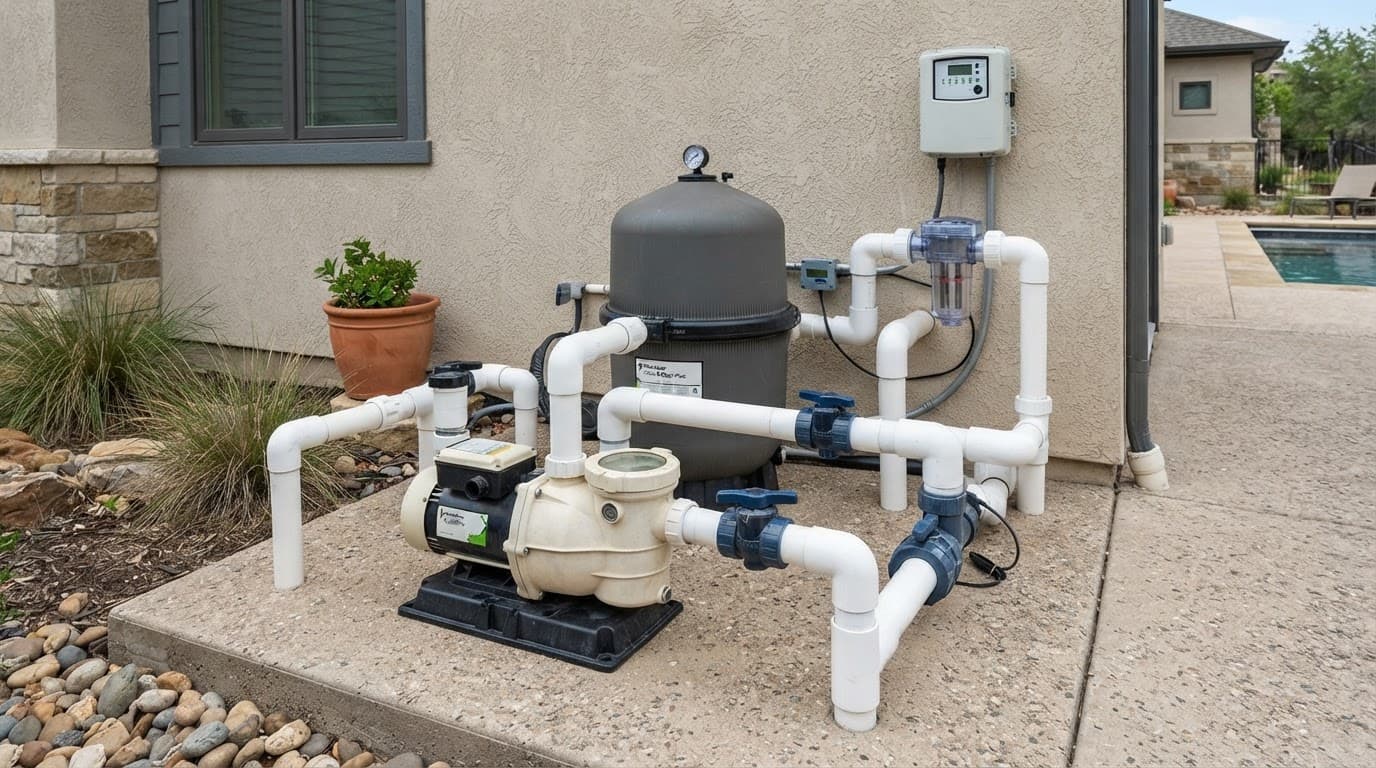
Traditional chlorine usually has the lower starting cost. A basic setup may need a pump, filter, plumbing, valves, and a chlorine feeder. A saltwater installation adds the generator, control equipment, electrical connections, and the salt itself.
For many residential projects, a salt chlorinator can add roughly $1,500 to $3,500 to the installed price, although pool size, brand, electrical work, access, and equipment layout can change the total. Ask for an itemized estimate instead of treating "saltwater upgrade" as a single fixed number.
Salt cells don't last forever. Many manufacturers rate cells for several thousand operating hours, which often equals several seasons of residential use. Replacement cells cost hundreds of dollars, and poor chemistry can shorten their life.
Traditional systems avoid the salt cell, but chemical costs continue throughout ownership. Tablet prices, liquid chlorine, shock, test supplies, and service visits add up. The lower installation price doesn't automatically mean the lower lifetime cost.
Material compatibility also matters in a saltwater design. Salt and moisture can contribute to corrosion around metal fixtures, hardware, outdoor furniture, and equipment areas when water splashes onto them repeatedly. Proper bonding, suitable materials, correct plumbing, and good drainage reduce these problems.
If you're building a new pool or changing an existing system, work with a licensed professional who can coordinate the pool shell, electrical work, equipment pad, drainage, and permits. A Southwest Florida pool contractor can also help match the sanitation system to your planned lanai, pavers, outdoor kitchen, and other backyard features.
Which system fits your Estero home?
Saltwater is a strong fit when you want less routine chemical handling and plan to keep the pool for many years. It can also suit homeowners who prefer steady chlorine production and don't mind paying more upfront for the equipment.
Traditional chlorine may make more sense when your priority is the lowest initial cost or quick control after heavy use. It can also work well for a vacation property with professional pool service, since a technician can handle testing and dosing.
Before choosing, consider:
- A salt system needs enough generator capacity for your pool size, sun exposure, and expected use.
- A traditional system needs a practical place to store chemicals safely and out of direct heat.
- Saltwater equipment requires cell inspection, pH control, and attention to corrosion-prone materials.
- Chlorine equipment offers simple troubleshooting and immediate dosing when conditions change.
- Both systems need reliable circulation, filtration, testing, and properly maintained surfaces.
Pool size and layout should guide the decision. A large pool with a spa, water features, and heavy sun exposure may require more sanitation capacity than a compact, shaded pool. Water features can also increase aeration and evaporation, which affects chemical balance and salt concentration.
Ask your builder how the system will handle Florida rain, equipment access, future repairs, and the exact warranty terms. A low price means less if the cell is difficult to reach or the equipment pad leaves no room for service.
Choose the system you'll maintain correctly
The best saltwater pools vs chlorine choice is the one that matches your habits and your construction plan. Saltwater systems provide convenient chlorine production, but they still need testing and occasional chemical adjustments. Traditional chlorine systems cost less to install and offer faster manual control, yet they require more frequent dosing.
For an Estero homeowner, the pool's equipment layout matters as much as the sanitizer label. Plan for safe chemical storage, easy filter access, proper electrical bonding, drainage, and materials that can handle a wet Southwest Florida environment.
Conclusion
Saltwater and traditional chlorine systems can both deliver clear, comfortable pool water. Saltwater usually wins on daily convenience, while traditional chlorine often wins on upfront simplicity, lower installation cost, and direct control.
The phrase saltwater pools vs chlorine describes a choice between two maintenance systems, not chlorine versus no chlorine. Review the long-term costs, your willingness to test and dose the water, and the equipment plan before construction begins. A well-designed system that you maintain consistently will serve your Estero backyard better than a system chosen by price alone.