Small Kitchen Storage Ideas for Punta Gorda Homes
Explore Our Services
Contact Us Today!
(239) 322-9295
A small kitchen storage plan can make a Punta Gorda home feel calmer without changing its footprint. The goal is simple: keep daily items easy to reach, move occasional-use pieces out of prime cabinet space, and protect clear countertop areas for cooking.
You don't need to remove walls to gain useful capacity. Start with the cabinets and pantry, then look at vertical surfaces, narrow gaps, appliance placement, and renter-friendly additions. These practical ideas work for existing homes, rental kitchens, and larger renovation plans.
Small Kitchen Storage Ideas That Start With a Cabinet Audit
Before buying organizers, study how your kitchen works now. Storage often feels limited because shelves hold the wrong items, not because every cabinet is full.
Measure each cabinet before buying organizers
Empty one cabinet or drawer at a time. Measure its width, depth, height, opening, hinge position, and any plumbing below it. A pull-out shelf that fits inside the cabinet may still fail if the door hinge blocks the tray.
Also check the space between your refrigerator and wall, the gap beside a range, and the distance between counters and walkways. A few inches can accommodate a narrow cart, but a poorly placed organizer can make doors difficult to open.
Remove broken utensils, duplicate tools, and items you rarely use. Keep holiday serving pieces or specialty appliances in a higher cabinet, storage room, or garage cabinet instead of taking up everyday space.
Give the easiest space to daily items
Place plates, glasses, pans, coffee supplies, and cooking utensils near the areas where you use them. Store cutting boards near the prep counter, pans near the cooktop, and dish towels near the sink.
Heavy cookware belongs in lower drawers or cabinets. You won't need to lift a cast-iron pan overhead, and lower storage reduces the risk of dropped items. Small bins can keep lids upright, while drawer dividers prevent measuring tools from spreading across the entire drawer.
Make Pantry and Cabinet Organization Work Harder
Deep shelves can hold plenty of food, yet they often hide cans and packages behind the first row. Better organization makes the full cabinet visible.
Improve a pantry without rebuilding it
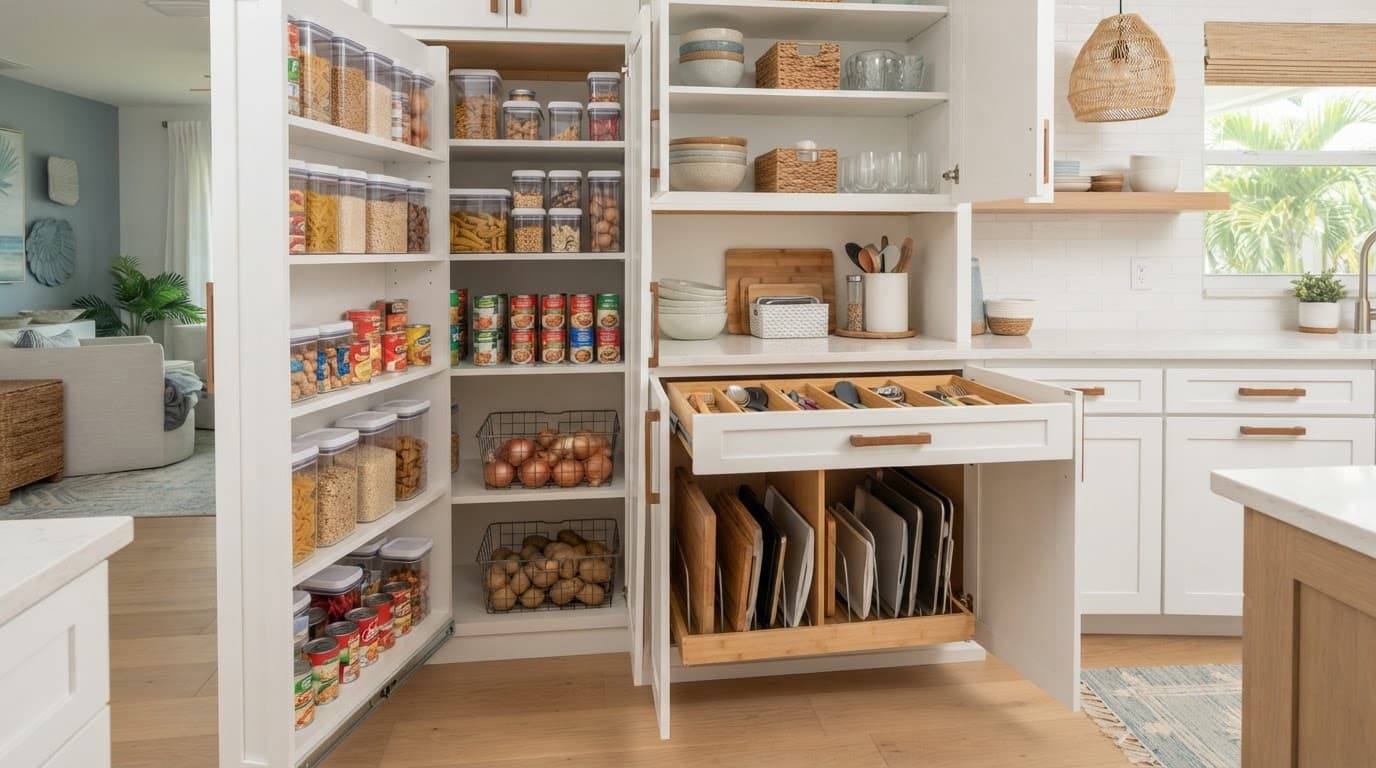
Use shelf risers for cans, baskets for snacks, and narrow bins for packets or baking supplies. Clear, airtight containers can protect flour, sugar, cereal, and other dry goods from Florida humidity. Choose containers that stack securely and fit the shelf depth.
A door-mounted rack can hold wraps, spices, or small bottles, provided the added weight doesn't prevent the pantry door from closing. For a narrow pantry, group items by use instead of placing every package in a single deep row.
Keep a small amount of clearance around shelves and containers. Crowded food storage is harder to clean and makes expired items easy to miss.
Add order inside ordinary cabinets
Pull-out trays are useful in base cabinets because they bring stored items forward. A two-tier organizer can improve access beneath the sink, although the area needs moisture-resistant materials and enough room around the drain and supply lines.
Corner cabinets often benefit from a rotating shelf or kidney-shaped organizer. Use the cabinet door for light items, such as pot lids or cleaning brushes, but don't overload the hinges.
A slim vertical divider can store baking sheets, cutting boards, and cooling racks upright. That change often frees a wider shelf for bowls, pans, or food containers.
Use Vertical and Unused Space
When floor space is limited, look upward and into areas that currently collect clutter. Vertical storage can add capacity without taking away valuable prep space.
Turn narrow gaps into useful storage
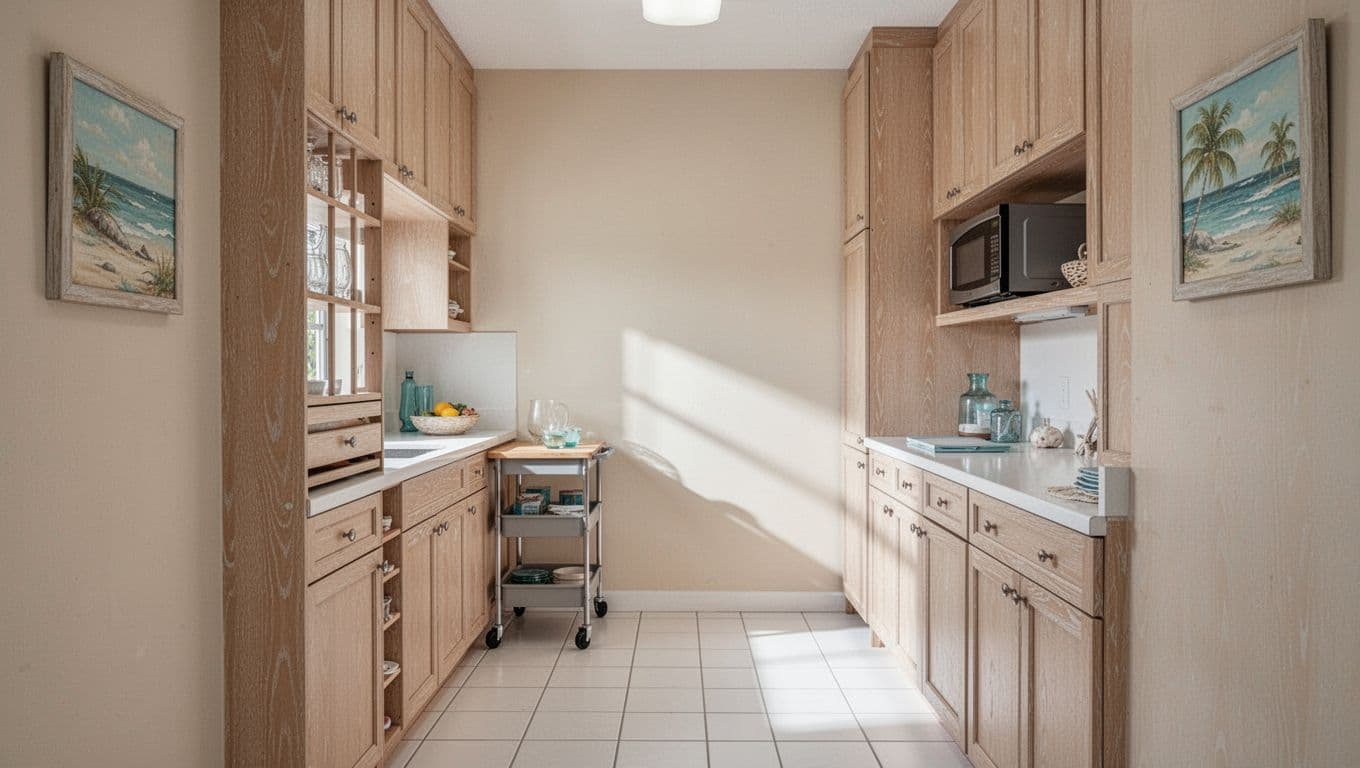
A slim rolling cart can fit between a refrigerator and wall if the walkway remains clear. Use it for oils, canned goods, baking supplies, or coffee equipment. Locking casters help keep the cart stable while you work.
The side of a cabinet can hold a shallow rail for utensils or a narrow shelf for spices. In a rental, removable adhesive organizers may work for lightweight items. Follow the product's weight limits, especially in warm or humid rooms.
Open shelving can add storage, but keep it shallow in a small kitchen. Deep shelves near a walkway can create shoulder and head hazards while making the room feel crowded.
Make high and low areas practical
The space above upper cabinets can hold lightweight serving pieces or infrequently used cookware. Use stable baskets rather than loose stacks, and avoid placing heavy glass or appliances overhead.
A built-in toe-kick drawer can store flat items such as baking sheets, placemats, or trays. This option requires cabinet work, but it uses space that otherwise remains empty.
If you have a peninsula or island, consider hooks on the end panel for towels or lightweight utensils. Keep the area near seating and walkways free of sharp tools and bulky objects.
Place Appliances Without Losing Counter Space
Appliances consume more than their footprint. They also need room for cords, ventilation, open doors, and safe handling.
Create a dedicated microwave zone
A microwave shelf can free the main counter, but it must support the appliance and follow the manufacturer's clearance requirements. Don't enclose a microwave in a tight cabinet unless the product is designed for built-in installation.
Place the microwave where users can reach it without lifting hot food above shoulder height. A shelf below eye level is often safer than the top of a refrigerator or a high cabinet.
The same rule applies to toaster ovens, air fryers, and coffee machines. Heat-producing appliances need the clearances listed in their manuals. Keep them away from upper cabinet bottoms, curtains, and the sink.
If an organizer changes an appliance's ventilation or clearance, it becomes a safety decision as well as a storage decision.
Protect a useful prep area
Keep at least one section of counter available for chopping, setting down hot cookware, and unloading groceries. Avoid filling every open area with small appliances.
Use an appliance garage only when the doors can stay open during operation and the interior has enough clearance. Otherwise, store the appliance inside a cabinet and bring it out when needed.
Plan outlets before adding a fixed shelf. High-wattage appliances shouldn't run through a power strip or extension cord, and cords should stay away from water and hot surfaces.
Renter-Friendly Small Kitchen Storage
Renters can gain capacity without drilling into walls or changing cabinets. Freestanding pieces are often the safest starting point.
Choose reversible organizers
Shelf risers, drawer bins, tension rods, over-the-door racks, and freestanding carts can improve storage without permanent changes. A tension rod beneath the sink can hold spray bottles, while a small bin keeps sponges and dishwasher supplies contained.
Use removable hooks for lightweight towels and tools. Avoid placing heavy cookware on adhesive mounts, especially where heat or steam can weaken the adhesive.
Before drilling, check your lease. When you move out, remove organizers carefully and repair any minor wall damage according to the agreement.
Build simple storage habits
Assign one location to each category and return items after use. Store daily dishes at hand level, keep backup food together, and place rarely used items higher or outside the kitchen.
A small kitchen storage system works best when it matches your routine. If a drawer sits far from the dishwasher, it probably isn't the right home for everyday plates.
Built-In Options for Remodeling or New Construction
A renovation can solve storage problems that movable organizers cannot. You don't need a large addition, but cabinet placement should follow the way you prepare, cook, and clean.
Add storage where the work happens
A shallow pantry cabinet near the refrigerator can hold dry goods without taking much floor space. A drawer bank beside the cooktop can keep pans and utensils close to the cooking zone.
Custom cabinets can include full-extension drawers, tray dividers, pull-out waste bins, and corner storage. In a new home, plan these features before electrical, plumbing, and cabinet drawings are finalized.
If you are remodeling a kitchen, protect the main work triangle without treating it as a rigid rule. The refrigerator needs landing space, the sink needs room for cleanup, and the cooktop needs safe counter space nearby.
Plan permits before changing walls or utilities
Replacing cabinet hardware, painting, or adding removable organizers is usually cosmetic. Moving walls, changing plumbing lines, adding circuits, or altering built-in cabinets may require permits and inspections.
Rules vary between Punta Gorda and the surrounding Charlotte County areas. Review this guide to permits for kitchen and bathroom remodels as a planning reference, then confirm the requirements with the authority having jurisdiction for your property.
A clear plan also helps control costs. Decide which storage improvements matter most before ordering cabinets or appliances, and keep changes out of the project once work begins whenever possible.
Florida Safety and Durability Considerations
Punta Gorda kitchens must handle heat, moisture, and frequent cleaning. Storage materials need to hold up in that environment.
Select materials for humidity and cleaning
Choose coated metal, stainless steel, sealed wood, or durable plastic for organizers that sit near sinks and dishwashers. Wipe spills quickly, especially inside lower cabinets where moisture can remain hidden.
Avoid storing food or paper goods directly against damp cabinet walls. Shelf liners can protect cabinet surfaces, but they shouldn't trap water underneath. Remove and dry them if a leak occurs.
For homes near the coast, corrosion-resistant hardware is a sensible choice. Inspect hinges, drawer slides, and wire racks if you notice rust or stiff movement.
Anchor tall storage and keep heavy items low
Tall pantry units, bookcase-style shelves, and freestanding cabinets should attach to wall studs or suitable anchors. This matters in any home, and it becomes more important when furniture stands near a busy walkway.
Keep glass, appliances, and cast-iron cookware low. Store lighter items on upper shelves, and don't climb on counters to reach them. Use a stable step stool when needed.
Leave access to shutoff valves, electrical panels, and ventilation areas. Storage should make the kitchen easier to use, not block equipment that may need inspection or repair.
Conclusion
The most effective small kitchen storage improvements usually begin with a careful audit. Measure cabinets, place daily items near their work zones, use vertical space, and give appliances a safe home that preserves prep space.
Renters can start with removable organizers and freestanding carts. Homeowners planning a remodel or new build can add pull-out cabinets, deeper drawers, toe-kick storage, and properly planned electrical locations.
A Punta Gorda kitchen doesn't need more clutter to hold more. It needs storage that fits the room, the climate, and the way you use it every day.