Solar Shingles vs Panels for Fort Myers Roofs
Explore Our Services
Contact Us Today!
(239) 322-9295
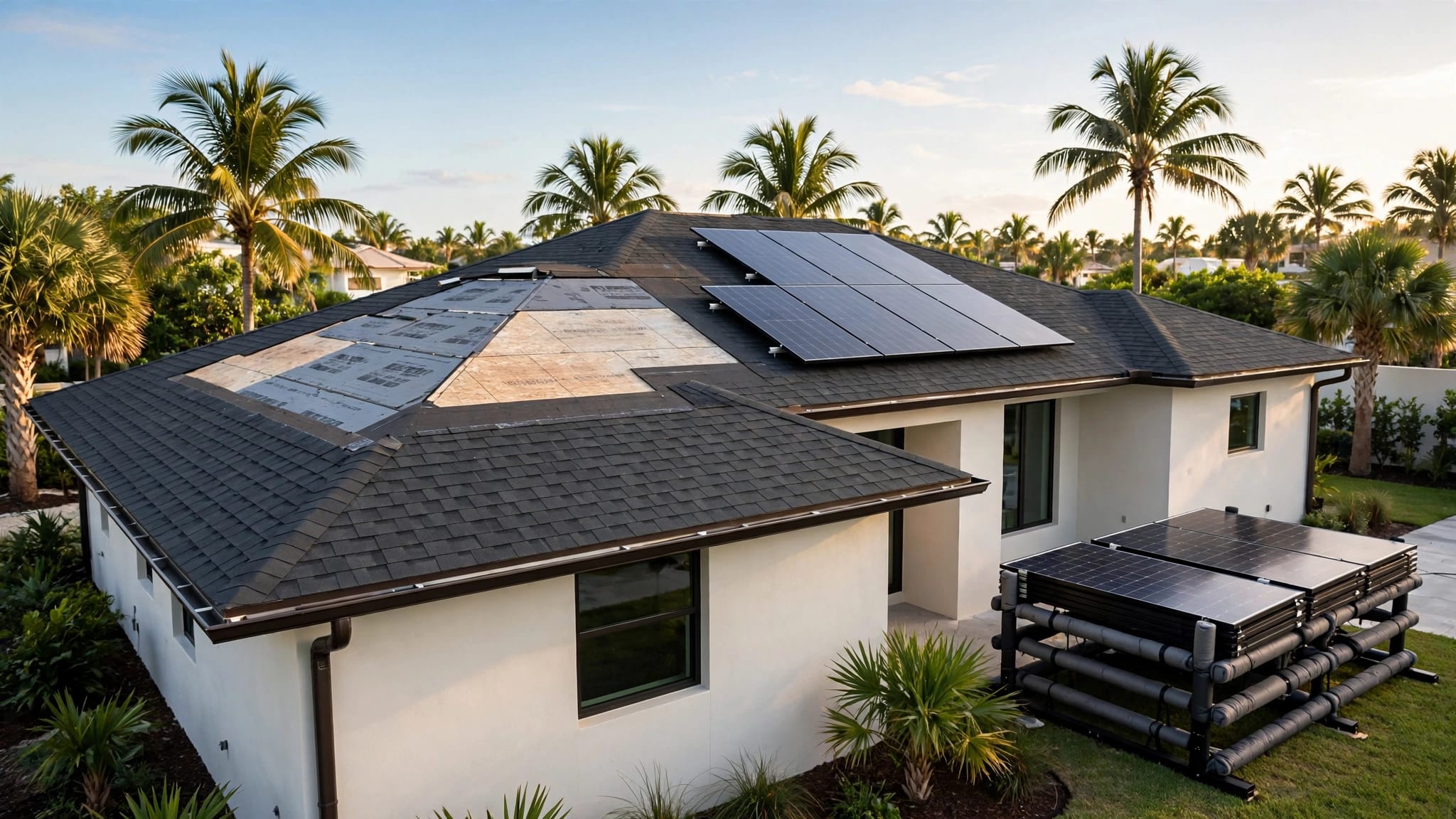
Fort Myers homeowners comparing solar shingles vs panels are weighing more than energy production. The roof must handle intense sun, high humidity, heavy rain, salt air, and hurricane-related wind loads.
Solar shingles can create a clean, integrated appearance, while traditional panels usually offer a simpler and less expensive retrofit. Your roof's age, condition, layout, utility service, and replacement plans should guide the decision. Start with how each system works, then consider Southwest Florida's conditions.
Solar shingles vs panels: how each roof works
Both options use photovoltaic cells to turn sunlight into electricity. The main difference is where those cells sit and how the system connects to the roof.
Solar shingles become part of the roof
Solar shingles, also called solar roof tiles, contain photovoltaic cells inside roofing materials. They replace some or all of the roof covering instead of sitting above it on a metal rack.
Tesla Solar Roof combines solar and non-solar glass tiles across a roof design. GAF Energy Timberline Solar integrates solar technology with a GAF roofing system. These products are most relevant when the homeowner already needs a new roof.
The lower profile can suit a homeowner who dislikes the appearance of raised panels. However, repairs may involve both roofing and electrical expertise, and product availability depends on qualified installers in your area.
Traditional panels sit above the roof
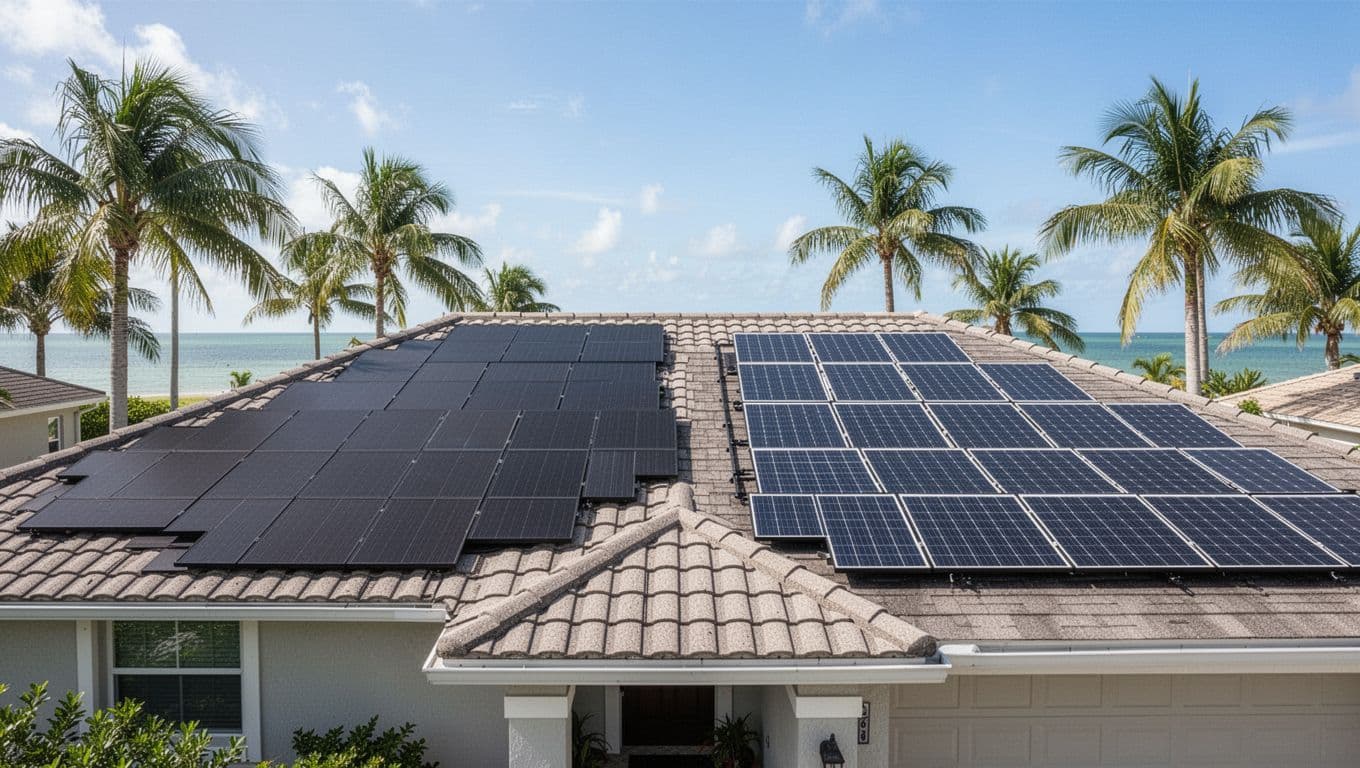
Conventional solar panels attach to rails, which connect to the roof structure through engineered mounting points. The roof remains separate from the electrical equipment, so a contractor can usually service or replace individual panels without replacing the entire roof surface.
Panels offer more flexibility for system sizing and placement. Installers can often adjust the array around vents, skylights, roof planes, and other obstacles. The equipment is visible, though, and the mounting system requires careful flashing and waterproofing.
For a Fort Myers home with a sound roof, panels are usually the more established choice. They also give homeowners more installer options and easier access to widely available replacement components.
How Southwest Florida weather affects the choice
Solar equipment in Fort Myers faces conditions that deserve more attention than an online price comparison. High temperatures, moisture, wind, and coastal exposure can affect both the roof and the system hardware.
Heat, humidity, rain, and salt air
Strong sunlight benefits both technologies, but roof temperatures can become intense during summer. In addition, high humidity places ongoing demands on seals, wiring, inverters, fasteners, and other electrical components.
Heavy rain makes roof drainage and flashing important. With traditional panels, installers must seal each roof attachment correctly. With solar shingles, the roof system itself must manage water while also supporting electrical connections.
Salt air matters most for homes near the Gulf, canals, bays, and open coastal areas. Ask for corrosion-resistance information for rails, fasteners, connectors, and other exposed metal parts. The right specifications depend on the product, distance from saltwater, roof design, and installation details.
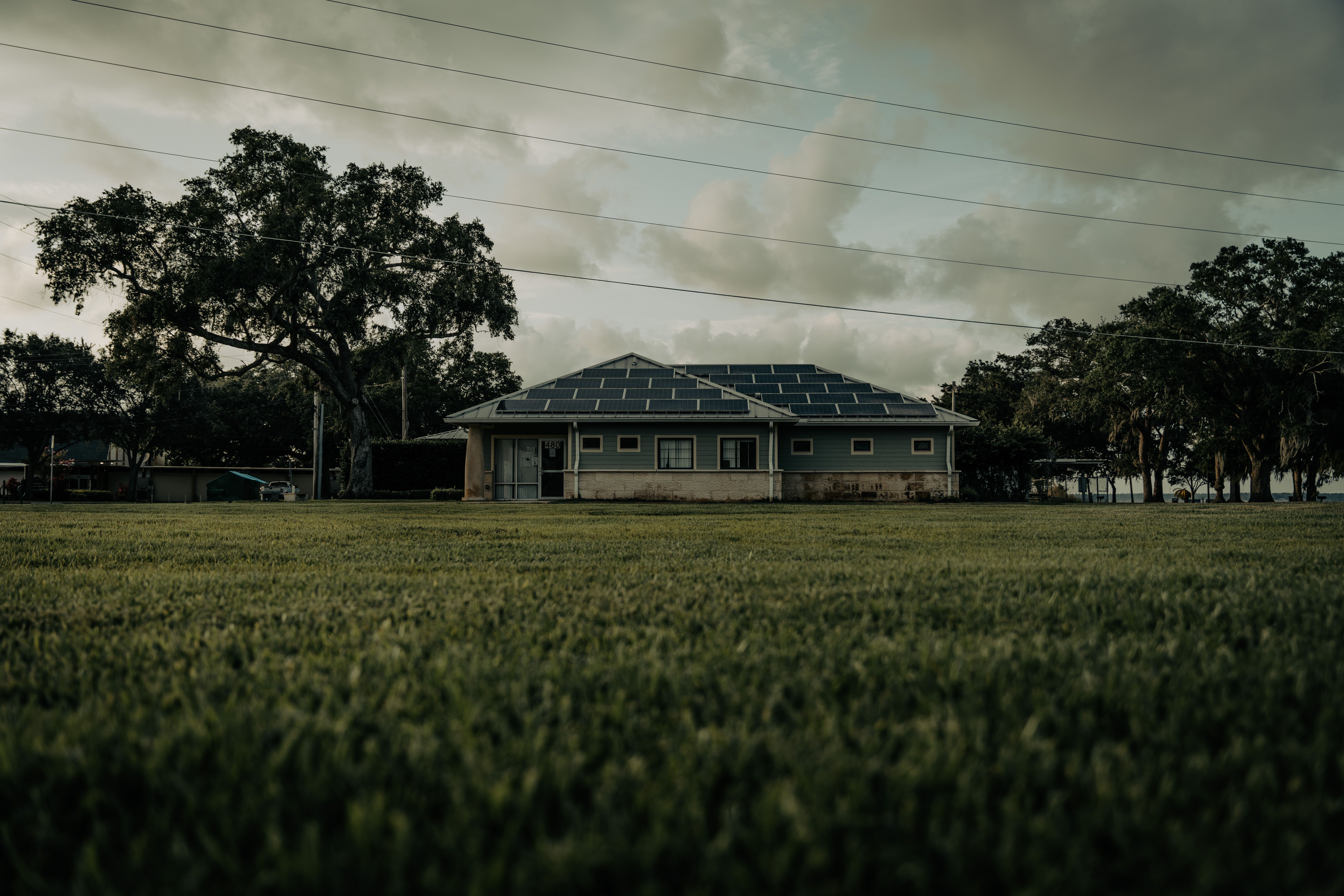
Photo by Chris S
Hurricane and high-wind questions need documentation
Neither solar shingles nor panels should receive an automatic hurricane-resistance claim. Storm performance depends on the full roof assembly, attachment method, product testing, roof-to-wall connections, and code-compliant installation.
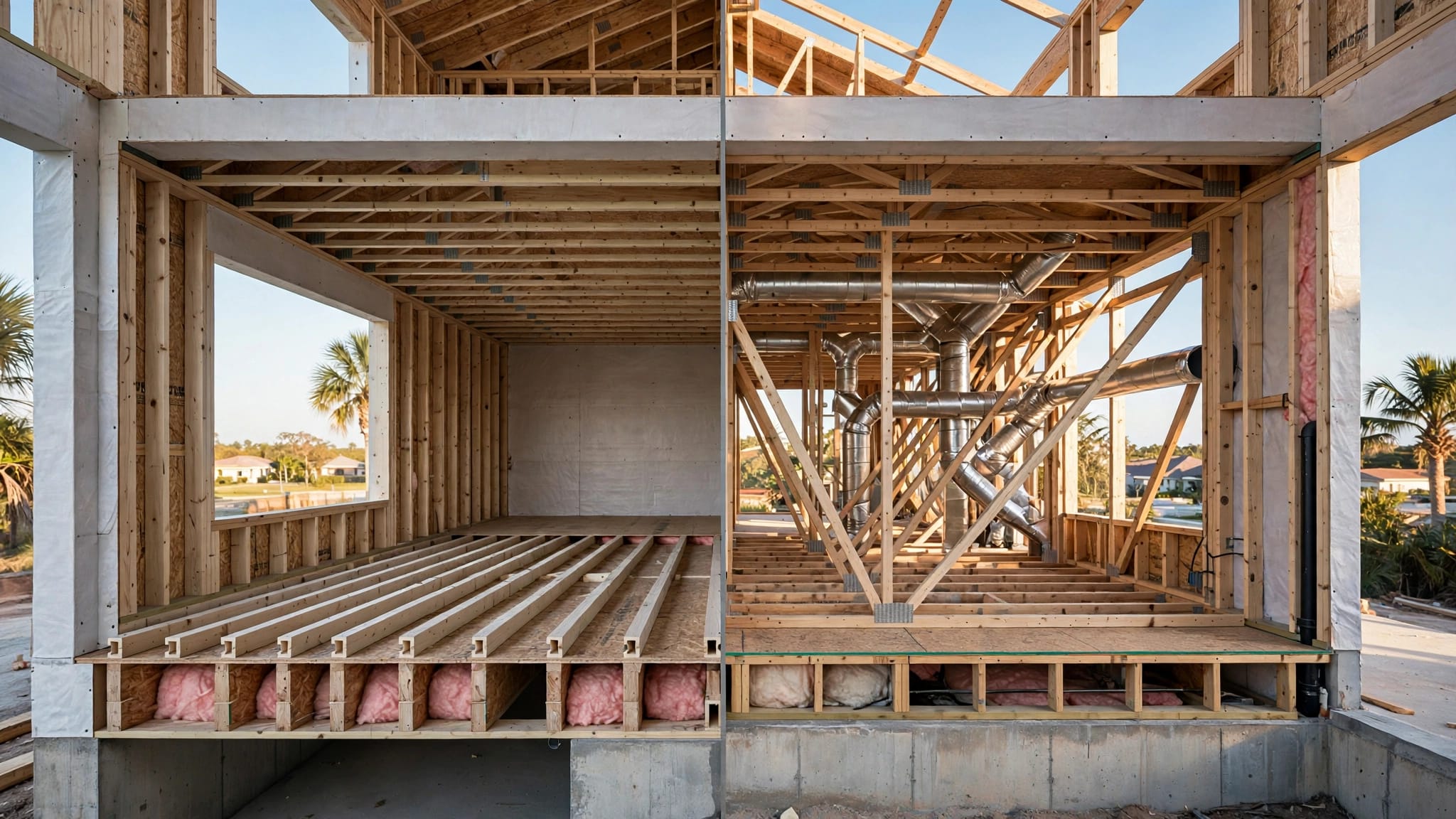
Ask the contractor for the product's current technical documents and the wind-load design prepared for your address. Confirm which Florida Building Code requirements and product approvals apply. A licensed Florida roofer or solar contractor should verify roof structure, attachment design, waterproofing, and electrical work.
A Cape Coral wind mitigation inspection can identify existing roof and opening-protection features. It doesn't replace the solar contractor's engineering review, but it can provide useful information before you alter the roof.
A solar product's storm rating doesn't describe the entire roof. The installation details often determine whether the roof stays watertight after severe weather.
Your roof's age may decide the answer
The best technology can become an expensive mistake if it goes onto a roof that needs replacement soon. Solar work should fit the roof's remaining service life.
Panels work well as a retrofit
Traditional panels make sense when the roof is relatively new, structurally sound, and free of major leaks. The roofing contractor can inspect shingles, tile, underlayment, flashing, and penetrations before the solar installation begins.
If the roof later needs replacement, the panels and racking usually need to be removed and reinstalled. That creates an additional project cost and requires coordination between the roofer and solar contractor.
A professional Cape Coral roof inspection can help identify damaged areas, aging materials, ventilation concerns, and signs of water entry. Homeowners should also ask whether the roof can support the proposed attachment layout.
Solar shingles fit a planned reroof
Solar shingles are better suited to a full roof replacement because the roofing and generation systems are installed together. That can simplify the visual design and avoid mounting panels on an older roof.
The combined project still requires careful planning. The contractor must coordinate roof layers, flashing, electrical pathways, ventilation, roof penetrations, and utility interconnection. A complex roof with several planes, hips, valleys, or obstructions may affect the usable solar area.
Solar shingles may also make less financial sense if only a small roof section needs repair. Replacing an entire roof for solar requires a larger budget, so compare the complete project scope rather than comparing equipment prices alone.
Compare costs, incentives, and utility rules
Solar shingles vs panels pricing varies widely in Southwest Florida. Roof size, roof pitch, tile or shingle material, electrical service capacity, attic access, permitting, and system size all affect the quote.
Use this comparison as a starting point, not as a substitute for project-specific bids.
| Consideration | Traditional solar panels | Solar shingles |
|---|---|---|
| Upfront cost pattern | Usually the lower-cost solar option | Usually the higher-cost option because roofing is part of the project |
| Best roof situation | A roof with useful remaining life | A roof already due for full replacement |
| Appearance | Raised equipment remains visible | Lower-profile, roof-integrated appearance |
| Service access | Individual panels and components are generally easier to access | Roofing and electrical repairs may overlap |
| Future reroofing | Panels may need removal and reinstallation | The solar roof is already part of the roof system |
| Installer availability | Often broader | Depends more heavily on qualified product installers |
As of August 2026, the federal Residential Clean Energy Credit is not available for homeowner-owned property placed in service after December 31, 2025. The IRS residential clean energy credit guidance covers the prior eligibility period, including solar electric panels installed by that deadline.
That change matters when calculating a 2026 project. Don't assume a quote includes a 30% federal credit. Review tax questions with a qualified tax professional, especially if the project began earlier but was placed in service later.
Many Fort Myers and Cape Coral homeowners receive service from Florida Power & Light, although the utility depends on the property's exact address. FPL's January 2026 residential rate information is a useful starting point, but your contractor must confirm current interconnection and export-credit rules for your account.
Florida's net-metering structure can affect system economics because exported electricity may receive bill credits under utility rules. The treatment of unused credits, annual true-up, system size, and application requirements must come from the serving utility. A battery, larger electrical loads, or a different utility territory can change the calculation.
Which option fits your Fort Myers project?
Choose traditional panels when the roof is sound
Panels deserve close consideration if your roof has substantial remaining life and your priority is controlling the initial solar cost. They also fit homeowners who want a larger choice of equipment, installers, and replacement parts.
A panel array can work well during a remodeling project when the roof isn't being replaced. The contractor can design around planned additions, pool equipment, attic changes, or future electrical upgrades. Ask how the array will affect roof access for maintenance and future repairs.
Choose solar shingles when appearance and reroofing lead
Solar shingles may suit a homeowner who is already budgeting for a new roof and wants the generation system to blend into the roof surface. They can be attractive on a new custom home or a major renovation where the roof design is still open.
The premium can make sense for some homeowners, but compare the complete installed roof price against a standard roof plus panels. Ask about product warranties, roof warranties, power output, repair procedures, local service coverage, and replacement timelines.
No product should be selected solely because it looks more integrated. The roof plan, electrical design, and storm documentation still matter.
Questions to ask before signing a contract
Before choosing between solar shingles and panels, request written answers to these questions:
- How much useful life remains on the roof? Ask for the roof material, installation age, visible defects, and recommended repair or replacement work.
- Who is responsible for each part of the project? Your contract should identify the roofer, solar contractor, electrician, permit holder, equipment supplier, and warranty contact.
- What wind-load and code documents apply? Request the design information for your address, along with applicable Florida approvals and installation requirements.
- How will the project affect permits and inspections? Roofing, building, and electrical work may follow separate permit steps. Review local Cape Coral remodeling permit requirements when that jurisdiction applies.
- What happens after a storm or roof repair? Confirm who removes equipment, handles leaks, files warranty claims, and reinstalls the system.
Get at least two detailed proposals with the same assumptions. Each should show roof work, electrical upgrades, permit fees, equipment, labor, utility applications, and any battery separately. A low headline price can hide important exclusions.
Conclusion
For most Fort Myers homeowners, traditional panels are the practical choice when the existing roof is in good condition. Solar shingles deserve consideration when a full reroof is already planned and the homeowner accepts a higher, more integrated project cost.
The right comparison is more than solar shingles vs panels. Check the roof's age, storm documentation, corrosion exposure, utility rules, permits, warranties, and complete installed price. A licensed roofing and solar professional can then confirm whether the proposed system fits your home, roof assembly, and electrical service.