
Why Commercial Roof Drains Back Up During Heavy Rain in Fort Myers
Explore Our Services
Contact Us Today!
(239) 322-9295
A commercial roof drain can back up when debris blocks the flow, a pipe or leader is obstructed, or the system can't move water away as quickly as a storm delivers it. In Fort Myers, intense rain, wind-blown leaves, and palm debris can expose drainage problems that stayed unnoticed during dry weather.
A backup can lead to water ponding on the roof, leaks inside the building, or damage to roofing materials. If you manage a commercial property, recognizing the causes and warning signs can help you arrange a professional assessment before a drainage issue becomes a larger repair.
How commercial roof drains move water
A typical low-slope roof drainage system includes a roof drain, a strainer or drain cover, and a connected leader that carries water into a stormwater system or another approved discharge point. Depending on the building, scuppers and overflow drains may provide additional routes for water to leave the roof.
The parts work together. If the drain opening is clear but a connected leader is blocked, water may still collect. Likewise, an open pipe cannot help if debris covers the drain.
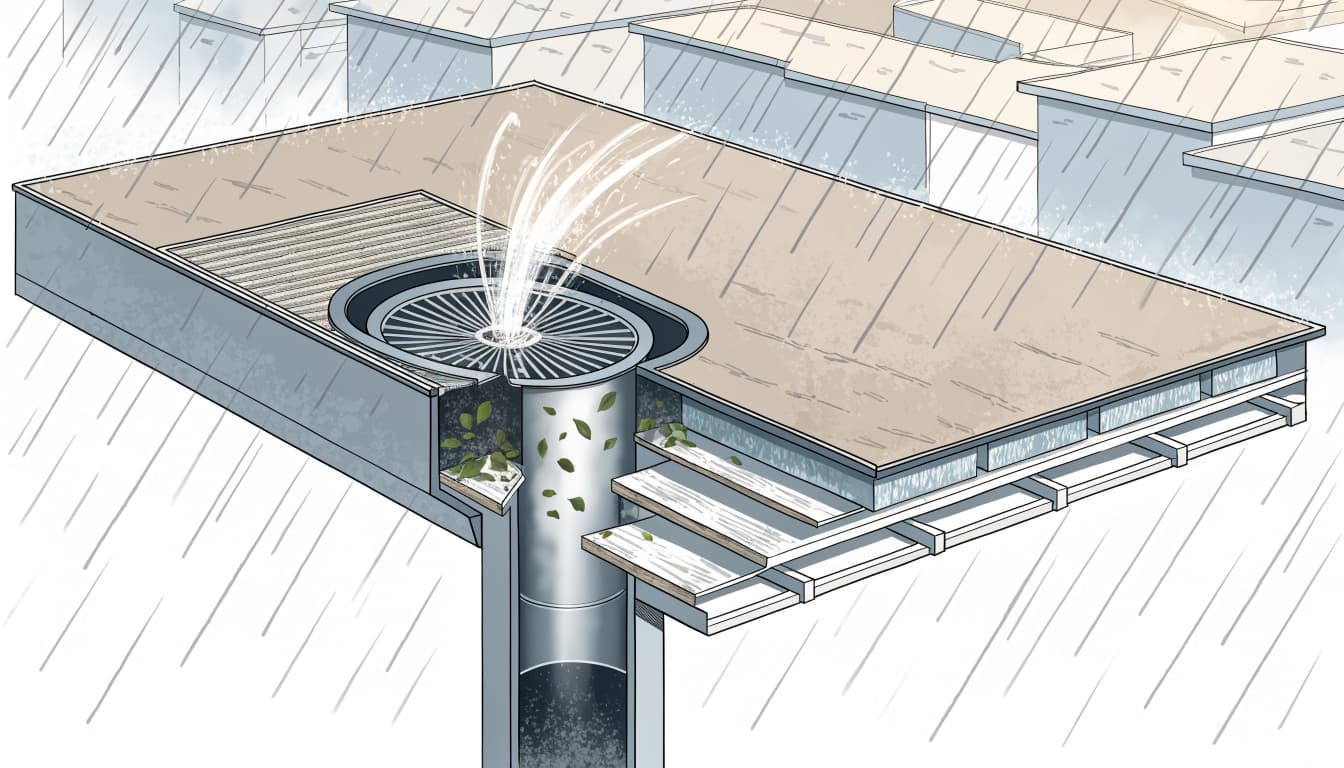
The drain and strainer
The drain opening gathers runoff from the roof surface. A strainer helps keep larger material, such as leaves and palm fragments, out of the drain. It can't stop every kind of blockage, and debris can collect around or beneath it.
Roofing granules, dirt, seed pods, and scraps from rooftop maintenance can also build up around drain bowls. Over time, that material can narrow the opening and slow the flow.
The leader and overflow route
The leader is the pipe that carries water away from the roof drain. A blockage farther down the line may be hidden from view, so a clear-looking drain doesn't necessarily mean the full drainage path is open.
Some roofs also have secondary drainage paths, such as overflow drains or scuppers. If the primary drain is blocked, these features may help limit water buildup, but they don't remove the need to find and fix the obstruction.
Common causes of roof drain backups in Fort Myers
A drain backup usually points to a problem with the opening, the piping, the system's ability to handle the rainfall, or maintenance over time. More than one issue can occur during the same storm.
Debris and clogged drain strainers
Wind can carry leaves, palm fronds, seed pods, and other debris onto a commercial roof. As water moves toward the drain, this material can collect against the strainer or settle in the drain bowl. A thick mat of debris may slow runoff enough for water to pool around the drain.
A strainer can also be clogged with fine material that's less visible from the ground. During an intense storm, even a partly restricted opening can become a bottleneck.
Blocked leaders and neglected maintenance
Debris can enter a leader or accumulate at a connection farther down the drainage route. Sediment and residue may also collect inside pipes over time. Because these areas are often concealed, recurring backups may be the first clue that the obstruction isn't on the roof surface.
Maintenance gaps make these problems more likely to go unnoticed. If nobody inspects the drains, scuppers, and visible discharge points, a slow-flowing system may only draw attention when rain is heavy.
When the drainage system can't keep up
A clear drain can still struggle if the system can't carry away water as quickly as the roof receives it. The performance of the full drainage route matters, including roof slope, drain placement, the number and size of outlets, leader capacity, and downstream connections.
Roof area and rainfall intensity also affect how much water arrives at the drains. In late August 2026, forecasts for Southwest Florida called for widespread rainfall of 1 to 2 inches, with isolated totals of 3 to 4 inches. Those figures describe a forecast, not a drainage design standard, but they illustrate how quickly a storm can put a roof system under pressure.
Building layout and roof slope
Low areas can direct runoff toward a drain, but a roof that doesn't slope effectively may leave water stranded elsewhere. Rooftop equipment, curbs, walls, or later alterations can also interrupt water's route and create isolated pooling.
A change to the building can affect drainage even when the roof drain itself stays in place. For instance, a new rooftop unit or a repair that changes the surface around a drain may affect how water reaches the outlet.
Capacity and downstream restrictions
The drain opening is only one part of the system. A leader, connection, or discharge route with limited capacity can slow the entire flow. A system that handles ordinary showers may struggle during a concentrated downpour, particularly if a partial blockage is already present.
Repeated ponding, especially across different areas of the roof, deserves a full system assessment. A qualified commercial roofing professional can evaluate whether the cause is a blockage, a layout issue, a capacity concern, or a combination.
Warning signs of a commercial roof drain problem
The clearest warning sign is standing water that remains on the roof after rain. Water that collects around a drain or in a low area during a storm can point to a restriction, poor drainage, or both. Persistent ponding can place added stress on roofing materials and the roof structure.
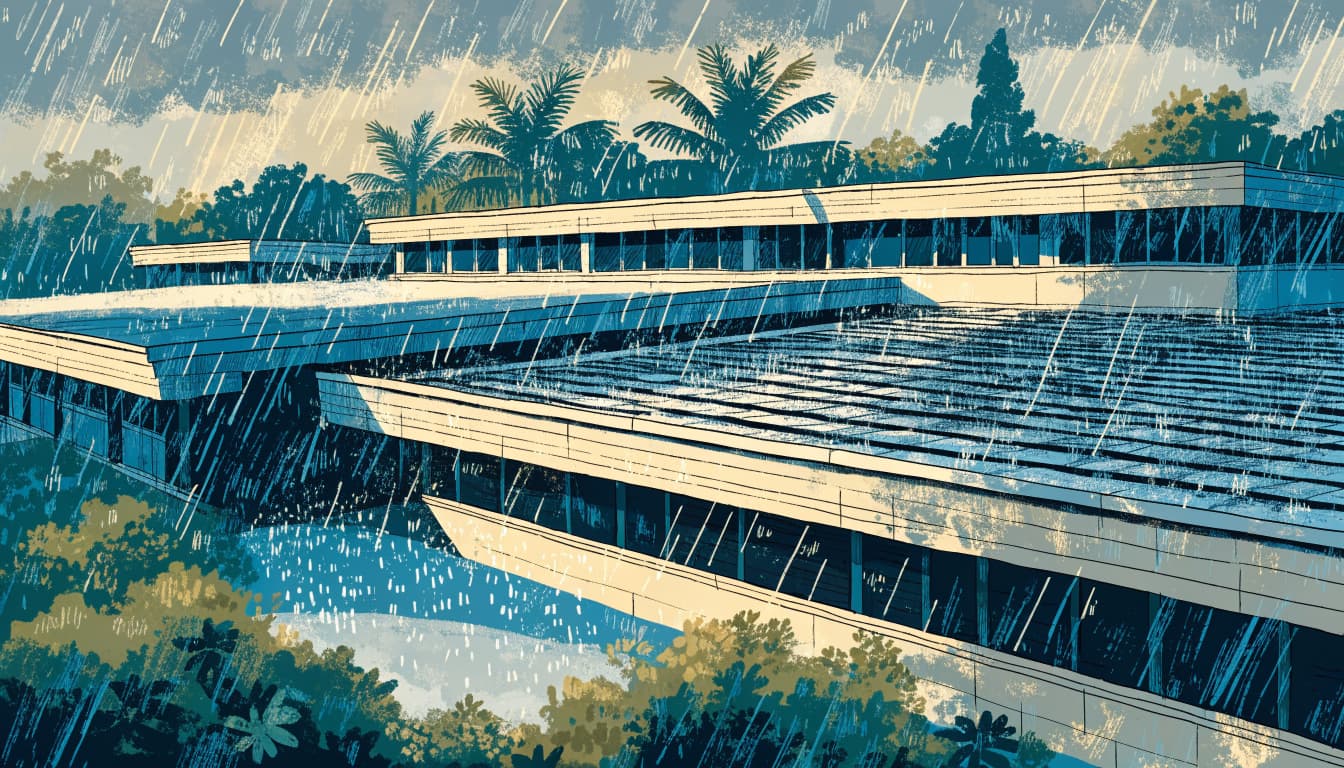
Inside the building, watch for new ceiling stains, dripping, damp insulation, musty odors, or water around roof penetrations. A leak may appear some distance from the drain because water can travel along the roof deck or building components before it becomes visible.
Other signs include water escaping through an overflow opening, debris visible around roof drains, or unusually slow discharge from accessible outlets. A backup that happens repeatedly in the same location, even during different storms, points to an unresolved issue rather than a one-time weather event.
Water appearing indoors may point to a roof drainage issue, but the leak location alone doesn't identify the source. Water can travel before it reaches the ceiling.
If water reaches electrical fixtures or you see sparks, leave the affected area and contact emergency services. Don't enter a wet space where electrical hazards may be present.
Prevention starts before the storm
Routine maintenance helps catch restrictions before a heavy rain tests the system. The inspection should cover drain strainers, drain bowls, scuppers, visible leaders, and accessible discharge points, along with the roof areas that direct water toward them.
In Southwest Florida, wind can deposit debris even when a storm doesn't appear severe from inside the building. A maintenance plan should account for the property's surroundings, including nearby trees and rooftop equipment, as well as its roofing system and history of backups.
Schedule professional inspections
Have the roof and drainage system inspected before the wet season and after a major storm or strong-wind event. The right maintenance frequency depends on the roof, debris exposure, and condition of the drainage components. A professional can recommend an interval suited to the building rather than applying a one-size-fits-all schedule.
During an inspection, the contractor can look for debris, check visible drain components, identify signs of slow drainage, and note roof damage that may affect water flow. Keeping inspection records, photos, and dates of leaks can also help reveal whether the same location is repeatedly affected.
Keep drainage changes coordinated
Roof repairs, equipment work, and other building projects can alter how water moves. Before changes are made, include drainage in the planning conversation. A contractor should account for the existing drains, roof slope, and discharge route instead of treating a drain as an isolated component.
Don't climb onto the roof or try to clear a blockage yourself. Wet or debris-covered roof surfaces can be hazardous, and working around drains may expose you to structural or electrical risks. From a safe location, note when water appears, where it collects, and whether the problem continues after the rain stops.
When to contact a commercial roofing professional
Contact a qualified commercial roofing professional when you see recurring ponding, water entering the building, a blocked or damaged drain, or an overflow route carrying water during storms. Prompt attention matters because moisture can damage roofing materials and interior finishes, and active leaks can disrupt business operations.
A professional assessment should look beyond the drain opening. The contractor may need to assess the roof surface, drain bowl, strainer, leaders, scuppers, visible connections, roof slope, and signs of water intrusion inside the building. If a blockage lies deeper in the drainage line, clearing the visible debris alone won't solve the cause.
What to do while waiting for an assessment
Keep people away from any area with active leaks, wet flooring, or signs of ceiling damage. Protect inventory or equipment only if you can do so safely, and record the location and timing of the water intrusion. Photos taken from safe areas can help document changes during and after a storm.
Avoid placing tools, patch materials, or temporary covers on the roof. A temporary fix can conceal the source or create a separate problem, especially on a wet low-slope surface. If water continues to enter, tell the contractor whether the leak is active and whether it worsens during rain.
For properties in the area, our commercial roofing services in Fort Myers include roofing work for local businesses. A contractor familiar with commercial roofs can assess drainage as part of the wider roofing system.
Frequently asked questions
Can heavy rain overwhelm a roof drain that isn't clogged?
Yes. The drain may be clear, but rainfall can reach the roof faster than the full drainage system can move it away. Roof area, slope, drain and leader capacity, and downstream conditions all influence performance. A professional can distinguish temporary ponding during intense rain from a recurring drainage defect.
Does a clogged strainer always cause a leak?
No. It can slow drainage and contribute to ponding, but a leak may also result from damaged roofing materials, seams, flashing, or roof penetrations. A visible backup and an interior leak can be related, but the leak source needs to be assessed rather than assumed.
How often should commercial roof drains be inspected?
There isn't one inspection schedule that fits every building. Debris exposure, roof type, prior blockages, and storm conditions affect how often the system needs attention. A qualified roofing professional can recommend a maintenance interval based on the property and its history.
Should building staff clear a roof drain during a storm?
Staff shouldn't climb onto a wet roof or attempt drain work during a storm. Roof access can be dangerous, and blocked drainage may involve concealed piping or other hazards. Keep people clear of affected areas and arrange a professional evaluation.
Keep roof drainage ready for heavy rain
A commercial roof drain backup can stem from debris, a blocked leader, limited system capacity, or maintenance that missed a developing restriction. Recurring ponding and interior leaks deserve prompt attention, even when the drain looks clear from the roof edge.
Regular professional inspections can identify trouble before the next downpour. A clear drainage path helps protect the roof and the business operations beneath it.