Tree Protection During New Home Construction in Fort Myers
Explore Our Services
Contact Us Today!
(239) 322-9295
A mature tree can add shade, privacy, and character to a new home, but construction can injure its roots long before damage shows in the canopy. Tree protection in Fort Myers starts with site planning: decide which trees to keep, map their protected areas, and keep equipment, excavation, and soil changes out of those zones.
Southwest Florida's rain and sandy soils make construction access and drainage part of the plan, too. Here's how to coordinate tree protection before work begins and maintain it through construction and beyond.
Start with the right local tree rules
Identify the parcel's jurisdiction
The City of Fort Myers and unincorporated Lee County have separate review processes. A Fort Myers mailing address alone doesn't establish which authority reviews a property. Lee County has a vegetation-removal program for unincorporated areas, while City rules apply within city limits.
Before clearing, removing, or heavily pruning trees, identify the parcel's jurisdiction and ask the appropriate local authority which current requirements apply. Protected trees, mangroves, and development conditions may affect what work is allowed. The City of Fort Myers ordinance records and Lee County Environmental Sciences provide useful starting points.
Treat removal and pruning as separate decisions
City ordinance materials describe permits for deliberate removal of trees at least 4 inches in diameter at breast height, with mangroves requiring a permit regardless of size. These details aren't a substitute for a project-specific review, since current rules and applicability depend on location and circumstances.
Pruning can also cause lasting harm when crews remove too much canopy or cut major limbs. Decide which trees to preserve before site clearing, and have a qualified tree-care professional assess any tree that appears unsafe or conflicts with the design.
Put retained trees on the site plan
Map trees before finalizing the layout
Have the project team identify retained trees and show their locations alongside the home, driveway, pool, utility routes, grading, and planned excavation. A site plan used for tree review may need to show lot dimensions, structures, utilities, grade changes, and excavations.
This work is easier before the layout is fixed. Fort Myers lot contract checks before building can help buyers consider site conditions early. Then include tree protection in the preconstruction meeting checklist for a new home, so the builder, trades, and landscape team share the same plan.
Set the home and foundation away from critical roots
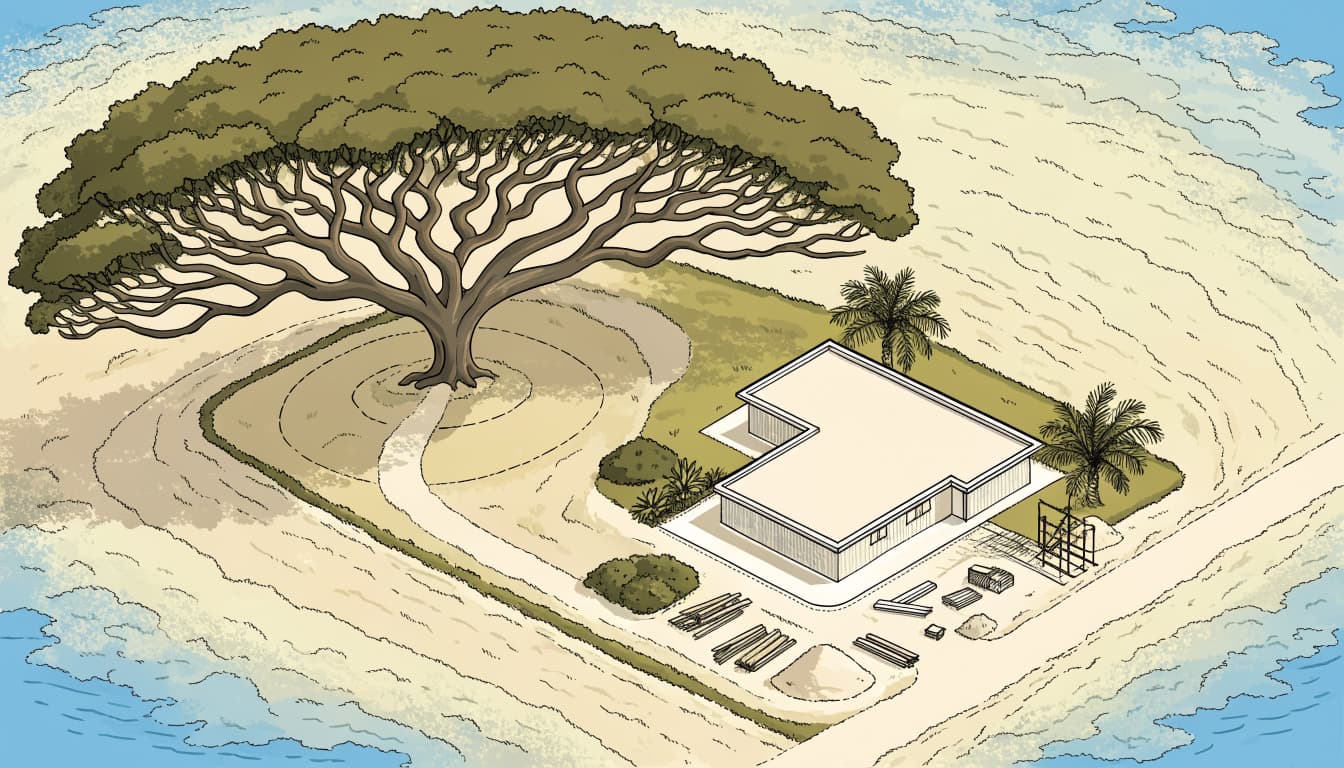
A tree's root system usually extends beyond the visible trunk and may reach beneath the canopy. Keeping foundations, driveways, and utility trenches away from major roots can reduce root loss and avoid later conflicts with paving or drainage.
Coordinate tree locations with foundation stakeout before forms and excavation begin. Stakeout checks before laying a new-home foundation help the project team compare planned placement with the actual lot. If the design must approach a valuable tree, ask an arborist and the project's design professionals to review options before work starts.
Establish a barrier around each protected tree
Use a clear, sturdy boundary
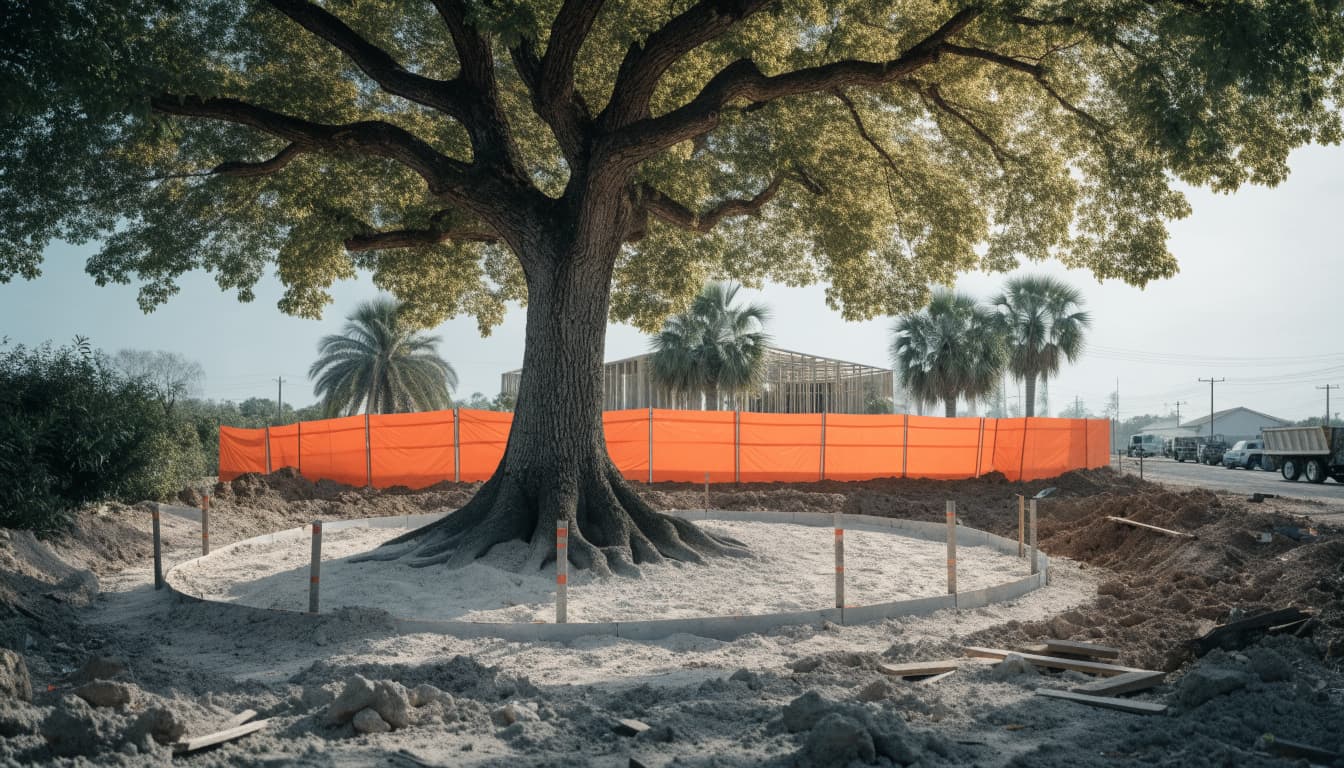
Temporary fencing makes the protection zone visible to equipment operators and subcontractors. Place it before clearing and leave it in position through major construction activity. Mark the area on the site plan and explain that the fenced ground is off limits for parking, storage, deliveries, and foot traffic.
City ordinance materials describe different barrier areas for certain protected trees: a minimum 6-foot radius for mangroves and protected cabbage palms, the full drip line for protected native pines, and two-thirds of the drip line for other protected species. The applicable boundary depends on the tree and current requirements. UF/IFAS recommends fencing to the drip line as a general protection practice.
Keep the fenced area intact
A barrier only works if crews respect it. Don't move fencing temporarily to make a delivery easier, then assume it will be put back. Assign someone on the project team to check that gates and fence sections stay closed and that materials aren't stacked against them.
For trees that need special protection, make the boundary match the approved plan rather than guessing from the trunk. The UF/IFAS guide to protecting trees during construction explains how fencing can keep vehicles and construction activity away from roots.
Prevent soil compaction and equipment damage
Plan access before the first delivery
Heavy machinery compresses soil, reducing the air and water available to roots. Repeated passes can also break roots below the surface without leaving obvious damage at the trunk. Establish a dedicated route for trucks, excavators, and material deliveries that avoids protected areas.
On a narrow lot, plan turning and unloading locations as carefully as the travel route. The advice on protecting landscaping during narrow-lot construction applies to tight access conditions across Southwest Florida.
Keep grade, paving, and debris under control
Don't pile fill, concrete, soil, or construction waste around a retained tree. Adding soil or paving over roots changes how water and air reach them. Cutting grade can expose roots or remove soil they depend on. Keep concrete washout, fuel, chemicals, and debris outside the protection boundary.
Rain can soften the work area and make rutting more likely. Pause heavy access where the ground is saturated, and keep drainage paths clear so runoff doesn't pool around trees or flow onto neighboring lots.
Coordinate excavation and utility work carefully
Route trenches away from major roots
Plumbing, electrical, irrigation, and pool lines can all require digging. Put their routes on the site plan early, then coordinate them with the tree locations instead of letting each trade choose a path in the field. Where a route must pass near a tree, have the project team review methods that reduce root disturbance.
Avoid cutting large roots without guidance from a qualified arborist. A damaged root may affect a tree's stability or health, even when the canopy still looks normal.
Watch the foundation and pool work areas
Foundation excavation, drainage changes, and pool construction can affect trees beyond the immediate digging area. The UF/IFAS resource on trees and hurricanes reports that construction within about 20 feet of a trunk can contribute to blow-over more than a decade later. That finding isn't a required setback or universal protection radius, but it shows why root disturbance deserves attention beyond the construction period.
If a tree is close to planned excavation, review the layout before machinery arrives. Keep the protection fence in place as work progresses, and record any approved changes to access or digging routes.
Care for retained trees after construction
Inspect for stress and respond to changing conditions
A tree may show construction stress through thinning foliage, branch dieback, or premature leaf drop. Ask a qualified arborist to assess concerning changes, especially if excavation exposed or cut roots, the grade changed, or machinery entered the protection zone.
UF/IFAS suggests watering construction-stressed trees about two to three times per week, adjusted for conditions. Rainfall, soil moisture, tree species, and season all affect watering needs, so avoid treating that schedule as automatic. Keep irrigation consistent without leaving the root area waterlogged.
Keep the protection plan in place during cleanup
Removing fencing too early can expose trees to final grading, landscaping, driveway work, or heavy cleanup equipment. Keep the boundary until major work ends and the site team has finished nearby operations. Then remove it carefully without damaging bark or roots.
After work, check that soil levels, drainage, and surface paving haven't changed around the tree. Don't use aggressive canopy pruning to compensate for construction damage without professional advice.
Plan pools and landscaping around the canopy
Trees affect more than the building footprint. Their shade can improve outdoor comfort, while leaf litter, blossoms, seed pods, and palm fronds can increase pool-cleaning needs. Discuss tree placement, pool shape, deck space, drainage, and screen enclosure locations together before excavation.
For a new pool, settle skimmer and return-jet locations before plumbing rough-in. Consider where floating debris will travel, and avoid directing it toward a screen wall, shelf corner, or spillway. The Fort Myers pool and outdoor living design guide covers how pool layouts can account for nearby trees and maintenance access.
Keep new planting and irrigation outside protected root zones unless the project team approves the work. A coordinated plan can retain useful shade without placing roots, paving, and pool equipment in conflict.
Key takeaways
- Identify whether the property falls under City of Fort Myers or Lee County review before tree removal or major pruning.
- Show retained trees, barriers, access routes, utilities, grading, and excavation on the project plan.
- Fence off protected areas before clearing, and keep equipment, materials, and soil changes outside them.
- Coordinate foundation, pool, and utility work early to limit root disturbance.
- Continue monitoring retained trees after construction, since some effects may appear later.
Frequently asked questions
When should tree protection begin?
Before clearing, grading, or equipment access begins. The project plan should identify trees to retain and show where barriers and construction routes belong.
Is the drip line always the legal protection boundary?
No. UF/IFAS recommends the drip line as a general protection area, while City ordinance materials describe different barrier areas for certain protected species. The applicable boundary depends on jurisdiction, tree type, and current project requirements.
Can construction damage show up after the home is finished?
Yes. Root damage and soil compaction may not produce immediate canopy changes. Keep records of any excavation or barrier breach, and seek an arborist's assessment if the tree later shows decline or instability.
Protect trees before the first machine arrives
Good tree protection begins with a clear plan, not a last-minute fence. Map the trees, coordinate the routes and digging, and keep protected ground free of equipment and soil changes. Those steps give retained trees a better chance to remain part of the finished home and yard.