Automatic Pool Covers for Naples Gunite Pools
Explore Our Services
Contact Us Today!
(239) 322-9295
Naples sun can turn an uncovered gunite pool into a daily maintenance task. A search for automatic pool covers Naples often starts with the cover itself, but the pool deck, coping, drainage, and equipment layout matter just as much.
An automatic cover can reduce evaporation, limit debris, and add a safety barrier when the pool is closed. However, gunite pools have different shapes, finishes, steps, and deck conditions, so a qualified professional should assess the site before anyone promises a simple installation.
Why Gunite Pools Need a Custom Cover Plan
Gunite pools use a reinforced concrete shell that can support many custom designs. That flexibility creates more planning considerations for an automatic cover. Straight rectangular walls provide the simplest path for cover tracks, while freeform curves, raised spas, tanning ledges, and irregular steps can affect the available options.
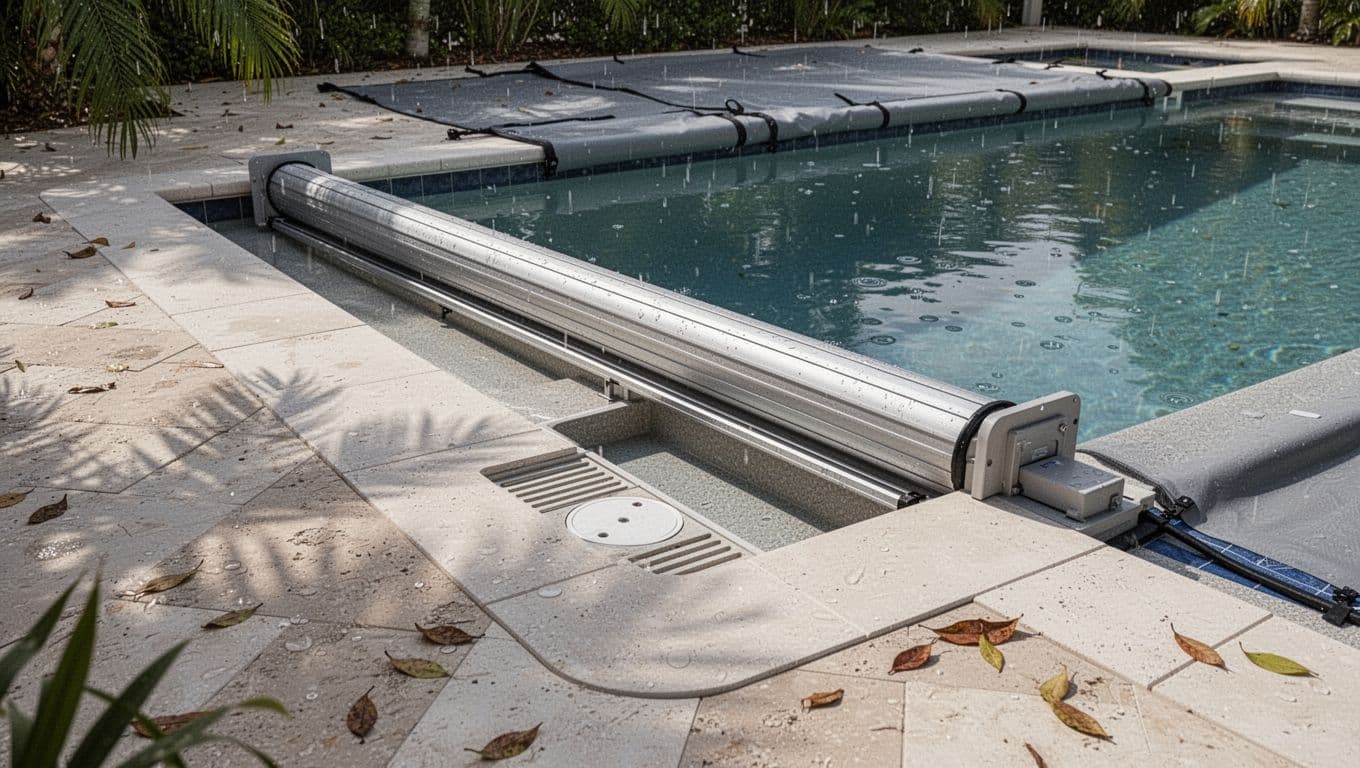
An automatic cover needs a consistent track route along both sides of the pool. The cover must also roll into a housing at one end. Depending on the design, that housing may sit beneath the deck, inside a covered box, or in another location chosen during planning.
Existing pools often require more work than new construction. The installer may need to remove sections of coping or deck, adjust the pool edge, create a drainage path, or add electrical service for the motor. If the deck has settled or the coping has cracked, anchoring a track before repairs can lead to alignment problems later.
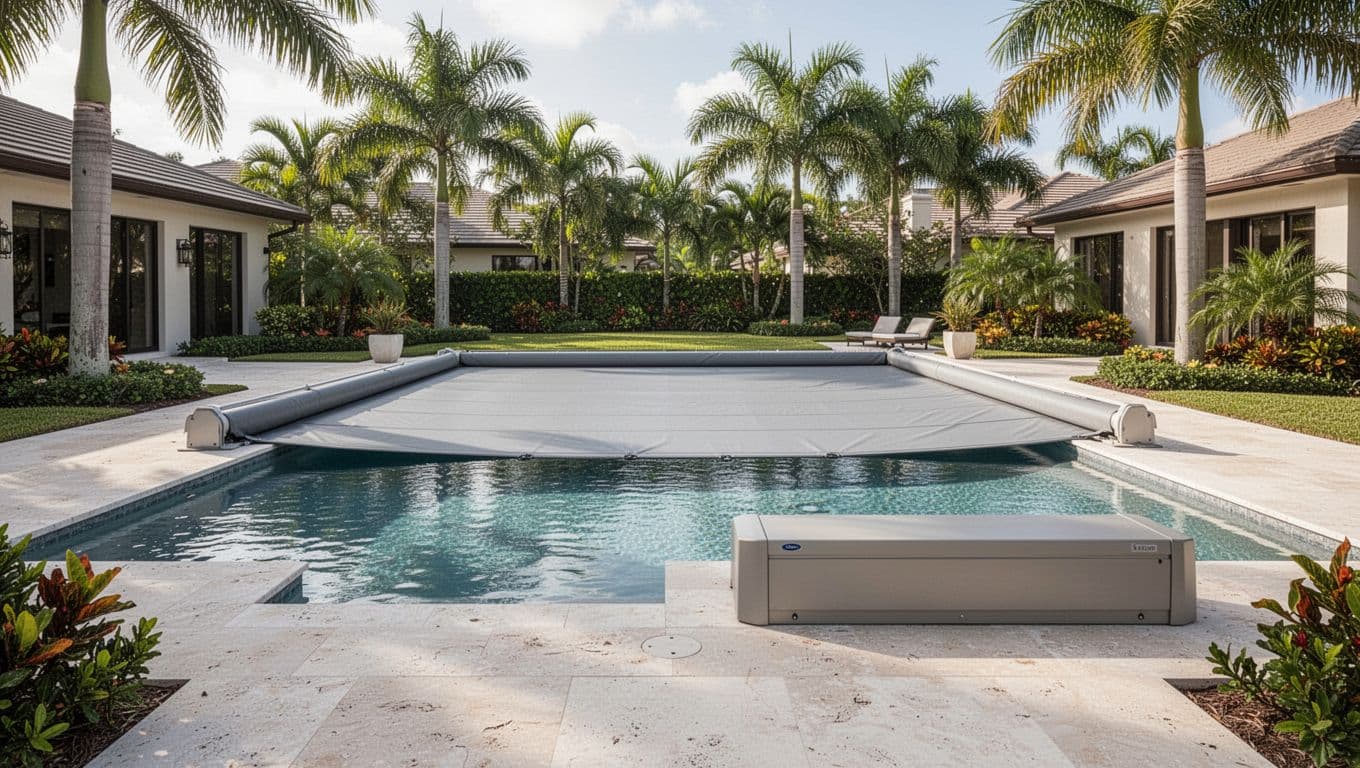
For a new gunite pool, the cover should appear in the pool plans before excavation and deck construction. That timing allows the builder to coordinate the pool dimensions, cover housing, electrical connections, drainage, and finished deck elevations.
For an existing pool, ask the contractor to measure the full perimeter instead of relying on old construction drawings. Small differences in width, corner angles, or deck height can affect how the cover operates.
Choosing automatic pool covers Naples Homeowners Can Use
Naples pools face conditions that affect both performance and service life. Strong ultraviolet exposure can fade and weaken some cover materials over time, while rain, palm fronds, oak leaves, and windblown debris add daily wear.
A quality system should match the pool's dimensions and the manufacturer's rated application. Ask about UV resistance, track materials, hardware corrosion protection, warranty coverage, and the expected service schedule. Salt air near the Gulf can also affect exposed metal, so corrosion-resistant components and regular rinsing matter.
Rain requires special attention. Water that collects on a closed cover must drain or be removed according to the system design. A cover pump, drainage channel, or dedicated discharge route may be part of the installation. Without proper planning, heavy afternoon rain can leave water on the cover or direct runoff toward the home, lanai, or pool equipment.
Tropical storms create another concern. An automatic pool cover is not a substitute for a hurricane plan or a storm-rated enclosure. Before installation, ask the contractor how the system should be positioned during severe weather, what to do during a power outage, and how to remove branches or heavy debris safely.
A cover can reduce routine cleaning, but it can't replace water testing, filtration, brushing, or inspection after a major storm.
Safety also depends on correct use. The cover should close fully when the pool is unattended, and children or pets should never be allowed on it unless the specific product is designed and documented for that purpose. Ask whether the selected safety cover meets applicable ASTM F1346 requirements and local safety rules. Keep approved barriers, alarms, supervision, and other required protections in place.
When you compare automatic pool covers Naples options, focus on the complete installation rather than the motor or remote control alone.
Benefits, Limitations, Maintenance, and Cost Factors
The table below provides a practical comparison for homeowners reviewing an automatic cover for a gunite pool.
| Area | Potential benefit | Limitation or cost factor |
|---|---|---|
| Evaporation | A closed cover can reduce water loss and help limit heat loss. | The result depends on fit, usage, weather, and how often the cover stays closed. |
| Debris | The cover can keep leaves, insects, and some windblown material out of the water. | Heavy branches and storm debris still require careful removal and inspection. |
| Pool safety | A closed, properly rated cover adds a physical layer when the pool is not in use. | It doesn't replace supervision, barriers, alarms, or other safety measures. |
| Gunite pool fit | Custom measurements can accommodate many pool designs. | Curves, raised features, unusual steps, and tight clearances can increase complexity. |
| Maintenance | Less debris may reduce skimming and cleaning between swims. | Tracks, housing, fabric, drainage, and motor components still need care. |
| Project cost | New construction can coordinate the system with the original pool and deck work. | Existing-deck demolition, repairs, electrical work, drainage, and restoration can add cost. |
The largest savings often come from planning early. A new pool can include the cover housing and track routes in the original design. Retrofitting an existing pool may still work well, but the quote should identify every required modification.
What Professional Installation Requires
The first step is a site evaluation, not a product selection. A qualified pool contractor should inspect the gunite shell, bond beam, coping, surrounding deck, and proposed track locations. Cracks, spalling, movement, settlement, or loose materials should be addressed before the installer anchors the system.
Sizing must account for more than the pool's longest and widest measurements. The contractor should verify the corners, slopes, steps, raised walls, spa connections, waterline, coping thickness, and available room for the cover housing. Freeform pools may require a custom template or a design that limits where the cover can travel.
Drainage deserves its own review. The cover housing can collect rainwater, wash water, and debris. A professional should identify how water leaves the box, where it discharges, and whether the route remains accessible for cleaning. Pool-deck grades should also direct water away from the house and electrical equipment.
Anchoring is another major concern. Tracks and related hardware need a stable attachment surface. Loose pavers, damaged concrete, narrow coping, or a deck with poor reinforcement may require rebuilding or reinforcement before installation. The installer should explain the anchoring method and identify any structural repairs in writing.
Electrical work should follow local requirements and the equipment manufacturer's instructions. The motor, controls, junction points, and access panels need protection from moisture. A power outage plan is also useful, especially for homeowners who spend part of the year away from Naples.
Permitting and inspections can vary by location and by the scope of the pool-deck work. If the cover installation connects with a new pool, major renovation, electrical work, or drainage changes, confirm which approvals apply before construction begins. A Southwest Florida home inspection can identify visible concerns around the property, although a general inspection doesn't replace a pool contractor's detailed assessment of the cover system.
A written proposal should separate the cover equipment from site work. That makes it easier to compare contractors and see whether the price includes deck removal, coping repairs, drainage, electrical service, permits, finish restoration, startup, and owner training.
Maintenance and Long-Term Cost Factors
Automatic pool covers reduce some chores, but they don't make pool care automatic. Keep the water balanced, maintain the filtration system, and inspect the cover after storms. Leaves and branches can place excess weight on the fabric or interfere with the mechanism.
Follow the manufacturer's cleaning instructions. In many cases, routine rinsing helps remove dust, pollen, salt residue, and chemicals. Avoid abrasive tools or unapproved cleaners that can damage the cover material. Keep the side tracks free of leaves and grit so the cover can travel without unnecessary resistance.
The cover housing also needs attention. Check for standing water, blocked drains, damaged access panels, or unusual odors. If the system uses a pump, test it before the rainy season and after extended periods without use. A service technician should inspect the motor, drive system, switches, fasteners, and fabric at the intervals listed by the manufacturer.
Cost depends on the pool's size and shape, the cover material, the drive mechanism, and the installation conditions. A retrofit may cost more when the contractor must rebuild the deck or correct drainage. A new pool may have a lower installation burden because the cover details can be included in the original plans.
Before signing, ask about:
- The total installed price and each allowance.
- Repairs required before anchoring the tracks.
- Drainage equipment and future pump replacement.
- Electrical work, permits, and inspections.
- Warranty terms for the fabric, motor, tracks, and labor.
- Manual operation during a power failure.
- Storm procedures and service availability in Southwest Florida.
These details help separate a complete proposal from a low initial price that leaves site work for later.
How to Request an Evaluation in Naples
For automatic pool covers Naples homeowners want installed correctly, the next step is an on-site evaluation with a licensed, qualified pool professional. Have the pool's approximate dimensions, age, shape, deck material, coping type, equipment location, and any renovation plans ready before the visit.
Ask the contractor to document the cover route, housing location, structural condition, drainage plan, anchoring surface, electrical requirements, permits, and finish restoration. The proposal should also state which work the contractor will perform and which repairs require another licensed trade.
If you are building a new home or pool, request the evaluation before the final deck and coping plans are approved. If you own an existing pool, share photos of the pool edge, equipment area, lanai, and any cracks or drainage issues. You can contact Cutting Edge Homes & Renovations to request a project discussion and evaluation for your Southwest Florida property.
Conclusion
An automatic cover can make a Naples gunite pool easier to protect from sun, rain, leaves, and everyday evaporation. Its success depends on accurate measurements, sound anchoring, controlled drainage, suitable materials, and installation by qualified professionals.
The most useful quote is an itemized plan that addresses the pool, deck, structure, electrical work, storm procedures, and long-term service. With those details in place, you can choose a cover system that fits the pool instead of forcing the pool area to fit the equipment.