Quartz vs Porcelain Countertops for Cape Coral Kitchens
Explore Our Services
Contact Us Today!
(239) 322-9295
A countertop affects how your kitchen looks, works, and holds up every day. The choice between quartz vs porcelain countertops matters even more when you are coordinating cabinets, appliances, plumbing, lighting, and a remodel budget.
Quartz and porcelain can both provide a durable, low-maintenance surface. However, they differ in how they are made, how they handle heat and sunlight, how they are fabricated, and what installation requires. Understanding those differences will help you choose a surface that fits your Cape Coral home instead of choosing based on a sample alone.
The Material Difference Between Quartz and Porcelain
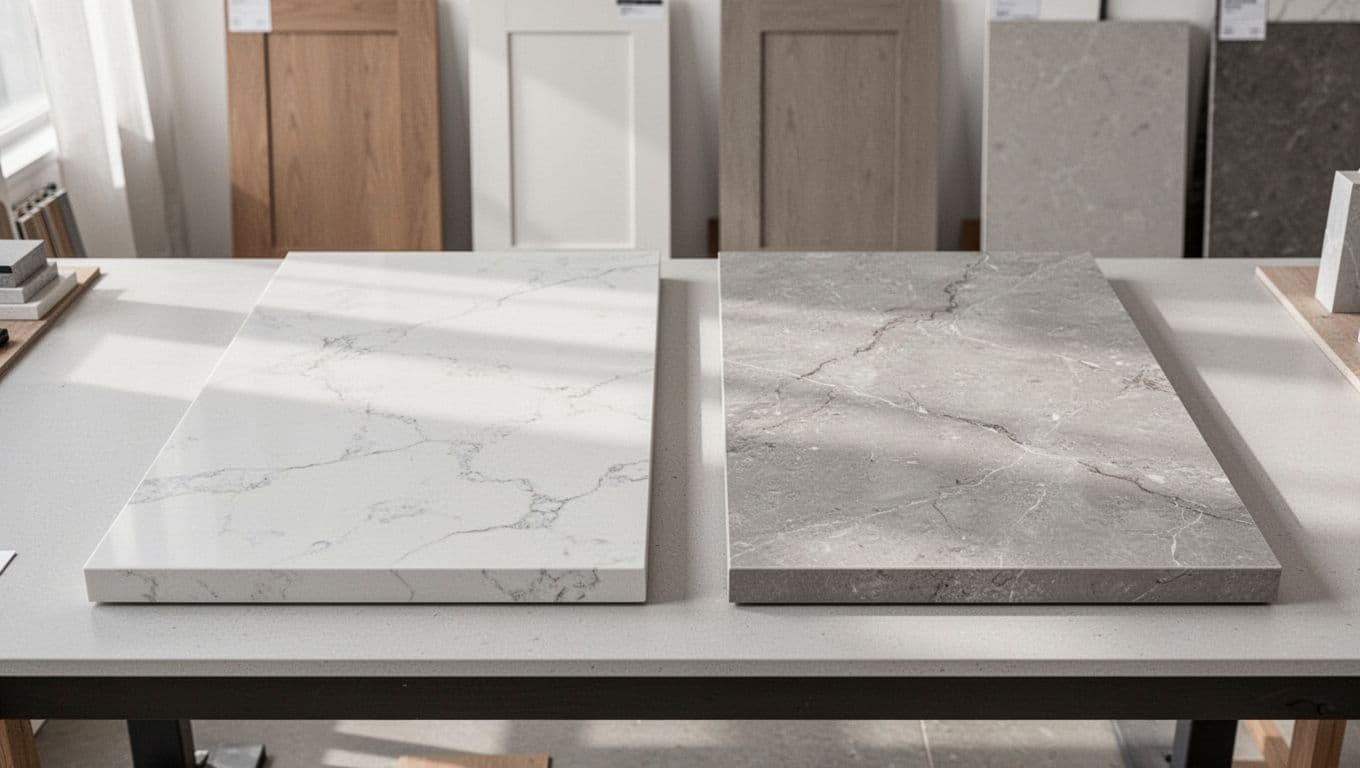
Quartz countertops are engineered stone . Manufacturers combine crushed quartz minerals with resins, pigments, and other materials, then press the mixture into slabs. The result is a dense, nonporous surface with predictable colors and patterns.
Because the pattern is manufactured, quartz offers a broad range of looks. You can find subtle solid colors, dramatic marble-style veining, concrete-inspired finishes, and warm neutral designs. The exact resin formula and manufacturing process vary by brand, so product warranties and care instructions matter.
Porcelain countertops are fired ceramic slabs . Manufacturers press refined clay and mineral materials, then fire them at high temperatures. Some products use printed surface patterns, while others have color or pattern that extends farther into the slab.
Porcelain is dense, nonporous, and often highly resistant to ultraviolet exposure. It can replicate natural marble, limestone, wood, and other materials with a thin, modern profile. Large porcelain slabs also create a clean appearance with fewer visible pattern breaks, although the fabrication process requires careful handling.
What Quartz Does Well
Quartz is a practical choice for busy kitchens because it resists common household stains and doesn't need routine sealing. Coffee, cooking oils, and food spills are easier to manage when you wipe them up promptly.
The material also gives homeowners many design options. Most quartz fabricators are familiar with standard sink cutouts, cooktop openings, eased edges, and more detailed edge profiles. That experience can make the planning process more predictable.
Quartz still contains resin, so it isn't indestructible. A hot pan, slow cooker, or baking dish placed directly on the surface can cause discoloration or damage. Use trivets and follow the manufacturer's care instructions.
What Porcelain Does Well
Porcelain handles high temperatures better than quartz in most applications. It also generally performs well in areas exposed to strong sunlight, which can matter in a bright kitchen or an outdoor cooking area.
The surface resists stains, moisture, and many household chemicals. Porcelain also works well for homeowners who prefer a thin countertop profile or a large-format stone appearance.
Its main concern is fabrication and edge vulnerability. A porcelain slab can chip if an edge or cutout receives a hard impact. The risk depends on the slab design, thickness, edge treatment, cabinet support, transportation, and installer experience.
Quartz vs Porcelain Countertops: Cape Coral Performance
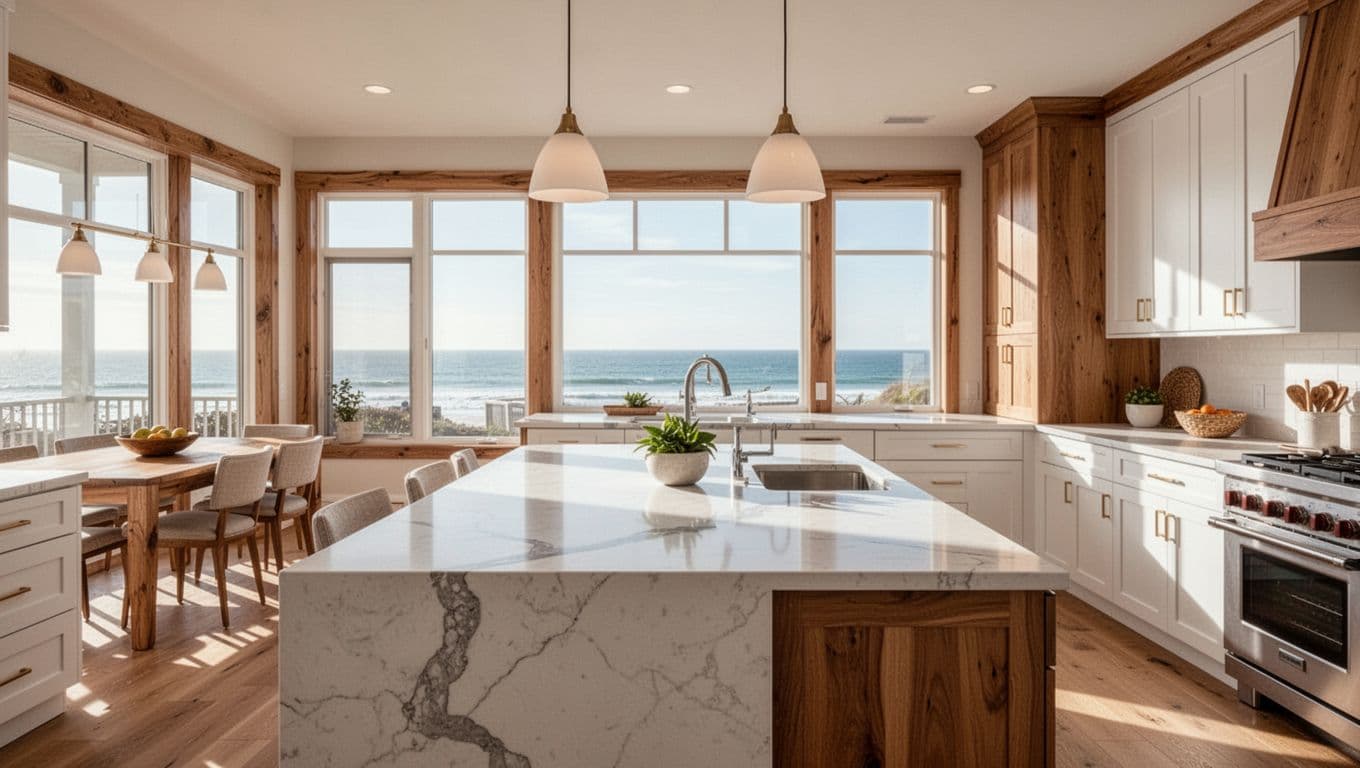
For homeowners comparing quartz vs porcelain countertops, the kitchen's location and use should guide the decision. Cape Coral homes often receive strong sunlight through large windows or sliding glass doors. Some properties also include an outdoor kitchen or a covered lanai.
Indoor quartz is suitable for many Cape Coral kitchens, but prolonged direct ultraviolet exposure can affect some products over time. Ask the fabricator whether the specific quartz color and brand are approved for the planned location. Porcelain is often a stronger candidate for direct sun, but the manufacturer still needs to approve the application.
| Kitchen concern | Quartz | Porcelain |
|---|---|---|
| Stain resistance | High, with no routine sealing | High, with no routine sealing |
| Direct sunlight | Product-dependent, prolonged UV may affect some colors | Generally strong UV performance |
| Hot cookware | Use trivets because resin can be damaged | Higher heat tolerance, but avoid thermal shock |
| Scratches | Resistant, but don't cut directly on it | Resistant, but use a cutting board |
| Edge damage | Corners and cutouts can chip | Thin edges and cutouts need careful handling |
| Routine care | Mild soap, water, and approved cleaners | Mild soap, water, and approved cleaners |
Humidity alone doesn't require sealing for either material. Still, wipe spills around sink areas, protect seams, and use the cleaning products listed by the manufacturer. Avoid abrasive powders, harsh chemicals, and forceful impacts near corners.
For an outdoor kitchen, evaluate the entire installation rather than the slab alone. Cabinets, adhesives, support systems, appliances, and exposure levels all affect performance. A quartz product that works well indoors may not carry the same warranty for an exterior application.
A material's technical rating only applies when the selected product, location, support, and installation match the manufacturer's requirements.
Appearance, Edges, and Installation Details
Quartz often works well when you want a conventional countertop with a substantial edge. Common options include eased, bevel, bullnose, and laminated edges. A laminated edge joins material to create a thicker appearance, which can increase fabrication work.
Porcelain can create a clean 12-millimeter profile, depending on the slab and design. Some homeowners choose a thicker mitered edge around an island, but that detail requires accurate fabrication and careful pattern matching. The visible edge may also reveal whether the slab has a through-body design or a surface-applied pattern.
Color selection deserves more attention than a small sample can provide. Veining may look different across a full island, and two slabs from the same collection can vary in movement. View the actual slabs when possible. Ask how the fabricator will position the pattern around the sink, cooktop, corners, and seams.
Cabinet installation comes first. Countertops need a stable, level base, so the fabricator should measure after the cabinets are secured. Wall irregularities, out-of-square corners, and island dimensions can affect seam placement and material use.
Sink and cooktop cutouts also need planning. An undermount sink, farmhouse sink, faucet holes, soap dispenser, filtered-water tap, and pop-up outlet each affect the template. Confirm appliance specifications before fabrication begins.
Homeowners planning a full renovation can review expert kitchen remodeling in Cape Coral for more context on coordinating cabinets, countertops, fixtures, and final inspections.
Comparing Cost Without Guessing at a Final Price
There isn't one fixed local price for either material. A countertop quote depends on the selected brand, slab color, thickness, square footage, layout, edge profile, cutouts, backsplash, seams, delivery, removal, and installation access.
Quartz often has a more predictable fabrication process because many local shops work with it regularly. Premium quartz can still become expensive, especially when the design includes dramatic veining, a large island, mitered edges, full-height backsplash panels, or multiple slabs.
Porcelain may have a lower or higher slab price depending on the product. Its installed cost can rise when the fabricator needs specialized tools, extra support, careful transportation, or more labor around cutouts and edge details. A thinner slab may need a reinforced substrate or a particular cabinet support plan.
Compare installed quotes , not material prices alone. Ask each contractor to identify the slab, thickness, edge treatment, sink and cooktop cutouts, backsplash work, tear-out, plumbing reconnection, delivery, and warranty terms.
You can also review Southwest Florida countertop costs when building a preliminary budget. The important figure is the completed installation cost, because fabrication details often change the total more than the sample price suggests.
Which Countertop Fits Your Cape Coral Kitchen?
Quartz may suit your project if:
- You want a wide selection of consistent colors and marble-style patterns.
- The countertops will stay indoors, away from prolonged direct sunlight.
- You prefer a familiar fabrication process with many available edge options.
- You want a nonporous surface that doesn't require routine sealing.
- Your design includes several standard cutouts or a detailed edge profile.
Porcelain may suit your project if:
- The kitchen receives strong direct sunlight.
- You want greater heat tolerance around cooking areas.
- You prefer a thin, modern edge or a large-format stone appearance.
- You are considering an outdoor kitchen and the selected product carries approval for that use.
- You have access to a fabricator experienced with porcelain slab handling.
Neither option automatically wins every comparison. A well-installed quartz countertop can outperform a poorly supported porcelain slab, while an expertly fabricated porcelain installation can solve concerns that make quartz less suitable for a sunny location.
Product performance varies by manufacturer. Review the technical data sheet, care guide, and warranty before choosing a color. Warranties may exclude outdoor use, commercial use, improper cleaning, unsupported overhangs, or damage from heat and impact.
Questions to Ask a Local Countertop Fabricator
A qualified local fabricator should visit the project or coordinate measurements with the remodeling contractor. Ask when the final template will be created, what cabinet conditions must be complete, and how the team handles uneven walls or unsupported overhangs.
Before signing off on the order, confirm these details:
- The exact manufacturer, collection, color, slab thickness, and finish.
- Whether the selected product is approved for indoor or outdoor use.
- The planned seam locations and how the pattern will align.
- The edge profile, sink type, cooktop opening, faucet holes, and outlet cutouts.
- The amount of overhang and any required brackets or support.
- Who handles plumbing reconnection and appliance installation.
- The written care instructions and warranty exclusions.
Ask to see the actual slab if the design includes strong veining. A small showroom sample cannot show how the pattern will cross a full island. It also won't reveal whether the edge will display a different color or pattern.
If your project moves plumbing, adds electrical circuits, changes walls, or affects other building systems, confirm the permit requirements before work begins. The scope determines whether approvals are needed, so review the Cape Coral remodeling permit requirements with your contractor and the appropriate local department.
Choosing With Confidence
Quartz is engineered stone with broad design flexibility and a familiar installation process. Porcelain is a fired ceramic slab with strong heat and sunlight performance, but it demands careful fabrication and support.
For most indoor Cape Coral kitchens, either material can work well when the product matches the location and the installation follows manufacturer requirements. Compare full installed quotes, inspect the actual slabs, and discuss seams, cutouts, edges, and warranty terms with a qualified local fabricator. The right choice is the one that fits your kitchen's light, cooking habits, design, and construction plan.