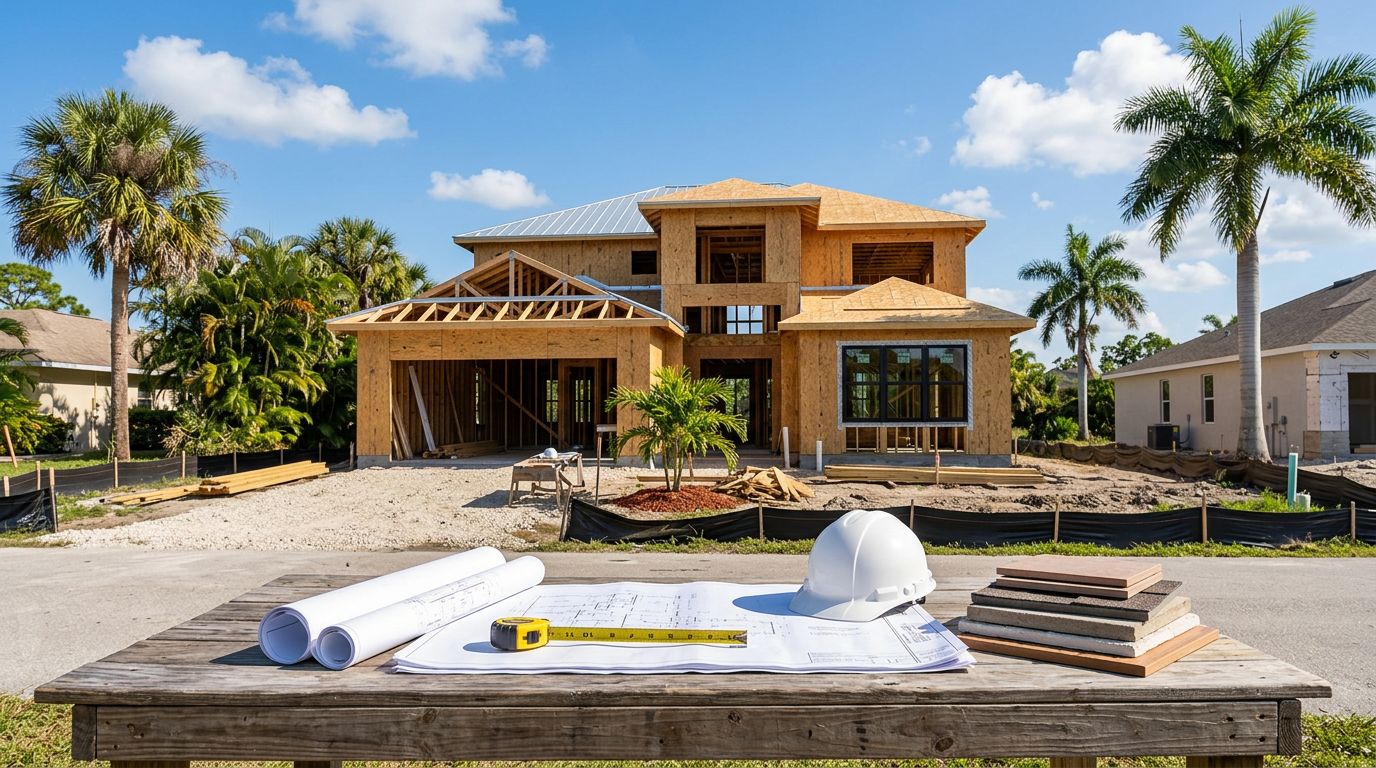



A new home can have walls, windows, and a finished driveway before it has an official street address. Until Cape Coral assigns that address, permit records, inspections, deliveries, utilities, and emergency response may not line up correctly.
For a 2026 build, the homeowner and builder should treat address assignment as an early project task. The City of Cape Coral Building Division handles the process, but requirements, fees, documents, and portal instructions can change. Confirm the current rules with the city before submitting anything.
Key Takeaways
- Cape Coral assigns the official address used for permits, inspections, emergency response, and property records.
- A site plan should clearly show the proposed home, front door, driveway, and property information.
- The property's Real Estate Number, or RE#, helps the city match the request to the correct parcel.
- Builders and owners should verify the assigned number before updating plans, ordering materials, or arranging services.
- Confirm current fees, forms, and timing directly with Cape Coral's Building Division in 2026.
What a Cape Coral Address Assignment Means
A Cape Coral address assignment gives a new home its official street number and recognized location. The number normally relates to the property's street frontage and the building location shown on the submitted site plan.
This is different from receiving mail. The City of Cape Coral assigns the address for municipal and public-safety records. The U.S. Postal Service uses the address after it enters the delivery system, but USPS does not replace the city's addressing process.
A real estate listing address, temporary lot label, and official city-assigned address aren't always the same thing.
The assigned address can appear in the building permit file, inspection records, utility accounts, construction documents, insurance paperwork, and lender records. It also helps responders locate the property when the home is under construction or occupied.
Cape Coral contains many vacant parcels, new subdivisions, canals, private roads, and lots with similar street names. A small mistake in the lot number or street name can send a subcontractor to the wrong property. It can also create confusion when the permit application, survey, and site plan show different information.
Timing matters because the address may need to appear on later project documents. Ask the Building Division when the city expects the assignment during the permit process. Don't assume that a contractor's internal lot number is acceptable in place of the official address.
For a single home on an existing, named street, the request may be more straightforward. New subdivisions, private roads, divided parcels, or changes to a building location may require additional review. Cape Coral's current requirements control each situation.
Documents and Information to Prepare
Before starting the Cape Coral address assignment process, gather the information that identifies the parcel and shows exactly where the home will sit. The city may request additional documents based on the property and project type.
The core materials identified for a new-home request include:
- A site plan showing the proposed building, front door, and driveway locations.
- The property's Real Estate Number, or RE# , which connects the request to the correct tax parcel.
- A current survey or title document , if the Building Division requests one.
- Project and contact information entered through the city's current submission system.
The site plan deserves careful review. It should match the approved survey, lot lines, street frontage, driveway access, and the home's actual orientation. If the front door faces a canal, side yard, or different street than expected, mark that clearly. A vague drawing can create questions about which side of the lot receives the address.
Check the RE# against the property records and your purchase documents. New construction sites often have nearby parcels with similar legal descriptions, especially in developing areas. A single incorrect digit can attach the request to another lot.
The City of Cape Coral provides an online e-permitting option through its website. An in-person submission option is available through the Building Division at 1015 Cultural Park Boulevard, Cape Coral, FL 33990 . Confirm the current office hours, payment methods, forms, and submission instructions before visiting.
Cape Coral's exact address-assignment fee wasn't confirmed in the available 2026 information. Don't rely on a fee published for another Florida county. Ask the Building Division for the current amount and accepted payment method.
Coordinate the Request With Your Builder
Homeowners often assume the builder handles every government filing. Some builders submit address information as part of permit coordination, while others expect the owner or design professional to submit the request. Your construction agreement should make that responsibility clear.
Ask these questions before the project begins:
- Who submits the address assignment request?
- Who checks the RE# and site plan?
- Who pays the city fee?
- Who responds if Cape Coral requests a revised plan?
- Who updates the permit set after the address is assigned?
- Where will the approval or assigned address be stored?
The builder should compare the site plan with the survey before submission. The architect, engineer, surveyor, permit coordinator, and owner should then use the same address. Consistent records reduce confusion when contractors order materials or schedule inspections.
Street names require extra care in new developments. An existing platted street may already have an approved name, while a new subdivision road or private street may involve separate city review. Ask Cape Coral whether the street name is already recognized before requesting a number. Don't assume a developer's marketing name is the city's official street name.
Address issues can also appear when a homeowner changes the home's location after submitting the site plan. Moving the structure, changing the driveway, adding a second dwelling, or changing access from one street to another may require the city to review the address again.
A quick approval in another Florida jurisdiction doesn't guarantee the same result in Cape Coral. Keep the request in the project schedule, but don't build the entire construction timeline around an unconfirmed turnaround. Save every submission receipt, correction notice, and approval message.
Common Mistakes That Delay New-Home Addressing
The most common problems involve mismatched information rather than complex construction issues. A site plan may show one street name while the permit application uses another. The RE# may belong to an adjacent lot. The driveway may be drawn on the wrong side of the property.
Review the following details before submitting:
- Confirm the legal property address and RE#.
- Use the city's recognized street name.
- Match the site plan to the current survey.
- Mark the front entrance and driveway clearly.
- Check that the proposed home sits on the correct parcel.
- Keep the owner and builder contact information current.
- Ask whether a survey, deed, or additional plan is required.
If Cape Coral returns the request for correction, make the changes promptly and resubmit through the method the city specifies. Keep the original and revised versions together. That record helps explain why a plan changed and prevents an older address from appearing in a later permit package.
The assigned number should also be visible at the construction site when practical. A temporary sign can help inspectors, delivery drivers, utility crews, and emergency personnel identify the lot. Use a clear display that can be seen from the road, and confirm any city or emergency-marking requirements.
For general city questions, Cape Coral's 311 Call Center can provide direction, but the Building Division is the better source for address-assignment requirements. Verify the correct contact route through the city's current website.
What to Do After Cape Coral Assigns the Address
Once the city issues the address, save the approval and send the assigned number to everyone working from the project documents. That may include the builder, architect, engineer, surveyor, lender, insurance agent, utility contacts, and permit coordinator.
Check the number against the permit record before ordering permanent signs or printing construction paperwork. If the approval differs from the address used in a contract or plan, ask the appropriate city office and project professional how to correct the records. Don't quietly use both versions.
The address may also affect utility setup and delivery instructions. Give contractors the official number, parcel location, and any gate or canal access details. In Cape Coral, a street address alone may not tell a new crew which lot is yours.
After the home becomes your active residence, update records that require your current address. These may include your Florida identification, vehicle registration, voter registration, insurance policies, and financial accounts. Use USPS mail forwarding when you move, but remember that forwarding doesn't create or validate the city's address.
If the property will be rented, ask Cape Coral about any current rental registration requirements that apply in 2026. Rental rules, deadlines, and fees can change, so verify them directly rather than relying on a builder's old information.
Include Address Responsibilities in the Construction Contract
Address assignment is a small administrative task, but unclear responsibility can create avoidable delays and extra charges. Your contract should state whether the builder handles the submission, revisions, city communication, and document updates.
This matters even more when you hire a cost-plus home builder . With cost-plus construction, the owner pays documented project costs plus the builder's agreed fee. A request revision, consultant update, or permit-related charge should have a clear place in the contract.
Look for transparent pricing and written rules covering city fees, permit costs, resubmissions, design changes, and owner approvals. You can review how open-book construction pricing works before comparing proposals.
The contract should also identify which documents control if the address, lot number, or site plan changes. Clear records protect both sides and make it easier to trace the cost of any required revision.
Conclusion
A Cape Coral address assignment gives your new home an official identity before construction is complete. Start with the correct RE#, a clear site plan, and direct confirmation from the Building Division.
Then keep the assigned number consistent across permits, plans, inspections, utilities, insurance, and delivery records. When address duties and related costs appear in the construction contract, your build has fewer administrative surprises and a clearer path forward.