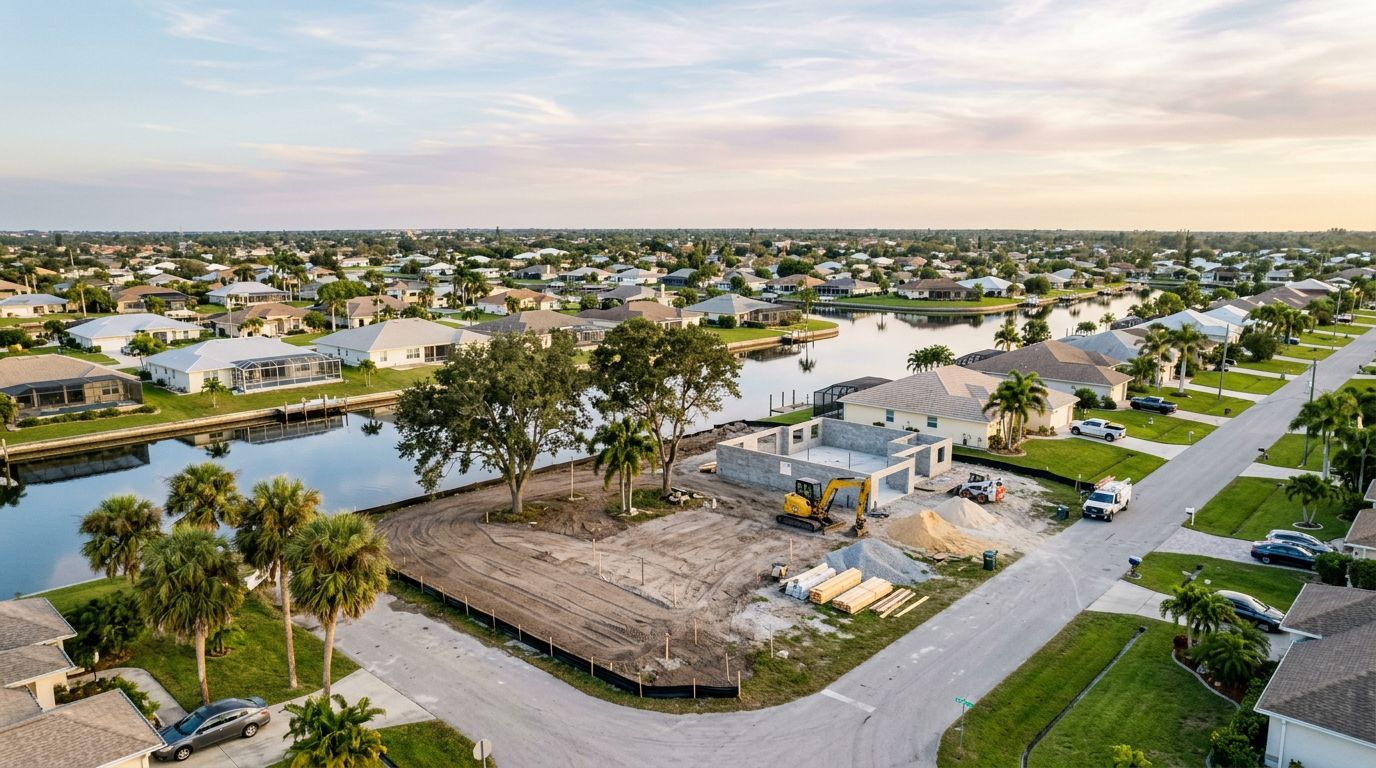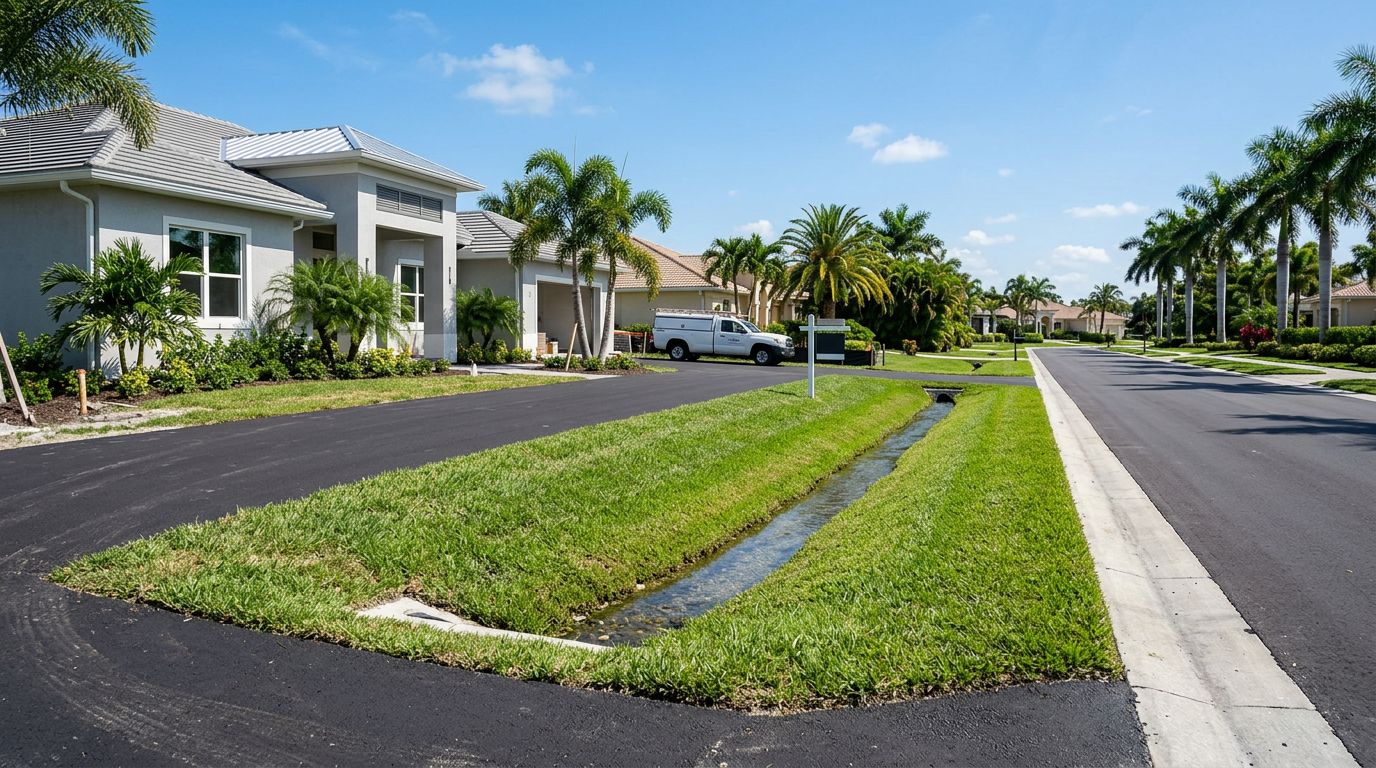
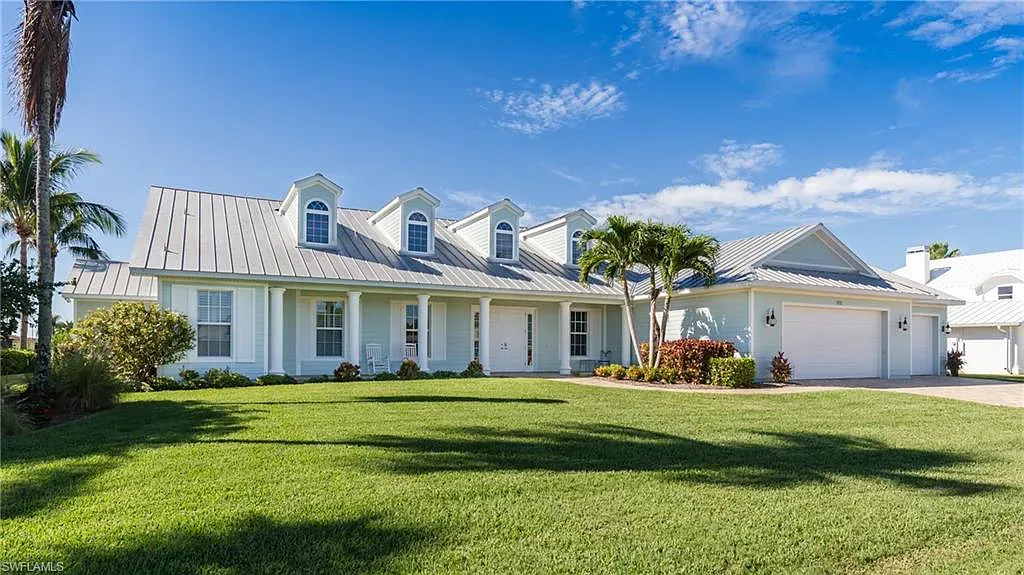



A Cape Coral lot can look generous on paper and still feel tight once setback lines are drawn. That's why Cape Coral setback rules matter before you buy land or lock in a floor plan.
In 2026, the answer still depends on the current city code, your zoning district, and the lot itself. A corner parcel, a waterfront lot, and a standard interior lot can all play by different rules, so the safest move is to verify the parcel first and design around the real buildable space.
What setback rules control in Cape Coral
Setbacks are the minimum clear distances between a building and the property lines. In plain terms, they are the buffer the city wants around your home.
Cape Coral's Land Development Code was updated through Ordinance 6-26 in February 2026, so current city rules matter more than old notes on a survey or advice from a neighbor. The city's zoning lookup in CapeIMS zoning lookup is the best starting point, and the current land development code shows how the rules are written today.
Most setbacks are measured from the true property line , not the curb. That sounds small, but it can change everything on lots with wide rights-of-way, angled corners, or utility easements. A house can sit where it feels centered and still miss the code by inches.
Front, side, rear, pool, fence, and sometimes driveway rules all have their own logic. So do architectural projections in some cases. The number alone is never the whole story.
The common baseline on standard single-family lots
On many standard single-family lots in Cape Coral, the common pattern is 25 feet in front, 7.5 feet on each side, and 20 feet in the rear for the house. City guidance also shows that pools can follow a different rear distance, often 10 feet, and fences may have separate placement limits.
That baseline helps, but it is only a starting point. It works as a sketch, not a final answer. A garage, porch, roof overhang, or covered entry can change how the home fits inside the lot.
The smartest way to use those numbers is to think in terms of the buildable envelope . Once the setback lines are drawn, the real lot is smaller than the one on the sales sheet. That matters fast on narrower parcels.
If you are buying land, ask for the survey early. If you already own the lot, compare the survey to the plan before a designer finalizes the footprint. A few feet can decide whether the house sits comfortably or feels squeezed from day one.
Why zoning district, corner lots, and lot shape change the answer
Two lots on the same street can have different setback rules if the zoning label is different. That is why the district matters as much as the dimensions.
Corner lots and double-frontage lots deserve extra care. A street-facing side can pick up front-yard treatment, which cuts into the space you thought was a side yard. Waterfront and irregular lots can change the math again.
Here is a quick way to think about the most common situations:
| Lot type | Why it changes the answer | What to verify first |
|---|---|---|
| Standard interior lot | The common residential pattern often applies | Zoning district and survey |
| Corner lot | Street-facing sides can trigger different yard rules | Frontage rules and visibility limits |
| Double-frontage lot | More than one side can act like a front yard | Code for both street sides |
| Narrow or irregular lot | The buildable envelope shrinks fast | Plat, dimensions, and easements |
| Waterfront lot | Rear yard and seawall placement matter | Waterfront rules and site layout |
That table is the real lesson. The city does not use one flat rule for every parcel, so the lot shape can matter almost as much as the zoning label. A buyer who skips this step may end up redesigning the house after the plans are already drawn.
Waterfront lots, pools, fences, and easements
Waterfront parcels bring more than a nice view. They also bring seawalls, dock planning, drainage, and a tighter rear-yard conversation.
If you are planning on a canal lot, a related guide on Cape Coral canal-lot rules is helpful because the rear line can behave differently once the waterfront edge comes into play. The usable yard may be smaller than it looks from the street.
Pools and cages can follow different setback rules than the house itself. Fences and walls can also have their own limits, especially near the front yard or a corner where sight lines matter. That means a plan can pass for the home and still fail for the pool or fence.
The setback on a neighbor's lot does not set the rule for your parcel. Zoning, frontage, and easements can change the answer.
Easements are another trap for first-time owners. A survey should show more than the lot lines. It should also show recorded access areas, drainage easements, and utility easements. Even when the setback line looks clear, an easement can block part of the structure.
If the design is close to the line, ask about that before you finalize the drawings. A small shift on paper is easier than a redesign after plan review.
How to verify the exact setback for your parcel
The fastest way to avoid bad assumptions is to check the lot in a fixed order.
- Confirm the zoning district in CapeIMS zoning lookup.
- Read the matching section of the current land development code.
- Pull a current survey and compare it with the recorded plat.
- Check for easements, corner conditions, and waterfront edges.
- Ask Development Services to confirm anything close to the line before you submit plans.
If you are about to file permits, timing matters too. A useful companion read on new-home permit fees can help you budget the next step.
If the lot is tight, ask whether a variance or other adjustment is possible before spending money on redesign. The answer may save weeks.
How setbacks affect layout, cost, and builder bids
Setbacks do more than shift walls. They affect garage depth, driveway length, porch size, pool placement, rooflines, and site work. On a narrow or waterfront lot, a few feet can change the whole floor plan.
That is one reason a cost-plus home builder can be a good fit for this kind of project. When the lot forces changes, transparent pricing helps you see the site work, plan changes, and permit-related costs instead of hiding them in a vague lump sum. You know what the land is doing to the budget.
If you are comparing proposals, a related guide on comparing builder bids is worth reading. The lowest number can look great until the builder starts adding site assumptions that should have been in the first quote.
Ask each bidder who reviews the survey, who checks the setbacks, and who owns the redlines if the first plan does not fit. That question matters as much as the price.
Conclusion
Cape Coral setback rules are simple in concept and site-specific in practice. The right answer comes from the current code, your zoning district, and the survey, not from what worked on another lot.
If you are planning a new home in 2026, start with the parcel and then design the house. That order keeps the buildable envelope honest and cuts down on redraws later.