Cape Coral Soffit Fascia Damage Before Roof Repairs
Explore Our Services
Contact Us Today!
(239) 322-9295
A roof repair can solve only part of the problem if damaged soffits and fascia are left out of the inspection. When soffit and fascia damage appears near a roof edge in Cape Coral, it may point to moisture entry, wind movement, blocked ventilation, or pest access.
Some defects are limited to peeling paint or surface discoloration. Others involve movement, soft materials, exposed openings, or damage connected to the roof covering and flashing. The safest approach is to document what you can see, then have the entire roof edge evaluated before permanent work begins.
Why Soffit and Fascia Need Attention Before Roof Repairs
Soffit panels cover the underside of the roof overhang. Fascia runs along the roof edge and often supports or meets the gutter system. Together, these components help close the home's exterior and protect the roof edge from weather and animals.
If either component is damaged, a roofing crew may need to account for it before repairing shingles, tile, metal panels, flashing, or other roof materials. Covering the roof without addressing a related opening can leave water, insects, or wind-driven debris a path into the assembly.
The roof edge can reveal hidden problems
Damage near the eaves may connect to more than the visible trim. Water can travel from a roof penetration, flashing joint, gutter connection, or damaged roof covering before appearing on the soffit below. A roof inspection should therefore include the roof materials, structure, flashing, drainage paths, and visible exterior edge.
A professional inspection can also help determine whether the issue is isolated or spread across several areas. Cape Coral roof inspections assess roof condition, possible leaks, weather damage, wear, and overall integrity.
Cosmetic damage still deserves documentation
Faded paint, minor staining, or a small crack may not mean the roof structure is compromised. However, documenting the condition helps establish whether it changes after rain or repair work begins.
Take photographs from the ground, including wide views and closer images. Avoid climbing onto the roof or pulling at loose panels. A qualified professional can inspect areas that are unsafe or difficult to reach.
The Risks of Leaving Damaged Roof Edges Unchecked
Cape Coral homes face intense sun, heavy rain, humidity, strong winds, and seasonal storms. Those conditions can expose weak points around roof edges and exterior openings. Damage may develop gradually, or it may become visible after one severe weather event.
The concern is not limited to appearance. A damaged soffit or fascia can affect how the home handles moisture, air movement, pests, and future roof work.
Moisture can travel beyond the visible stain
Water may enter through missing or damaged roofing materials, failed flashing, exposed joints, or gutter problems. Once inside, moisture can affect adjacent trim, roof decking, insulation, or framing. The visible mark on the soffit may not identify the original entry point.
This is why a repair estimate should describe what was inspected and what caused the damage, when the cause can be confirmed. A contractor should distinguish between replacing an exterior panel and correcting the water path that damaged it.
Wind and pests use small openings
Loose fascia, separated joints, and open soffit sections can become vulnerable during high winds. Wind-driven rain can reach areas that remain dry during ordinary rainfall. Birds, insects, and small animals may also enter through gaps, especially when screens or vent covers are missing.
A Cape Coral wind mitigation inspection evaluates roof and exterior features related to resistance against strong winds and water intrusion. It can provide useful documentation, but it does not replace a repair assessment for a specific damaged area.
How to Tell Cosmetic Damage From a Roof Concern
Homeowners can often identify visible warning signs without diagnosing the cause. The goal is to notice changes and report them accurately, not to decide whether the roof needs replacement.
Signs that call for a professional evaluation
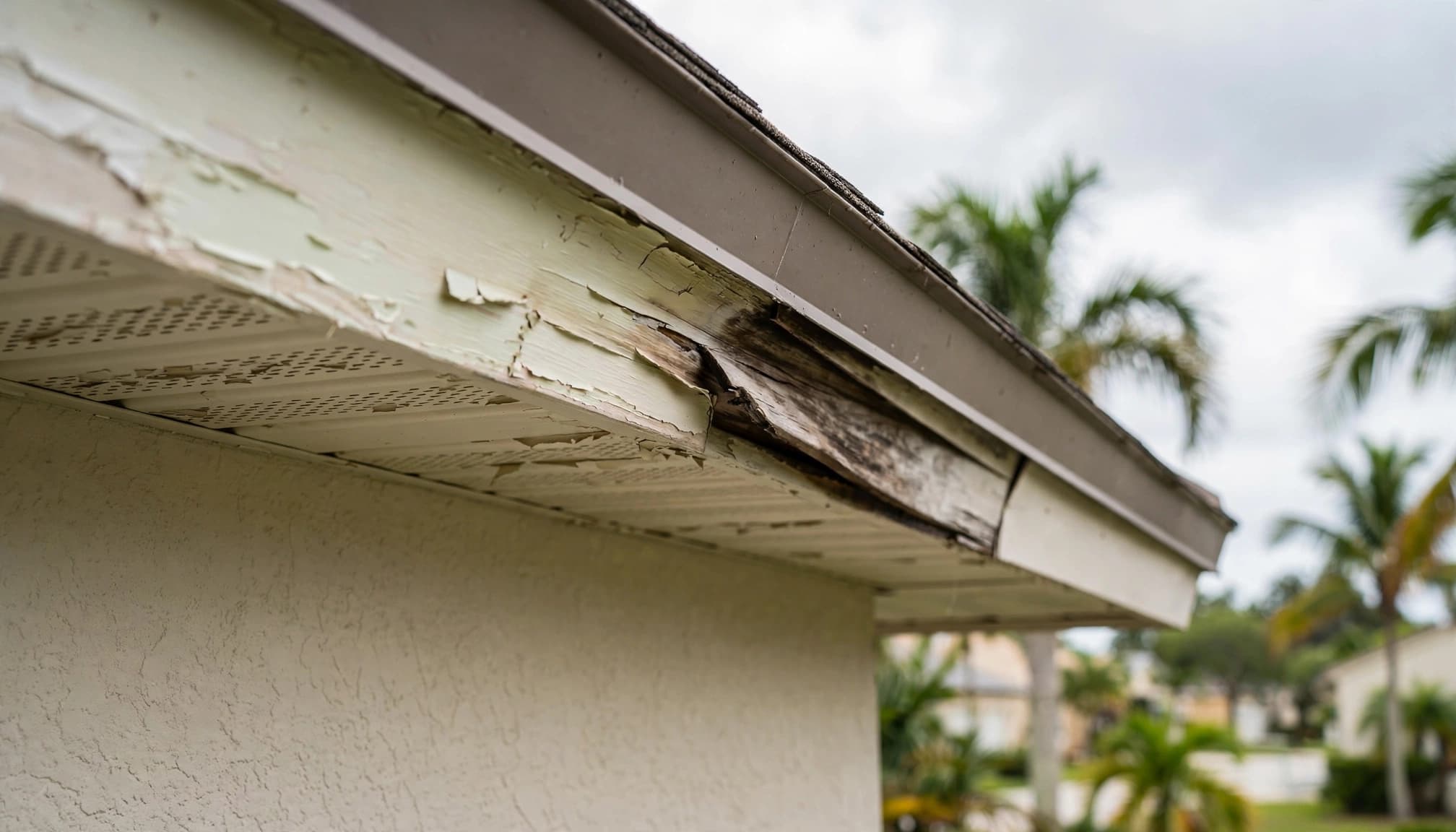
Pay closer attention when you see:
- Sagging, bowing, or separation along the fascia line.
- Soft, swollen, warped, or visibly deteriorated material.
- Water stains that return after rainfall.
- Peeling finish near roof edges, gutters, vents, or joints.
- Missing screens, open seams, or visible daylight through the soffit.
- Gutters pulling away from the fascia or overflowing near one section.
- Fresh damage after a tropical storm or high-wind event.
- Paint damage combined with interior ceiling or wall staining.
One sign does not prove that the roof assembly has failed. A group of signs in the same area deserves prompt attention, especially when the damage appeared after a storm.
Inspect connected components together
Soffit and fascia should be reviewed with the roof covering, flashing, gutters, roof-to-wall areas, vents, and visible decking. Wind-driven rain often finds small gaps around transitions and penetrations. Repairs can be incomplete when crews address only the most obvious surface.
The correct scope may include trim replacement, roof repair, flashing work, gutter adjustments, ventilation improvements, or investigation of concealed damage. The inspection should determine which items actually apply to the home.
A clean exterior finish does not confirm that the drainage, flashing, ventilation, or fastening details behind it are working correctly.
The Proper Order Before Roof Repairs Begin
The order of work matters because permanent repairs can hide evidence or make related problems harder to inspect. A clear sequence also helps homeowners understand what a contractor is recommending.
1. Make the area safe and limit further exposure
If a storm has opened the roof or allowed active water entry, temporary protection may be needed before a full repair. Keep people away from unstable trim, fallen materials, exposed wiring, and areas where water is entering near electrical equipment.
Temporary protection is not a permanent repair. Emergency roof tarp services can help secure a damaged home while the roof is inspected and the long-term scope is determined.
2. Inspect before removing or covering materials
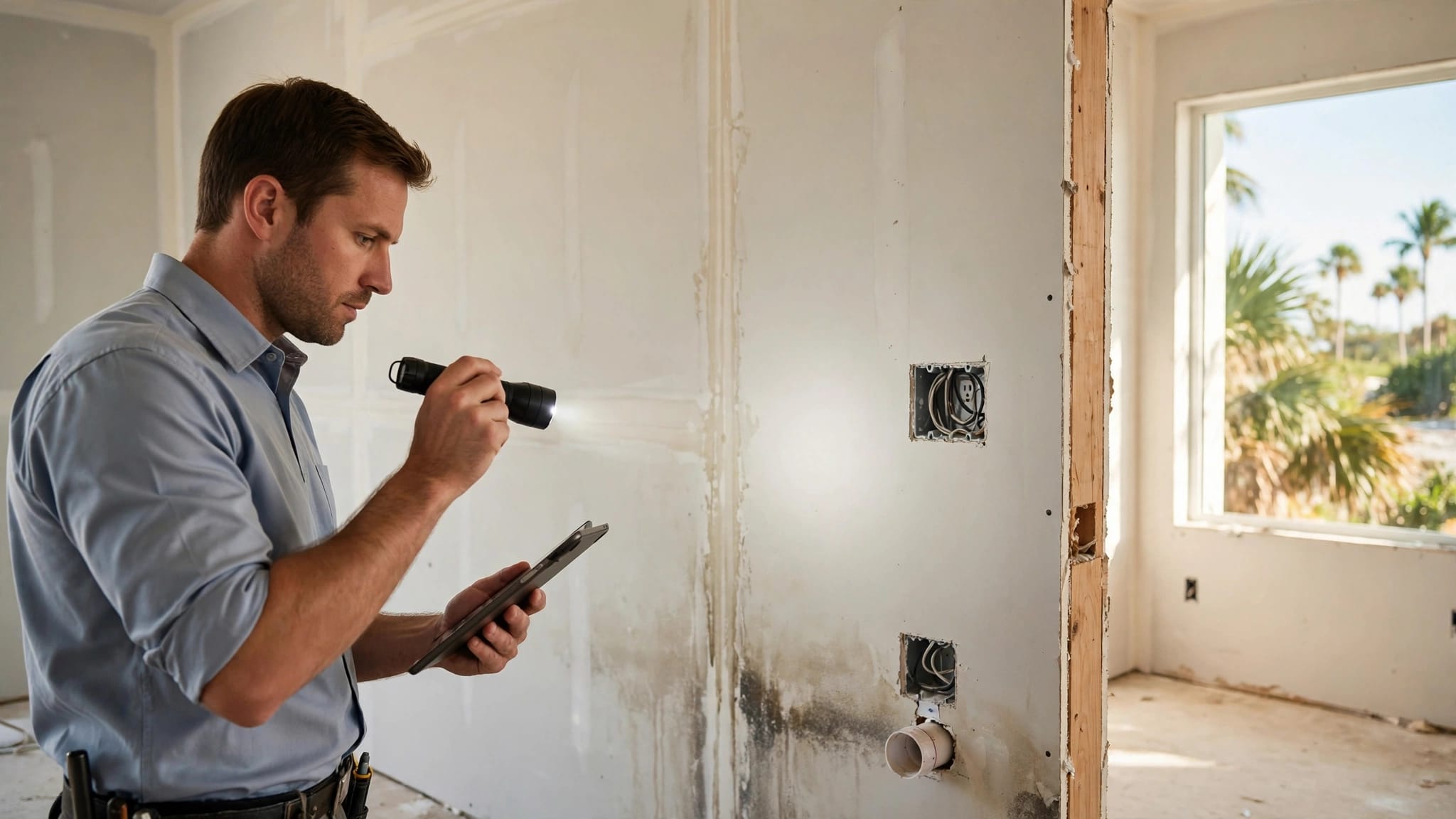
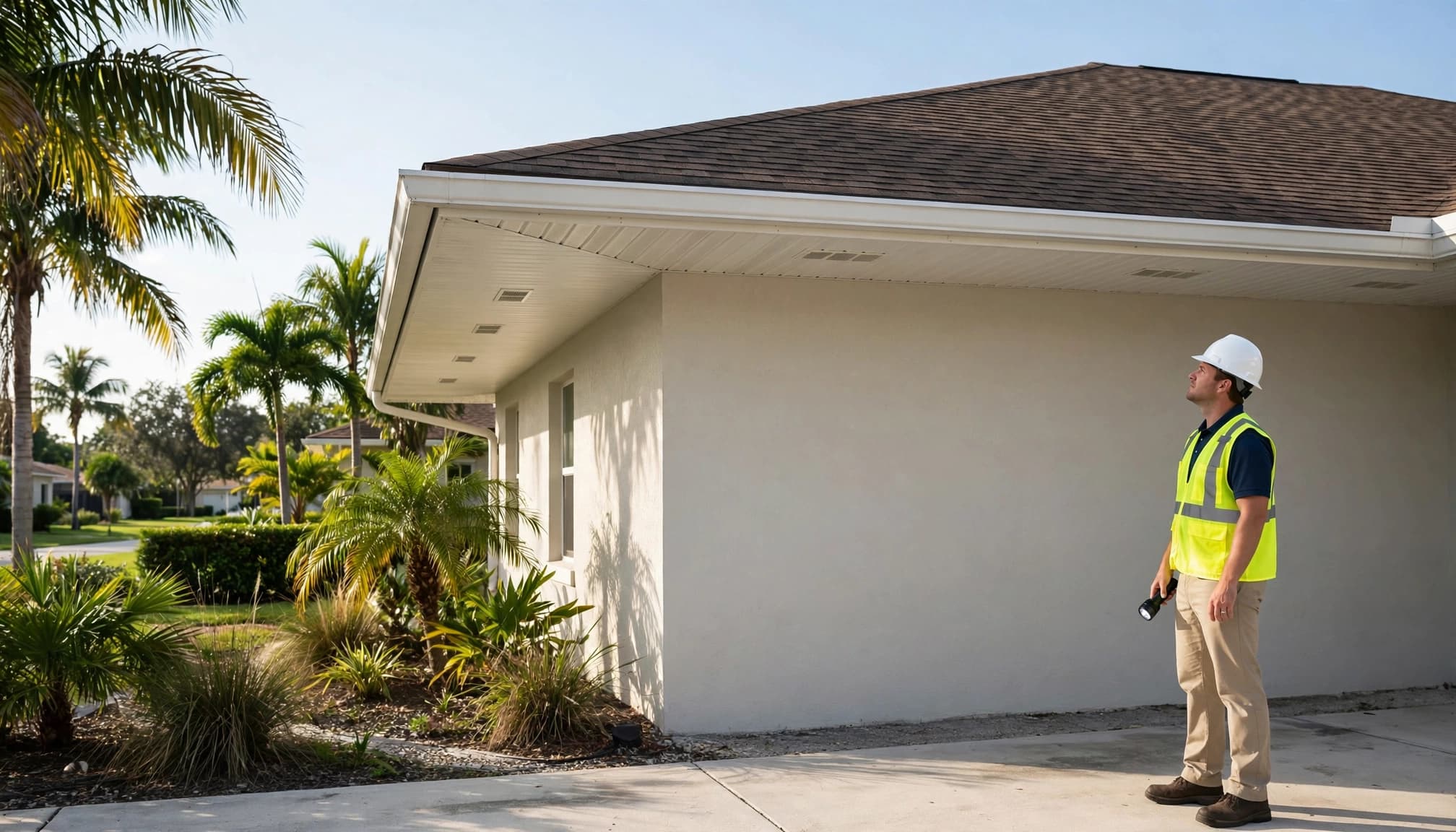
The contractor should evaluate the roof covering, flashing, gutters, fascia, soffit, vents, and accessible roof edge. If water intrusion is suspected, the inspection should consider nearby interior staining and any exposed decking or framing that can be safely viewed.
Ask for photographs and a written description of the findings. A useful report should separate confirmed damage from areas that require further investigation.
3. Repair the source before finishing the exterior
When the cause is known, work should address the path of damage before the final soffit or fascia finish is installed. For example, replacing a stained panel without correcting a roof or gutter problem may allow the damage to return.
Roof work may involve underlayment, flashing, roof decking, ventilation, or the roof covering itself. The right sequence depends on the property and the approved repair scope.
4. Complete trim and finish work after the roof edge is sound
Once roof-related repairs are complete, the contractor can finish compatible soffit, fascia, vent, gutter, sealant, and coating details. Material choices should suit the home's exposure and the approved specifications.
This is especially important near coastal or highly exposed properties. Metal accessories, fasteners, sealants, and coatings should be compatible with one another and installed according to the selected system.
Ventilation, Moisture, and Pest Concerns
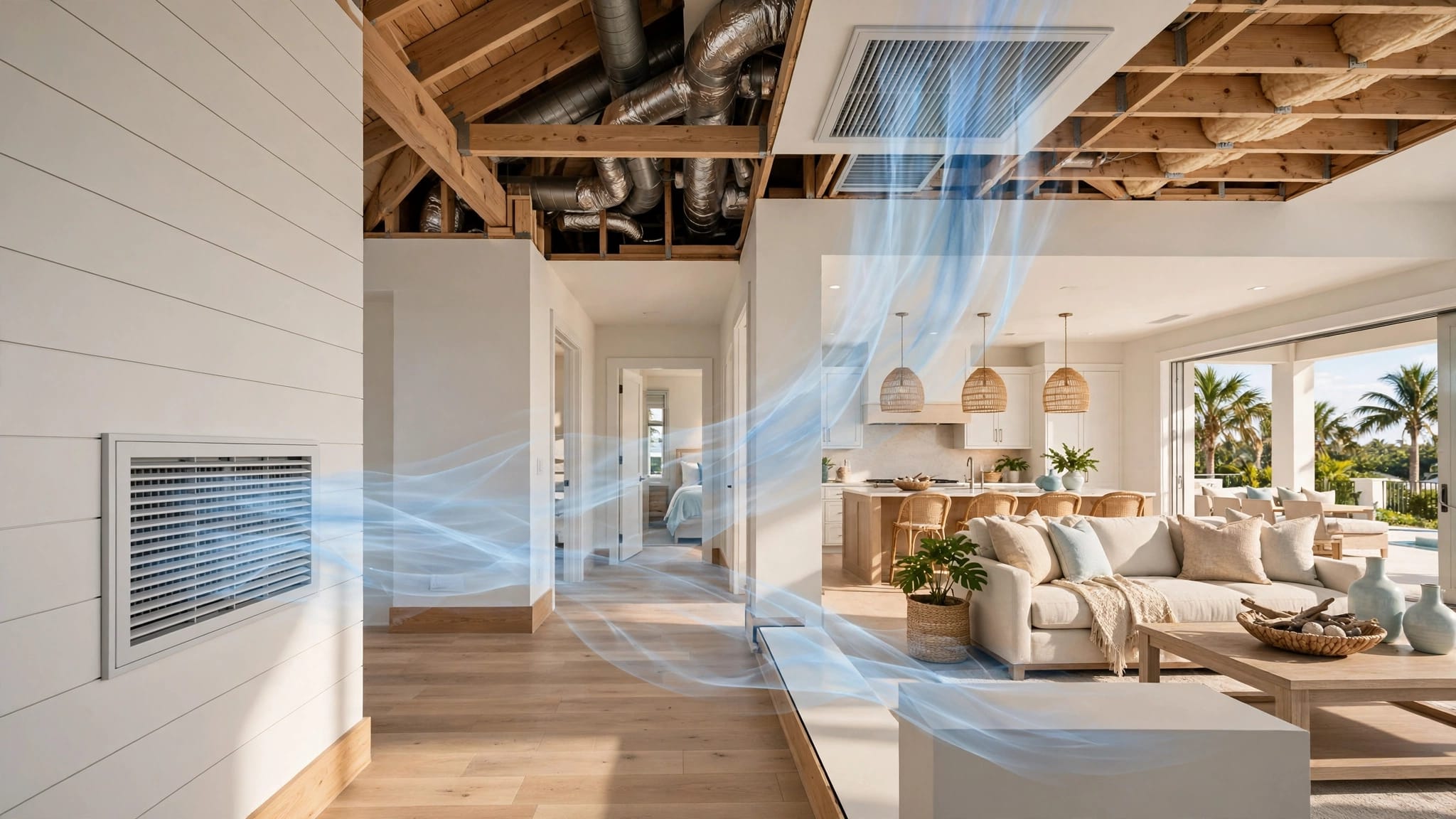
Soffits often contain intake vents that support airflow through the attic. Blocked, damaged, or improperly covered vents can reduce that airflow. However, homeowners should not assume every visible vent problem explains a roof leak or attic issue.
Check whether airflow is being blocked
Paint buildup, debris, insulation, nesting material, or damaged screens can restrict an opening. A roofing professional can evaluate whether the vent layout, roof exhaust, and attic conditions work together.
Roof installation services may include ridge vents and ventilation improvements when the project calls for them. Ventilation changes should match the roof design and should not be added randomly to a damaged area.
Look for signs of unwanted entry
Droppings, nesting material, scratching sounds, and repeated insect activity can indicate access through a soffit or fascia opening. Do not reach into a dark cavity or disturb an animal nest. A qualified contractor or pest professional can identify the entry point safely.
If moisture and pest evidence appear together, both conditions should be documented before the opening is sealed. Otherwise, a repair may trap moisture or leave an active problem inside the assembly.
Choosing the Right Professional for the Job
Minor surface damage may need a straightforward exterior repair. Extensive deterioration, active leaks, storm damage, or suspected structural problems require a more complete evaluation.
Choose a contractor who can explain:
- Which areas were inspected and which were inaccessible.
- Whether the damage appears cosmetic, moisture-related, wind-related, or uncertain.
- Whether the roof covering, flashing, gutters, ventilation, and trim need separate work.
- What temporary protection is appropriate before permanent repairs.
- Which materials and installation details belong in the repair scope.
- Whether permits, engineering, or building department review may apply.
A licensed and insured roofing or general contractor should handle unsafe roof-edge conditions. Structural concerns may require additional review by an appropriately qualified professional. Homeowners should also keep photographs, inspection reports, repair estimates, and storm documentation together for their records.
For a roof replacement, the scope may include roof decking repair or replacement, underlayment, flashing, ventilation, and the selected covering. Roof replacement and installation should be planned as a complete system rather than as a surface-only project.
Key Takeaways for Cape Coral Homeowners
- Inspect soffit and fascia before permanent roof repairs begin.
- Treat recurring stains, warping, sagging, open seams, and missing vent screens as reasons for evaluation.
- Review the roof covering, flashing, gutters, ventilation, and roof edge together.
- Use temporary protection after storm damage when water can enter the home.
- Do not climb onto the roof or handle unstable, wet, or exposed materials.
- Ask for written findings and photographs before approving a larger repair scope.
- Have qualified professionals evaluate extensive damage, active leaks, structural concerns, and unsafe access areas.
- Confirm that replacement materials and sealants suit the home and the approved assembly.
Frequently Asked Questions
Does damaged fascia always mean the roof needs replacement?
No. Fascia damage may result from a localized gutter issue, moisture exposure, impact, age, or another exterior problem. It may also be connected to roof covering, flashing, or decking damage. An inspection should determine whether the repair is limited or part of a larger roof scope.
Can I paint or seal damaged soffit before the roof is repaired?
Wait until the cause and condition are evaluated. Paint may improve appearance, but it will not correct active water entry, a loose connection, blocked ventilation, or an opening that allows pests inside. Sealing the area too early can also make later inspection more difficult.
Should I call a roofer or a general contractor?
Call a qualified professional based on the scope. A roofing contractor can assess the roof system and connected roof-edge conditions. A general contractor may help coordinate roofing, exterior trim, framing, drywall, and other repairs when damage extends beyond the roof. Unsafe or structural conditions may require additional specialists.
Are wind mitigation and four-point inspections the same as a repair inspection?
No. A wind mitigation inspection documents features related to wind resistance, including roof and exterior construction. A four-point inspection reviews four major home systems: HVAC, electrical, plumbing, and the roof. These services can provide useful information, but neither automatically replaces a focused assessment of active soffit, fascia, or leak damage. Four-point inspections are especially relevant for homes more than 25 years old.
What should happen after a storm damages the roof edge?
First, keep people away from unsafe areas and prevent further exposure when possible. Then arrange an inspection before permanent repairs are approved. Storm damage roof repair should address the confirmed source of damage, not only the most visible stain or loose panel.
Conclusion
Cape Coral soffit and fascia damage deserves attention before roof repairs begin because the roof edge connects drainage, ventilation, weather protection, and exterior finishes. Some problems are cosmetic, while others point to moisture entry, wind movement, pest access, or concealed deterioration.
A careful inspection creates a better repair sequence: provide temporary protection when needed, identify the source, repair the roof-related problem, and finish the soffit or fascia afterward. That process helps protect the home and prevents a fresh exterior finish from hiding an unresolved roof concern.