What to Do About a Soft Bathroom Subfloor
Explore Our Services
Contact Us Today!
(239) 322-9295
If your bathroom remodel uncovers a soft subfloor, pause the flooring work until you know what's causing the damage and how far it extends. A new tile or vinyl floor needs a sound, dry base beneath it.
A soft spot doesn't automatically mean the entire bathroom floor needs replacement. However, covering weakened material can leave the problem hidden under your new finishes.
Start by making the area safe, then trace the moisture and assess the exposed floor.
Stop Work Around the Soft Spot
Don't install underlayment, tile, or other flooring over the affected area. Also, keep people off any section that flexes noticeably or feels unsafe underfoot. The visible soft spot may be smaller than the damaged area below it.
Tell your remodeling contractor where you noticed movement and what was removed before it appeared. Loose tile, stained flooring, or a spongy area near the toilet can help narrow the inspection, but they don't establish the cause on their own.
If water is actively leaking, stop using the affected fixture and shut off its water supply if you can do so safely. Keep away from electrical equipment near standing water and bring in a qualified professional when water and electrical components may be involved.
Take photos before additional demolition. Images of the exposed floor and surrounding fixtures give you a record of what was found and help you discuss the scope of the repair.
Find and Stop the Moisture Source
A replacement floor won't solve an active leak. Before the room is closed up, the team needs to identify where moisture is entering and address that source.
Look Beyond the Visible Stain
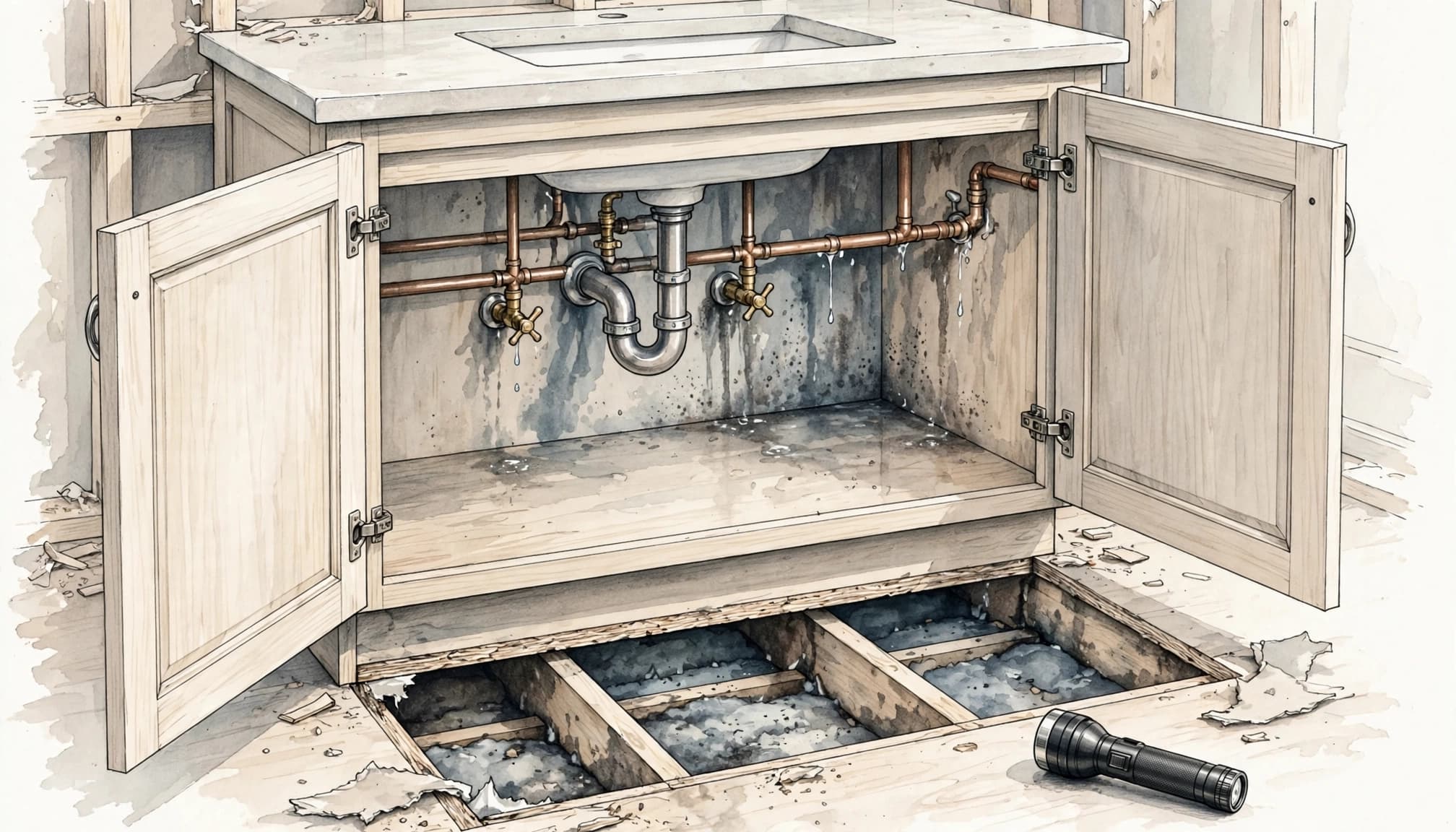
Water can travel before it becomes visible. A soft area near a vanity could be associated with supply or drain plumbing, while damage near a shower may lead the inspection toward the shower enclosure, drain, or waterproofing.
The toilet connection is another area to examine when damage appears around the fixture. Moisture can also come through an adjacent wall or another part of the home, so the investigation shouldn't stop at the first stain.
Ask the contractor to identify the suspected source and explain what evidence supports it. If the source isn't clear, the floor may need to remain open while a plumber or another qualified professional investigates.
Repair the Source Before Rebuilding
Once the source is identified, address it before installing replacement flooring materials. For example, a plumbing issue may need a plumber, while a damaged shower waterproofing assembly requires a plan for the affected wet area.
After the repair, the relevant plumbing or waterproofing work should be tested as appropriate. The exposed assembly also needs to dry before it is covered. Otherwise, the new floor could conceal an unresolved moisture problem.
Assess the Subfloor and Framing
The subfloor is the structural layer beneath the finished flooring. In a wood-framed bathroom, it sits over floor joists and helps support the flooring assembly. A soft surface can indicate damaged subfloor material, but the supporting framing may also need attention.
Determine How Far the Damage Extends
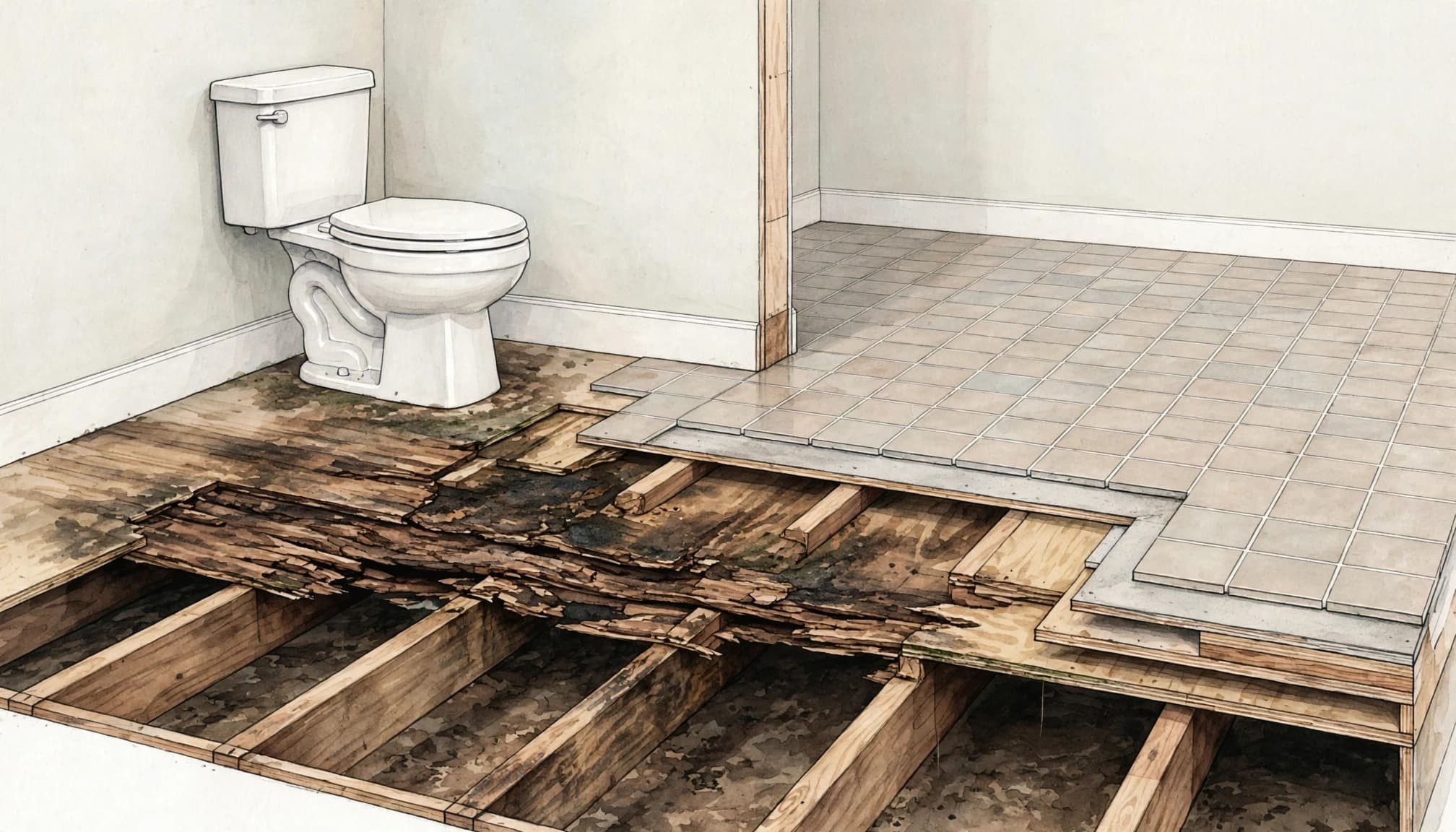
The contractor needs enough access to distinguish damaged material from sound material around it. That assessment may involve removing additional flooring or opening a larger area than originally planned.
Look at the condition of the exposed surface, including areas that feel soft, show swelling, or have separated layers. The team should also assess movement and fasteners. A surface that appears intact but flexes under normal use may still need work before it can support the planned floor.
Damage beside a tub, shower, or vanity can extend underneath the fixture. In those cases, the repair plan may change once the surrounding area is accessible.
Inspect What Supports the Floor
The subfloor isn't the only part of the assembly that matters. The contractor should assess the exposed joists and other affected framing, particularly where moisture has been present or the floor feels unstable.
If framing is damaged, involve a qualified professional to determine the appropriate scope. Floor-system changes can require structural review, and the documentation should match the work being performed. Our guide to structural requirements for bathroom renovations covers the planning considerations for Fort Myers projects.
Know When Subfloor Replacement Is Needed
Replacement is generally needed when the subfloor material has lost its strength or can't provide a stable base for the new flooring. Soft, deteriorated sections shouldn't be covered simply because they will be out of sight.
The scope depends on the exposed condition. If damage is limited and the surrounding material and framing are sound, the repair may be confined to the affected area. If deterioration extends beneath fixtures or across a larger section, more of the floor may need to be opened and replaced.
Discoloration alone doesn't establish that every nearby panel needs replacement. Likewise, a small visible stain doesn't establish that the damage is minor. The decision depends on the condition and support of the material after the affected area is accessible.
The planned finish matters, too. Tile requires a stable base because movement can crack tile or grout. If you're adding radiant heat, the condition of the floor remains important before the heating system goes in. Our guide to preparing a subfloor for heated bathroom floors explains what to consider.
Plan the Repair Before Ordering the Finish Floor
Once the team understands the damage, the next step is a defined scope that connects the repair to the rest of your remodel. This helps prevent flooring, fixture, and plumbing work from being scheduled in the wrong order.
Define What Needs to Come Out
The scope should identify the affected floor area and any fixtures or finishes that must be removed to reach it. A soft spot beside a toilet may lead to a different scope than damage extending beneath a shower or vanity.
It should also identify whether the framing needs work and who is responsible for addressing the moisture source. If the bathroom has already been demolished, make sure the revised scope reflects what was discovered rather than relying on the original plan alone.
Coordinate the Replacement Work
The repair plan should cover removal of damaged material, any necessary framing work, and replacement of the affected subfloor. The finished floor assembly can then be planned around a sound base.
Floor height deserves attention before installation resumes. The combined layers can affect transitions to adjoining rooms, door clearance, and fixture connections. If the repair changes the original floor height, those details may need adjustments before finishes go in.
For work involving structural changes, the project documents and inspection plan should reflect the revised scope. Requirements depend on the design, location, and applicable code.
Understand the Budget Impact
A soft subfloor can add costs that weren't visible when the original remodel was priced. The size of the affected area matters, but access and related work can be just as important.
Separate the Repair From the Original Scope
Ask for a written change order that identifies what has changed and how it affects the contract. It should distinguish the subfloor work from related items such as additional demolition, plumbing repairs, framing work, disposal, and replacement finishes.
A clear scope also helps you see whether a fixture must come out and be reinstalled. If the team must open more of the bathroom to reach the damaged floor, that work can affect several trades rather than only the flooring installer.
Keep Room for Further Discoveries
An estimate prepared after the first opening is more useful than a guess made before demolition. Even so, additional damage may become visible as the work area expands.
Discuss how the contractor will document and price any further changes before proceeding. Keep a contingency in the overall remodel budget for concealed conditions, especially in a larger renovation where the team is opening floors and walls.
Adjust the Remodel Schedule
Subfloor repairs change the order of work. The moisture source must be addressed, the affected assembly must dry, and the floor must be repaired before new finishes go down.
That sequence can move flooring, fixture installation, and any required inspections later in the project. The effect depends on the extent of damage, the trades involved, and whether additional conditions appear after the floor is opened. A localized repair and a project involving damaged framing won't follow the same schedule.
Ask for an updated work sequence rather than focusing only on the original completion date. If the bathroom is your household's only usable one, discuss a temporary arrangement and a safe route around the work area. For homes with another bathroom, keeping that room functional can make the repair easier to accommodate.
Check the Floor Before Closing It Up
Before new flooring hides the work, walk through the exposed area with your contractor. The goal is to understand what was repaired and whether the next layer has a suitable base.
Review the Repaired Assembly
The damaged material should be addressed, the supporting structure should be sound, and the subfloor should feel stable. The team should also account for the selected flooring's requirements and resolve uneven areas before installation.
Review any plumbing or fixture connections that were disturbed during the work. Photos of the exposed repair, along with the approved change order, give you a useful record after the floor is covered.
Review Waterproofing and Transitions
If the repair affects a shower, the waterproofing assembly needs attention before tile goes in. Seams, corners, penetrations, and the connection at the drain are all areas where the installation needs to be complete.
Where a flood test is required, it belongs before the shower floor is covered. A damaged section should be repaired and retested as appropriate. Our bathroom waterproofing checklist covers the details to review before tiling.
The transition between the bathroom and adjoining room also matters. The finished floor should fit the planned height without creating an unexpected edge at the doorway.
Consider the Floor Type in Southwest Florida
Many Southwest Florida bathrooms have concrete slabs rather than wood-framed floors. In that situation, a soft area under the finish may involve an underlayment or another flooring layer rather than a wood subfloor.
The same basic sequence applies: stop, identify the moisture source, assess the affected materials, and resolve the problem before installing the new floor. A slab can also have moisture conditions that affect flooring even when its surface appears sound.
Our guide to concrete slab moisture and flooring choices explains how moisture can affect the next flooring decision. The existing floor assembly determines what needs attention, so avoid assuming every bathroom needs the same repair.
Give the New Floor a Sound Start
A soft bathroom subfloor is a reason to pause, not a reason to abandon your remodel. Identify the source of moisture, assess the full affected area, and agree on the repair before covering the floor.
At Cutting Edge Homes & Renovations, we provide bathroom remodeling services throughout Southwest Florida. If you've found an unexpected floor issue during your project, contact us to discuss the repair and the rest of your remodel.