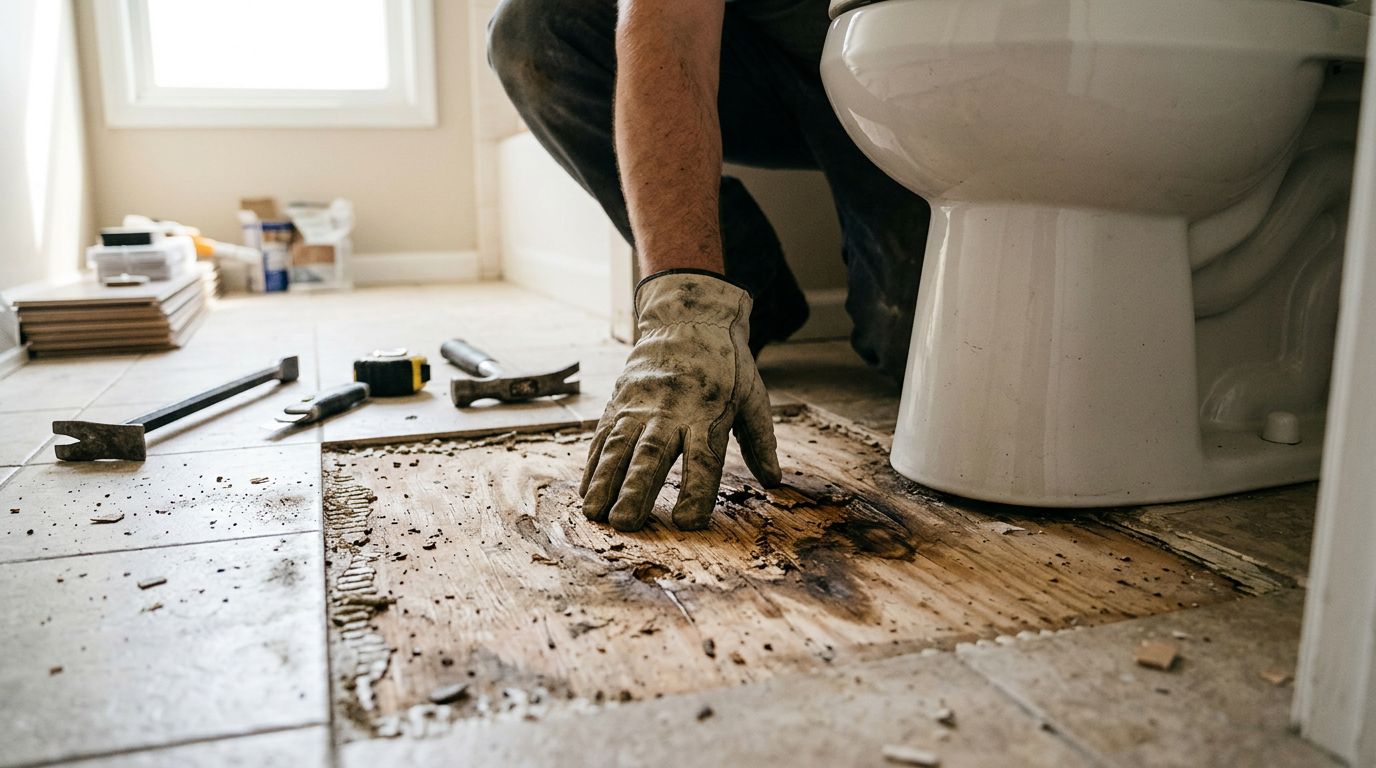
Why Does a New Garage Slab Stay Damp in Cape Coral?
Explore Our Services
Contact Us Today!
(239) 322-9295
A new garage slab in Cape Coral can stay damp because the concrete is still drying, humid air is condensing on its surface, or water is reaching it from below or around the edges. More than one cause can be present at the same time.
The pattern matters more than a single wet spot. Curing and drying are different processes , and a slab that looks dry can still hold moisture below the surface. A few observations can help you decide whether to give the floor more time or investigate a persistent source.
Key Takeaways
- New concrete needs moisture to cure, but it can continue drying after it gains strength.
- Humid air can leave condensation on a cooler garage floor, even when water isn't entering from below.
- Dampness near a door, wall, pipe, or low spot can point to a more localized water source.
- A vapor retarder slows moisture movement from the soil, but it doesn't replace drainage or slab testing.
- Moisture readings matter before installing a coating or other floor finish.
Curing and Drying Happen on Different Schedules
A damp garage slab isn't automatically a sign of poor construction. New concrete contains water, and some of that moisture remains after the surface becomes hard enough for construction to continue.
Curing helps concrete gain strength
Curing supports the chemical reaction between cement and water that gives concrete strength. During early curing, the construction team may use coverings or other approved methods to prevent the slab from losing moisture too quickly.
A slab doesn't need to feel dry to gain strength. In fact, rapid drying at the surface can contribute to cracking or a weaker surface. Follow the builder's curing instructions rather than trying to speed up the process with added heat or uncontrolled airflow.
Drying prepares the slab for a finish
Once concrete has cured, excess moisture can continue moving toward the surface. How long that takes depends on the slab, its surroundings, and its exposure to water.
Rain during construction can add moisture, while humid air can slow evaporation. A closed home without normal climate control may dry differently from one with the air conditioning operating.
A hard slab and a dry slab aren't the same thing. Strength alone doesn't tell you whether concrete is ready for a coating or flooring.
A gradual reduction in dampness can fit a drying pattern. However, a spot that stays wet, grows, or returns after drying deserves a closer look.
Humidity Can Cause Condensation on a Garage Floor
Cape Coral's humid conditions can make a concrete floor look wet even when the moisture comes from the air above it. This often happens when warm, moist air enters a garage and contacts a cooler slab.
How to recognize a sweating slab
Condensation forms when the slab surface is at or below the air's dew point, the temperature at which moisture in the air turns to liquid. The result may be a thin, widespread film rather than one isolated puddle.
Look for a pattern after the garage door opens on a humid day. Tools or other cool surfaces may also collect moisture. If the floor dries as the air and slab temperatures become more similar, condensation is one possible explanation.
A hygrometer can show the garage's air temperature and relative humidity. Pair those readings with a dew-point reading and the slab's surface temperature for a more useful comparison.
Air movement needs the right conditions
Opening the garage door or running a fan doesn't always dry a floor. If outdoor air is warmer and more humid than the air inside, bringing in more of it can increase condensation on a cool slab.
A dehumidifier may help in a closed garage when humid indoor air is the source. Use equipment suited to the space and keep its electrical connections dry. If the dampness continues, investigate other water sources rather than relying on dehumidification alone.
Moisture Can Move Up Through Concrete
A slab-on-grade garage sits close to the ground. Because concrete is porous, water vapor in the soil can move through it and reach the surface, particularly when the assembly doesn't sufficiently limit that movement.
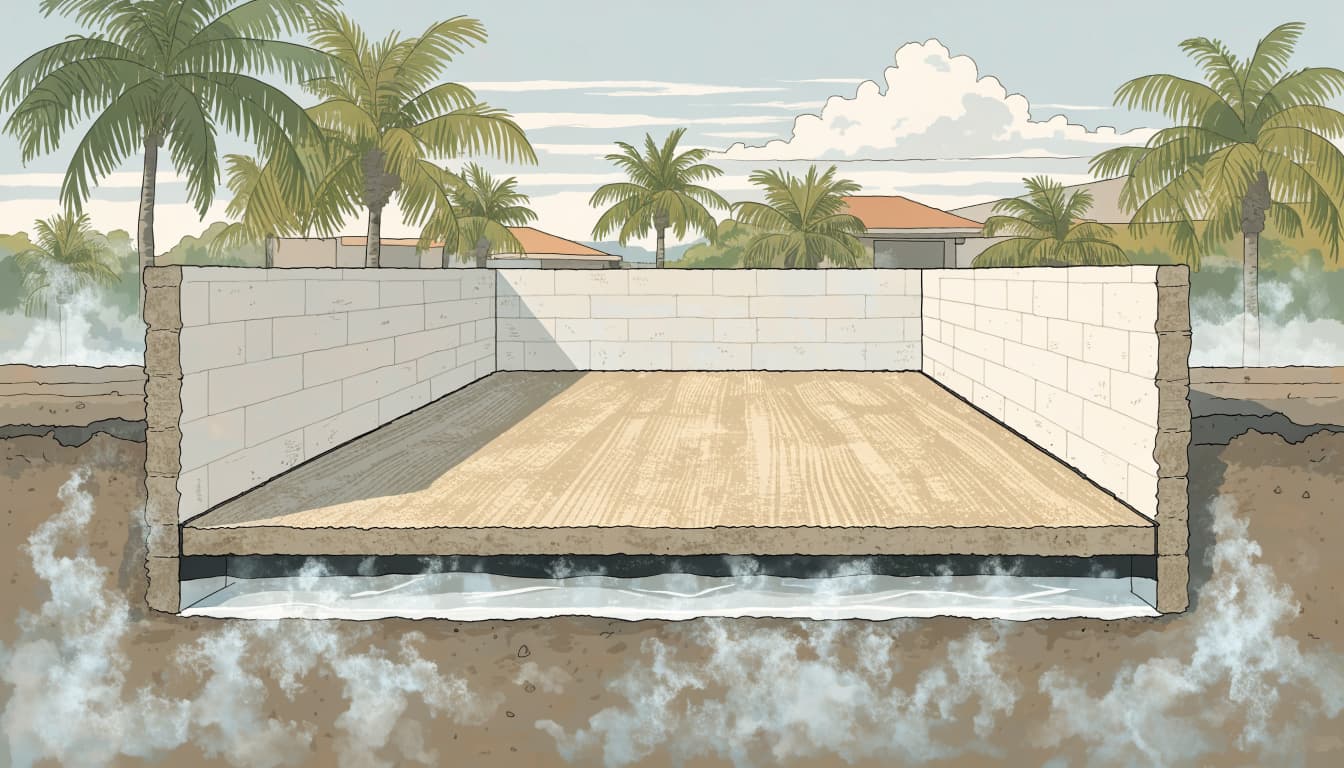
A vapor retarder beneath the concrete slows that movement. Its placement, continuity, and treatment around penetrations matter. Joints and openings around plumbing or electrical conduits can also deserve attention when dampness is concentrated in those areas.
A retarder isn't a substitute for managing standing water outside the foundation. It also doesn't stop a plumbing leak above the slab or eliminate the need to test concrete before applying a finish.
Moisture below the surface doesn't automatically mean the retarder is missing or damaged. New concrete can retain construction moisture, and the floor's appearance alone can't identify the source.
Our discussion of garage foundation moisture protection covers how slab edges and penetrations fit into foundation planning.
Rain and Site Drainage Can Keep Slab Edges Wet
Water doesn't have to travel through the middle of a slab to make a garage floor damp. It can enter at the door, collect near the perimeter, or reach the slab edge when runoff has nowhere else to go.
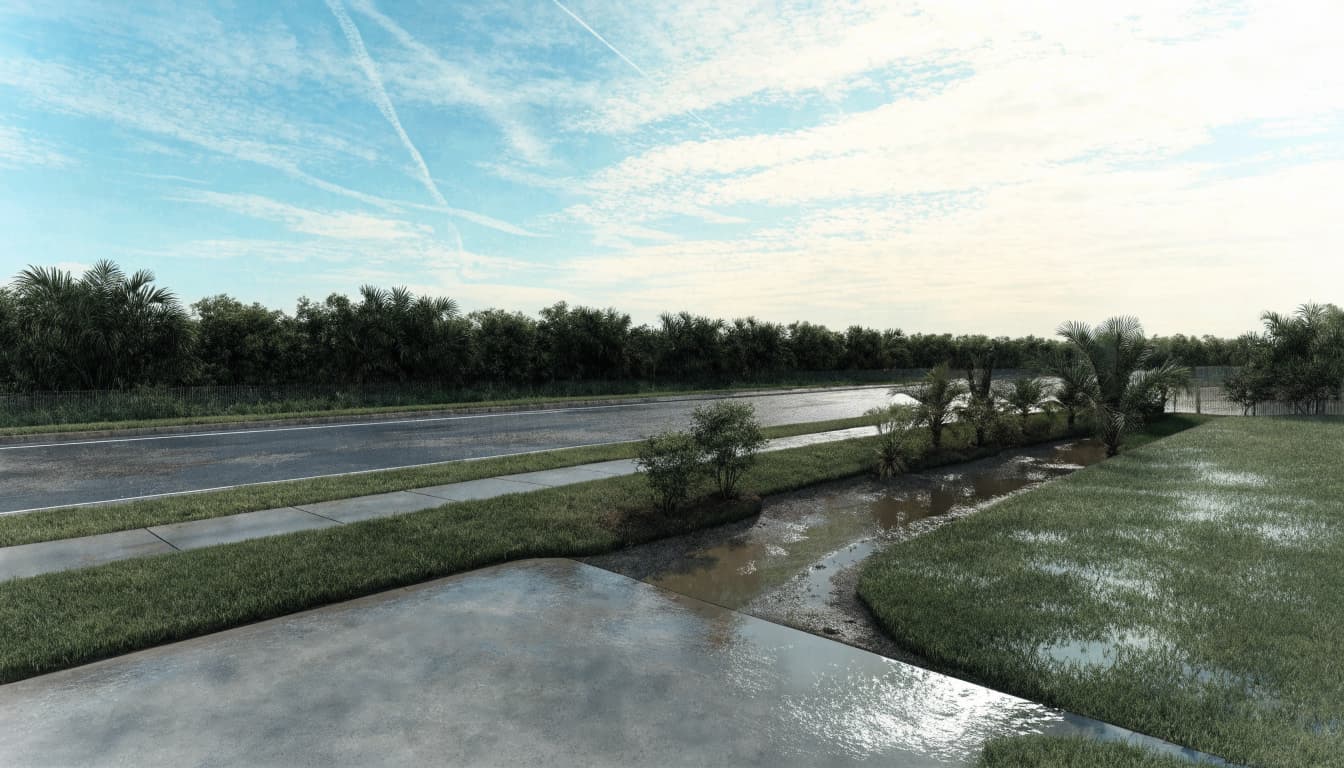
After heavy rain, look for water collecting against the garage, flowing down the driveway toward the door, or spilling from a gutter near the foundation. Irrigation aimed at the wall or slab edge can create a similar recurring pattern.
Ponding can increase moisture exposure at the slab edge and affect poorly prepared soil. Inside, the first visible sign might be a wet strip along a wall or a damp area near the garage door.
Drainage is a property-wide issue. Finished grades, downspouts, paved surfaces, and swales should work together without sending runoff onto a neighboring lot. Our guide to foundation planning for an addition explains why those details belong in the site plan.
Avoid filling a swale or redirecting runoff as a quick fix. A contractor can identify a correction that fits the property's drainage design.
Practical Checks for a Damp Garage Slab
You don't need to diagnose the entire foundation to collect useful information. Start with the location of the moisture and the conditions when it appears.
Track where and when the floor gets wet
Dry the accessible surface, then photograph the area and note when dampness returns. Record whether the garage door was open, whether irrigation ran, and whether rain occurred. Include the slab's age and any recent construction activity in your notes.
A broad film during humid conditions may point toward condensation. A wet strip at the door after a storm suggests a different investigation. Dampness around a pipe or appliance may call for a plumbing check.
These patterns are clues, not proof . Water can travel before it becomes visible, and more than one source can affect the same floor.
Look around the garage and outside it
Move stored items off the wet area so you can see the concrete. Look along wall edges, around penetrations, and near the water heater or other plumbing equipment. Outside, observe where roof and driveway runoff travel during rain.
Keep cardboard, fabric, and wood away from persistent moisture. If water is near an outlet, charger, or electrical equipment, stay clear and get appropriate professional help.
A spot that returns without rain, especially near plumbing, may need a licensed plumber. Spreading dampness, standing water, damaged finishes, or recurring water at the house wall also warrant a prompt review by the builder or another qualified professional.
Testing Before You Add a Garage Floor Finish
A dry-looking surface doesn't guarantee that the concrete beneath it meets a coating's requirements. Before installing epoxy, tiles, or another floor system, the installer needs a documented assessment that matches the selected product.
Two tests measure different conditions
ASTM F2170 uses probes in drilled holes to measure relative humidity within the slab. ASTM F1869 uses calcium chloride to measure moisture vapor emission at the surface.
The methods answer different questions, so their results aren't interchangeable. A surface pH test may also be relevant because concrete alkalinity can affect certain adhesives and coatings.
The appropriate test and acceptable readings depend on the finish and its manufacturer's instructions. Conditions during testing matter, too, including whether the garage has reached the temperature and humidity expected during installation.
Keep the results with the project records
A useful report identifies the method, test locations, date, and readings. The installer can then compare those results with the requirements for the exact coating, adhesive, or flooring system.
If readings exceed the product's limits, pause installation. A high reading doesn't automatically establish a foundation defect, but covering the floor can make the source harder to investigate.
Our article on slab moisture and flooring choices explains how testing fits into finish selection.
Match the Fix to the Source
The right next step depends on where the moisture comes from. A surface sealer won't repair a leaking pipe, and a dehumidifier won't redirect driveway runoff.
Address water and airflow first
For rain entry, the correction may involve the garage door seal, drainage near the driveway, or a broader grading issue. A plumbing leak needs repair before the surrounding concrete can dry.
When condensation is the cause, reducing indoor humidity and limiting the entry of very humid air may help. During construction, additional drying time and appropriate climate control may also be part of the plan.
If dampness persists without an obvious surface source, the builder may need to review the slab assembly and arrange further testing. Avoid treating a single observation as proof that water is moving up through the concrete.
Choose a finish only after the slab is ready
Depending on the test results, a flooring professional may recommend more drying time, an approved moisture-control system, or a different product. Preparation matters as well: curing compounds, dust, cracks, and contamination can affect adhesion.
Ask for the proposed treatment and retesting plan in writing. Generic sealers or added plastic can interfere with a flooring system if they aren't compatible with it.
Protect the Garage While the Floor Dries
Until the source is clear, keep belongings raised on shelving or in water-resistant bins. Avoid placing rugs, cardboard boxes, or materials that can trap moisture directly on the slab.
Use caution on wet concrete because it can be slippery. Keep chargers, cords, and power tools away from damp areas, and don't cover a recurring wet spot with a mat.
If you're planning a workshop or golf cart space, humidity-conscious garage storage can help protect belongings while keeping the floor visible.
Give Persistent Dampness a Closer Look
A new garage slab may need time to dry, but ongoing surface moisture can also come from condensation, drainage, plumbing, or the ground. The location and timing of the dampness help narrow the possibilities.
For a floor finish, measured conditions matter more than appearance. If dampness keeps returning, our team at Cutting Edge Homes & Renovations can discuss the conditions during a construction or remodeling consultation.