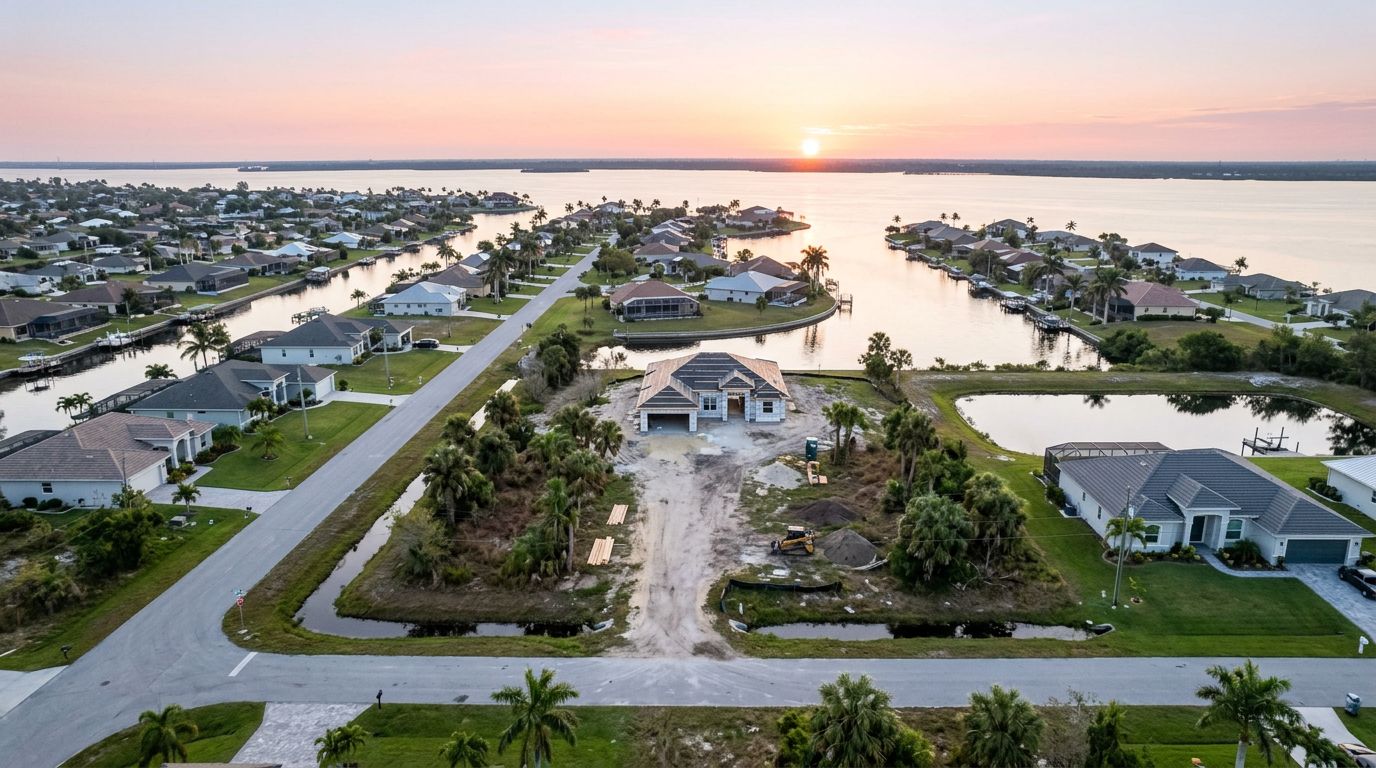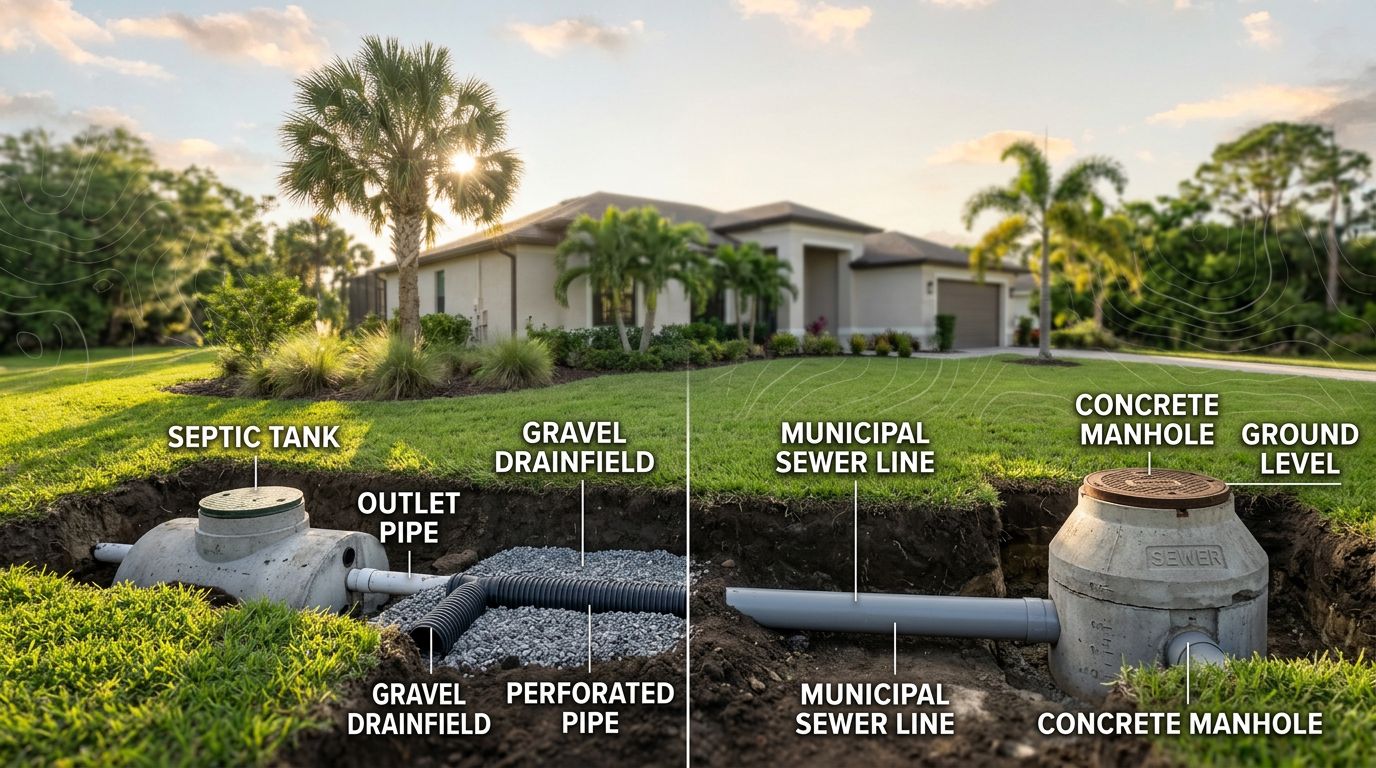
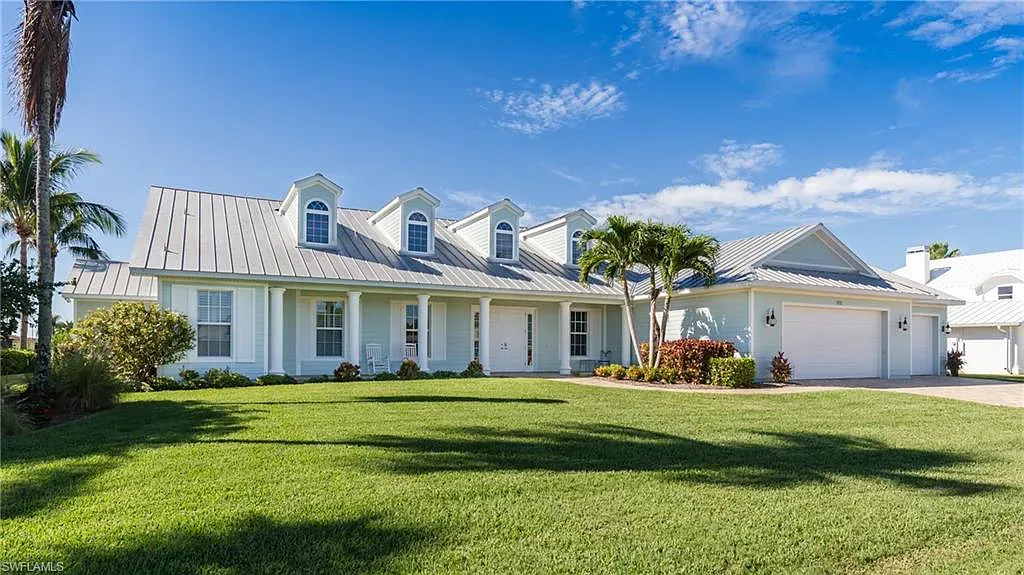



Building a new home in Cape Coral sounds simple until the street edge comes into play. The swale, the driveway apron, and the first few feet of right-of-way can change your plan, your permit path, and your budget.
In 2026, the city looks closely at drainage. That matters because a driveway that looks fine on paper can still send water the wrong way.
If you understand the Cape Coral swale rules early, you can avoid redesigns and last-minute surprises.
What a Cape Coral swale does on a new lot
A swale is a shallow drainage channel along the road. It holds, moves, and filters stormwater after heavy rain. On a new build, it is part of the site plan, not leftover yard space.
That matters because water has to go somewhere. If the slope is off, the swale can back up or push runoff toward a neighbor. If the finish grade is too high, the front yard can lose the drainage path it was supposed to have.
Cape Coral also treats some swales as drainage easements. When that happens, the area is not free space for fences, walls, or other features that block flow or limit maintenance access.
A swale may look like a grassy strip, but it still has a job to do.
Homeowners sometimes miss this when they re-sod the front yard or change the grade near the road. Even small changes can affect how water moves across the lot. If the drainage pattern changes, the city may want a closer look before the work is accepted.
Cape Coral guidance also allows short-term ponding after rain, but water that lingers for days is a warning sign. When that happens, the site usually needs attention, not a guess.
If your lot is still in the prep stage, a Southwest Florida lot prep checklist can help you see how grading, fill, and drainage fit together.
Driveway apron permits at the street edge
The driveway apron is the transition between your driveway and the street. In Cape Coral, adding, replacing, or changing that section in the public right-of-way needs a permit from Surface Water Management.
That right-of-way usually covers the first 15 to 20 feet from the street edge. So even a small change can fall inside city review. Re-sodding in that area can also need a permit if it may change drainage or affect the swale.
The city is checking more than curb appeal. It wants to know where the water goes, how the apron meets the road, and whether the work could block the flow.
If the apron changes how water runs, the city treats it as more than a cosmetic update.
Here's the quick version of where permit attention usually starts:
- New driveway apron : plan on review if the work touches the right-of-way.
- Replacement apron : expect the city to check drainage and tie-in details.
- Re-sodding near the road : ask first if it may alter runoff or the swale shape.
- Changing slope or width : treat it as a drainage issue, not just a finish choice.
The main point is simple. If the work touches water flow or public land, plan on talking to the city before construction starts. That conversation is easier than a redesign after the slab is in.
How Cape Coral may classify your driveway
Cape Coral may classify the driveway as a swale driveway, ramp driveway, or culvert driveway, depending on the lot. That label changes how the apron meets the street and how drainage is handled.
A quick comparison helps make the difference clearer.
| Driveway type | Plain-English meaning | Why it matters |
|---|---|---|
| Swale driveway | The driveway works with the open swale and keeps drainage moving beside it. | It fits lots where the swale stays open and drainage can flow naturally. |
| Ramp driveway | The apron rises or transitions more directly to meet the street. | It changes the shape at the curb and may need closer review. |
| Culvert driveway | A pipe lets water pass under the apron through the drainage line. | It matters when the swale needs flow under the driveway. |
Your lot shape, street slope, and nearby drainage can push the city toward one type or another. A corner lot can differ from the house next door. So can a low lot or a site with a tight frontage.
That is why a one-size-fits-all answer rarely works. The city looks at the actual site, not just the house plan.
If you want to see how those choices affect the budget, driveway drainage costs often matter more than buyers expect.
What to confirm before grading starts
Before the builder brings in fill or pours concrete, get the basics in writing. A current survey and a clear drainage plan can prevent the most common mistakes.
- Get a current survey. It shows your property lines, easements, and the real swale location.
- Ask who designed the drainage plan. The builder, engineer, or civil team should confirm the version on site matches the permit.
- Check HOA and subdivision rules. Some communities add their own limits on apron shape, material, or frontage details.
- Confirm runoff direction during a storm. Water should not pool against the garage or sheet onto a neighbor's lot.
- Ask what gets inspected before sod and concrete. Bad timing can mean tearing out finished work.
Because standards can vary by lot, subdivision, engineering plans, or updated municipal requirements, confirm the current rules with Cape Coral Surface Water Management and your builder before work starts.
A lot prep checklist can also help you keep the site work in order before the slab goes down.
How swale rules affect cost and timing
Swale and apron work rarely stays in one lane. It can change fill, fine grading, sod, pipe size, curb tie-ins, and permit fees. That is why the cheapest-looking bid is not always the lowest final cost.
A cost-plus home builder can show those pieces as line items. With transparent pricing , it becomes easier to see where drainage, apron work, and permit costs land in the budget. That matters when the city asks for a different slope or a different drainage path.
Finish choices also matter. Concrete, pavers, and walkway tie-ins can all change the amount of prep work needed near the front of the lot. If you are comparing those options, driveway and walkway costs can give you a clearer picture of where the money goes.
Most budget surprises come from the small items, not the big ones. Extra rock base, a culvert pipe, re-sodding, or a change after inspection can move the number fast.
What matters before the first pour
Cape Coral swale and driveway apron rules are easy to overlook until the site is under way. Once the street edge is in the plan, drainage, right-of-way limits, and easements all become part of the build.
For new homes in 2026, the safest path is still the same. Check the survey, confirm the permit path, review HOA rules, and make sure the drainage plan matches the lot. When water has a clear path, the rest of the project has fewer surprises.