


Buying a lot in Southwest Florida can feel simple until you picture the first big rainstorm. Water shows you the truth fast, where the low spots are, where the soil washes, and where a future driveway could turn into a rut.
Good Southwest Florida lot prep is less about making the site look nice and more about building a stable, dry base that meets local elevation and drainage rules. This guide walks through a practical checklist, common pitfalls, questions to ask your contractor, and realistic 2026 cost ranges.
What makes Southwest Florida lot prep different (soil, water, storms)
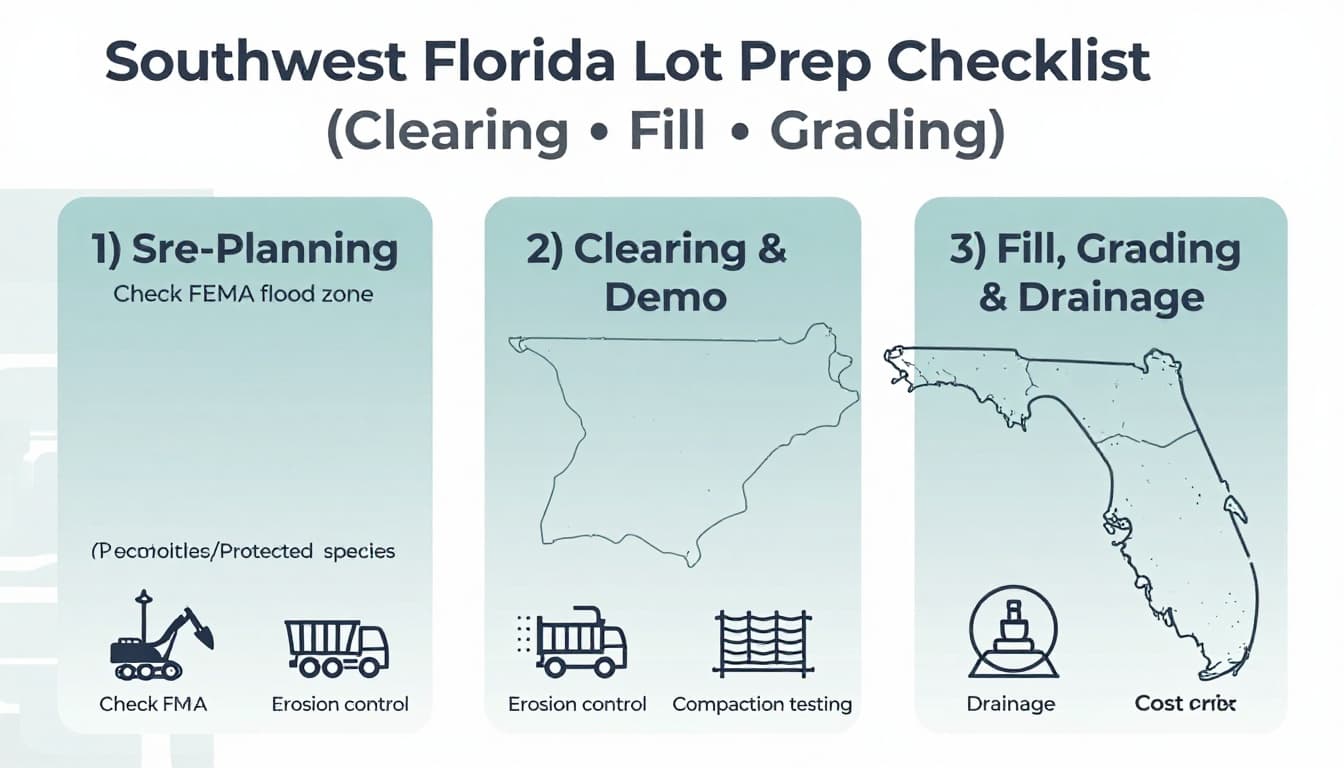 Infographic summary of the main lot prep phases and cost drivers, created with AI.
A lot can look flat and “buildable,” but Southwest Florida has a few sitework realities you can’t ignore.
First, sandy soils drain quickly, but they also move. If fill isn’t placed in lifts and compacted correctly, the pad can settle after the slab is poured. That’s when you see doors stick, patios crack, and drainage slope the wrong way.
Second, the high water table can turn trenches and footing areas into mud or standing water. In low areas, contractors may need temporary dewatering, rock underlayment, or more engineered fill to keep things firm.
Third, heavy summer rain (and hurricane season) changes scheduling. If a site is cleared and exposed right before weeks of storms, you can lose soil, clog swales, and fight soft ground. Erosion control like silt fence and stabilized construction entrances isn’t just paperwork, it protects your budget.
Finally, floodplain and base flood elevation requirements can drive the whole plan. In many neighborhoods, the house pad has to be raised, and the yard has to drain without sending water to neighbors. Always verify county, city, and HOA requirements, and use licensed pros for clearing, hauling, and excavation.
A step-by-step checklist for clearing, fill, and grading
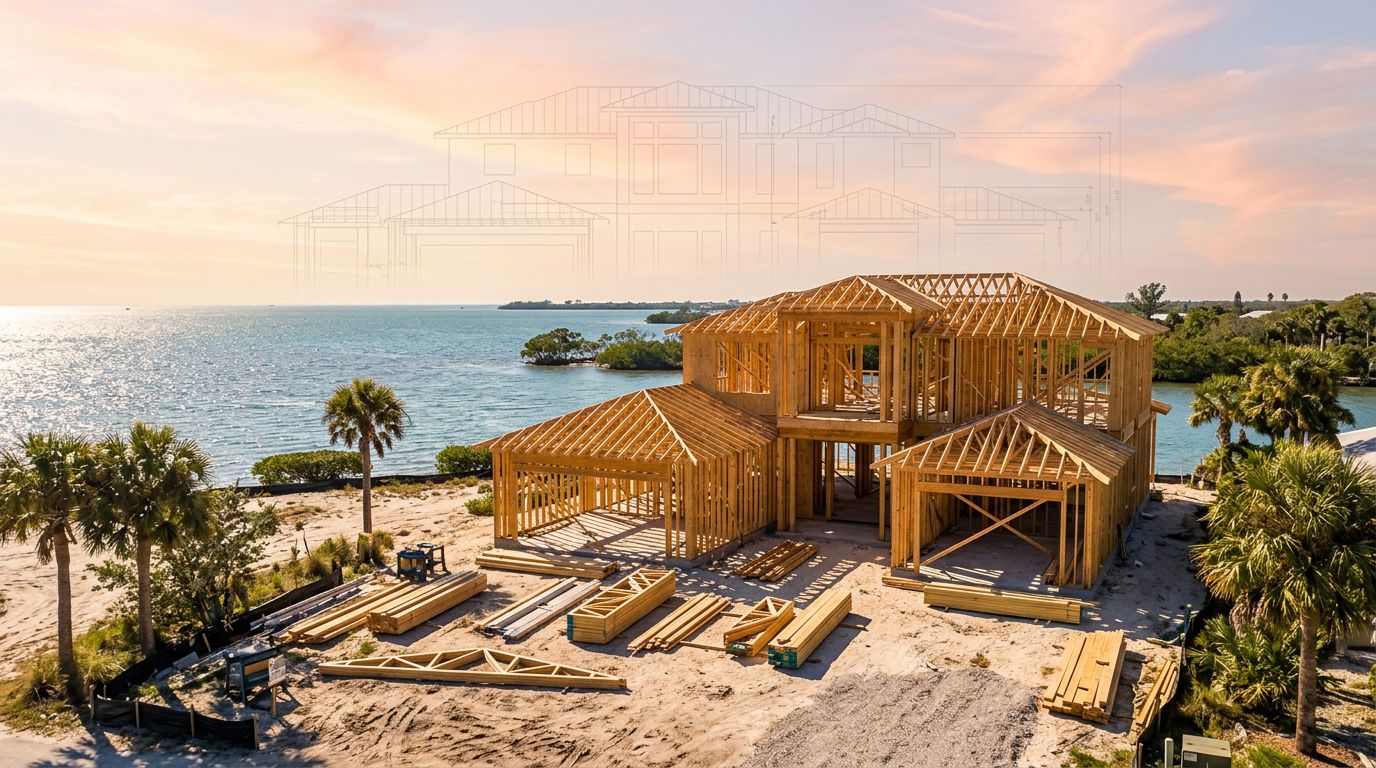
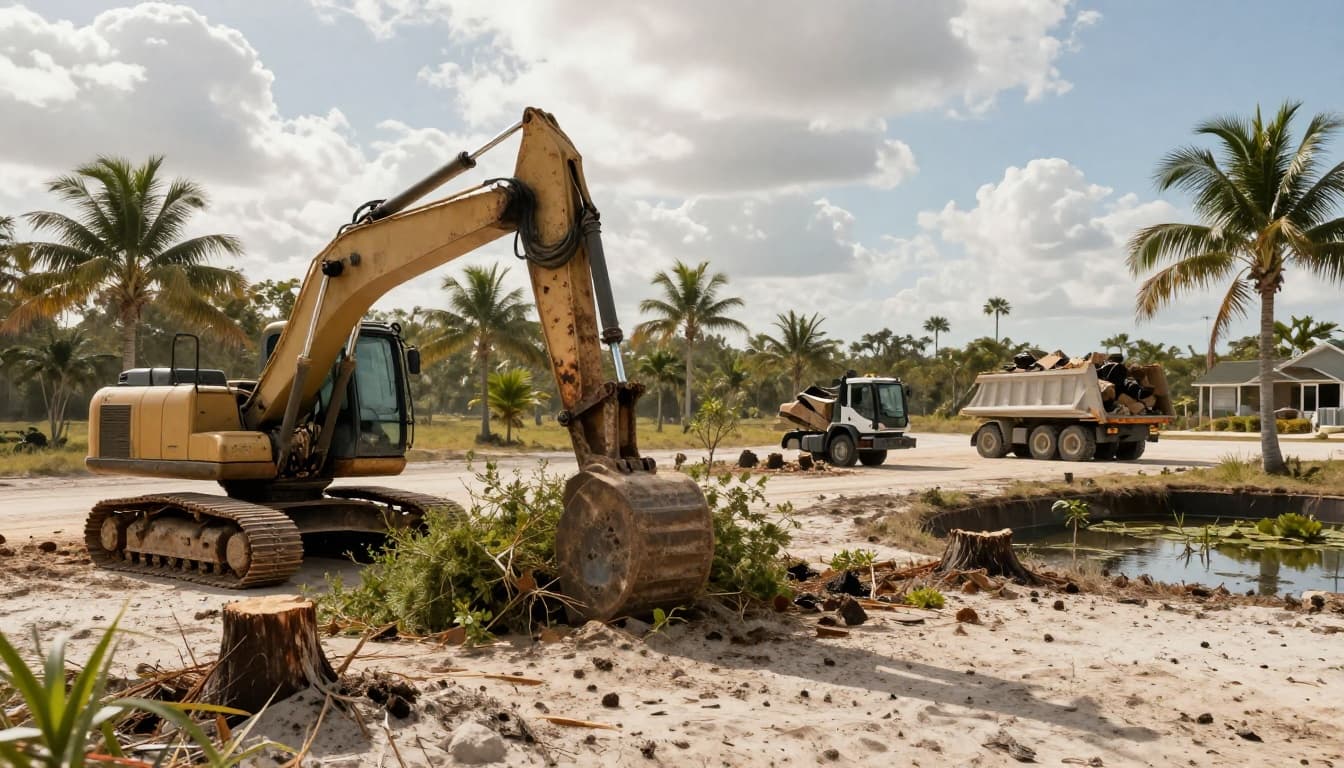 Land clearing in progress on a sandy Southwest Florida lot, created with AI.
If you want lot prep to go smoothly, treat it like building the foundation of the foundation. Here’s a field-ready sequence that works for most residential builds.
- Due diligence before machines show up : Confirm property lines, easements, and setbacks. Verify flood zone and required finished floor elevations with your local jurisdiction.
- Site plan and drainage approach : Decide where water will go (swales, berms, yard slope), and confirm you’re not directing runoff to a neighbor’s lot.
- Permits and protected items : Ask about clearing permits, protected trees, and any environmental limits. Don’t assume you can remove everything you don’t like.
- Access and staging : Identify where trucks will enter, where fill will be dumped, and how you’ll protect sidewalks, curbs, and existing drainage.
- Clearing and grubbing : Remove brush, trees in the work zone, and roots/stumps that will be under the pad, driveway, and utilities.
- Demolition and debris handling : Old sheds, concrete, fencing, and trash add time. Make sure disposal is planned, not improvised.
- Rough grading : Shape the lot so rain runs away from the pad area, even before final grading. This keeps the site workable.
- Fill placement and compaction : Place fill in layers and compact each lift. If required, schedule compaction testing.
- Fine grading and drainage features : Finalize slopes, swales, and tie-ins to existing systems, then stabilize exposed soil.
- Final stakeout and elevation check : Confirm pad height and benchmark elevations before foundation work begins.
Questions to ask your contractor
- Where will the water go during a storm? Ask them to point to swales, slopes, and discharge points on the plan.
- How deep is the fill, and how will it be compacted? “Truck it in” isn’t a plan.
- What’s included in hauling and disposal? Stumps and mixed debris can change pricing fast.
- How will rainy season delays be handled? Clarify remobilization, erosion control, and soil stabilization.
For homeowners who want tight control of sitework numbers, working with a cost-plus home builder can help, because invoices for hauling, fill, and equipment time are visible, which supports transparent pricing from day one. See what that process looks like with a New Home Builder in Cape Coral.
Southwest Florida lot prep costs in 2026 (real ranges, real drivers)
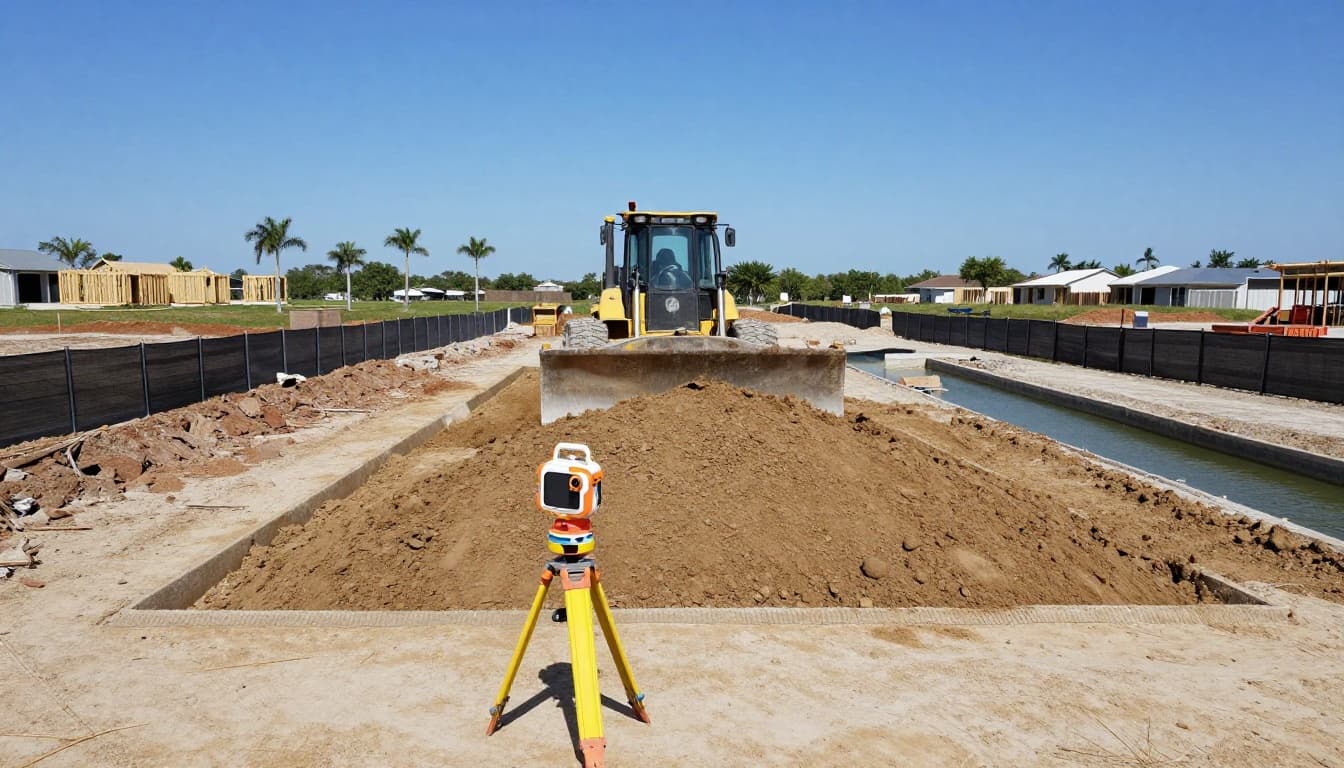 Fill placement and laser-guided grading for pad elevation and drainage, created with AI.
In 2026, a typical 1/4-acre residential lot often lands around $8,000 to $32,000 for clearing, fill, grading, and basic sitework. Bigger sites and low-lying properties can push $30,000 to $130,000 per acre , mainly due to fill volume and hauling.
Here’s a simple way to think about the line items you’re paying for:
| Line item | Typical 2026 range | Notes |
|---|---|---|
| Clearing and grubbing | $1,500 to $8,000 | Tree size and count matter, protected trees can limit options |
| Stump/root removal | $800 to $6,000 | Stumps under pads and driveways usually must go |
| Haul-off and disposal | $1,000 to $7,500 | Landfill fees, debris type, and haul distance drive cost |
| Fill dirt delivered and spread | $6,000 to $25,000+ | Depends on fill depth, access, and trucking distance |
| Grading and compaction | $3,500 to $12,000 | Lift thickness, compaction method, and testing requirements |
| Erosion control and stabilization | $500 to $4,000 | Silt fence, inlet protection, and rainy season needs |
| Survey stakeout and elevation checks | $500 to $2,500 | Often required at multiple stages |
| Permits and local fees | Varies widely | Check county and municipal requirements |
What swings the price the most? Fill depth , haul distance , equipment access (tight lots cost more), flood zone elevation rules , and tree density . A low lot might need hundreds of cubic yards of fill, and each extra truckload adds cost in a very direct way.
Common pitfalls that cause delays, change orders, and drainage headaches
The biggest mistakes tend to show up after the first heavy rain.
- Skipping compaction discipline : Fill placed too thick, too wet, or not tested can settle later.
- Clearing without a drainage plan : A bare sandy lot can erode quickly, and you can lose grade before the foundation starts.
- Underestimating water table impacts : Wet subgrade turns “simple grading” into pumping, drying time, or imported base material.
- Not confirming what “prep” includes : Some bids stop at clearing, others include pad building, driveway base, and erosion control.
A good contractor will talk through these risks early and put assumptions in writing.
Example scenarios (budget ranges you can sanity-check)
These aren’t bids, but they help you spot when a quote is missing big pieces.
Scenario 1: 1/4-acre, lightly wooded, minimal fill needed
Typical range: $8,000 to $15,000
. Light clearing, limited hauling, basic rough and final grade. Watch for add-ons like stump hauling and driveway base.
Scenario 2: 1/2-acre, heavy brush with multiple stumps and debris haul-off
Typical range: $18,000 to $45,000
. Clearing and disposal can rival the grading cost. Access for trucks and where they can stage equipment makes a difference.
Scenario 3: 1/4-acre, low-lying lot needing significant elevation
Typical range: $25,000 to $60,000+
. This is the fill-heavy situation, often tied to floodplain elevation targets, compaction requirements, and stormwater controls. Haul distance and fill depth control the final number.
Conclusion
Southwest Florida lot prep isn’t just clearing trees and smoothing sand. It’s managing water, meeting elevation rules, and building a pad that won’t move later. If you price the work by clear line items, ask the right questions, and plan around rainy season, you’ll protect both your schedule and your budget . Before you sign, confirm what’s included, what’s assumed, and how your lot will drain after the next big storm.