


If you’re building in Southwest Florida, your foundation choice can feel like picking tires for a daily driver that sometimes has to cross floodwater. Most homes here land on some version of concrete, but slab on grade vs stem wall isn’t a cosmetic decision, it affects elevation, moisture behavior, schedule, and long-term repairs.
In places like Cape Coral, Fort Myers, Estero, and Bonita Springs, the ground can be sandy, the water table can sit surprisingly close to the surface, and storm season can turn a “dry lot” into a muddy pond overnight. The right foundation depends on your flood zone, your target finished floor height, and what your soil report says, not what your neighbor did.
What changes between slab-on-grade and stem-wall in SWFL
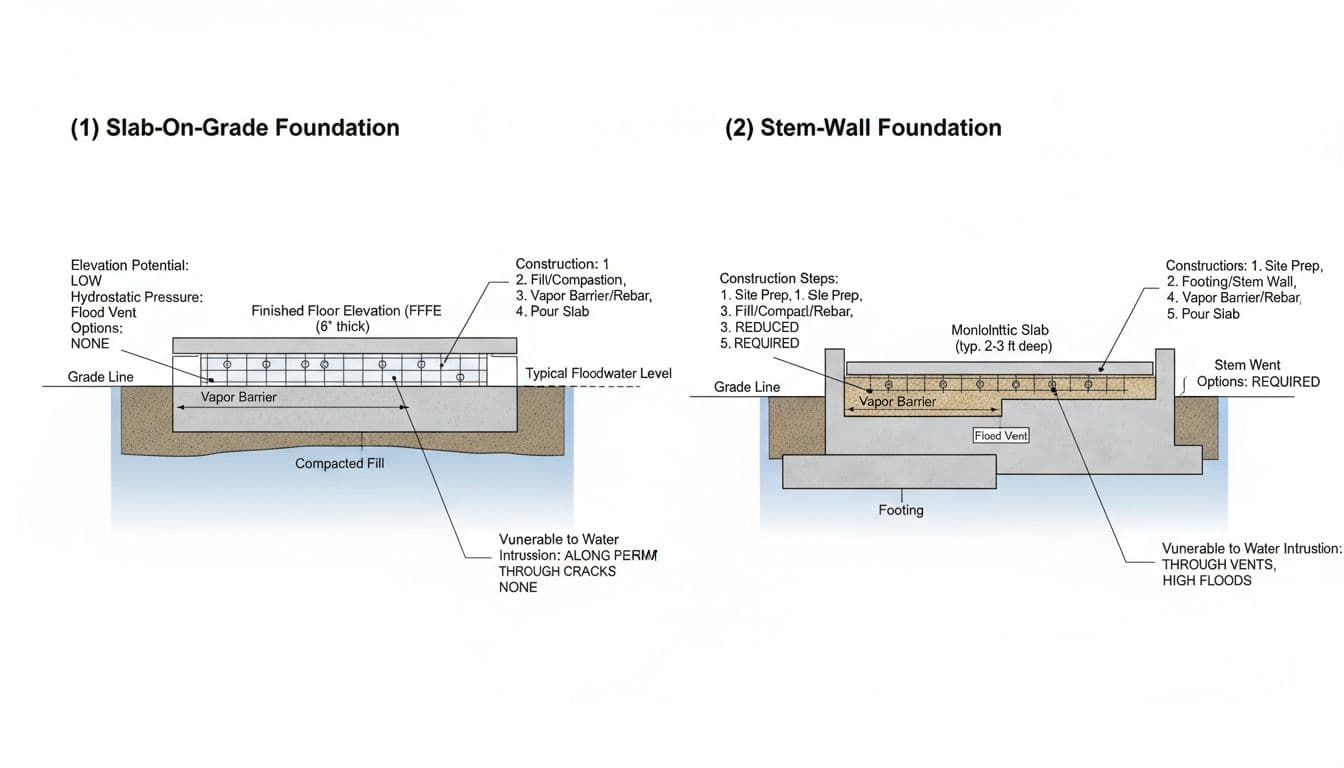 Side-by-side cross-sections showing typical slab-on-grade and stem-wall assemblies used in Southwest Florida, created with AI.
A slab-on-grade foundation is what many people picture first: compacted base material, vapor barrier, reinforcing steel, then a concrete slab poured close to existing grade. In Southwest Florida, that usually means careful base prep and compaction because a little softness under the slab can become a crack later.
A stem-wall foundation (often a monolithic slab with a perimeter stem wall and interior fill) uses a perimeter wall and footing to create a “box.” Then the interior is filled and compacted, and the slab is poured on top. The big practical difference is that the stem wall gives you more control over elevation . You can bring the finished floor up without relying only on building up the entire pad with fill.
That elevation flexibility matters here because lots vary wildly. Two streets apart can have different drainage, different fill history, and different flood maps. Southwest Florida also deals with a high water table , and some sites may have groundwater 3 to 5 feet below grade during wet periods. When excavations get wet, the work doesn’t just slow down, it can change the whole approach (dewatering, added base rock, soil stabilization, or deeper footings).
Soil bearing strength is another quiet driver. Many SWFL sites are sandy and can land in the rough range of 1,500 to 3,000 psf (pounds per square foot). Some areas hit stronger material like coral rock, and others have softer, wetter soils that increase settlement risk. Your geotechnical report and engineer decide what’s acceptable for your plan, loads, and lot conditions.
2026 cost and build-time differences (and why schedules slip in rainy season)
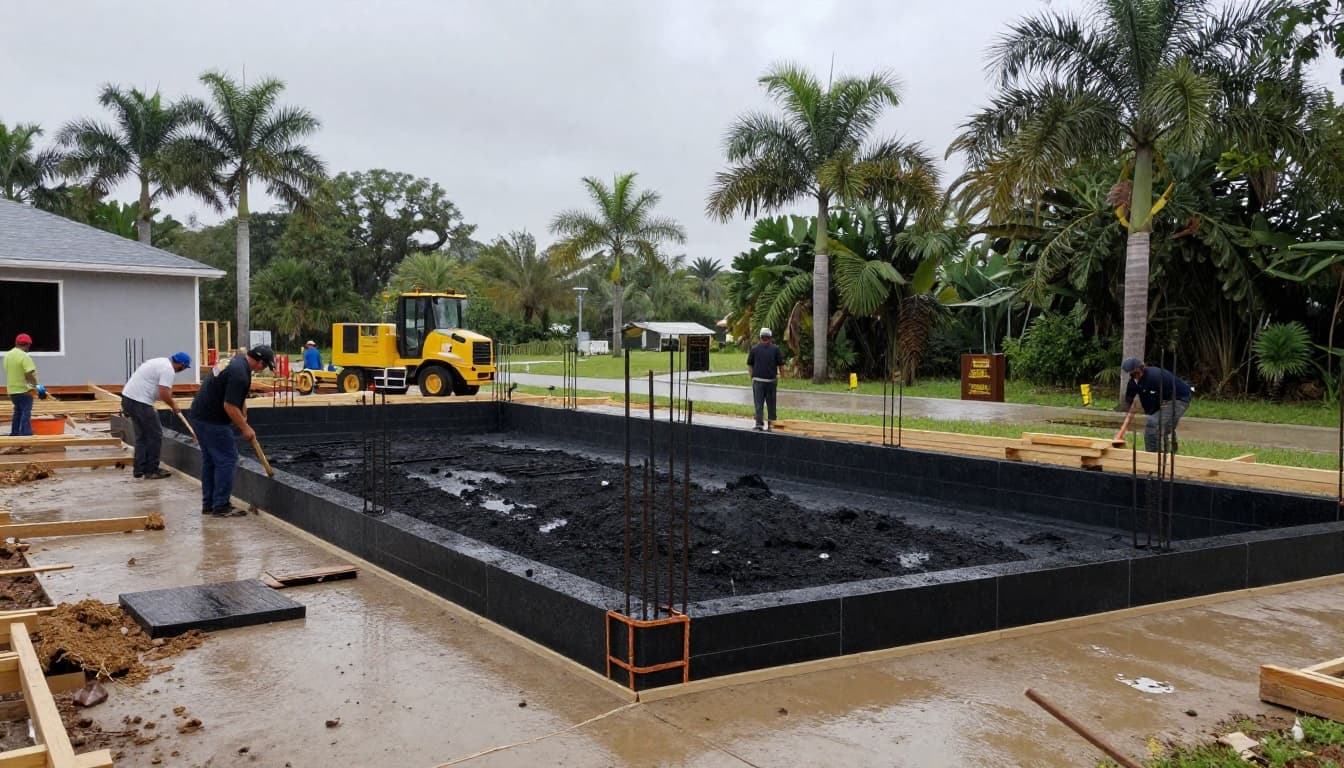 Rainy-season foundation work with forms and rebar staged for a stem-wall pour, created with AI.
In February 2026 pricing conditions, slab-on-grade foundations in SWFL often run about $6 to $12 per square foot , with a common “middle” number around $9 per square foot . Stem-wall foundations often run about $10 to $18 per square foot , with a common middle around $14 per square foot . High groundwater and wet soils can add about $2 to $5 per square foot to either option when extra base work, pumping, or stabilization is needed.
Time matters too. A slab-on-grade can move quickly once the base and forms are ready. A stem-wall usually takes longer because there are more steps and more inspections.
Cost and schedule comparison for a typical SWFL build
| Item | Slab-on-grade (typical SWFL range) | Stem-wall (typical SWFL range) |
|---|---|---|
| Budget range (per sq ft of foundation) | $6 to $12 | $10 to $18 |
| “Middle” example (per sq ft) | ~$9 | ~$14 |
| Example total for 2,000 sq ft home | ~$18,000 | ~$28,000 |
| Typical build time for foundation phase | 1 to 3 weeks | 3 to 6 weeks |
| Common schedule risk | rain delays, base saturation | rain delays, wet excavations, added inspections |
Important disclaimer: these are Southwest Florida context ranges, not a quote. Your actual cost depends on survey elevations, soil report, engineering, concrete and labor availability, dewatering needs, and local permit requirements. Foundation and flood-resistant design should be handled by licensed Florida professionals (engineer, surveyor, and your permitted contractor), with permitting through your local building department.
What usually pushes the price up (either foundation type)
- High water table work : pumping, over-excavation and replacement with rock, or stabilization.
- Elevation goals : more fill and compaction, higher stem walls, longer runs of steps, or driveway tie-ins.
- Reinforcement and detailing : extra steel, thicker edges, or special connections required by engineering.
- Access and logistics : tight lots, utility conflicts, or limited staging space.
If you’re trying to keep control of the budget, a cost-plus home builder model can make the decision less stressful because you can see where dollars are going as the plan evolves. When a builder offers transparent pricing (itemized costs, clear fee structure, and bill visibility), it’s easier to compare the real difference between “slab” and “stem wall” on your exact lot, not a guess. For local new construction support, see Southwest Florida new home construction services.
Flood risk in SWFL: BFE vs FFE, SFHA maps, and what code pushes you toward
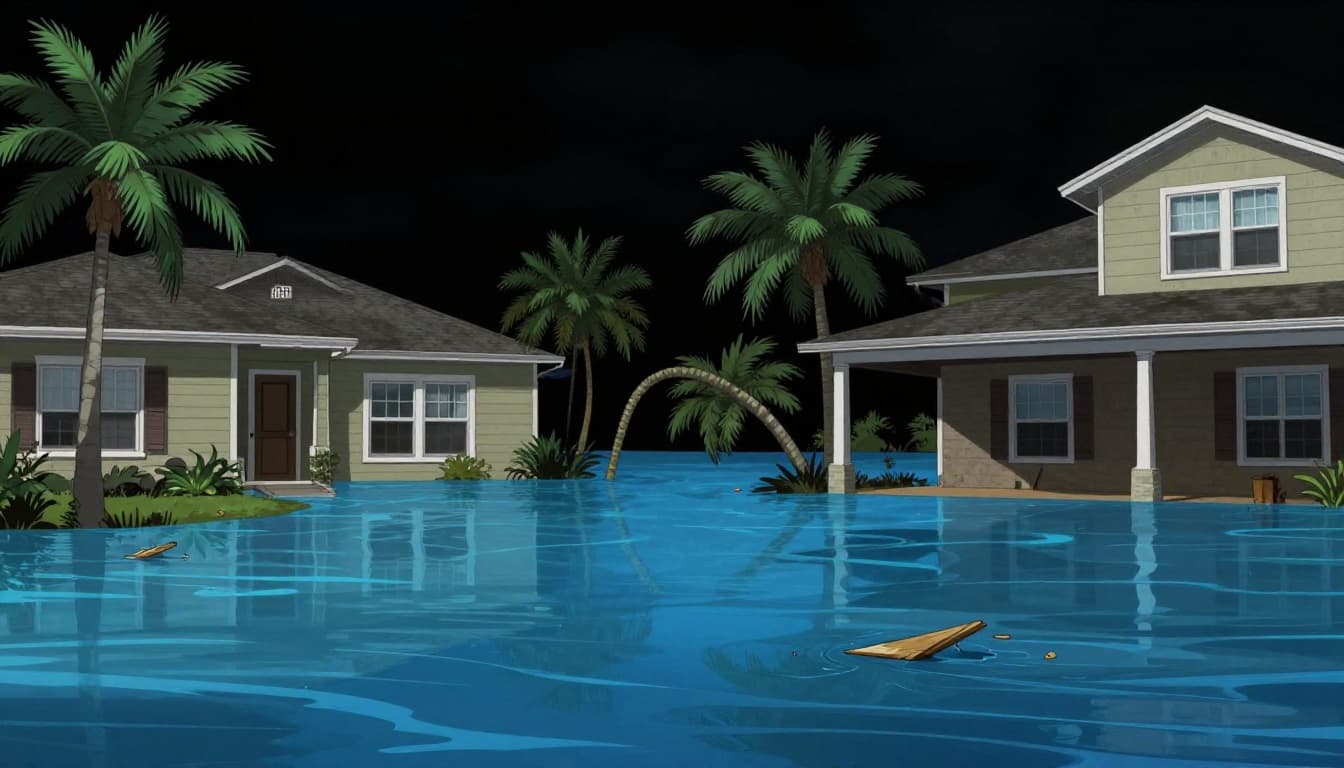 Illustration showing how extra elevation can change flood outcomes for a home, created with AI.
Flood risk is where the slab on grade vs stem wall decision stops being preference and becomes compliance. FEMA flood maps (FIRM panels) define Special Flood Hazard Areas (SFHA) and list a Base Flood Elevation (BFE) , which represents the 1 percent annual chance flood level. Your home’s Finished Floor Elevation (FFE) needs to meet code and local requirements relative to that BFE.
Florida’s building rules reference flood-resistant standards (often through ASCE flood provisions adopted into the Florida Building Code). In plain terms, if your site is in an A or AE flood zone, you typically need the living floor elevated to or above the required elevation, and many jurisdictions add extra freeboard for safety. Coastal high-hazard areas (V zones) add wave forces and scour concerns, and those conditions often drive designs toward deeper foundations and open foundations.
A slab-on-grade can still work on some lots, but it gets tricky when you need meaningful elevation. Raising grade across the whole building pad can require a lot of fill, and fill has to be placed and compacted correctly or you risk settlement. Stem-wall foundations can make elevation more straightforward because the perimeter structure creates the height you need, while the interior fill is confined and easier to manage.
Pros and cons side-by-side (SWFL homeowner view)
| Foundation type | Pros | Cons |
|---|---|---|
| Slab-on-grade | Usually faster to build, fewer forming steps, often lower upfront cost on dry lots, simple floor framing | Harder to gain elevation without lots of fill, more vulnerable if floodwater reaches the slab, moisture can move through cracks and joints, plumbing under slab is harder to access |
| Stem-wall | Better elevation flexibility for BFE and drainage goals, can reduce flood exposure when properly designed, perimeter wall can help manage fill and compaction | Higher cost, longer schedule, more steps and inspections, wet excavations can slow work, details matter to prevent water intrusion at joints |
Quick checklist to choose based on your lot and risk
- Flood zone and maps (SFHA/FIRM) : confirm your zone, BFE, and any local freeboard requirements before final design.
- BFE vs FFE gap : if you need extra height, stem-wall often provides a cleaner path than piling fill for a slab.
- Soil bearing and compaction : use a geotechnical report, weak or wet soils may push deeper footings or special reinforcement.
- High water table : expect added cost and time for dewatering or base improvements, no matter which foundation you pick.
- Long-term maintenance : consider how you’ll access plumbing, how you’ll manage water near the home, and how you’ll repair cracks or settlement.
- Professional design : have a Florida-licensed engineer and surveyor set elevations and structural details, and verify with your local building department.
A final reality check: flood design is not only about “height.” It’s also about how water moves around the building, how hydrostatic pressure is relieved (where allowed), and how materials perform after getting wet. The best foundation is the one that fits your flood requirements, soil conditions, and budget without gambling on assumptions.
Conclusion
In Southwest Florida, choosing between slab on grade vs stem wall is really choosing how you manage water, elevation, and risk. Slabs often win on speed and upfront cost on good, dry lots, while stem walls often win when elevation and wet conditions rule the design. Get your flood data, get a soil report, and insist on transparent pricing so the decision is based on facts, not guesswork. If you already know your flood zone and BFE, the next smart move is to confirm the target FFE with a licensed Florida team and build from there.