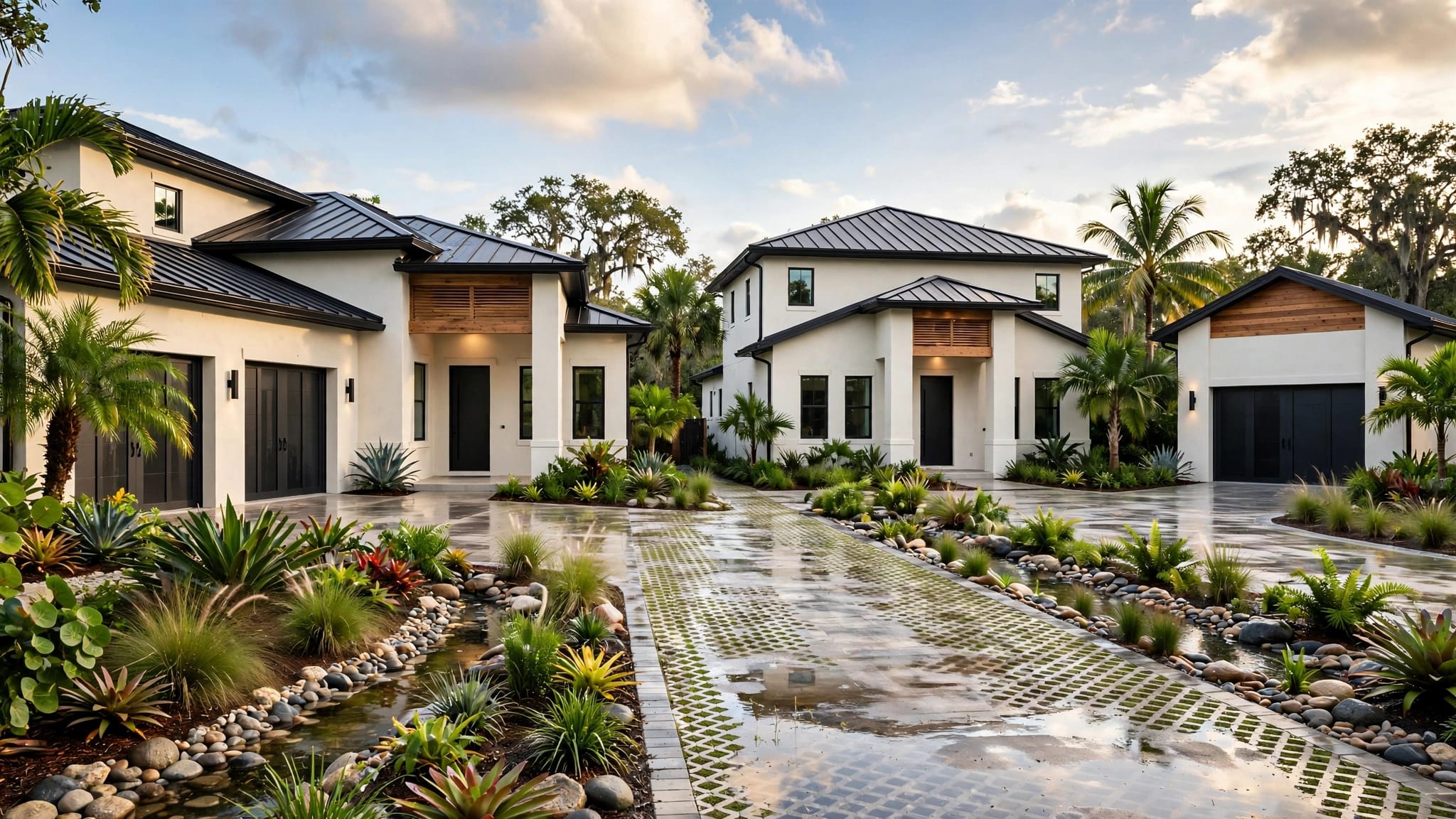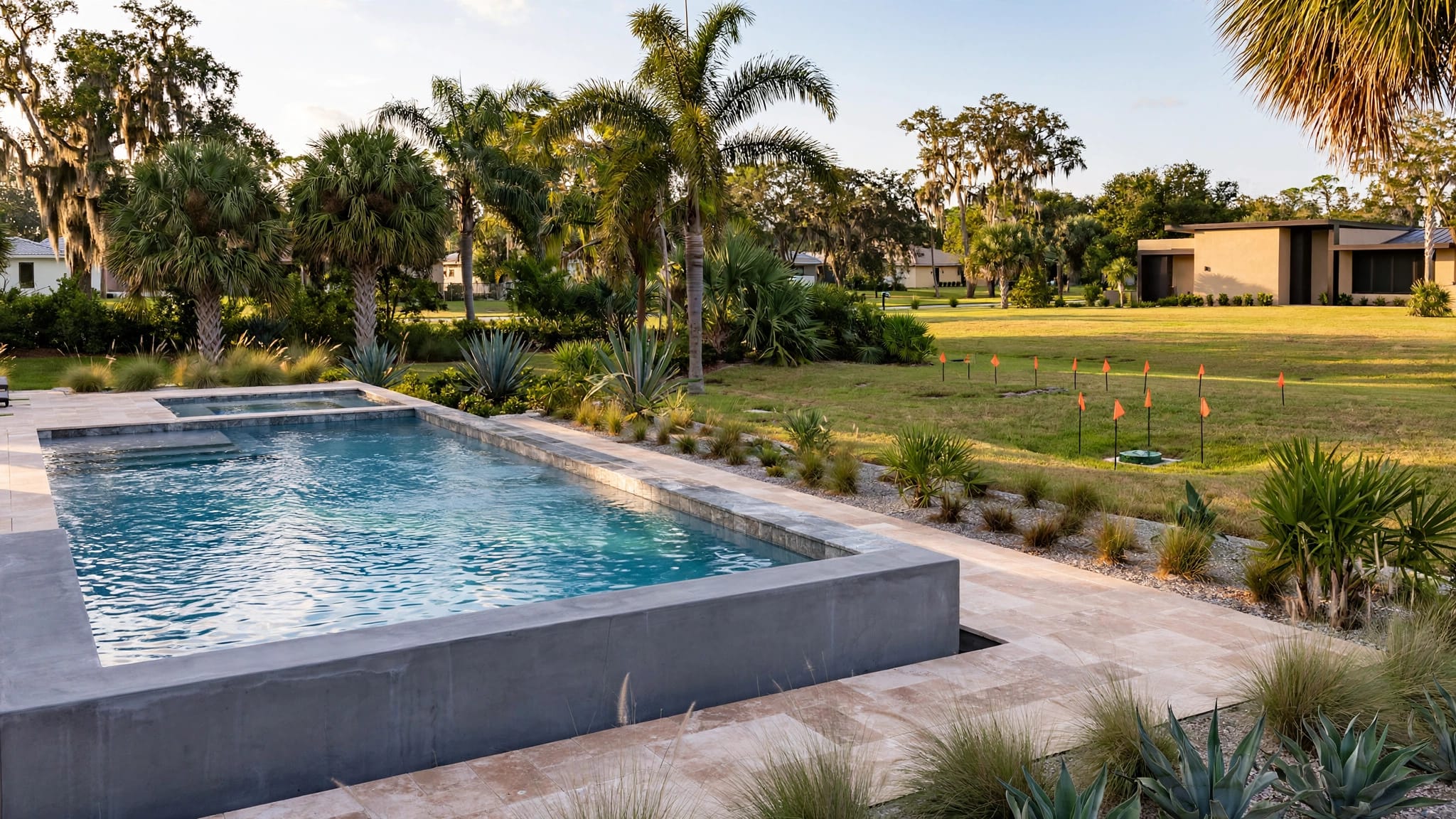
Cape Coral Tile vs Metal Roofing for Waterfront Homes
Explore Our Services
Contact Us Today!
(239) 322-9295
A waterfront roof in Cape Coral faces more than Florida sunshine. It must handle wind pressure, wind-driven rain, salt-laden air, and long stretches of heat without becoming the weak point in an otherwise well-built home.
The tile vs metal roofing decision isn't about finding one material that wins every category. Your roof shape, canal exposure, framing, budget, and installation details all affect which system fits your home.
A good comparison starts with the conditions at your address, then moves to the products and assemblies approved for that location.
Waterfront exposure changes the roofing conversation
Canal-front homes often have fewer windbreaks than inland properties. Open water, broad intersections of canals, roof height, and the home's orientation can all affect wind pressures at the roof edges, corners, and overhangs.
Florida's Building Code, Eighth Edition (2023), requires roof systems to meet site-specific wind design requirements. Lee County permitting also relies on approved products that match the home's wind speed, exposure, height, and calculated pressures.
Wind ratings belong to the whole roof assembly
A tile or metal panel doesn't protect a home by itself. Performance depends on the approved covering, roof deck attachment, underlayment, fasteners or clips, flashing, and edge details.
A product may carry a strong wind rating, yet the installed system still has to meet the pressure requirements for your property. This matters most at ridges, hips, rakes, eaves, valleys, and roof-to-wall transitions.
For homes close to open coastal water, exposure conditions can be more demanding. A qualified local roofing professional should review the exact address and permit requirements before selecting a system.
Salt air affects more than the roof surface
Salt moves through humid air, especially around canals and waterfront lots. Tile itself doesn't rust, but roof accessories still need attention. Metal roofing can perform well near the water when the panel material, coating, clips, screws, trim, and flashings are compatible with marine exposure.
Ask whether the proposed system uses aluminum, coated steel, stone-coated steel, or another metal. Also ask what fasteners and flashings are specified. A roof's smallest exposed components often determine how well it ages.
What tile roofing brings to a Cape Coral home
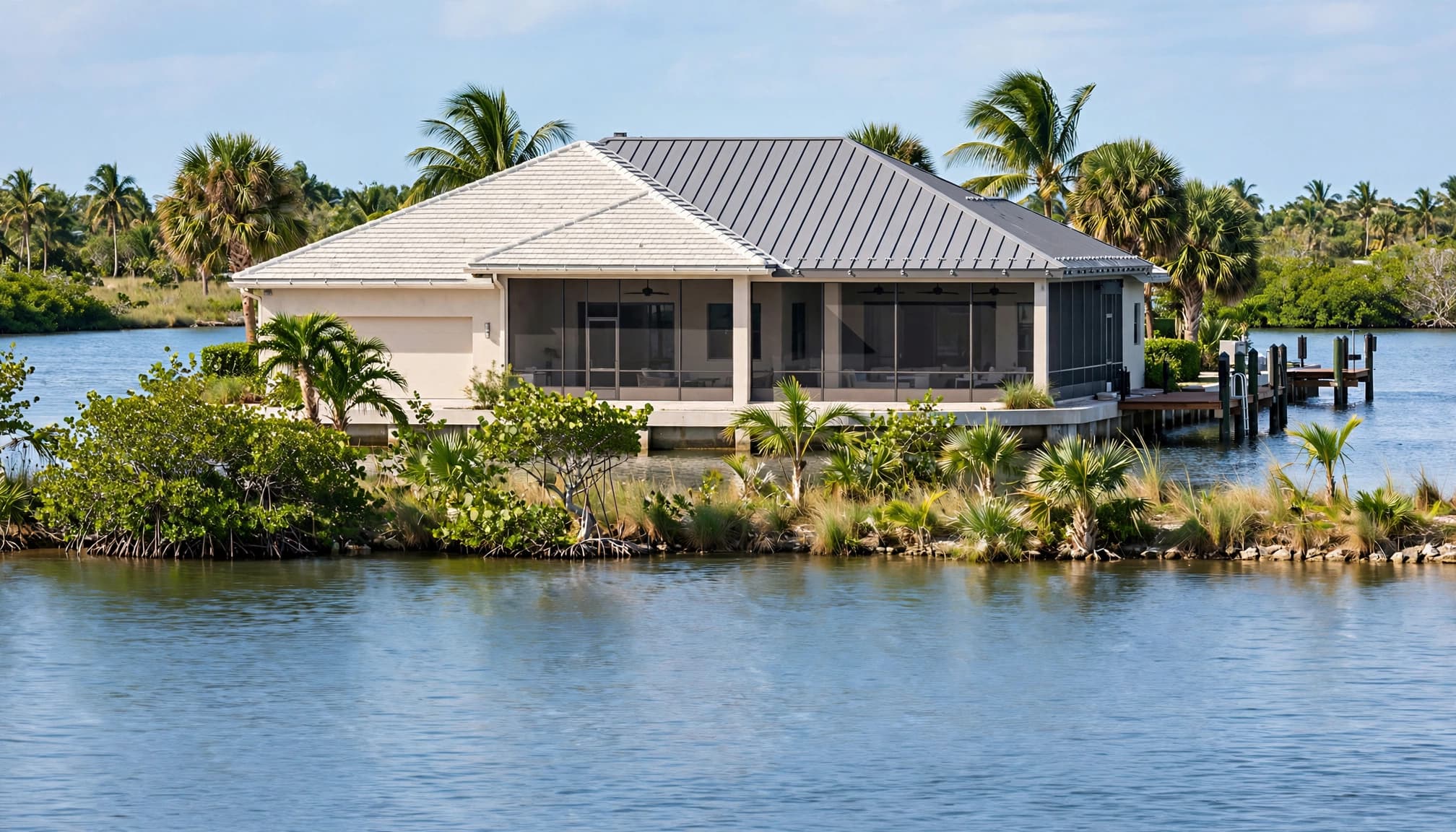
Tile remains a familiar choice across Southwest Florida. Concrete and clay profiles work especially well on Mediterranean, coastal, and traditional waterfront homes. Their depth creates a substantial roofline that many homeowners want to preserve during a remodel or replacement.
Tile offers presence, texture, and long service potential
Clay tile can last for many decades when the roof structure and installation support it. Concrete tile also offers a long service life, although individual tiles may eventually crack from impact, foot traffic, or movement.
Tile is available in high barrel, low profile, flat, and modern designs. Color options range from weathered coastal tones to richer terracotta shades. That flexibility can help a new roof complement stucco, pavers, pool decking, and a screened lanai.
For a home built around a traditional Florida style, replacing tile with metal may alter the property's entire appearance. Professional tile roof replacement can retain that architectural character while updating the protective layers below.
Weight and maintenance require planning
Tile adds significant dead load compared with most metal systems. New construction can account for that weight in the framing design. However, an older home may need a structural review before changing from shingles or metal to tile.
Tiles can be replaced individually, which helps with isolated damage. Still, matching an older color or profile isn't always simple. Walking on a tile roof also requires care because careless foot traffic can break tiles.
Mildew, algae, and debris may show more readily on tile's textured surface. Gentle cleaning methods and periodic inspections are better than aggressive pressure washing, which can damage the surface or dislodge components.
Where metal roofing performs well
Standing-seam metal gives many waterfront homes a clean, tailored appearance. It works with contemporary homes, coastal cottages, elevated designs, and remodels where reducing roof weight matters.
Metal also comes in exposed-fastener panels, metal shingles, and stone-coated steel profiles. Those products differ in price, appearance, repair methods, and coastal specifications, so they shouldn't be treated as one category.
Lower weight can simplify a reroof
Metal generally places far less weight on the framing than concrete or clay tile. That can make it an appealing option when a structural review finds limited capacity for a heavier assembly.
Long panels also create fewer field joints than individual tiles. When properly detailed, a standing-seam system can shed heavy rain efficiently. Yet panels expand and contract as temperatures change, which is why clip design, panel spacing, and flashing details matter.
Homeowners considering this option can compare residential metal roof installation systems with the roof style and exposure conditions in mind.
Rain noise and heat are assembly questions
A metal roof can sound louder during a heavy downpour if it sits over open framing or minimal insulation. On a typical Cape Coral home with roof decking, attic insulation, and a finished ceiling, the difference is often less dramatic than people expect.
Heat performance also depends on the full roof design. A light-colored metal finish can reflect more solar energy than a dark surface. However, attic ventilation, insulation depth, roof geometry, and air sealing strongly affect indoor comfort.
Tile's air space and thermal mass can also help moderate heat transfer. Neither material eliminates the need for a properly insulated and ventilated attic.
Tile vs metal roofing: compare the costs beyond installation
For a mid-sized Southwest Florida home, both tile and standing-seam metal commonly cost tens of thousands of dollars. Roof complexity can shift the price quickly. A simple single-story roof costs less than one with steep slopes, dormers, skylights, extensive valleys, or difficult waterfront access.
Recent Southwest Florida planning ranges place a standing-seam metal roof on a 2,000-square-foot home around $22,000 to $28,000. A tile reroof for a similarly sized single-story home may fall around $23,000 to $30,000. Clay tile, premium metals, structural work, and complex drainage details can raise either figure.
| Cost factor | Tile roofing | Metal roofing |
|---|---|---|
| Material type | Concrete costs less than clay | Aluminum and standing seam often cost more |
| Structural needs | May require framing review | Lower weight can reduce structural concerns |
| Roof complexity | Individual pieces increase labor | Custom panels and flashing add labor |
| Future repairs | Single tiles may be replaced | Matching and patching panels can be harder |
| Coastal hardware | Underlayment and flashings still matter | Coatings, clips, and fasteners need close review |
The lowest estimate can leave out important details. Compare tear-off, deck repairs, underlayment, flashing, permit costs, disposal, ventilation, and warranty coverage line by line.
Total ownership cost includes inspections and repairs
A roof's life-cycle cost includes more than its first invoice. Tile may need occasional replacement tiles and cleaning. Metal may need inspections of seams, fasteners, penetrations, sealants, and areas where different metals meet.
Clay tile can outlast many roof systems on paper. Yet the underlayment beneath it may require service before the tiles reach the end of their useful life. Metal can last 40 to 60 years under favorable conditions, but coastal corrosion protection and workmanship remain part of that equation.
A roof can have a high wind rating and still leak where a valley, vent, pipe, or roof edge was detailed poorly.
Underlayment and flashing decide how water stays out
Cape Coral's summer rain can expose a weak detail in minutes. The visible roof covering is the first shield, but the waterproofing layers beneath it carry much of the responsibility when rain arrives sideways.
Start with the deck and secondary water barrier
Before installation, the contractor should inspect roof decking for rot, delamination, soft areas, and inadequate fastening. Replacing a roof without addressing damaged decking leaves a hidden problem below an expensive new surface.
The underlayment must match the approved roofing assembly. Tile systems often rely on robust underlayment because water can pass beneath individual tiles during wind-driven rain. Metal systems also need the correct underlayment for the panel type, slope, and local approval.
Flashing and fasteners need a coastal specification
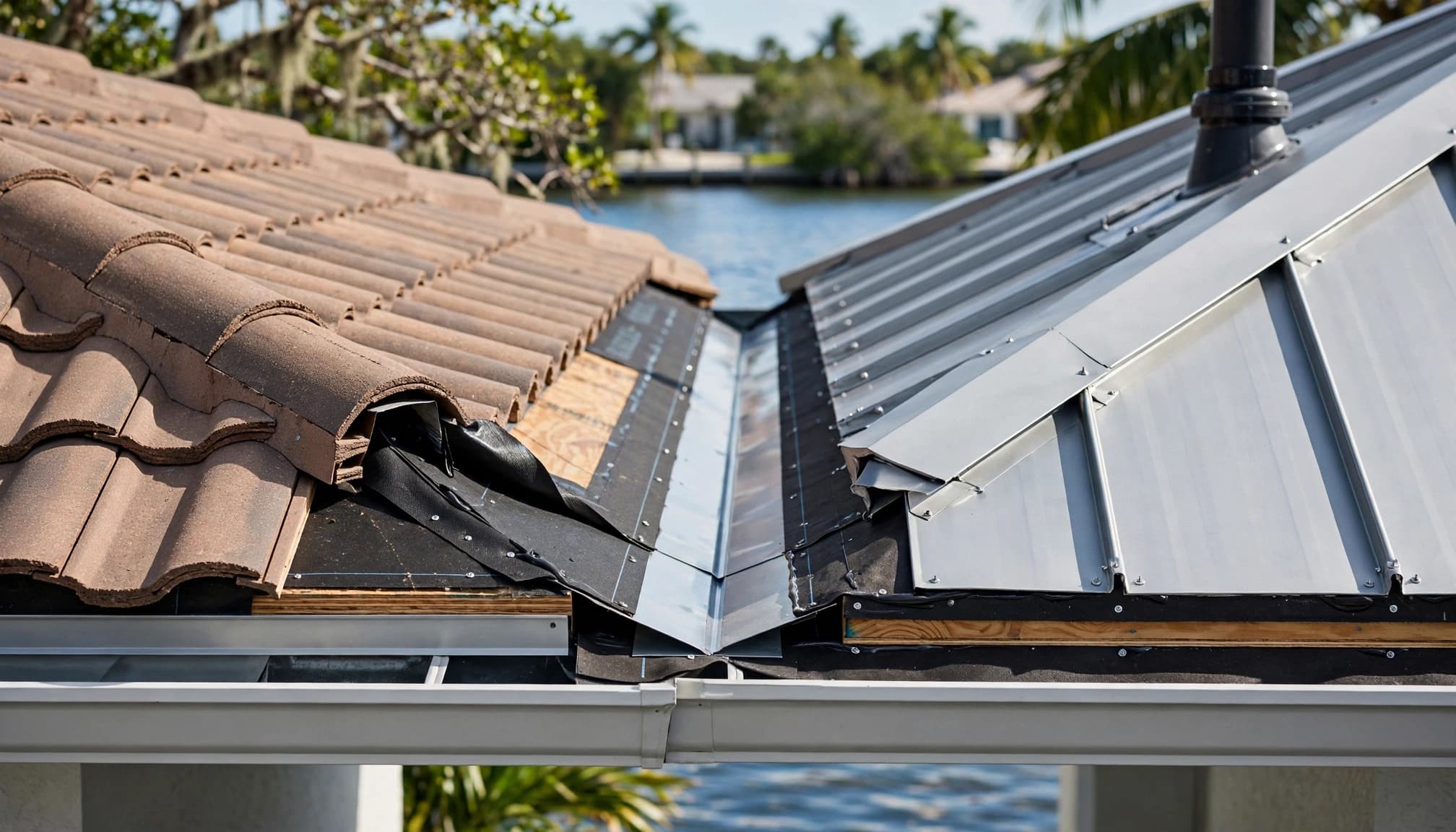
Valleys, wall intersections, chimneys, skylights, vents, and pipe penetrations require compatible flashing. Mixing incompatible metals can accelerate corrosion. Sealants also age under ultraviolet exposure, so they need periodic review.
For metal, ask about panel gauge, finish, clip system, fastener type, and edge-metal attachment. For tile, ask how the tiles attach, what underlayment is used, and how hips, ridges, and valleys are finished.
Roof replacement requires permits in Cape Coral, and local requirements can change. Review roof replacement permits in Cape Coral early, especially if your project includes structural repairs, solar equipment, additions, or a redesigned roofline.
Maintenance, repairability, and resale value
Neither material is maintenance-free. Regular checks help catch small defects before water reaches decking, insulation, drywall, or a lanai ceiling.
Plan inspections around storms and aging details
After a hurricane or major wind event, look for shifted tiles, cracked tiles, lifted edges, loose trim, exposed fasteners, bent panels, damaged sealant, and water stains inside the home. Avoid climbing onto the roof yourself, especially after rain.
Tile often makes spot repairs more localized, provided matching pieces are available. Metal repairs can be durable, but an invisible patch may be harder when a panel is dented or damaged. A qualified roofer should determine whether a repair preserves the approved system.
A scheduled roof inspection in Cape Coral can document the roof's condition before a sale, after a storm, or when planning a replacement.
Buyers notice condition and documentation
Waterfront buyers often notice roof age, style, visible condition, and permit records early in the transaction. A tile roof may support a classic Florida look. A standing-seam metal roof can appeal to buyers who prefer a modern profile and lower roof weight.
Neither choice guarantees a certain resale price or insurance premium. Still, buyers and insurers often value a roof with clear documentation, current permits, wind-rated approvals, and evidence of professional installation.
Keep copies of permits, material approvals, invoices, warranties, inspection reports, and photos of the completed roof. Those records make future repairs, insurance discussions, and resale questions easier to address.
Choosing the right roof for your waterfront property
Tile may fit best when your home was designed for its weight and your priority is traditional architectural character. It can also suit owners who want modular repair options and are prepared to maintain the roof surface over time.
Metal may fit better when reducing structural load matters, the home has a clean contemporary design, or you prefer long panels with fewer field joints. For canal properties, the proposed metal, coating, trim, and fasteners deserve close scrutiny.
The best choice comes from comparing approved systems for your actual roof, not choosing based on a sample board or a neighbor's house. A qualified local roofing professional should inspect the framing, roof slope, drainage paths, exposure, and existing deck before providing a final recommendation.
A roof choice built around the home
For Cape Coral waterfront homes, tile vs metal roofing is a decision about the complete assembly, not a contest between two surfaces. Both materials can perform well through intense sun, heavy rain, and hurricane conditions when they match the structure and local approval requirements.
Choose the roof that fits your home's design, budget, maintenance expectations, and exposure to open water. Then insist on sound underlayment, corrosion-conscious flashing, approved attachments, and careful installation.