Fort Myers Pool Filter Sizing for Clearer Circulation
Explore Our Services
Contact Us Today!
(239) 322-9295
A pool can look clean at the surface while poor circulation lets debris, algae spores, and fine particles remain in the water. Proper Fort Myers pool filter sizing gives your gunite pool the capacity to trap contaminants without placing unnecessary strain on the equipment.
The right filter works with the pump, pipe layout, skimmers, returns, and pool features as one circulation system. Start with the pool's water volume and planned flow rate, then match equipment to the manufacturer's published limits.
Why filter size matters in a gunite pool
Gunite pools in Fort Myers come in nearly every shape, depth, and feature combination. That flexibility is great for backyard design, but it also means equipment sizing can't rely on a one-size-fits-all package.
A filter removes suspended material after the pump moves water through the plumbing. When the filter is too small, it can load with debris quickly, restrict water flow, and require more frequent cleaning. Water may stay hazy even when chemical levels appear correct.
Circulation has to reach the whole pool
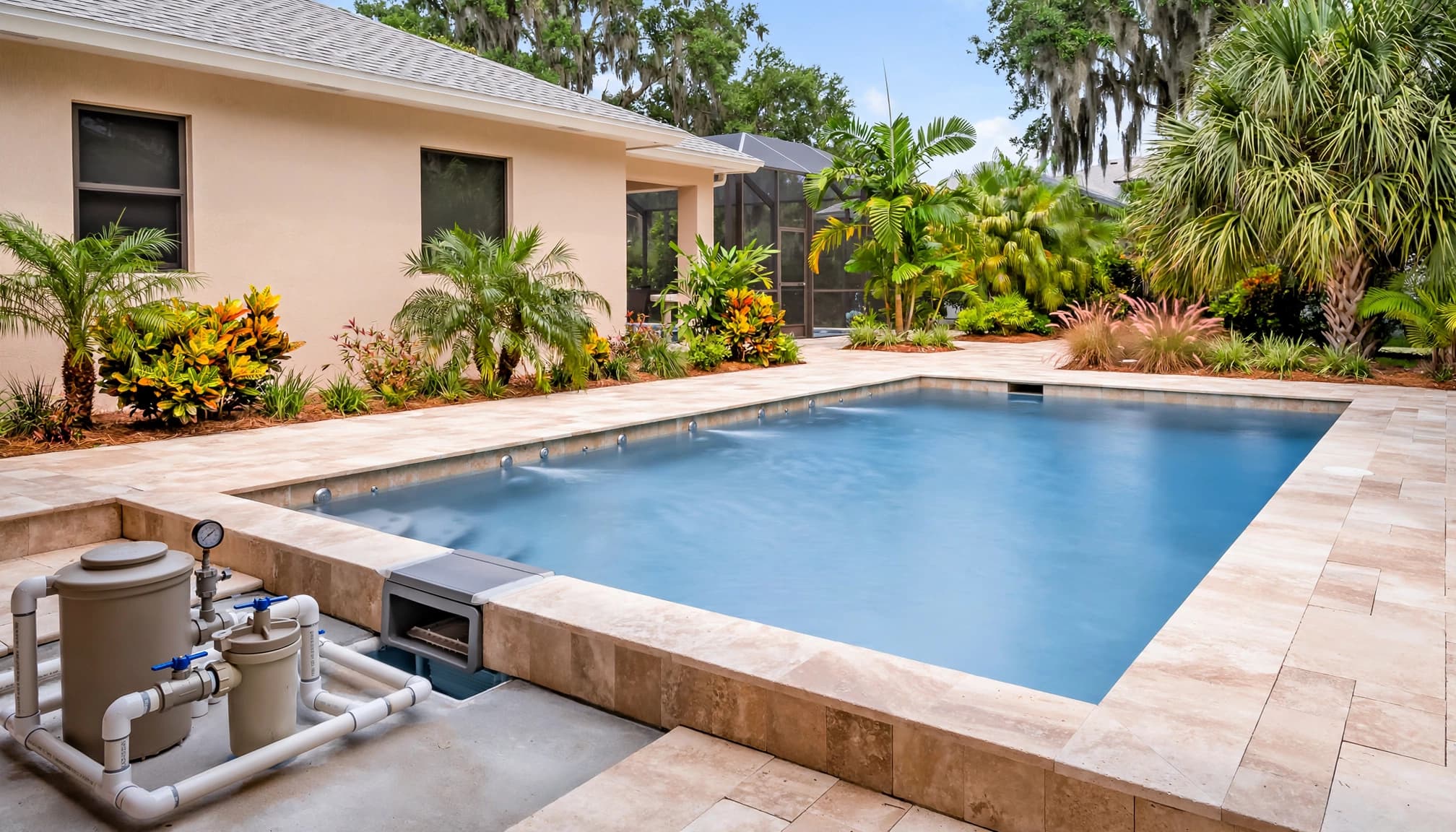
Good circulation pulls water through skimmers and drains, sends it through the filter, then returns it evenly to the pool. Return fittings should help move water across steps, benches, tanning ledges, and deeper areas where debris can settle.
A filter doesn't create circulation by itself. However, an undersized filter can become a bottleneck that reduces the flow the pump and plumbing were designed to provide.
Southwest Florida conditions add more debris
Fort Myers pools often collect windblown pollen, palm fronds, sand, insects, and fine organic material. A screened lanai reduces large debris, yet it doesn't eliminate the smaller particles that cloud water.
Heavy use also matters. Families, visiting guests, pets, nearby landscaping, and storm-season debris all increase the work your filter must handle. A larger-capacity filter gives you more margin before cleaning becomes necessary.
Filter area affects how long the system can operate between cleanings. It does not replace balanced water chemistry, brushing, or routine skimming.
Fort Myers pool filter sizing starts with water volume
Fort Myers pool filter sizing begins with a reasonably accurate estimate of how many gallons your pool holds. A builder can calculate this from the approved pool plan, including the shallow end, deep end, sun shelf, spa, and any attached water features.
For a simple rectangular pool, volume is commonly estimated from length, width, average depth, and a gallons-per-cubic-foot conversion. Freeform gunite pools need a more careful calculation because curved walls, varied depths, benches, and ledges change the total volume.
Use turnover as a planning tool
Turnover is the time it takes to circulate a volume of water equal to the pool's total volume. It helps a pool professional determine the flow rate needed for the operating schedule.
The basic relationship is straightforward:
Pool volume in gallons / target turnover time in hours / 60 = required gallons per minute
That flow rate is only a starting point. The pump must produce it after plumbing resistance, filter resistance, valves, heaters, chlorinators, and features reduce flow.
Avoid treating turnover as the only answer
A turnover calculation cannot tell you whether the skimmers draw well, whether returns reach dead spots, or whether the pump runs at an efficient speed. It also doesn't account for a spa spillway, bubbler, waterfall, cleaner line, or solar heating loop.
Use the calculation to frame the conversation, then have a qualified local pool professional review the full circulation design. For new projects, this review belongs early in custom gunite pool construction, before pipes and equipment locations are locked in.
Filter sizing and pump sizing are different jobs
Homeowners often hear "size the pool equipment" as though one number selects everything. In practice, the filter and pump do separate jobs and must be matched carefully.
The pump moves water. Its performance depends on motor speed, impeller design, pipe size, vertical lift, fittings, and resistance throughout the system. The filter captures material from that moving water, and its usable capacity depends on its design and surface area.
A larger pump is not a cure for weak filtration
An oversized pump can push water faster than the filter, plumbing, heater, or sanitation equipment should handle. It may create noisy plumbing, higher electrical use, excess pressure, and poor filter performance.
Variable-speed pumps offer useful control because a professional can set lower speeds for routine filtration and higher speeds only when a feature or cleaning task needs more flow. Still, adjust pump settings only within the published operating range of every connected component.
Follow manufacturer flow-rate limits
Every filter model has a manufacturer-stated maximum flow rate. The installed pump must not exceed that limit under real operating conditions. The same check applies to heaters, salt chlorinators, valves, and other equipment in the circulation path.
A professional uses pump performance data, often called a pump curve, with the system's estimated total dynamic head. Total dynamic head is a plain-language measure of how hard the system makes the pump work to move water.
Account for plumbing resistance before choosing equipment
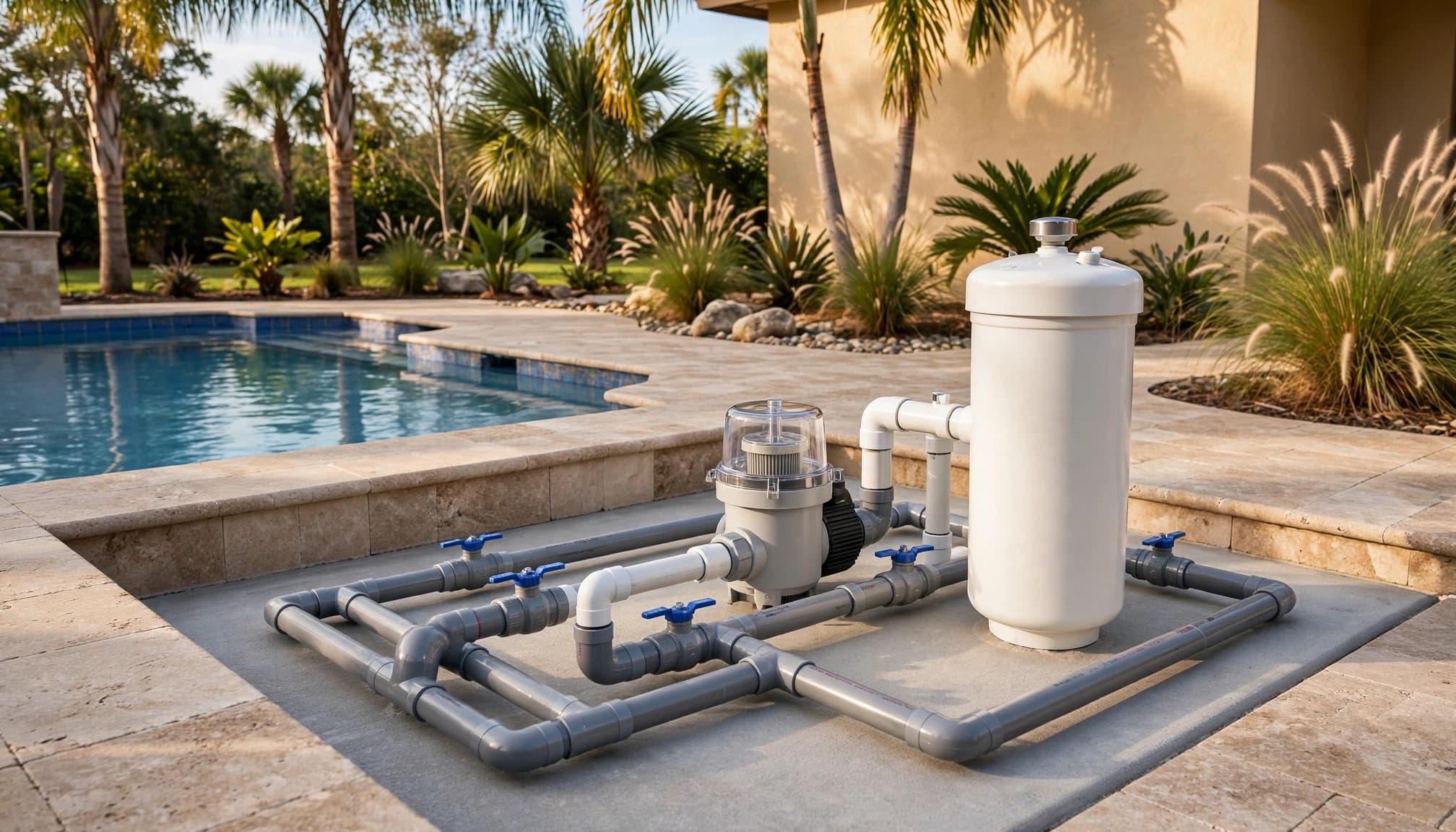
Water loses pressure as it travels through pipe, elbows, valves, fittings, filters, heaters, and features. Longer pipe runs and smaller pipe diameters add more resistance. A design that looks simple at the pool's edge can have a demanding equipment path behind the deck.
A pool with an equipment pad close to the water has different hydraulic needs than one with equipment around the side of the home. Raised spas and elevated water features also add resistance because water must travel upward before returning to the pool.
Features can change the flow requirement
Waterfalls, deck jets, bubblers, spa spillways, in-floor cleaning systems, and solar systems may need dedicated plumbing or a higher flow range. They should not force everyday filtration to run at an inefficient speed.
During design, list every feature that will operate now and any you may add later. If a future spa, heater, salt system, or water feature is part of the plan, reserve space and plumbing options for it.
Valves and a dirty filter affect real-world flow
A pump curve shows performance under a stated amount of resistance. In real life, partially closed valves, a loaded cartridge, a dirty sand bed, or a heater can alter that resistance.
For that reason, size a filter for more than the bare minimum. Extra filter capacity helps the system maintain workable flow as normal debris accumulates between service intervals.
Choose a filter type that fits maintenance habits
Residential gunite pools commonly use cartridge, sand, or diatomaceous earth, also called DE, filters. Each can produce clear water when paired with the right pump, installed properly, and maintained as directed.
The best choice depends on the desired water clarity, equipment-pad space, local service preferences, water use, and the homeowner's willingness to perform routine maintenance. Manufacturer documentation should guide final sizing and care.
| Filter type | How it captures debris | Typical homeowner consideration |
|---|---|---|
| Cartridge | Water passes through pleated fabric elements | Requires periodic removal and rinsing |
| Sand | Water passes through a bed of filter media | Uses a backwash cycle to clean the filter |
| DE | Fine powder coats internal grids | Can filter fine particles but needs careful service |
Cartridge filters often appeal to homeowners who want a larger filtration area and no routine backwashing. Sand filters have a familiar maintenance process, while DE filters can provide fine filtration when maintained correctly. The right choice is the one that supports the design and service plan.
More filter area gives useful breathing room
Filter surface area influences how rapidly pressure rises as material collects. More area generally means lower resistance at a given flow and longer intervals between cleaning.
That doesn't mean choosing the largest unit that fits the pad without checking the rest of the system. The selected filter must still match the pump's actual flow, available clearance for service, and the equipment manufacturer's instructions.
Plan for service access and future upgrades
Equipment needs room around it. A filter that is difficult to open, drain, clean, or replace often gets neglected. Place the equipment pad where a technician can reach valves, unions, drain plugs, electrical disconnects, and the filter tank without working around a crowded deck or landscaping.
Also consider how a revised backyard may affect the equipment setup. A lanai extension, outdoor kitchen, added pavers, or new planting beds can restrict access if the equipment area isn't planned early. Coordinating the pad with Fort Myers backyard and lanai design protects clear maintenance space.
Renovations are a good time to correct mismatches
An aging pool may have a pump and filter that were installed years apart. The system might still run, but it may no longer suit the pool's current features, plumbing, or sanitation equipment.
Pool resurfacing, a new heater, saltwater conversion, LED upgrades, and automation work are practical times to review circulation. Fort Myers pool renovation services can include an equipment assessment alongside cosmetic improvements.
Warning signs that deserve a circulation review
Cloudy water doesn't always point to a filter problem. Poor chemistry, failing equipment, algae growth, or inadequate brushing can produce similar symptoms. Still, repeated problems often justify a closer look at filter capacity, pump settings, and circulation patterns.
Watch for these signs:
- Filter pressure rises soon after cleaning, even with normal pool use.
- Return jets feel weak, or leaves gather repeatedly in the same areas.
- The water stays dull after chemical balance and routine cleaning.
- The pump is loud, runs hot, or requires high speed for basic filtration.
- A new heater, salt system, spa, or water feature was added without reviewing the original equipment.
Get the final recommendation from a qualified local professional
A qualified pool professional can verify the pool volume, pipe sizes, equipment elevations, features, and manufacturer's flow-rate limits. They can also check real operating pressure and recommend pump settings that fit the system.
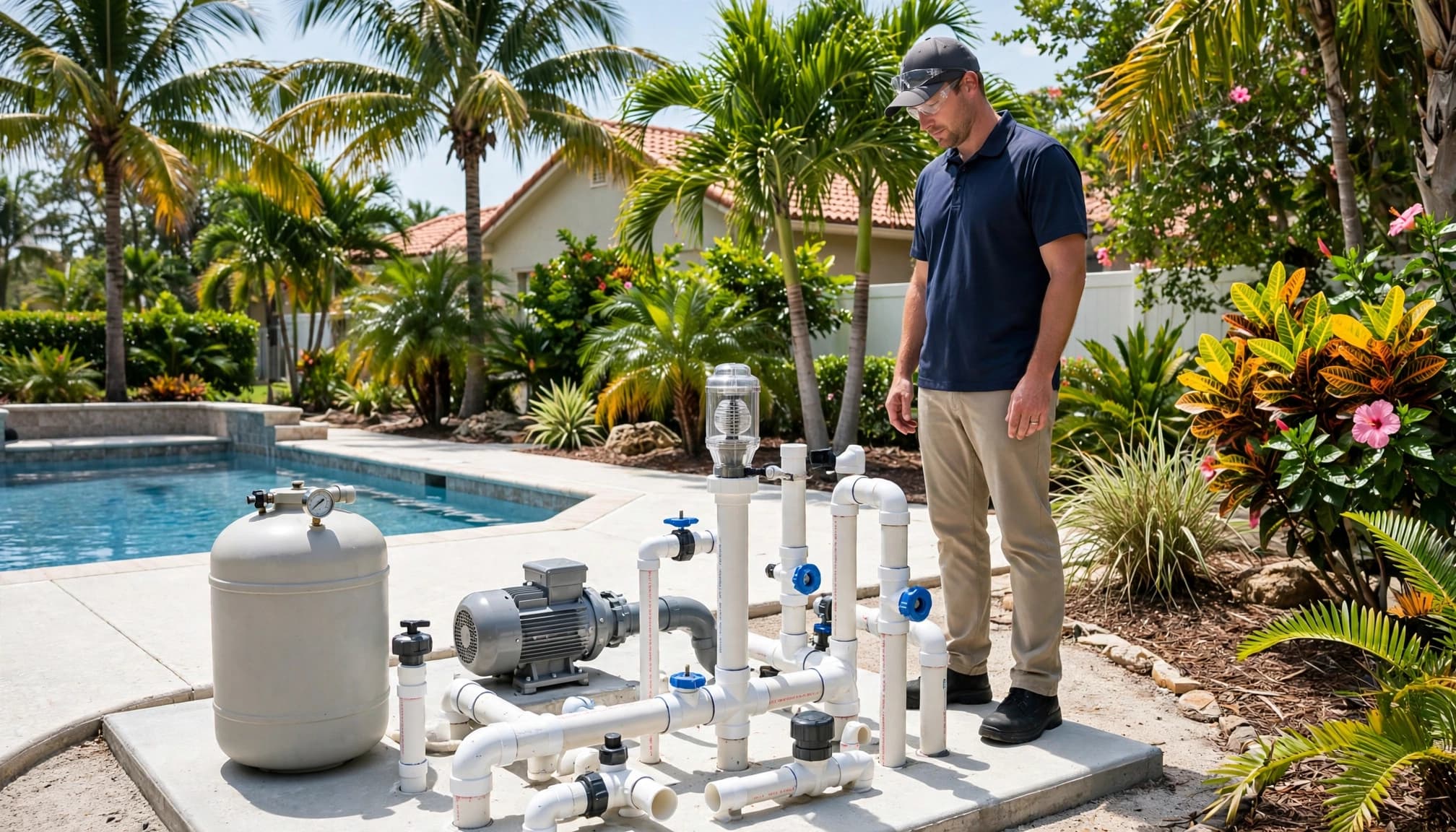
Ask for the recommended filter model's rated flow range, the anticipated pump flow at your system resistance, and the service space required at the pad. Those details make a recommendation easier to understand and compare.
A filter sized for the system protects pool performance
Proper Fort Myers pool filter sizing is about more than selecting a tank based on pool gallons. It means matching filter capacity with real pump output, plumbing resistance, daily operating needs, and planned features.
A well-matched system keeps water moving at an appropriate rate without forcing the pump or filter past its limits. That balance supports clearer water, simpler upkeep, and dependable circulation through Southwest Florida's busiest pool months.