Clay vs Concrete Tile Roofs for Naples, Florida Homes
Explore Our Services
Contact Us Today!
(239) 322-9295
Roof tile affects more than curb appeal. It changes the roof's weight, installation cost, maintenance needs, and how the home handles Southwest Florida weather.
If you're comparing clay vs concrete tile roofs in Naples, the material alone shouldn't make the decision. The roof deck, underlayment, fasteners, flashing, slope, and installation method all affect performance. Your home's structure, HOA rules, permit requirements, and insurance conditions matter too.
Clay and concrete can both work well on Naples homes. The better choice depends on your property and the complete roofing assembly.
How Clay and Concrete Tiles Differ
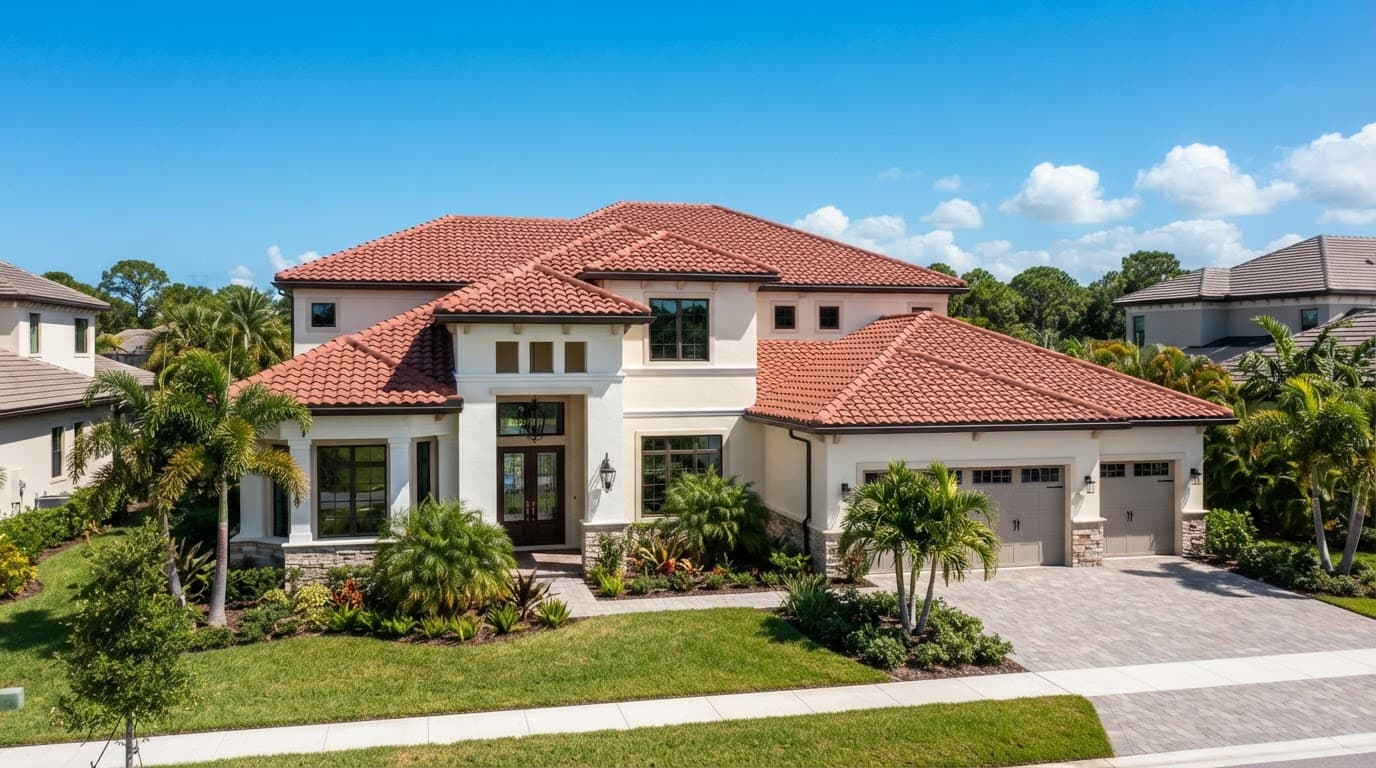
Clay tiles are made from natural clay and fired at high temperatures. Their color often comes from the clay itself, which gives them an earthy appearance. Common profiles include barrel, mission, and flat tiles. They fit Mediterranean, coastal, Spanish, and Old Florida home designs.
Concrete tiles use cement, sand, water, and pigments. Manufacturers can shape them into many of the same profiles, including designs that resemble clay, slate, or wood. Concrete also offers a broad range of colors and finishes.
Weight is an important difference. Concrete tile is often heavier than clay tile with a similar profile, although the actual weight varies by product. A structural review is necessary before installing either material, especially when replacing asphalt shingles with tile.
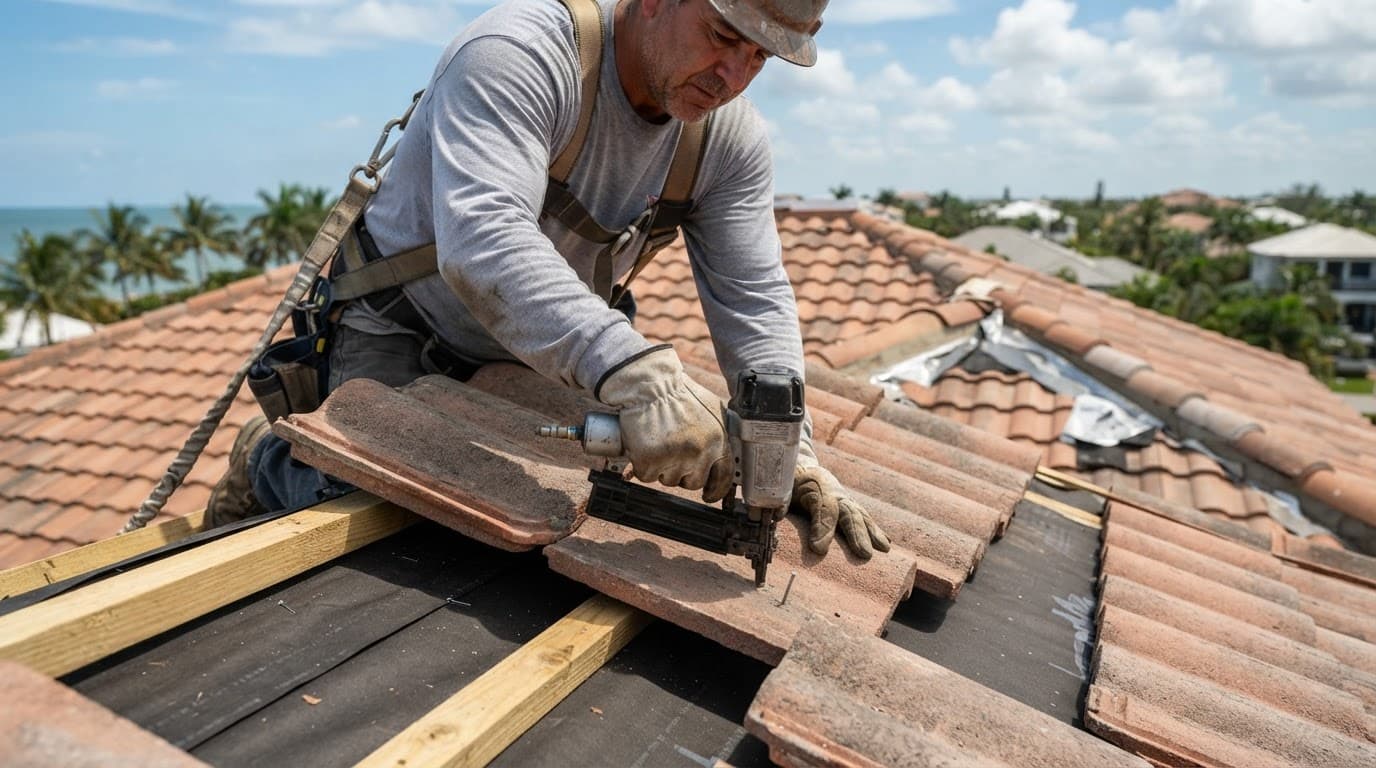
Both products can break if someone walks on them incorrectly or handles them roughly. Tile roofs also depend on the layers beneath the tile. Underlayment, flashing, battens, fasteners, and ridge details protect the home from water and wind.
Clay often has lower water absorption than standard concrete, but product specifications vary. Concrete finishes can weather or fade over time, while clay's natural color may remain more consistent. Even so, exposure to Florida sun, salt air, rain, and airborne debris affects every roof.
Neither material is automatically the right fit for every Naples property. A product's tested specifications and the proposed installation system deserve more attention than a showroom sample.
Choosing Clay vs Concrete Tile Roofs: A Quick Comparison
This table highlights the main differences homeowners usually weigh during a roof replacement or new build.
| Factor | Clay tile | Concrete tile |
|---|---|---|
| Appearance | Natural, warm, traditional colors | Many colors, textures, and profiles |
| Weight | Varies by profile, often lighter than concrete | Often heavier, product specifications control |
| Upfront cost | Usually higher material and labor cost | Often more budget-friendly |
| Color aging | Natural color can remain stable | Coatings and pigments may weather over time |
| Moisture absorption | Often lower, depending on the product | Varies, with some products absorbing more moisture |
| Repairs | Matching older tiles can be difficult | Replacement options may be easier to source |
| Service life | Can last for decades with proper care | Can last for decades with proper care |
| Wind performance | Depends on the approved roofing assembly | Depends on the approved roofing assembly |
The main takeaway is simple: clay usually costs more and offers a distinctive appearance , while concrete gives homeowners more product choices at a lower starting price. Neither option removes the need for correct engineering and installation.
Hurricane Performance Depends on the Whole Roof
Naples homeowners often focus on whether clay or concrete tile is stronger during a hurricane. That question matters, but the answer isn't based on tile material alone.
The Florida Building Code applies to the roof system, including the deck, underlayment, tile attachment, edge conditions, flashing, and penetrations. Depending on the approved product and design, installers may use mechanical fasteners, adhesive systems, mortar, battens, or a combination of methods.
The roof's slope and shape also affect wind exposure. Ridges, hips, valleys, overhangs, skylights, vents, chimneys, and plumbing penetrations need the correct details. A roof with carefully installed tiles can still develop problems if water gets beneath the tile or wind reaches a weak edge.
A tile roof's hurricane performance comes from the tested, code-compliant assembly, not from choosing clay or concrete in isolation.
Ask your roofing contractor which product approval or tested assembly applies to your project. Florida Product Approval and, where applicable, a Miami-Dade Notice of Acceptance can help identify products and installation methods approved for Florida conditions.
A qualified roofer should also explain how the plan addresses secondary water resistance, roof edges, hip and ridge tiles, and fastener placement. Those details matter during high winds.
A wind mitigation inspection can document certain protective features that may affect an insurance review. However, the insurance company decides whether a credit applies. Never assume that either tile material guarantees a discount or a specific storm rating.
Cost, Maintenance, and Repairs in Southwest Florida
Concrete tile often has a lower starting price than clay, but the final estimate depends on much more than the tile itself. Labor, tear-off, disposal, underlayment, structural reinforcement, flashing, access, roof pitch, and the number of penetrations can change the total.
For a current baseline, review this Southwest Florida roofing price guide for new builds. A new construction roof and a replacement roof don't always have the same cost structure, so use online ranges as planning information rather than a fixed bid.
Clay can require a larger initial investment because of material cost, specialty products, shipping, and installation requirements. Concrete may offer more accessible pricing and easier availability, but a heavier system could affect structural work.
Maintenance is similar for both materials. Have the roof checked after major storms and whenever you notice cracked tiles, loose ridge pieces, staining, or water marks inside the home. A professional should inspect the underlayment and flashing, not only the visible tile surface.
Pressure washing can damage tile surfaces, finishes, and surrounding components. Cleaning methods should match the manufacturer's instructions. Tree branches, falling debris, and careless foot traffic can crack either material.
The tile itself may last for decades, but other roof components can need attention sooner. Sealants, flashings, fasteners, and underlayment have different service lives. A replacement plan should account for those parts rather than treating the tile as the entire roof.
Which Tile Fits Your Naples Home?
Start with the property, not the color sample. For a new home, your designer, builder, structural engineer, and roofer can coordinate the roof design before construction begins. That makes it easier to account for tile weight, roof pitch, drainage, attic ventilation, and approved installation details.
For an existing home, confirm that the structure can support the proposed system. A roof replacement may also expose deck damage or outdated flashing that needs correction before new tile goes on.
Clay may fit your project if you want a natural, traditional appearance and accept a higher initial cost. It can work well with Mediterranean and coastal architecture, especially when the product and color complement the home's exterior.
Concrete may fit better when you want a wider selection of colors and profiles, a lower starting material cost, or more readily available replacement pieces. Its added weight still requires a proper structural review.
Naples homeowners should also check:
- HOA requirements , including approved colors, profiles, and visible roof changes.
- Local permitting rules , which can affect product documentation and inspections.
- Insurance conditions , including requirements for roof age, installation records, and wind mitigation features.
- Coastal exposure , since salt air and intense sun can affect metal components, coatings, and sealants.
- Future repairs , because uncommon profiles or discontinued colors can make matching difficult.
Request a written proposal that identifies the tile product, underlayment, attachment method, flashing scope, tear-off work, structural changes, permits, and warranty terms. A qualified local roofing professional can then check the property-specific structural, code, HOA, and insurance requirements before work begins.
Conclusion
The choice between clay and concrete tile involves appearance, weight, cost, maintenance, and product availability. Both can be suitable for Naples homes when the roof structure and installation plan match the selected tile.
For hurricane protection, focus on the complete roofing assembly . Ask for approved products, clear installation details, proper permits, and a written scope that covers the components beneath the tile. The right material is the one that fits your home, budget, design, and local requirements without compromising the roof system.