Commercial Roof Recovery or Tear-Off in Port Charlotte?
Explore Our Services
Contact Us Today!
(239) 322-9295
When a commercial roof needs major work, an overlay can look like the faster, less expensive choice. But commercial roof recovery only makes sense when the existing roof is a sound, code-compliant base and the structure can carry the added load.
A tear-off costs more upfront in many cases, yet it exposes the deck and lets the crew address hidden damage. The right decision for a Port Charlotte property starts with an inspection, the roof's history, and the requirements that apply to that specific building.
Key Takeaways
- Recovery leaves the existing roof in place and installs a new system over it. Tear-off removes the old roofing, usually down to the deck.
- Two or more existing roof-covering applications, or roofing that is too deteriorated or water-soaked to serve as an adequate base, generally point toward removal.
- Recovery adds weight and can conceal moisture or damage. Structural capacity and roof condition matter as much as the price.
- An inspection should include roof edges, penetrations, flashing, drains, and evidence of past repairs or leaks.
- Port Charlotte projects need a property-specific review of code, permit jurisdiction, and installation requirements. Savings and service life depend on the building and the proposed system.
What Recovery and Tear-Off Mean
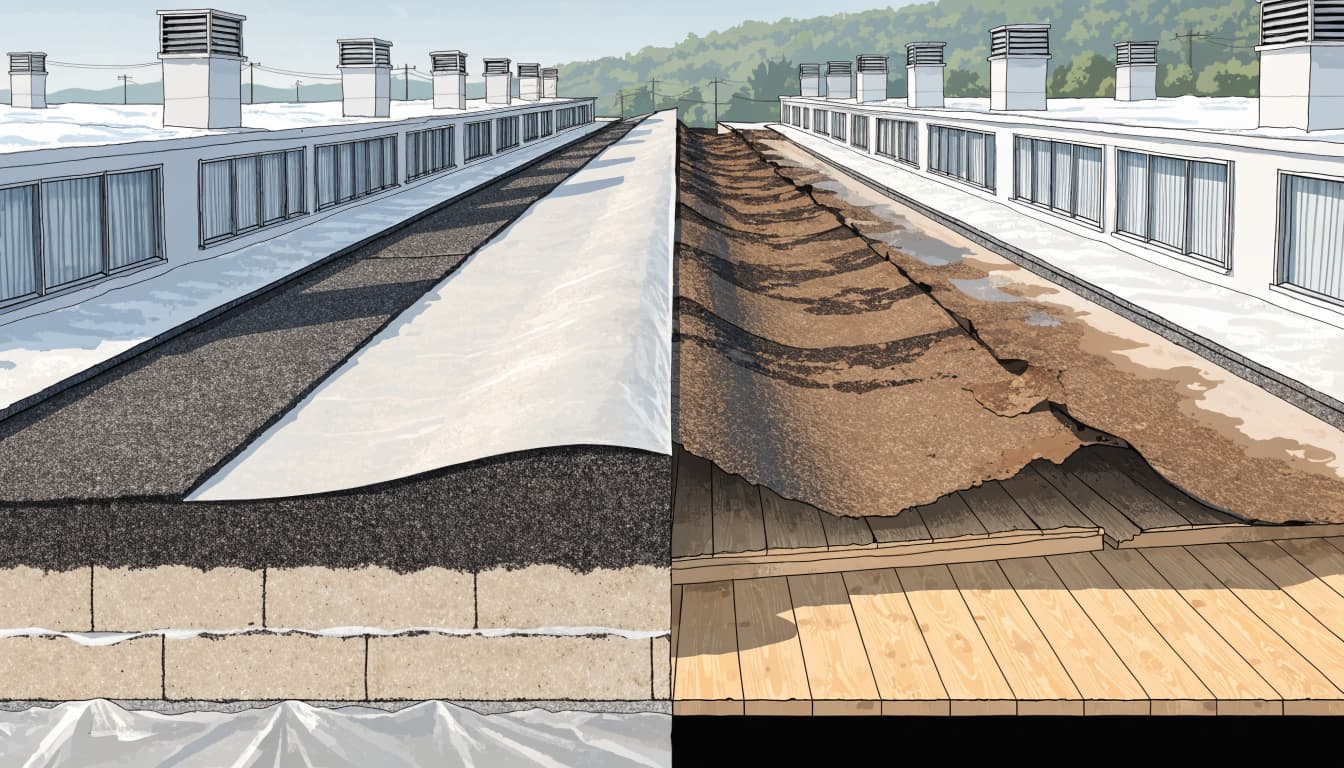
Recovery adds a new roof over the old one
A recovery, often called an overlay, leaves the existing roof covering in place. The contractor prepares that surface and installs a new roof system above it. Commercial systems vary, but a project may include a recovery board, insulation, and a new membrane or other approved covering.
Because the old materials remain, recovery can reduce tear-off labor and debris handling. It also means the new system depends on the existing roof being an acceptable base. An uneven, wet, loose, or poorly adhered surface can undermine the installation.
Tear-off exposes the roof deck
A tear-off removes existing roofing materials so the contractor can inspect the deck and repair damage before installing the replacement system. That visibility helps locate wet insulation, deteriorated decking, and problem areas around penetrations or roof edges.
Removal creates more debris and typically requires more labor. It can also leave the building more exposed during construction, so the crew needs a weather plan and a reliable dry-in process. The extra work buys access to roof layers that an overlay would hide.
When Florida Code Points Toward Removal
Existing layers and roof condition matter
The Florida Building Code, Building, 8th Edition (2023), became effective December 31, 2023. Its existing-roofing provisions generally require removal when a roof already has two or more roof-covering applications. They also restrict installation over a roof that is water-soaked or deteriorated enough that it cannot provide an adequate base.
That does not mean every trace of moisture automatically requires tear-off. The question is whether the existing materials remain suitable for the proposed system and can be secured as required. Certain existing roof types and conditions can bring additional restrictions, so the material and history matter.
The structure must carry the proposed system
An overlay adds weight to the roof assembly. Structural roof components must support the new covering, as well as materials and equipment used during installation. A visual review from the ground cannot establish whether the structure has enough capacity.
Some code exceptions address systems that transfer loads to the building structure without relying on the existing roof. Those exceptions have specific conditions and do not make recovery an automatic option. A qualified roofing professional should assess the proposed assembly and the building before recommending an overlay.
What an Inspection Should Cover
Look beyond the center of the roof
A useful inspection checks the membrane or surface for open seams, blisters, loose areas, ponding, and signs of repeated patching. Roof edges and eaves can reveal old layers, poor fastening, or moisture damage. Penetrations, HVAC supports, drains, skylights, and flashing also deserve close attention because leaks often develop at transitions.
Past repairs matter too. A roof with recurring leaks or several repairs in the same area may have a broader problem that a new surface will not solve. For related warning signs, see our guide to signs of damaged roof decking.
Test for moisture and review the roof's history
Moisture can move beneath a roof surface before a ceiling stain appears inside. Depending on the roof, an inspection may include moisture testing, core samples, and targeted openings to assess insulation and deck condition. The contractor should also review available repair records and permit history to establish how many roof-covering applications exist.
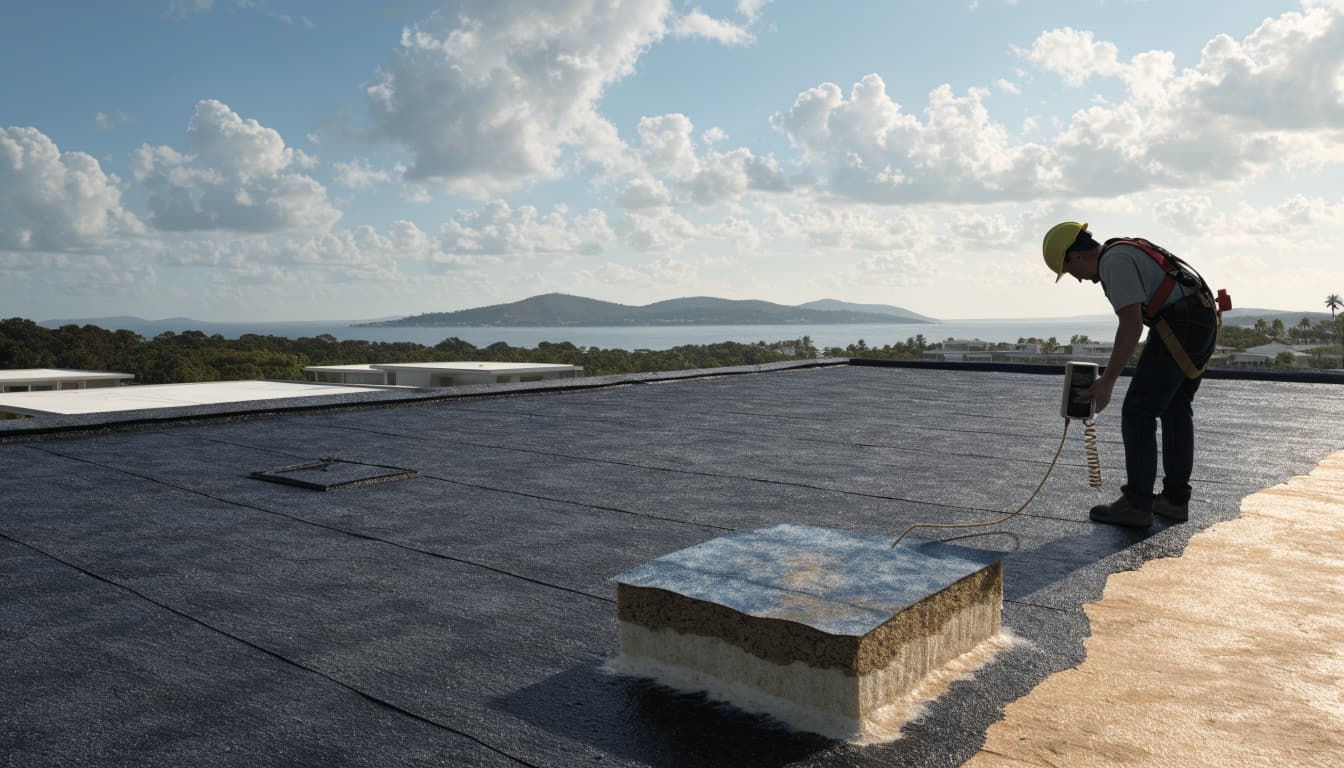
A written report should describe findings and explain why the existing roof can or cannot support recovery. If the inspection identifies damaged decking, the scope should state how concealed damage will be handled once work begins.
Compare Cost and Expected Service Life
Recovery may cost less initially when the existing roof is dry, stable, and suitable for the new system. Fewer tear-off and disposal tasks can reduce labor and cleanup. However, those savings can narrow if the crew must correct an uneven surface, replace wet materials, or adjust details that do not work with the existing roof.
A tear-off usually brings higher removal costs, but it creates a clearer opportunity to repair the deck and rebuild the roof assembly. Neither option guarantees a particular service life. The result depends on the roof's condition, the selected materials, installation quality, drainage, and ongoing maintenance.
| Consideration | Recovery | Tear-off |
|---|---|---|
| Existing roof | Remains beneath the new system | Removed, exposing the deck |
| Hidden damage | Harder to inspect and correct | Easier to identify during removal |
| Added roof weight | Increases assembly load | Removes old roof weight |
| Initial work | Often less removal labor | Includes removal and debris handling |
| Service-life outlook | Depends on the condition of the base and new system | Depends on deck repairs and the new system |
Ask for separate pricing for the proposed roof system, removal, deck repairs, and any allowances for concealed damage. A comparison is only useful when both proposals describe the same scope, materials, and replacement details.
Plan for Business Disruption
Recovery can reduce tear-off noise, debris, and the time spent exposing the building. That may help limit disruption, especially where the business needs to remain open. Still, crews must manage access, equipment, odors or noise from installation, and temporary protection from rain.
Tear-off adds removal and cleanup, and the exposed roof needs careful weather protection. The schedule can also change if crews find damaged decking or wet insulation. Before work starts, agree on access routes, staging areas, work hours, protection for equipment and inventory, and how the contractor will communicate delays.
A sound plan matters as much as the installation method. Commercial roofing projects in Port Charlotte must account for strong sun, heavy rain, humidity, and storm exposure. Our commercial roofing services in Port Charlotte include repair and replacement planning for local business properties.
Confirm the Property's Code and Permit Requirements
Charlotte County requires permits for regulated construction, alteration, repair, removal, and replacement work. However, a Port Charlotte mailing address alone does not establish which authority handles a particular parcel. Confirm the permit jurisdiction and the requirements for the proposed scope before work begins.
The Florida Building Code, Existing Building, also includes a 25 percent threshold for work on a roof area or section within a 12-month period, with an exception when the entire existing system or section is replaced or recovered to code requirements. How that provision applies depends on the project and the authority reviewing it. A contractor should not assume that dividing a larger project into phases avoids applicable requirements.
The permit scope and contractor's proposal should agree on recovery or tear-off, materials, repairs, and inspections. For more about our commercial roof replacement work in Southwest Florida, see the services we provide for commercial properties. We recommend a professional inspection before choosing a method, followed by confirmation of the code and permit requirements for the specific building.
Frequently Asked Questions
Is recovery always cheaper than a tear-off?
No. Recovery can cost less when the existing roof is in good condition and qualifies as a base. Hidden damage, extra preparation, or required repairs can reduce the difference. Compare written proposals that include the same materials and scope.
Can a contractor recover a roof with one existing layer?
Possibly, but the layer count alone does not establish that recovery is suitable. The existing roof must meet applicable requirements, provide a stable base, and work with the proposed system. Moisture, deterioration, securement, and structural capacity still need assessment.
Does water in the roof always mean a tear-off?
Not automatically. The condition and extent of moisture damage matter, including whether the roof can provide an adequate base. Testing and inspection help determine whether affected materials can be addressed or removal is necessary.
Will tear-off guarantee a longer-lasting roof?
No roof method guarantees a service life. Tear-off gives the crew a better opportunity to inspect and repair concealed areas, but the new system's performance still depends on materials, installation, drainage, and maintenance.
Choose the Scope That Fits the Building
Commercial roof recovery can be a practical option when the existing assembly is dry, sound, structurally suitable, and allowed for the specific project. Tear-off is often the better direction when layers, moisture, deterioration, or repair history leave too much uncertainty beneath the surface.
The sound decision comes from matching the inspection findings to the proposed roof system, code, permit, and business needs. A lower initial estimate matters only if the roof assembly beneath it is ready to support the work.