What Calcium Nodules on a Gunite Pool Surface Mean
Explore Our Services
Contact Us Today!
(239) 322-9295
A raised white spot on your pool's interior can look like calcium, but appearance alone can't confirm what it is. Calcium nodules on a pool surface are a symptom to investigate, not a diagnosis of water chemistry, plaster failure, or damage to the gunite shell.
In Southwest Florida, regular rain, warm weather, and frequent pool use can all affect water care. Before you scrape or treat a bump, note where it appears and whether other changes are developing. Understanding the pool's finish and shell is the first step.
What Calcium Nodules May Indicate
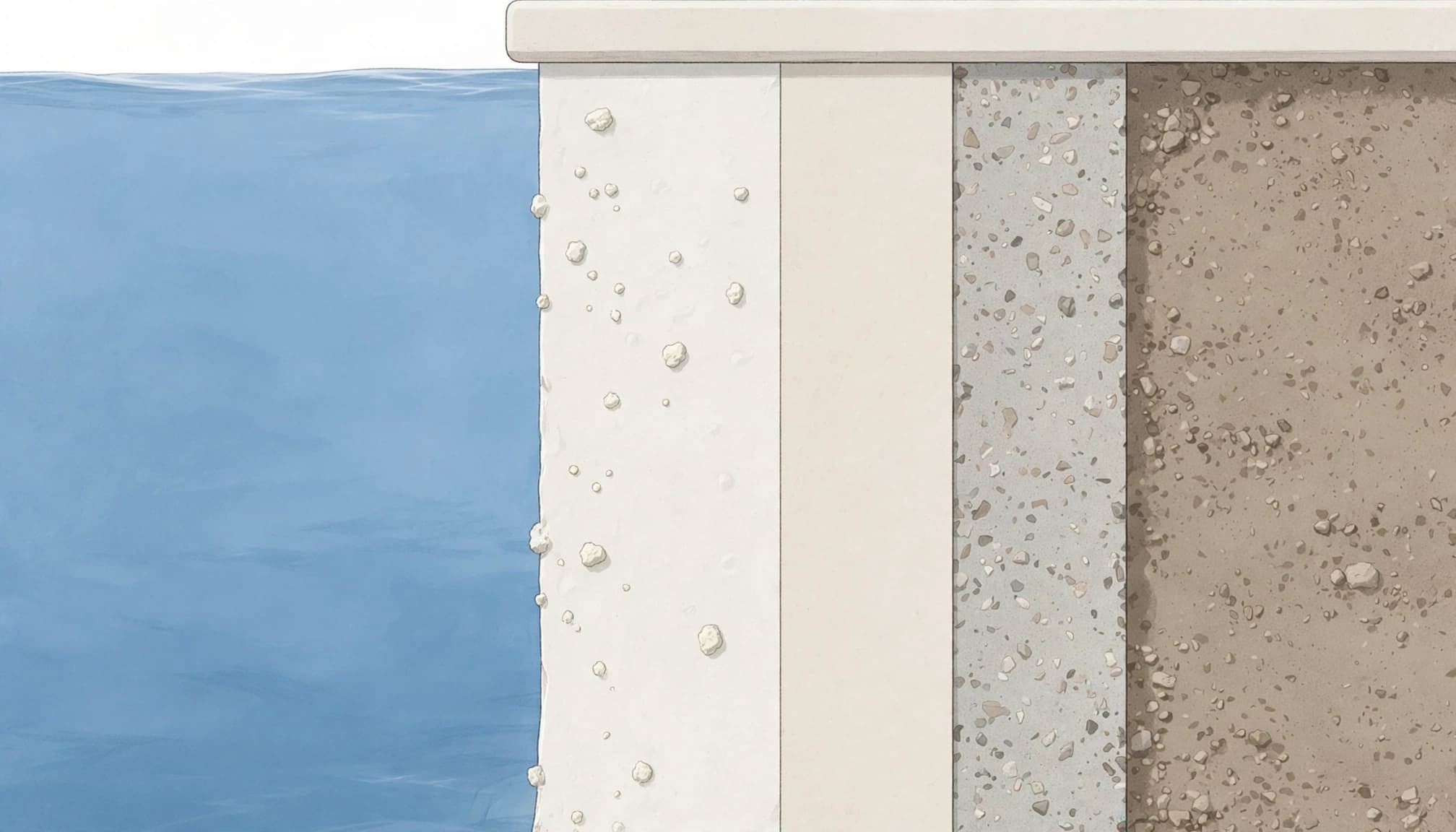
The inside surface of a gunite pool is usually a finish applied over the structural concrete shell. Plaster, quartz, or pebble aggregate creates the visible surface, while the shell provides the structure. A bump on the finish doesn't automatically mean the shell is damaged.
A white bump isn't a confirmed diagnosis
Calcium deposits and scale can occur when pool water is out of balance. However, a white or rough-looking spot could have another explanation, and its appearance alone can't identify its composition or cause. Even several similar-looking bumps don't prove that the entire finish is failing.
Water chemistry is useful context, not a visual diagnosis. Keep a record of recent test results, including pH, alkalinity, and calcium hardness, and note changes in the pool or its maintenance routine.
The finish and shell have different roles
A plaster or aggregate finish covers the gunite shell. Surface wear may call for finish work, while a structural crack or leak needs a different evaluation. Resurfacing can replace a worn interior layer, but it doesn't repair a shifted shell or plumbing leak.
For that reason, pool calcium nodules shouldn't be treated as proof that resurfacing is needed. Our guide to choosing a gunite pool finish in Fort Myers describes common finish options and the broader signs that can warrant an evaluation.
Look for Other Changes Around the Pool
The number, location, and progression of surface changes help provide context, though they still can't establish a cause on their own. Look at the full pool rather than focusing on one bump.
Check for changes beyond isolated spots
During routine cleaning, notice whether roughness or discoloration is limited to a few areas or appears across larger sections. Persistent stains, flaking, exposed aggregate, hollow-sounding areas, and widespread deterioration are more concerning than a few isolated marks.
Also look at the steps, benches, returns, drains, fittings, waterline, and coping joints. Repeated deposits, cracked grout, loose tile, or rust-colored marks deserve attention, especially if they appear alongside other changes.
Pay attention to cracks, hollow areas, and water loss
A widening crack, a crack that crosses a wall, or one near a fitting needs prompt professional review. The same applies to hollow spots, separation around drains or skimmers, rust-colored stains, or water loss beyond ordinary evaporation and splash-out.
These signs don't all point to the same problem. For example, a finish issue and a structural concern require different responses. Our article on gunite curing and plaster timing in Punta Gorda notes that hairline marks can appear in gunite, but homeowners shouldn't assume a crack is harmless.
Practical, Cautious Next Steps
Start with observation and routine water testing. Don't try to determine the cause by chipping into the finish or applying a strong cleaner. Aggressive scraping and unapproved chemical treatments can damage the surface and make a later assessment harder.
Take clear photos of the bumps from the same angle over time. Record where they appear, whether they spread, and any related changes in texture, staining, water level, or tile and grout. In Southwest Florida, heavy rain can dilute pool chemicals, so recent rainfall may be useful context when reviewing test results.
Test the water and keep the results with your notes. Pay attention to pH, alkalinity, calcium hardness, and sanitizer, but don't make large adjustments based on a generic schedule. The appropriate care depends on the pool, water source, sanitizer system, and finish. Follow the product-specific care instructions provided for your pool.
If the bumps persist, multiply, or occur with cracks, loose material, hollow areas, recurring deposits, or unusual water loss, arrange an evaluation by a qualified pool professional. Ask for an assessment of the finish and shell before deciding on repair or resurfacing. A finish replacement shouldn't be used to cover an unresolved structural or plumbing issue.
Key Takeaways
- A bump that looks like calcium isn't confirmed by appearance alone.
- Water balance can contribute to calcium deposits, but it doesn't explain every raised spot.
- Track changes, test the water, and avoid scraping or strong chemical treatments.
- Widespread roughness, cracks, hollow areas, rust stains, or unexplained water loss call for professional assessment.
Frequently Asked Questions
Do calcium nodules mean my pool needs resurfacing?
No. A few raised spots don't establish that the finish has reached the end of its service life. Resurfacing decisions should account for the overall finish condition, such as widespread roughness, flaking, persistent stains, exposed aggregate, hollow areas, or broader deterioration.
Can I scrape off a suspected calcium nodule?
Avoid aggressive scraping or chiseling. These methods can damage plaster or aggregate and may leave a rough patch without identifying the cause. Likewise, don't apply an acid or other strong chemical treatment unless a qualified professional has identified a suitable approach for the specific finish.
Take Surface Changes Seriously, Without Guessing
A calcium-like bump is a reason to observe and assess the pool, not to assume the shell has failed or the finish needs replacement. Track the change, keep up with water testing, and get professional help when it appears with broader damage or unusual water loss.