Gunite Curing and Plaster Timing in Punta Gorda
Explore Our Services
Contact Us Today!
(239) 322-9295
A gunite pool shell can look finished long before it is ready for interior plaster. Its readiness depends on hydration and developing structural integrity, not appearance alone.
For Punta Gorda homeowners planning new pool construction in Punta Gorda, patience during this construction process protects a major investment. The pool builder should coordinate the curing process with the approved mix, inspections, weather, humidity, and site conditions before scheduling surface preparation and finish work.
Key Takeaways
- Gunite gains strength through cement hydration, so the shell should remain properly moist during the early curing period rather than being allowed to dry quickly.
- The first seven days often require the closest attention, with watering controlled by the pool builder's documented procedure and Punta Gorda's heat, wind, humidity, and storms.
- A 28-day period is a common concrete strength benchmark, but it does not automatically determine when plaster, tile, coping, decking, or heavy equipment can begin.
- Cracks, soft spots, washed-out areas, exposed rebar, and unusual surface defects should be reported promptly and reviewed before finishing work continues.
- Plaster timing depends on the shell's verified condition, inspections, surface preparation, selected finish requirements, weather, and manufacturer instructions—not a fixed calendar date.
Gunite Curing Time in Punta Gorda: What the Shell Needs
Gunite is a concrete material applied at high velocity over a shaped steel rebar framework. In a gunite pool, concrete hydration, also called cement hydration, needs moisture to develop strength.
A pool shell doesn't "dry" into strength. In fact, letting it dry too quickly can interrupt hydration near the surface and raise the risk of shrinkage cracking or surface crazing.
The first seven days need close attention
The first week after application is often the most sensitive part of the curing process. During this period, the shell can lose moisture quickly, especially in Punta Gorda's sun, heat, and wind.
Your pool builder's documented procedure controls watering, not a neighbor's schedule. It may call for repeated wet curing throughout the day. Homeowners should follow the contractor's direction instead of creating a separate routine.
Full cure and construction readiness are different milestones
Concrete continues gaining strength for weeks, and a 28-day period is widely used as a benchmark for compressive strength. It isn't a universal date for every step. Structural strength, inspections, surface preparation, and plaster timing are separate milestones.
Some work may proceed before the shell reaches full design strength. The builder, engineer, and applicable product instructions must support that timing. An interior finish coating shouldn't be scheduled solely because a calendar date has passed. Plaster, tile, coping, decking, and heavy equipment should follow the shell's actual condition, not a date circled on a calendar.
What Controls the Gunite Curing Schedule
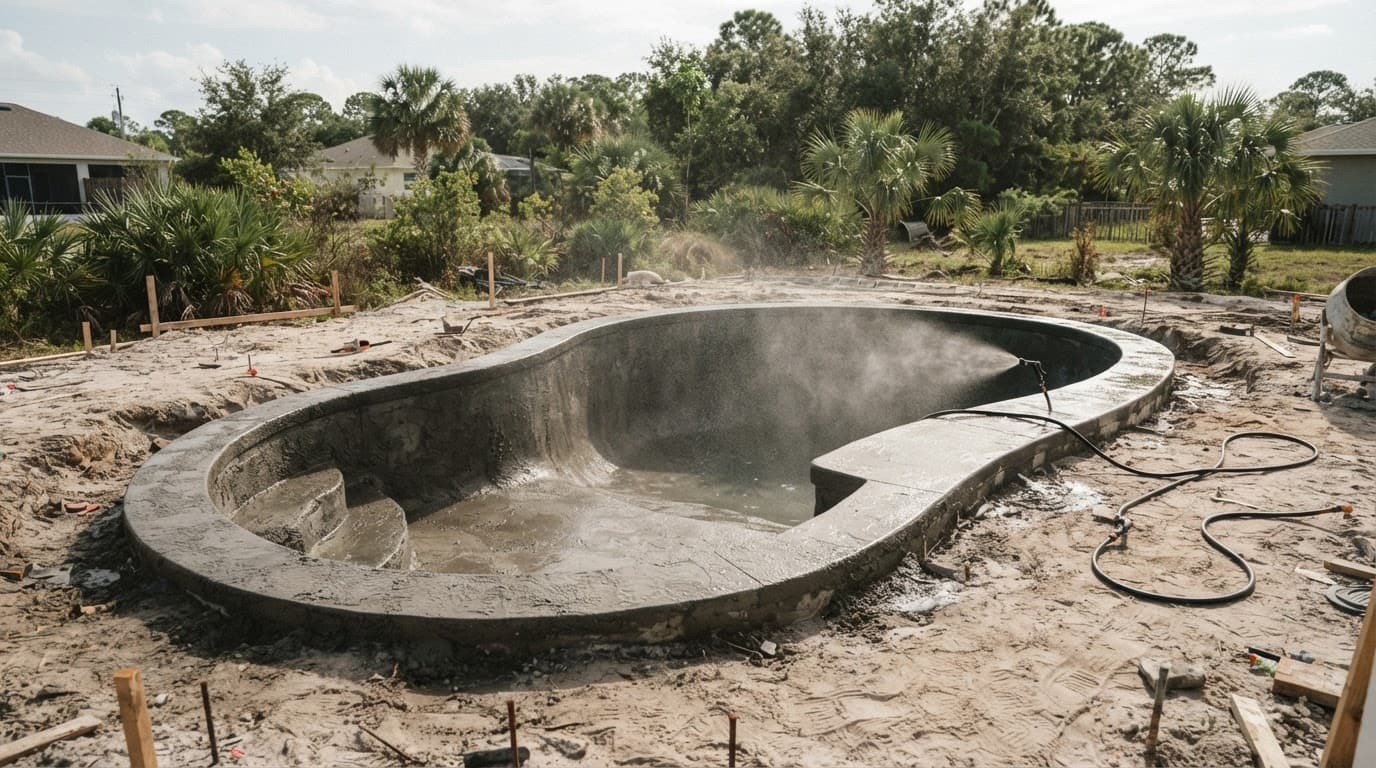
No two pool shells cure under identical conditions. A gunite pool in Punta Gorda may face sandy soil, limited shade, active summer storms, or high groundwater. Each factor can affect the pool construction sequence and curing process.
The pool shell's concrete mixture and application quality also matter. A pool builder should set the timeline using project documents and site conditions. Curing considerations include ambient temperature, humidity, wind, and groundwater.
Mix design, thickness, and steel support
A concrete mixture contains cement, aggregate, water, and approved admixtures. Its proportions and moisture content can change working time and strength development. The nozzle operator's technique also affects density and compaction.
Shell thickness matters because thicker areas retain heat and moisture differently than thinner walls or steps. Curves, benches, spas, and raised features can add complexity to the curing plan.
Steel rebar provides the internal framework that helps the shell carry loads and resist movement. Reinforcement and proper curing work together as the concrete develops its specified compressive strength. The builder or engineer should control this performance measure rather than assume the shell is ready on a fixed date.
Heat, rain, and site conditions can move the date
Punta Gorda's summer heat, humidity, and wind can pull moisture from exposed gunite faster than expected. Changing daily conditions may cause contractors to adjust watering intervals or protect sections of the shell. Those decisions can also affect inspections and the anticipated finish date.
Heavy rain creates a different concern. Light rain after the material has set may add moisture, but torrential rain can wash fines from a fresh surface, create streaking, or damage uncured areas. A builder should inspect the shell after severe weather before moving to the next trade.
Rain is not a substitute for a documented curing plan. Homeowners shouldn't infer readiness from rainfall alone or change the contractor's plan themselves.
Wet Curing During Punta Gorda Heat
For a gunite pool, wet curing keeps the pool shell damp while the curing process supports cement hydration and strength development. Contractors may use hoses, sprinklers, misting, damp coverings, or a combination of methods. The right method depends on the shell, weather, and the pool builder's approved procedure.
During Punta Gorda heat, wind, changing humidity, and sudden storms, some builders may call for wetting the shell multiple times daily, perhaps two or three times or more. This frequency is an example, not a universal rule. The contractor's approved method controls the timing and frequency. Homeowners shouldn't change the schedule because a neighbor's pool followed a different routine.
Water gently and consistently
A strong hose stream or excessive water pressure can gouge an immature surface or wash loose material into drains. Gentle, even application is safer than aggressive spraying. The goal is to maintain consistent moisture content without pooling water that could create another problem.
Watering can occur during the hottest part of the day if the contractor's curing plan calls for it. Timing should account for ambient temperature and changing weather. However, the crew should avoid abrupt changes in water temperature and high-pressure application. Cool water on a sun-heated shell should be introduced gradually.
Protect the shell from rapid drying
Fresh gunite needs more protection than a quick daily rinse. Crews may adjust for sun exposure, wind patterns, or areas that dry faster, such as raised walls and tanning ledges.
Keep pets, children, lawn equipment, and stored materials away from the shell during curing. Avoid standing on benches, dragging hoses across sharp edges, or placing heavy items on the bond beam. Those habits can damage green concrete before it develops adequate strength. Follow the approved curing instructions before later trades begin.
Cracks and Surface Defects Need a Prompt Review
Small hairline marks can appear on a gunite pool's concrete surfaces. No homeowner should assume every crack is harmless. Surface crazing may be superficial, but only the pool builder or another qualified professional can determine whether a mark needs repair.
Call the builder promptly if cracks widen, extend across a wall, or appear near fittings. Also report patterns around steps and raised features, along with changes in the pool shell. Report soft spots, loose material, unusual discoloration, exposed rebar, washed-out areas, or rough patches that differ from the surrounding shell.
Why rushing creates expensive problems
If the curing process ends too early, the concrete may lose moisture before cement hydration has progressed as planned. The surface can become weaker, more porous, or more prone to shrinkage cracking. These defects can affect the shell's structural integrity, and later finishes may hide them without correcting the underlying issue.
Rushing plaster timing can also lock in moisture-related defects. Once the interior receives a finish coating, inspection and repair become more involved. It is less expensive to pause, review, and correct concerns while the shell remains accessible.
Weather delays are part of responsible construction
A delayed plaster date can feel frustrating when the pool is close to completion. Yet a schedule change after extreme heat, heavy rain, strong wind, or drying concerns may be responsible. A visible defect can also justify a pause in the construction process.
Ask your builder what was inspected after the event and whether repairs are recommended. Also ask how the decision affects surface preparation and plaster timing. Clear answers should include the next step, not only a revised date.
When Tile, Coping, Decking, and Plaster Can Begin
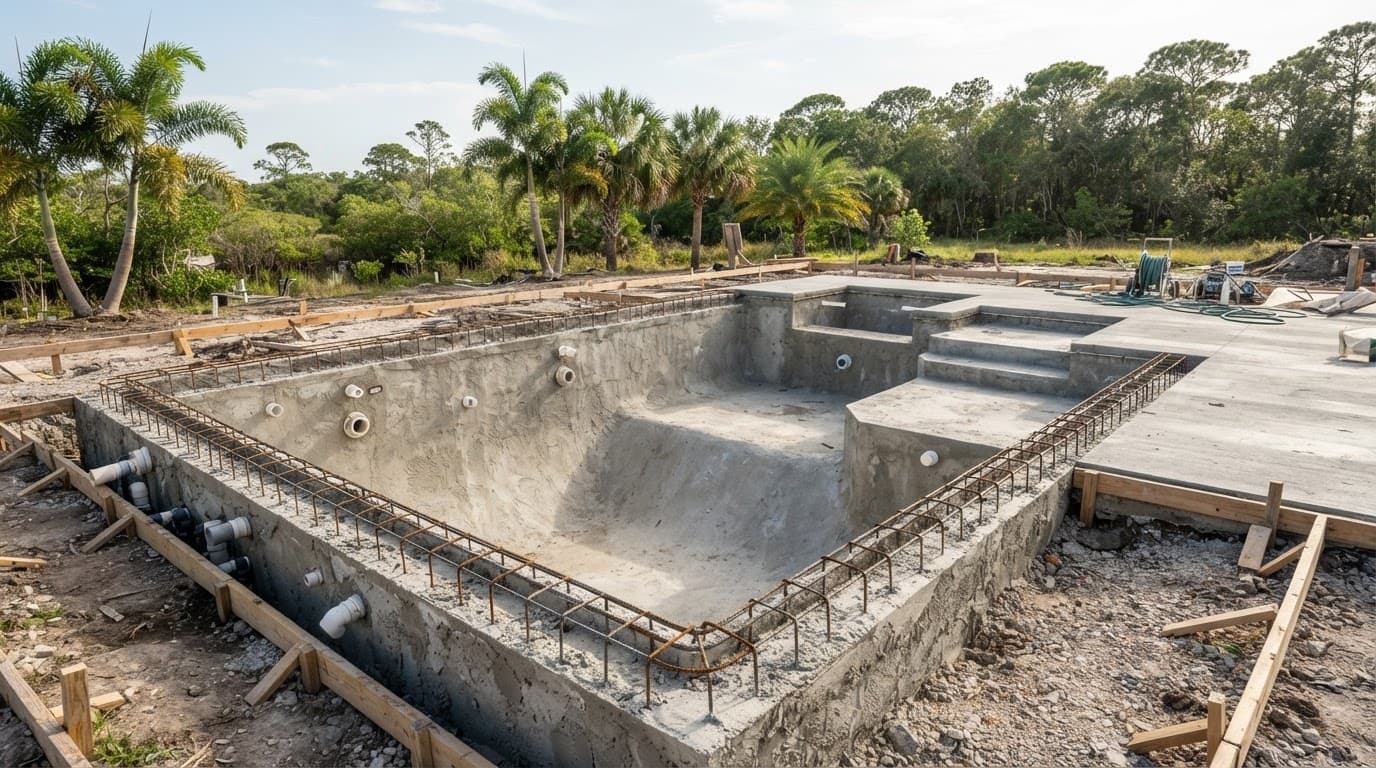
The gunite pool shell is the structural base for every finish that follows. Tile, coping, waterline details, pavers, drainage, and plaster all depend on its condition, so the pool builder should coordinate each trade around inspections and the design sequence.
There is no one-size-fits-all answer for when plaster goes on a Punta Gorda pool. During pool construction, a cured shell may be ready for one activity while its surface still needs inspection, cleaning, approved repairs, or preparation. Homeowners should confirm the actual shell condition, weather outlook, humidity, selected finish, and manufacturer's instructions with the contractor.
Tile and coping should follow verified shell readiness
Tile, coping, and other perimeter materials add material and labor along the pool edge. Raised walls, spillways, fire features, or thick stone pieces may add loads. Documented compressive strength results or engineering guidance can help assess readiness. Before work begins, the contractor should confirm steel rebar and other reinforcement. The shell must have the structural strength needed for planned work.
Deck work also needs careful coordination. Equipment access, deck drainage, expansion joints, and the connection between coping and pavers all affect the construction process. A well-planned poolside lanai design in Punta Gorda should support the overall pool design and account for these details before finishes make changes harder.
Pool plaster is a final interior finish
Pool plaster, pebble finishes, and other interior coatings need a clean, prepared shell. The selected finish coating has manufacturer-specific requirements for surface preparation, application, pool filling, water temperature, and startup. Before application, the contractor may inspect the surface, address approved repairs, verify tile work, and confirm that plumbing and fittings are ready.
After application, the pool is filled according to the finish manufacturer's instructions. Water chemistry then needs close management during the startup period. Homeowners shouldn't drain or refill a newly finished pool without direction from the contractor, since that can damage a fresh interior surface.
Questions to Ask Your Punta Gorda Pool Builder
Good communication with your pool builder prevents confusion when weather, humidity, rain, heat, or moisture-management concerns change the construction calendar. Ask the project manager responsible for records to provide written answers when a schedule adjustment affects a major milestone.
- What concrete mixture, shell thickness, and steel rebar schedule were specified for this gunite pool? What curing period do those records support?
- Who is responsible for documenting the curing process, and what procedure was followed during hot or windy days?
- What moisture content readings and inspection notes confirm the pool shell is ready for the next trade, including tile and coping?
- After storms or rapid drying, what did the team inspect, and how were the findings documented?
- What cracking or surface marks require repair or engineering review to confirm the shell's structural integrity before finishing begins?
- Which plaster product is planned, and what surface preparation does its interior finish coating require? Please provide the product data sheet, installation instructions, and startup directions.
- Which pool construction documents and milestones control the planned finish date, including inspections, engineering requirements, drainage work, and equipment access?
A reliable answer describes the condition of your specific shell and the records supporting it. If a contractor offers only a blanket date, request the mix information, inspection notes, repair recommendations, product data sheet, installation instructions, and startup directions. A schedule should reflect documented readiness, not a fixed number of days.
Frequently Asked Questions
How long does gunite need to cure before plaster?
A 28-day period is commonly used as a concrete strength benchmark, but it is not a universal plaster date. The pool builder should confirm that the shell has been inspected, properly prepared, and meets the selected finish manufacturer's requirements.
How often should a gunite pool shell be watered?
The contractor's approved curing procedure controls the timing and frequency, which may require wetting the shell multiple times daily during Punta Gorda's heat. Homeowners should use gentle, even watering and should not create a separate schedule based on another pool's routine.
Can rain replace wet curing?
Rain is not a substitute for a documented curing plan. Light rain may add moisture after the material has set, but heavy storms can wash fines from fresh gunite or damage uncured areas, so the builder should inspect the shell afterward.
What should I do if I see cracks in the gunite shell?
Report cracks and other unusual marks to the pool builder promptly, especially if they widen, cross a wall, appear near fittings, or occur with soft spots or exposed rebar. A qualified professional should determine whether the condition is superficial or requires repair or engineering review before finishes begin.
A Better Pool Finish Starts With a Patient Shell
A beautiful pool plaster finish on a gunite pool depends on a sound pool shell and concrete base. A finish coating can't compensate for an inadequately prepared or improperly managed base.
The gunite curing time may shift with Punta Gorda weather and site conditions. Confirm schedule changes and curing documentation with your pool builder, since weather, humidity, rain, heat, moisture management, builder instructions, and manufacturer requirements can all affect timing.