Manual vs. Automatic Generator Transfer Switches for Naples Homes
Explore Our Services
Contact Us Today!
(239) 322-9295
A power outage can affect far more than lighting in a Naples custom home. Refrigeration, air conditioning, pool equipment, internet, and security systems may all depend on backup power, but the right transfer switch depends on how you want the system to work.
Manual and automatic generator transfer switches connect a generator to a home's electrical system while keeping utility and generator power from feeding the same circuits at once. The practical choice comes down to how much backup power you need, whether someone can respond during an outage, and how much convenience you want built into the home.
Key Takeaways
- A manual transfer switch requires someone to start and operate the generator and transfer the selected circuits.
- An automatic transfer switch is designed to manage the changeover with a compatible standby generator, reducing the need for someone to be home.
- Neither switch determines how much power the home receives. The generator, electrical design, and backed-up loads do.
- In Naples, site drainage, salt air, storm exposure, fuel access, and service clearance belong in the plan.
- Have a qualified local electrician size and install the system, with transfer equipment matched to the generator and home electrical design.
How manual and automatic transfer switches differ
Both switch types manage the connection between a generator and home circuits. The key difference is who initiates the changeover.
Manual transfer puts the homeowner in control
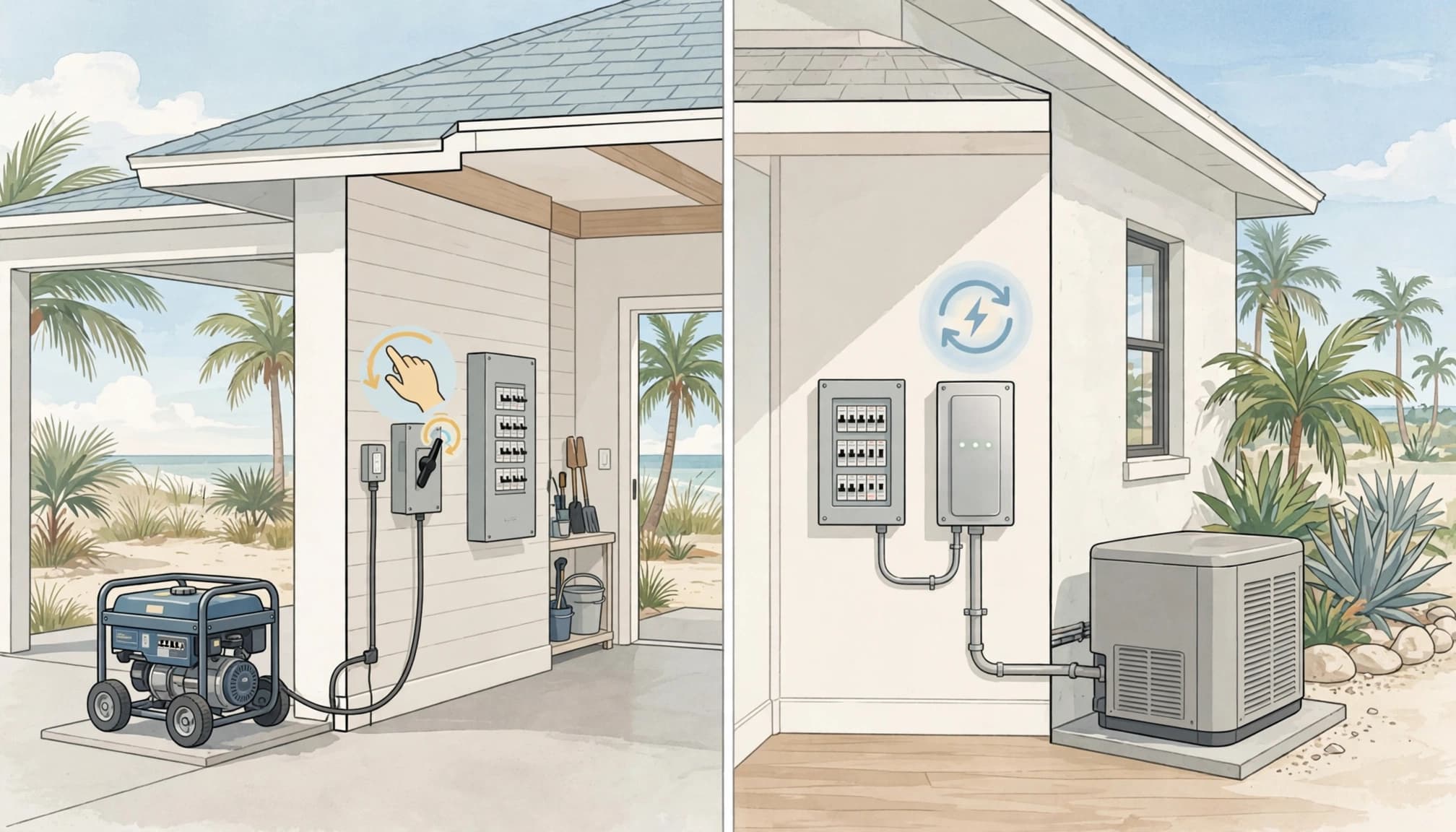
A manual transfer switch is operated by a person after an outage. In a typical setup, the homeowner starts a compatible generator and uses the switch to supply selected home circuits. When utility power returns, the homeowner follows the system's operating procedure to change back.
That hands-on process can suit a household that expects someone to be home and is comfortable following the generator manufacturer's instructions. It also means backup power may not be available until someone notices the outage and operates the equipment.
Automatic transfer reduces hands-on steps
An automatic transfer switch works with a compatible permanently installed standby generator. The system detects a loss of utility power and manages the generator start and electrical changeover according to its design. When utility service returns, it can return the home to utility power.
That convenience matters if the home is often empty, if residents have limited mobility, or if an outage happens overnight. The equipment still needs appropriate maintenance and a correctly designed installation. Automatic operation doesn't compensate for an undersized generator or circuits the system wasn't built to support.
Compare convenience with the way you use the home
The switch type affects what happens during an outage, but it also shapes daily planning. Consider who will operate the equipment and how much control you want over backed-up circuits.
When manual operation may suit your household
A manual setup can fit a homeowner who wants to power a defined group of circuits and is available to operate the generator. Because a person manages the response, you can make deliberate choices about which circuits receive power, within the system's approved design.
However, someone must be present and able to use the equipment safely. That can be difficult during a storm, while traveling, or when roads and outdoor conditions are poor. A portable generator also requires safe outdoor use and appropriate protection from rain and flooding.
When automatic operation is worth considering
An automatic system is designed for people who want the home to respond to an outage without requiring someone to switch the system manually. That can be useful for a primary residence with essential equipment, or a home that sits empty for stretches of time.
The convenience depends on more than the switch. The standby generator needs a suitable fuel supply, a safe outdoor location, and enough capacity for the loads selected. It also adds equipment and installation work, so include the full system in the home budget rather than comparing switch prices alone.
Choose backup loads before choosing equipment
A transfer switch doesn't create power. The generator supplies the power, while the electrical plan determines which home circuits can use it.
Decide what must keep working
Start with the needs that matter most during an outage. Refrigeration, selected lighting and outlets, internet equipment, garage access, and some air-conditioning capacity may be priorities. A household with medical equipment or other essential systems may have different requirements.
Large equipment affects the plan. Air-conditioning startup demand, pool pumps, electric water heaters, ranges, EV chargers, and solar equipment can change the electrical calculation. A home labeled "whole-house backup" doesn't necessarily mean every appliance can operate at the same time. The design may use load management or prioritize selected circuits.
Match the generator and transfer equipment
The electrician needs to coordinate the generator model, transfer switch, service equipment, panel schedule, grounding plan, and load calculation. The transfer switch rating and location must suit the electrical system and the generator. The switch also needs to isolate the home's circuits from utility power while generator power is in use.
Discuss planned features early, especially a pool, spa, outdoor kitchen, EV charger, or future battery system. These choices can affect circuit routes and panel capacity. For new construction, coordinate generator backup with electrical design before plans and site work are finalized.
Understand the full cost, not just the switch
There isn't one reliable price for a manual or automatic setup. Cost depends on the generator, backed-up loads, electrical service, site conditions, fuel arrangement, and installation scope.
What may be part of the budget
A manual setup may include a compatible portable generator, transfer equipment, electrical connections, and work to support the selected circuits. An automatic standby system typically includes a permanently installed generator and automatic transfer equipment, plus the work needed to connect and support them.
Budget discussions can also include a generator pad or support, conduit, fuel piping, trenching, regulators, propane tank work, permits, and inspections. A long fuel route or a driveway crossing can add work. Landscaping and finished paving may make later access more difficult, so account for the full route during design.
Why early planning helps control changes
The equipment quote is only one part of the project. If generator decisions come after the driveway, grading, or outdoor living areas are complete, changing routes or equipment locations may disrupt finished work.
For a custom home, include generator and transfer equipment decisions alongside the electrical design. That gives the builder and electrician a chance to coordinate the loads, fuel, pad, access, and other site features before they become construction changes. During a remodel, review existing panel capacity and the intended circuit plan before work begins.
Plan for Naples weather and the property
Southwest Florida conditions influence where equipment can sit and how people can reach it after construction. A dry-day site plan may not account for stormwater, wind-driven rain, or debris.
Keep the installation accessible and exposed to open air
A permanent generator needs a location that supports safe exhaust, airflow, service, and fuel access. Keep service doors and shutoffs accessible after landscaping, fencing, and outdoor improvements are finished. Avoid placing equipment where dense planting, a future screen enclosure, or stored items could block access or ventilation.
Salt air can affect exposed metal components, while standing water can threaten equipment and electrical connections. The site plan should account for drainage and flood exposure. Generator placement should also keep exhaust away from doors, windows, vents, and other openings. A garage, carport, or screened porch isn't a safe operating location for a generator.
Coordinate location, fuel, and electrical routes
Plan the generator pad, transfer switch, fuel route, and electrical conduit together. The fuel shutoff and any emergency shutdown equipment need to remain accessible once the yard is complete. Keep these items visible on the project plan so landscaping and hardscaping don't obstruct future service.

For new construction, plan home generator placement before construction. On an existing home, the electrician and generator installer can assess how the site, electrical service, and fuel source shape the available options.
Work generator planning into the home design
Generator decisions are easier to coordinate while plans are open and trades can account for equipment routes. That doesn't mean every Naples custom home needs automatic whole-house backup. It means matching the system to the home's planned use before key decisions are locked.
Talk through likely electrical loads, backup priorities, fuel type, panel space, generator location, and service access. If you expect to add a pool, EV charger, or outdoor kitchen later, include those plans in the discussion. A future feature can affect panel capacity, conduit routes, and the loads the generator must support.
As the general contractor, we coordinate project details with the appropriate trades. For electrical sizing and transfer-switch installation, work with a qualified local electrician who can design the system for the home and handle applicable permits and inspections. A custom home electrical walkthrough checklist can also help keep generator and storm-system wiring in view as construction progresses.
Frequently asked questions
Can a manual switch support whole-home backup?
The switch alone doesn't determine that. The generator's capacity, the home's electrical service, the switch design, and the selected loads all matter. An electrician can calculate whether whole-home backup is practical or whether selected circuits and load management make more sense.
Does an automatic transfer switch need a standby generator?
An automatic transfer switch is designed to operate as part of a compatible backup system, commonly with a permanently installed standby generator. The generator, switch, fuel supply, and home electrical equipment must be selected as a coordinated system.
Which option is better during a hurricane-related outage?
That depends on how you expect to use the home and whether someone can operate a manual setup. Automatic operation can reduce the need for someone to be present, while manual control can suit a household prepared to manage the generator directly. Stormwater exposure, fuel availability, and safe access matter with either choice.
Make the choice before the system is built
The right transfer switch is the one that matches your backup priorities, household routines, generator, and electrical design. Manual operation gives you direct control, while an automatic setup reduces the steps needed when power fails.
For a Naples custom home, plan the loads and equipment location alongside construction decisions. A qualified local electrician can size and install the system so the transfer equipment, generator, and circuits work together safely.