Choosing a Gunite Pool Finish in Fort Myers
Explore Our Services
Contact Us Today!
(239) 322-9295
Choosing a gunite pool finish in Fort Myers affects how your pool looks, feels, and ages. Plaster, quartz aggregate, and pebble finishes each create a different surface, color, texture, and maintenance experience.
The right choice depends on your budget, comfort preferences, water chemistry, pool design, and installation quality. A finish that performs well in one backyard may need different care in another. Start by understanding what each material does, then match it to how you plan to use the pool.
What a gunite pool finish actually covers
A gunite pool has several separate construction layers. The reinforced concrete shell provides the structure. Tile, coping, waterproofing details, plumbing, and the interior finish complete the pool system.
The interior finish is the surface you see and touch underwater. It also protects the shell from direct exposure to pool water. Because of that, finish selection matters, but it can't compensate for poor structural work, inadequate preparation, or incorrect water care.
Shell and finish are different decisions
A new gunite pool begins with excavation, steel reinforcement, plumbing, and concrete application. The finish comes later, after the shell has cured and the contractor completes the necessary preparation.
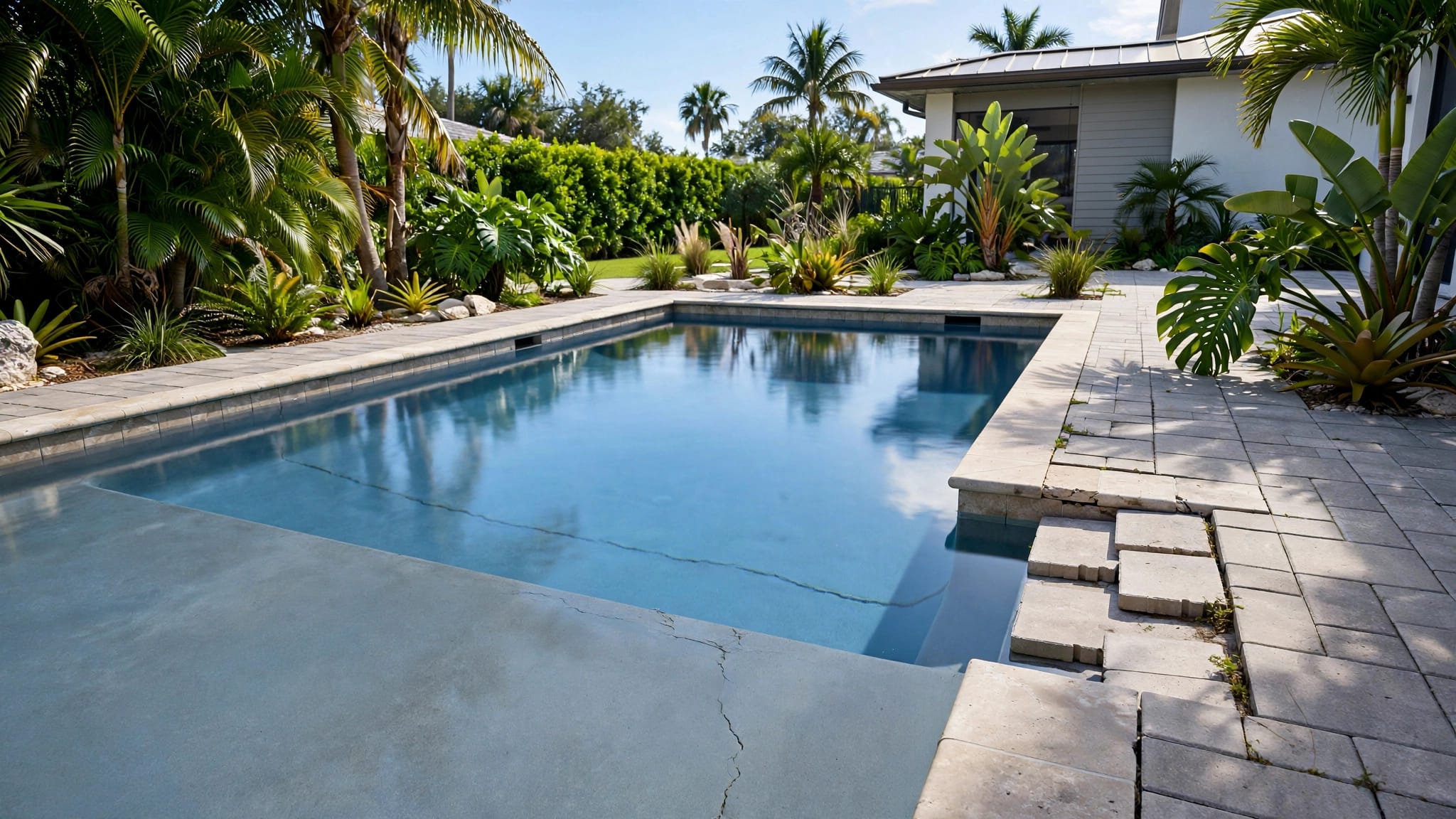
During a renovation, the existing finish may need removal before the new material goes in. The contractor also needs to check for cracks, hollow areas, plumbing problems, and surface damage. Those repairs belong in the scope of work, rather than being hidden beneath a new coating.
Homeowners planning the entire backyard should coordinate the pool with the deck, lanai, drainage, and outdoor living areas. A Fort Myers pool and backyard builder can help coordinate those parts under one construction plan.
Installation controls the starting point
The crew's preparation and application methods affect the finished surface. Important details include the condition of the shell, bonding preparation, material proportions, application thickness, aggregate exposure, curing, and the initial water fill.
Manufacturer specifications also matter. Different products may require different startup procedures, brushing schedules, and chemical targets. Ask for the exact product name and written care instructions before approving the finish.
How to compare a gunite pool finish: plaster, quartz, or pebble
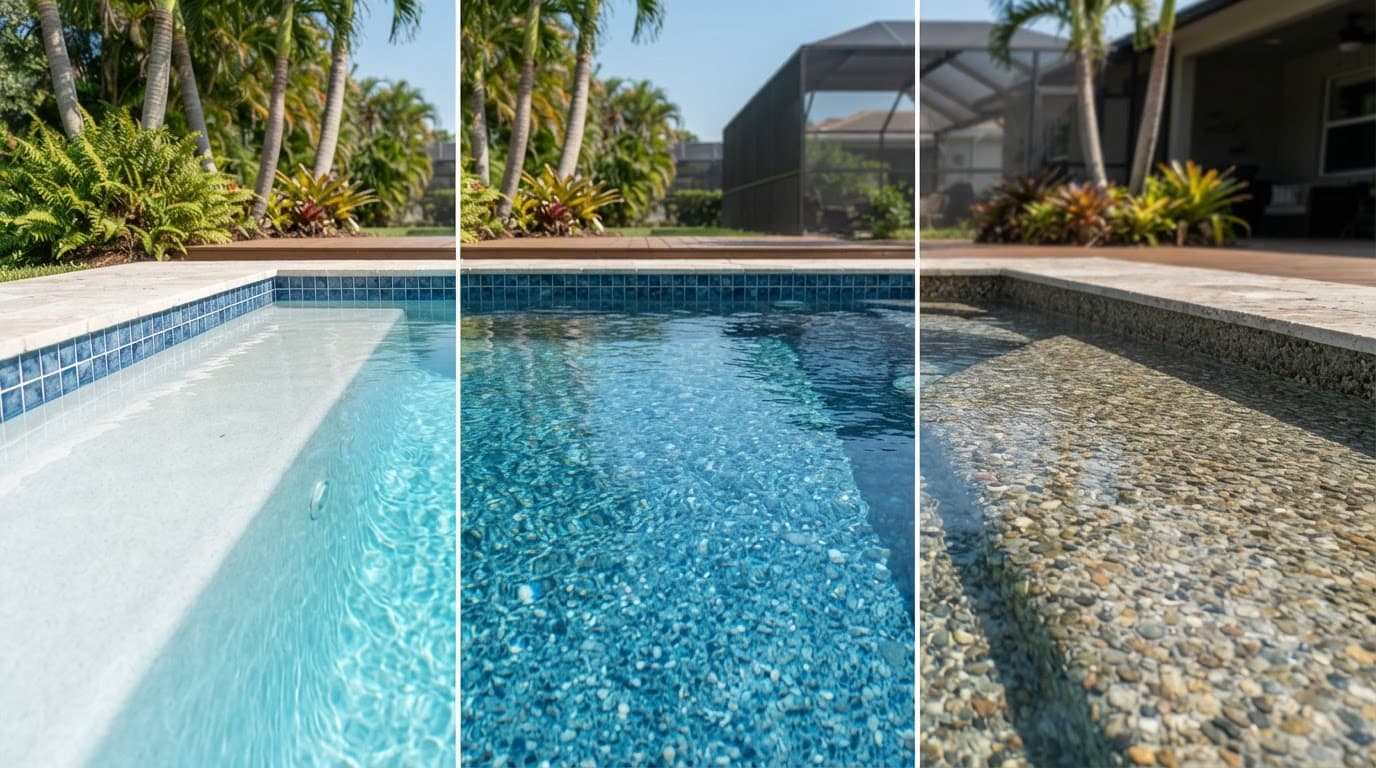
The three main options differ most in texture, appearance, aggregate size, and expected cost. The table below gives a quick comparison before looking at each finish in more detail.
| Finish | Surface feel | Appearance | Typical reason to choose it |
|---|---|---|---|
| Plaster | Smooth | Classic white or colored finish | Lower initial finish cost and soft feel |
| Quartz aggregate | Smooth to lightly textured | More color variation and sparkle | Balance of appearance, texture, and durability |
| Pebble aggregate | Textured | Natural, varied stone appearance | Strong visual character and exposed aggregate |
Traditional plaster
White plaster is the classic gunite pool surface. It typically combines white cement with fine marble-based aggregate, creating a smooth finish that feels comfortable on bare feet.
The water often takes on a light blue appearance, although depth, sunlight, tile, and surrounding colors affect the final result. Plaster also makes surface discoloration, scale, and wear easier to see.
Many homeowners choose plaster because it offers a familiar appearance and a lower starting cost than premium aggregate options. It still needs careful startup and regular chemical balance. Poor water chemistry can shorten its useful life.
Quartz aggregate
Quartz finishes blend colored cement with quartz aggregate. The particles create more visual variation than plain plaster while maintaining a relatively comfortable surface.
Quartz can produce blue, gray, aqua, and other water colors, depending on the product blend and pool depth. It often appeals to homeowners who want a more distinctive finish without the stronger texture of pebble.
Quartz is often treated as a middle option, but the actual price and performance depend on the product, application, and contractor. Review the manufacturer's specifications instead of assuming every quartz finish has the same characteristics.
Pebble aggregate
Pebble finishes expose rounded or tumbled stone across the pool interior. They create a natural appearance with more texture and color variation than plaster or quartz.
The feel ranges from comfortable to noticeably rough, depending on the pebble size, polishing, and exposure. A mini-pebble product may feel different from a larger exposed aggregate finish.
Pebble generally costs more than standard plaster because of the material and installation work. It can be a strong choice for a resort-style backyard, but homeowners should test samples with their feet before choosing it for a large tanning ledge or swim area.
How Fort Myers conditions affect finish selection
Fort Myers pools face strong sunlight, warm temperatures, heavy rain, humidity, and long periods of outdoor use. Those conditions don't automatically make one finish correct for every home, but they do make water care and color selection more important.
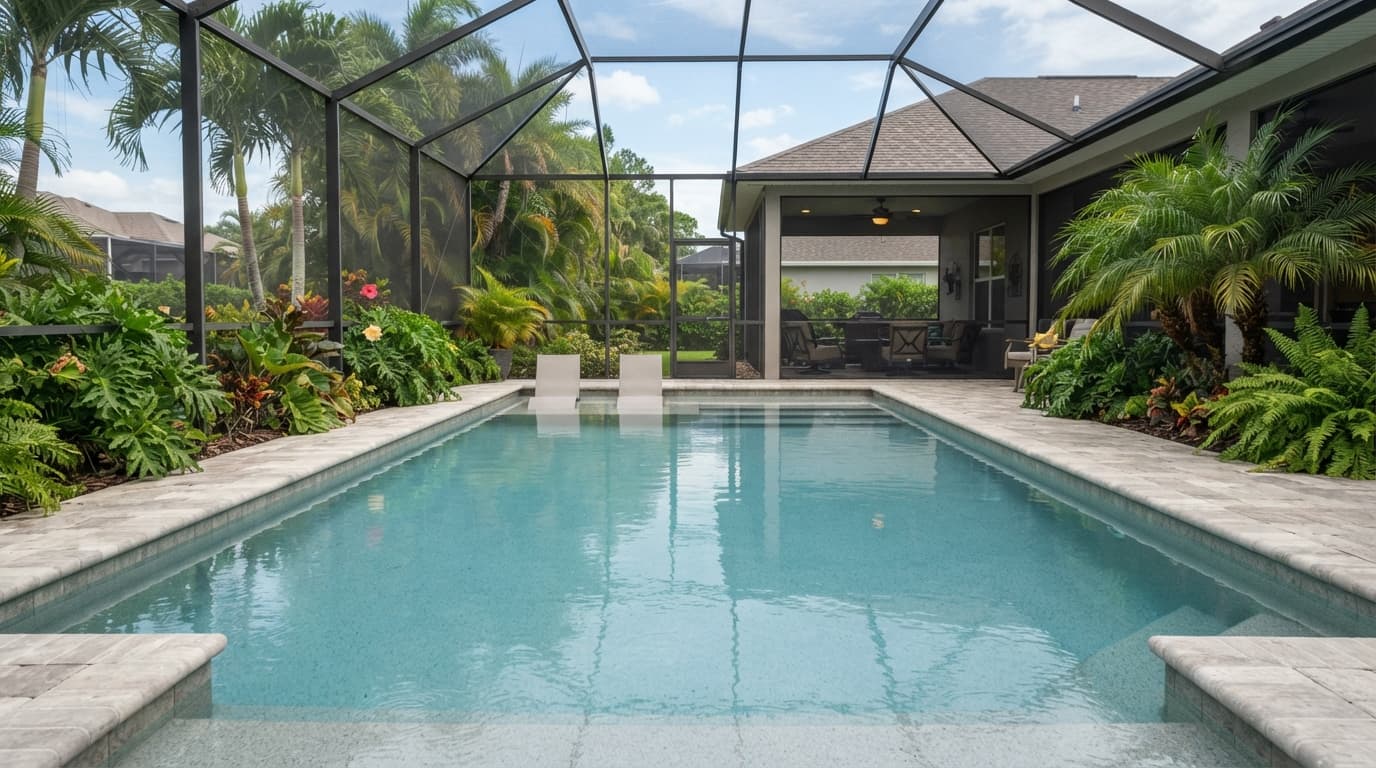
A screened enclosure can reduce leaves and debris, although it doesn't eliminate rain, dust, pollen, or minerals entering the water. Nearby palms and landscaping also affect cleaning needs.
Sun, heat, and water color
Light finishes often produce a bright, clear pool color. White plaster can look pale blue in shallow water and a stronger blue in deeper sections. Blue and gray aggregates create different results depending on the amount of sunlight and the depth of the pool.
Darker finishes can make water appear deeper and may absorb more solar heat. They can also show mottling, mineral deposits, or color variation in ways that differ from a white surface. Ask to see wet samples in natural light, not only small dry samples indoors.
Your deck, roof, screen enclosure, exterior paint, and landscaping will frame the water. A finish that looks attractive by itself may not work with the colors already planned for the home.
Rain, fill water, and salt systems
Frequent rain can dilute pool chemicals and introduce organic debris. Fill water may also contain minerals that contribute to staining or scale, depending on the property's water source.
Before startup, ask whether the contractor recommends testing the fill water. The pool service plan should account for pH, alkalinity, sanitizer, calcium hardness, and other chemistry targets required by the finish manufacturer.
Saltwater systems still require balanced chlorine and routine testing. They don't remove the need to monitor the pool. In addition, the equipment and finish should be selected as a complete system rather than as unrelated upgrades.
Comfort and color should fit daily use
A pool finish is a design decision, but it is also a surface you will walk across. Steps, benches, tanning ledges, and shallow play areas make comfort more noticeable than a deep swimming section.
Texture preferences vary between households. Some homeowners like the natural character of pebble. Others prefer the smoother feel of plaster or quartz, especially when children spend time on the steps.
Match texture to how you use the pool
If you regularly sit on a tanning ledge, place your feet on a bench, or walk across a broad shallow area, ask for a physical sample. Rub the sample with your hand and foot if possible. Photos can't show how the surface will feel after installation.
A textured finish may feel different depending on aggregate size, polishing, and application. Even two samples labeled as pebble can have noticeably different surfaces. Your contractor should identify the product and finish grade in the proposal.
Also consider cleaning access. Steps and ledges collect sunscreen, leaves, and fine debris. Their shape and circulation design may affect your experience as much as the finish itself.
Choose the color with the whole backyard in mind
Water color comes from more than the aggregate. Pool depth, sunlight, interior shape, tile, coping, deck color, and surrounding plants all affect what you see.
Ask for completed pool photos that use the same or similar finish. Look for examples in bright sun and shade. A blue finish under a Fort Myers screen enclosure may look different from the same product photographed in another climate.
Color variation can occur in cementitious finishes. Proper application and water care reduce problems, but they don't make every surface perfectly uniform. A written product description should explain the expected range.
Maintenance determines how the surface performs
Actual performance depends on installation quality, water chemistry, cleaning, use, and manufacturer specifications. No finish stays in good condition without regular care.
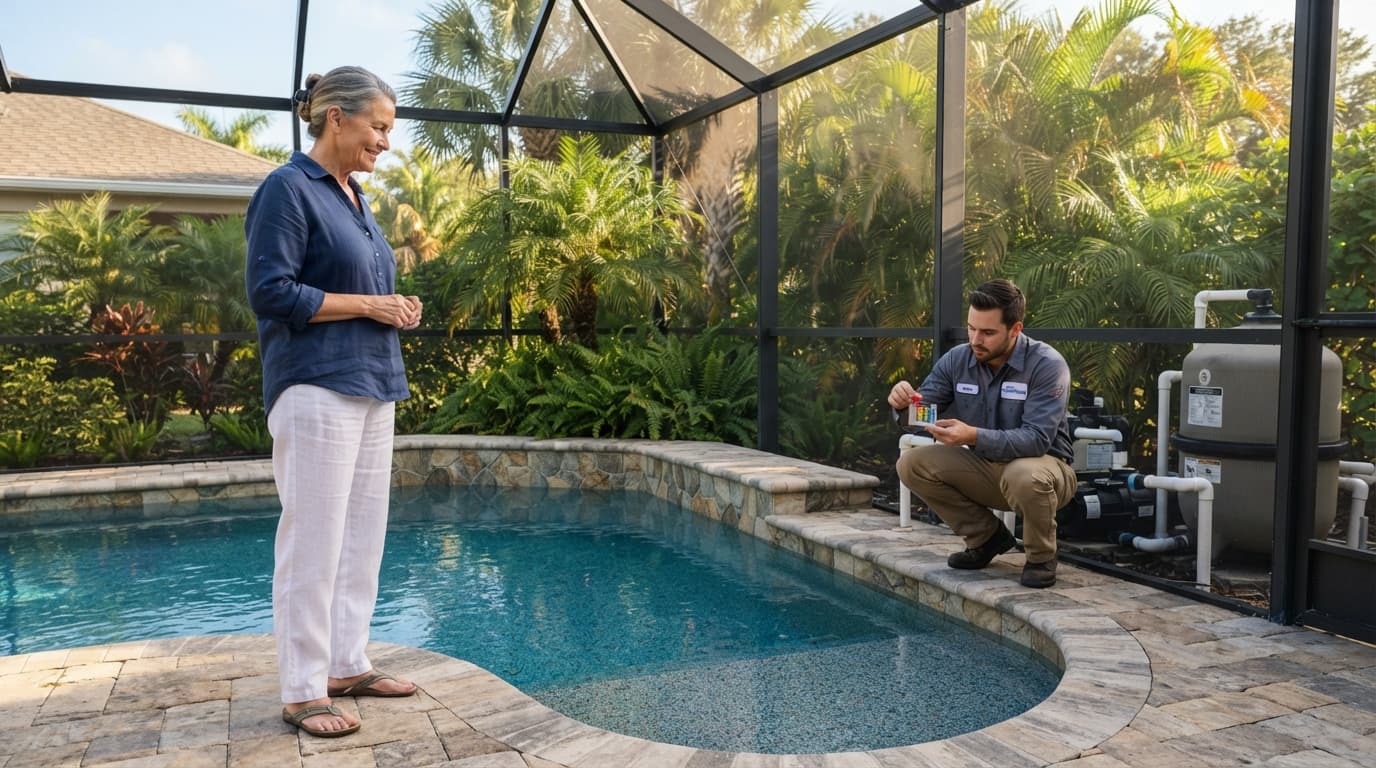
This point matters during the first fill. New plaster and aggregate finishes need a product-specific startup process. The contractor or pool service provider may provide instructions for filling, brushing, testing, and adding chemicals.
Give the new finish a careful startup
Ask who will monitor the pool during the startup period. Confirm how often the water will be tested and whether the contractor provides written records.
Water that is too aggressive can contribute to etching or material loss. Water that is out of balance in another direction can contribute to calcium deposits and scale. Early care gives the surface a better start, but the exact procedure should come from the product manufacturer and installation team.
Ask how startup chemistry affects the finish warranty. A written care schedule is more useful than a verbal promise to "watch the water."
Don't add chemicals based on a generic internet schedule when the finish manufacturer provides different instructions. The pool's size, water source, sanitizer system, and finish product all affect the proper approach.
Build routine care into your ownership plan
Regular care usually includes testing and balancing the water, brushing the walls and floor, cleaning baskets and filters, and checking the equipment. The cleaning schedule may need adjustment during rainy periods or when surrounding trees shed more debris.
Inspect the waterline and steps during routine cleaning. Early signs of scale, staining, discoloration, or roughness are easier to address than widespread surface problems.
Automatic cleaners and salt systems can reduce some daily work, but they don't replace inspection. A pool service company should follow the finish manufacturer's limits for chemicals and cleaning equipment.
Budget, installation, and resurfacing considerations
Finish cost is only one part of a gunite pool budget. The total project may also include excavation, shell construction, plumbing, tile, coping, deck work, screen enclosure, equipment, permits, drainage, lighting, and water features.
For broader planning, review this guide to Southwest Florida pool construction costs. It can help separate finish decisions from the larger construction budget.
Compare the complete scope, not one allowance
A lower finish allowance may look attractive until preparation, upgrades, or startup service appear as separate charges. Ask each contractor to identify the finish material, color, aggregate size, application method, surface preparation, startup care, and warranty terms.
Pebble often has a higher upfront cost than standard plaster. Quartz pricing depends on the product and installation details. Plaster can reduce the initial finish expense, but long-term value also depends on water care and how long the surface meets your expectations.
For a new home, coordinate the pool plan before finalizing grades and drainage. For a renovation, request a separate line for removal, repairs, tile, coping, finish application, and cleanup. If the pool location is still being planned, review the Fort Myers pool setback requirements before construction drawings are finalized.
Plan for future resurfacing
Every pool finish eventually requires evaluation and possible resurfacing. The timing varies with the product, installation, water chemistry, cleaning, and use.
Common warning signs include widespread roughness, persistent stains, exposed aggregate, flaking, hollow areas, and visible deterioration. A few isolated marks don't always mean the entire pool needs a new finish.
During resurfacing, the contractor should determine whether the problem is limited to the interior surface. Shell movement, plumbing leaks, drainage problems, or structural cracks need separate attention. Applying a new finish over an unresolved issue can lead to another repair later.
A good renovation plan also considers updated tile, coping, lighting, drains, circulation equipment, and energy use. The finish should fit the pool's condition, not distract from problems beneath it.
Making the final finish decision
Begin with the way your household will use the pool. A smooth plaster surface may fit a simple pool with a traditional appearance. Quartz can suit homeowners who want more color and aggregate detail with a relatively smooth feel. Pebble may fit a natural backyard design where texture and visual variation matter most.
Then compare samples, completed installations, and written specifications. Ask these questions before signing:
- What exact product, color, and aggregate size are included?
- How will the crew prepare the shell before application?
- Who handles startup water care, and for how long?
- What chemistry targets does the manufacturer require?
- How will the finish feel on steps and tanning ledges?
- What does the warranty cover, and what homeowner care does it require?
- If this is a renovation, which shell or plumbing repairs are included?
The strongest proposal connects the finish to the full pool design. It also states what happens if the existing shell needs repair or the selected product becomes unavailable.
Conclusion
Plaster, quartz, and pebble can all work well in a Fort Myers gunite pool. The better choice depends on texture, color, budget, maintenance expectations, and the quality of the installation.
Focus on the complete system rather than the surface alone. A well-prepared shell, correct application, careful startup, balanced water, and regular cleaning have more influence on long-term results than a finish label by itself. Choose the surface that feels right underfoot and fits the way your household will use the pool.