PEX vs copper plumbing for a Bonita Springs Custom Home
Explore Our Services
Contact Us Today!
(239) 322-9295
Choosing between PEX and copper belongs early in the plans, especially when a Bonita Springs custom home will sit on a concrete slab. The right PEX vs copper plumbing decision affects routing, access, repair work, and how the system handles local water and coastal conditions.
Both materials can meet Florida plumbing requirements when the products, fittings, and installation methods follow the approved standards. However, the better choice depends on where the pipes will run, how accessible they will be, and how your home will be used.
PEX vs copper plumbing: the basic difference
PEX is flexible cross-linked polyethylene tubing. Plumbers can route it through framed walls and tight spaces with fewer connections. A manifold, which is a central distribution point with separate lines for fixtures, can send individual runs to bathrooms, kitchens, laundry areas, and outdoor fixtures.
Copper is a rigid metal pipe. Installers join sections with soldered, press-fit, or other approved connections. Copper has a long history in residential construction and remains a strong option where exposed piping, heat, or physical protection matters.
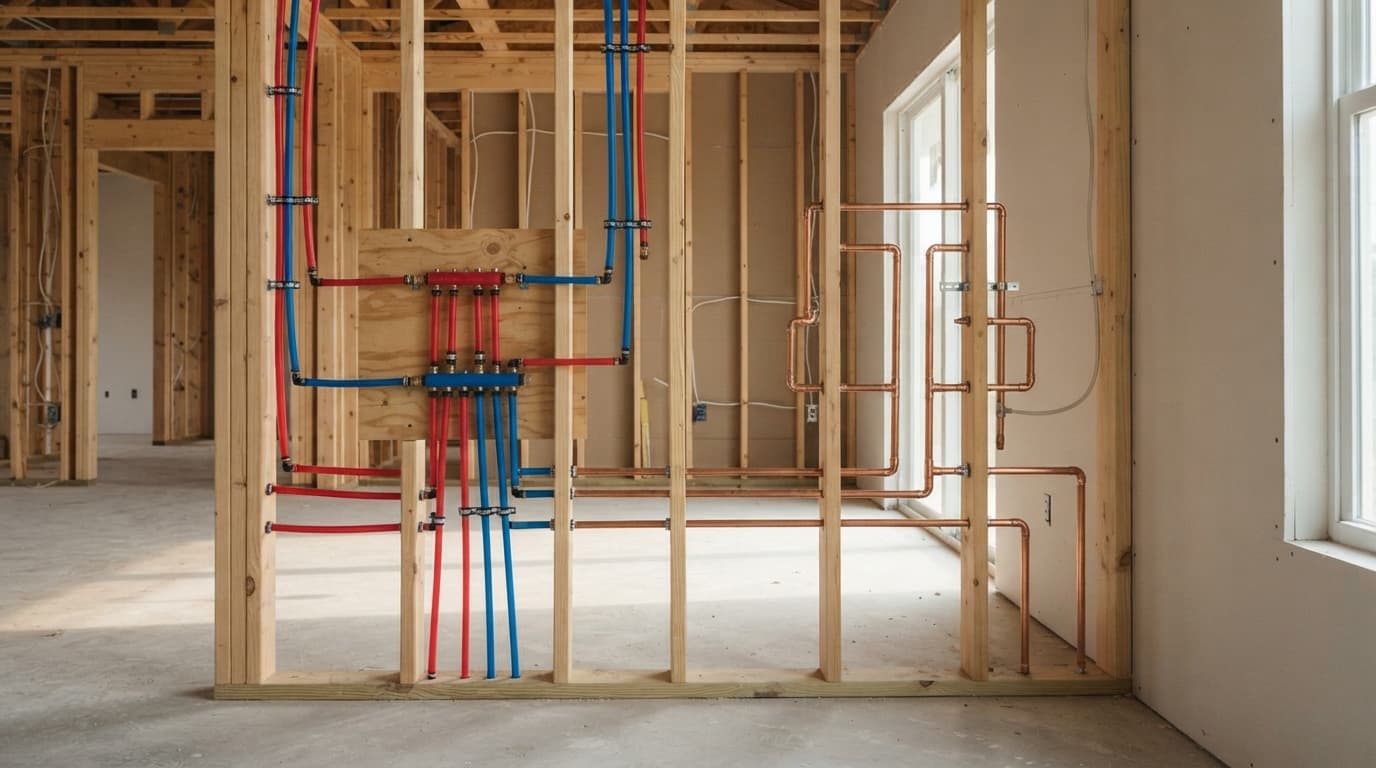
Flexible PEX suits concealed water lines
PEX usually requires fewer fittings because the tubing bends around framing and follows a direct route. Fewer joints can reduce potential leak points, particularly in walls or below a slab where repairs are disruptive.
The tubing also resists scale and many forms of corrosion. That helps in areas where water contains minerals or where chlorinated water may affect copper over time. PEX still needs protection from sunlight, sharp edges, heat sources, and careless fastening.
Copper brings rigidity and heat tolerance
Copper holds its shape and handles exposed locations well. It is less affected by ultraviolet light than PEX, which makes it more suitable for certain garage, mechanical-room, or outdoor service conditions.
Copper also tolerates higher temperatures than many plastic piping products. Still, the water chemistry matters. Mineral-heavy or aggressive water can contribute to scale and corrosion, so the pipe material should match the home's water conditions.
Why Bonita Springs conditions matter
A material choice that works well in a dry inland climate may need a different review near the Gulf Coast. Bonita Springs homes deal with high humidity, coastal air, salt exposure, concrete slab construction, and water conditions that can vary by property and utility source.
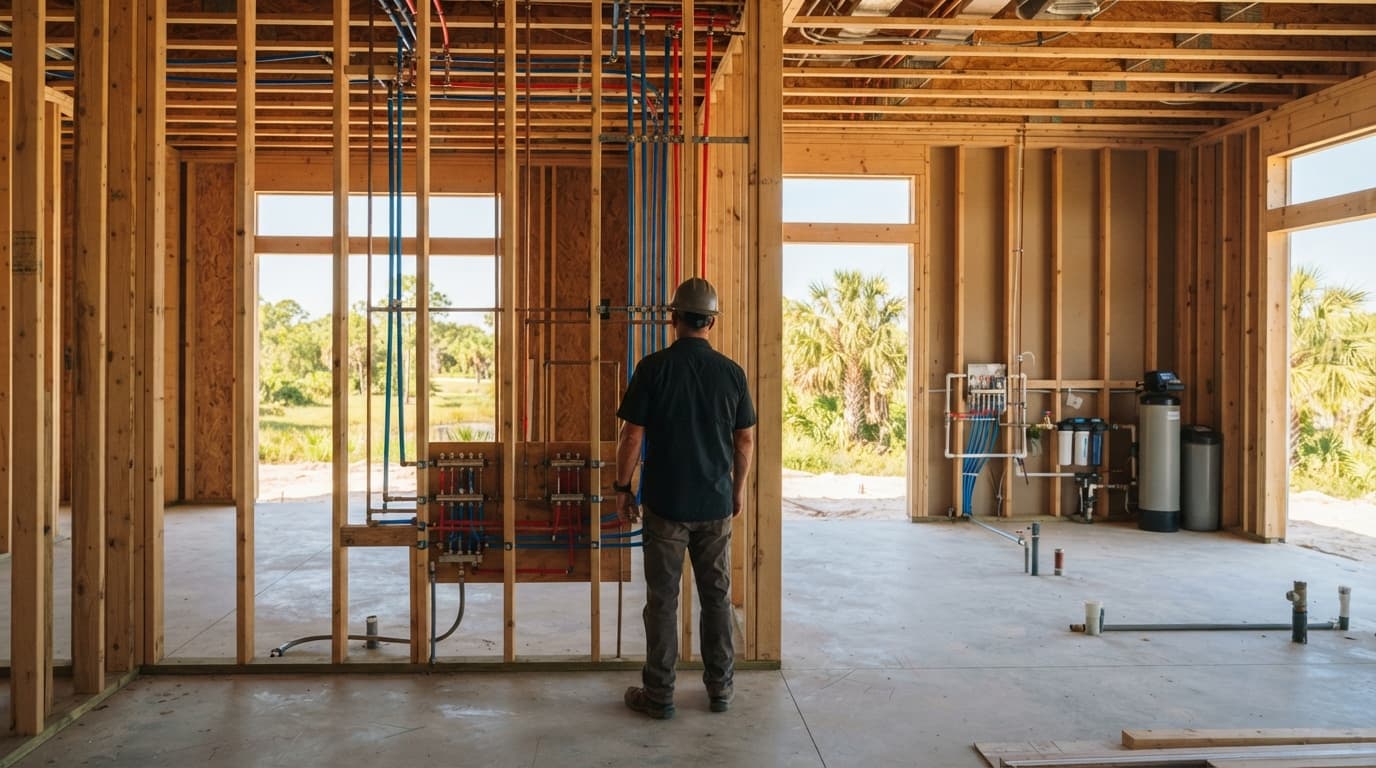
Coastal air affects exposed copper
Salt-laden air can accelerate corrosion on exposed metal surfaces, especially around fittings, fasteners, and mechanical equipment. Copper inside sealed, conditioned walls doesn't face the same exposure as copper in an open garage or exterior service area.
PEX doesn't corrode through galvanic action, but it isn't suitable for every exposed location. Direct sunlight can damage the tubing, and physical impacts can puncture or crush it. Installers should protect exposed PEX with approved coverings or route it inside protected spaces.
A hybrid design may use PEX inside finished walls and copper where the piping remains visible or faces heat and sunlight. The transition requires compatible, listed fittings and careful installation.
Mineral-heavy water changes maintenance needs
Southwest Florida water may contain minerals that leave scale on fixtures and plumbing components. Hardness and chlorination can also influence copper performance. The exact water profile depends on the source, treatment system, and property.
PEX resists internal scale better than copper, but it doesn't soften or filter the water. If the home needs filtration, a softener, or another treatment system, the plumber should plan its location before rough-in. The design should include service access, shutoffs, drainage, and space for future maintenance.
Slab construction rewards careful planning
Many Bonita Springs homes use slab-on-grade foundations, which place the finished floor close to the concrete foundation. Water lines may run through walls, under the slab, or through carefully planned sleeves and penetrations.
Material selection should happen while you're making broader decisions about Southwest Florida custom home construction, not after framing begins.
Fewer joints can simplify slab routing
PEX can follow longer, more direct paths through a home. That flexibility may reduce the number of concealed connections and make it easier to route separate lines to distant fixtures.
Copper can also work under or through a slab when the product and installation comply with the approved plans. Its rigid shape requires more precise layout, support, and joint placement. Every concealed connection deserves close attention because access becomes limited after the concrete, flooring, cabinets, and finished walls are complete.
Access matters after the concrete is poured
A custom home should have clear plumbing records before drywall and flooring cover the work. Photos of pipe routes, measurements from permanent walls, and a fixture map can help locate lines during future remodeling or repairs.
Keep manifolds, shutoff valves, pressure-reducing equipment, and water-treatment components accessible. Don't bury a service point behind permanent cabinetry when a nearby utility space or removable panel can provide better access.
The plumbing team should also pressure-test the system before concealment. Sleeves, protective plates, supports, and penetrations need review during inspections, not after finishes hide them.
Compare comfort, durability, and repair work
The right PEX vs copper plumbing comparison includes daily performance, not only material strength. Water temperature, pressure, sound, access, and the location of each run all affect the result.
Heat, pressure, and household sound
PEX has lower thermal conductivity than copper, so hot water may lose less heat while traveling through the home. The actual result depends on pipe length, insulation, recirculation design, water-heater location, and fixture demand.
Copper transfers heat quickly and gives a firm, traditional installation. It can also transmit water movement and pipe noise through framing when installers don't support it properly. PEX can reduce some sound, although loose tubing can knock against framing if the crew doesn't secure it correctly.
Both systems need correct sizing. A large custom home with several showers, a soaking tub, an outdoor kitchen, pool equipment, and multiple hose connections may need a hydraulic review rather than a simple material swap.
Storm repairs and occasional freezes
Hurricanes don't usually target concealed water lines, but storm restoration can expose plumbing problems. Wall removal, displaced water heaters, damaged service connections, and emergency rerouting can turn a small repair into a larger project.
PEX is easier to cut, replace, and reroute in tight spaces. That can help when a restoration crew needs to work around damaged framing or limited access. Copper repairs often require rigid alignment and soldering or press connections, which can add labor in confined areas.
Bonita Springs has a lower freeze risk than northern Florida, but cold-weather events still occur. Vacant homes, garages, exterior walls, and unheated utility spaces are the most exposed areas. PEX usually tolerates freeze-thaw stress better than copper, although no piping system should be left unprotected when freezing conditions are possible.
Florida code belongs in the plans
Florida code allows both copper and PEX for residential potable-water distribution when the exact products and installation meet the applicable requirements. The code edition used for your permit, local review, product listing, and manufacturer's instructions control the project.
What to verify with PEX
Under the 2023 Florida Plumbing Code, water-distribution piping inside dwelling units must conform to NSF 61 and an approved material standard. PEX tubing is listed under ASTM F876, with additional requirements for fittings and the complete system.
Hot-water distribution tubing must meet the required pressure and temperature rating. The research for the 2023 code identifies a minimum rating of 100 psi at 180 degrees Fahrenheit for hot-water distribution pipe and tubing.
PEX also requires careful support and protection. The installer should confirm the tubing's bend radius, hanger spacing, slab penetrations, UV protection, and connection system. Crimp, clamp, and expansion fittings aren't interchangeable, so the fittings must match the tubing and manufacturer instructions.
What to verify with copper
Copper installations also need approved materials, correct sizing, compatible fittings, and proper jointing methods. Lead-free solder and potable-water-rated components are standard concerns for domestic water systems.
Copper needs support, protection from physical damage, and attention to water chemistry. Where copper joins PEX or another material, the plumber should use a listed transition fitting and follow the fitting manufacturer's instructions.
Your builder, plumber, designer, and local building department should resolve project-specific questions before installation. Flood-zone conditions, foundation details, utility connections, and mechanical-room placement may affect the final layout. Plumbing work also needs coordination with Southwest Florida hurricane building codes, especially where penetrations, equipment, or elevated construction are involved.
Compare installed cost and future access
Material price alone doesn't tell you what a custom plumbing system will cost. Labor, fitting count, routing difficulty, support requirements, insulation, testing, water treatment, fixture count, and access all affect the proposal.
PEX often lowers labor in concealed areas
PEX can reduce cutting, soldering, and connection time. Its flexibility may also help the plumber work around beams, tight wall cavities, and long routes across a slab-based home.
A manifold system adds components and requires a suitable location. It may also use longer individual runs, so the plumber should size each line correctly and plan hot-water delivery times. The lower labor cost of the tubing doesn't automatically make every PEX design less expensive.
Copper can cost more but fit certain locations
Copper may require more labor because each rigid section needs accurate measurement and connection. Copper prices can also change with the broader metals market.
However, exposed copper can make sense in a mechanical room or another location where sunlight, heat, or physical impact presents a concern. A visible copper installation may also fit the design of a utility or industrial-style space.
Ask for a plumbing scope that separates pipe, fittings, labor, testing, insulation, treatment equipment, and fixture connections. A detailed Southwest Florida plumbing rough-in plan helps you compare bids based on the same work instead of comparing one vague allowance with another.
A practical recommendation framework
The best PEX vs copper plumbing choice depends on the location and purpose of each run.
Choose PEX for most concealed distribution
PEX is often a strong fit for interior walls and slab-oriented layouts when you want fewer concealed joints, easier rerouting, and better resistance to mineral scale. It also makes sense when future storm repairs and access limitations are part of the planning discussion.
Use approved tubing and fittings. Protect the lines from UV light, fasteners, abrasion, and excessive heat.
Choose copper for exposed or high-heat locations
Copper deserves consideration where piping will remain exposed, face sunlight, or need extra rigidity. It can also suit homeowners who prefer a traditional metallic water-distribution system and have water treatment plans that address mineral and corrosion concerns.
The installer still needs to account for coastal air, water chemistry, joint access, and the added labor of rigid routing.
Choose a hybrid system when locations have different needs
Many custom homes can benefit from both materials. PEX can handle concealed branch lines, while copper can serve selected exposed sections, mechanical-room connections, or areas where heat and physical protection matter.
The final framework is straightforward:
- Use PEX when concealed routing, repair access, mineral resistance, and installation efficiency lead the decision.
- Use copper when exposure, rigidity, and heat or UV tolerance matter more.
- Use a hybrid system when the home has both protected interior runs and demanding exposed locations.
- Follow the permitted plans, current Florida requirements, product listings, and manufacturer's instructions in every case.
Conclusion
A Bonita Springs custom home doesn't need to use one material everywhere. Local humidity, coastal air, mineral-heavy water, slab construction, storm restoration, and limited freeze risk all point toward a location-based decision.
For many homes, PEX is the practical choice for concealed water lines, while copper remains useful in selected exposed or high-heat areas. Plan the material choice during design, document concealed routes, and compare complete installed systems before rough-in begins.