Fort Myers Sewer Tap Fees and Connection Planning
Explore Our Services
Contact Us Today!
(239) 322-9295
Sewer tap fees can affect a Fort Myers custom-home budget, but they are only one part of the cost of getting wastewater service to a house. The amount depends on which utility serves the parcel, the project's assessed wastewater demand, and the work needed to connect the home.
A utility charge and the physical connection are separate budget items. Plan them alongside the house layout, site work, permits, and construction schedule to reduce the risk of late changes.
Key Takeaways
- A Fort Myers mailing address doesn't establish which utility serves a property. City of Fort Myers Utilities, Lee County Utilities, or another service area may apply.
- A sewer impact or capacity fee pays for utility-system capacity. It does not automatically cover excavation, pipe installation, or site restoration.
- The City of Fort Myers' published single-family sanitary sewer impact fee is $3,435, plus a $79.01 administration fee, for a listed total of $3,514.01.
- Physical connection costs depend on the lot, route, access, and scope of work. Build those costs into the budget separately from published utility charges.
Identify the Utility Serving the Property
The service area is the first planning decision because the utility determines which fee schedule and connection requirements apply. A property described as "Fort Myers" may be inside City limits or in unincorporated Lee County. Other nearby jurisdictions may have their own processes.
Don't assume a nearby property has the same charges
A neighboring home may have a different utility provider, connection point, or development history. Those differences can affect both the assessment and the construction scope. Use the parcel and project documents to establish the relevant service area early, before utility costs are treated as fixed allowances.
This distinction also matters to the building-permit process. City of Fort Myers and Lee County projects don't automatically follow the same review path. A builder's budget should identify the responsible jurisdiction and list utility charges separately from building permits and trade work.
Include service details in the site plan
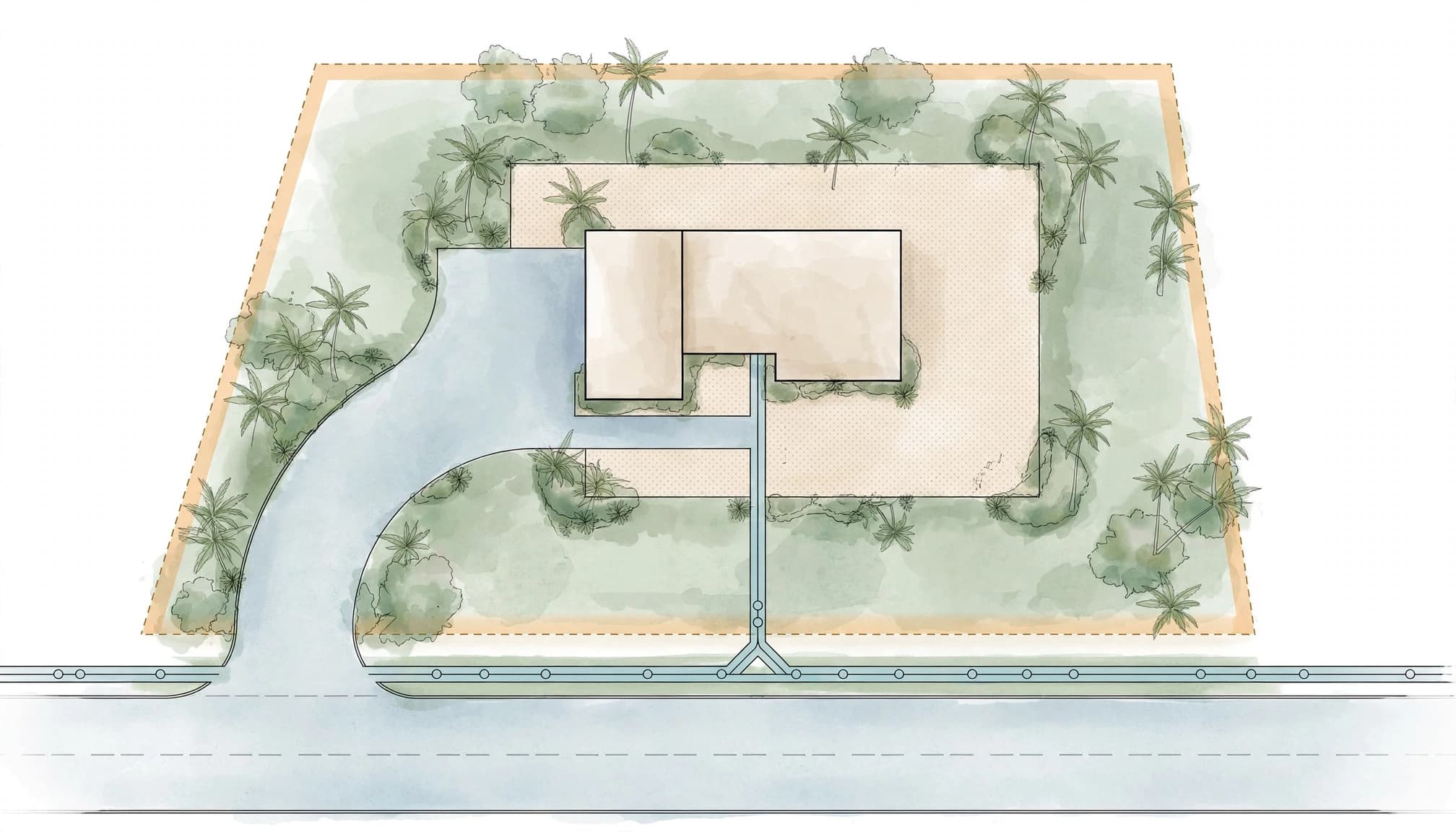
The site plan should show the proposed house, driveway, pool, easements, utility routes, and likely connection points. A sewer lateral that crosses a planned driveway or pool area can create extra coordination and restoration work.
The routing belongs in early design discussions, not after the slab or landscape plan is set. For related layout decisions, see our guidance on Fort Myers new home plumbing layout planning.
Separate Utility Fees From Connection Work
The phrase "sewer tap fee" can refer to different charges in casual conversation. For budgeting, separate the utility's fee for wastewater capacity or system impacts from the physical work that brings sewer service to the house.
Capacity and impact charges pay for system demand
A sanitary sewer impact or capacity fee is a utility charge tied to the additional demand a property places on the public system. It is not the same as a plumber's or contractor's price to install piping on the lot.
The assessed amount can depend on the jurisdiction, the utility's fee schedule, the project classification, and the wastewater demand assigned to the home. A larger or differently classified project may not use the same assumptions as a standard single-family house.
The physical tap is a separate scope
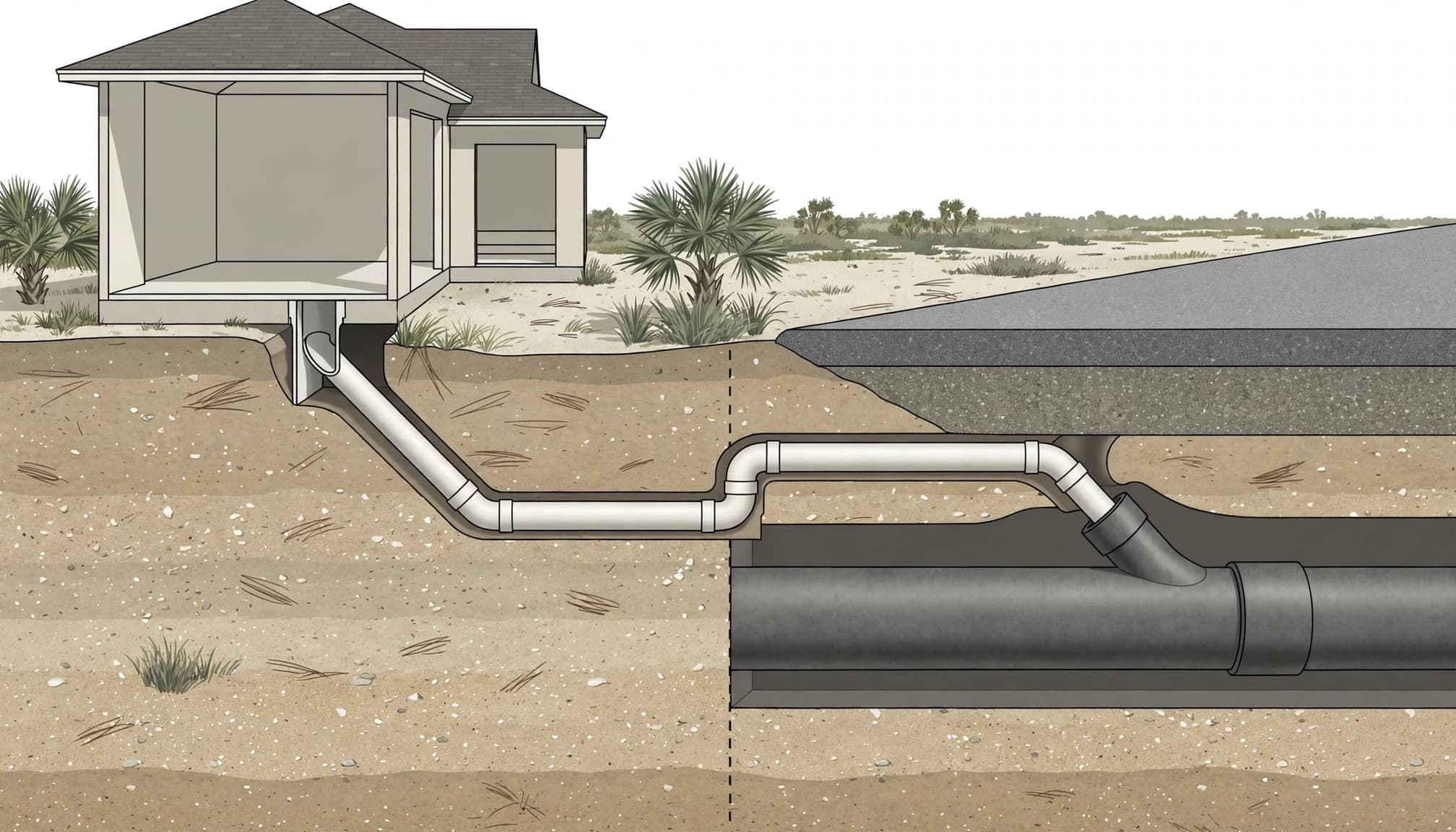
The physical connection may involve work at or near the public main, a service lateral, private-side building sewer piping, excavation, testing, and surface restoration. The exact work and who performs each part depend on the utility's rules and the property.
A utility fee should not be treated as a turnkey connection price unless the written scope says it includes installation. Likewise, a plumbing or site-work estimate should state whether utility charges are excluded.
What Published Sewer Charges Show
Published schedules can help set an initial budget, provided their dates and labels are clear. They are not a substitute for a project-specific connection scope.
City of Fort Myers single-family charge
For the period May 4, 2026, through May 3, 2027 , the City of Fort Myers lists a single-family sanitary sewer impact fee of $3,435.00 . The schedule adds a $79.01 administration fee , for a total of $3,514.01 per single-family unit .
That figure is the City's listed sewer impact-fee total. It does not establish the cost of the physical sewer tap or all piping and site work for a specific home. The City of Fort Myers impact-fee schedule identifies the applicable dates and fee category.
The City also has a sewer connection deposit. Ordinance No. 4030, effective October 7, 2024, sets a minimum $115 deposit when a single-family residential user applies to connect to a City sewer main. This is a deposit, not a labor or installation price. The City sewer connection ordinance provides the ordinance details.
Lee County Utilities and ERUs
Lee County Utilities (LCU) uses an equivalent residential unit, or ERU, to describe wastewater demand. The reported definition is 200 gallons per day for sewer per 1.00 ERU .
A listing associated with LCU's new-construction fees reported $3,325 per 1.00 ERU , effective May 5, 2026. However, the available residential fee information is inconsistent, so treat that amount as a preliminary reference, not a confirmed assessment for a particular home. The LCU new-construction fees page is the relevant published resource.
What Changes the Physical Connection Cost
There is no single connection price that fits every Fort Myers custom home. A lot with a nearby, accessible service point may require a different scope than a site with a long route, restricted access, or finished improvements in the way.
Route, distance, and site access
The distance between the utility connection and the house affects pipe length and excavation. The route also has to fit around the foundation, driveway, pool, landscaping, and other underground services.
Access can change the installation plan. Limited space for equipment, a route beneath a paved area, or a need to protect existing improvements can add work. If a pool is part of the project, coordinate excavation and utility paths before crews begin. Our Fort Myers pool excavation checklist covers related site-preparation planning.
Scope, permitting, and restoration
Quotes can differ because they include different tasks. One proposal may cover private-side pipe only, while another includes excavation, connection work, testing, backfill, and restoration. Utility charges, permits, and contractor work should appear as separate line items so the total is easier to compare.
Surface restoration matters too. If the route crosses a driveway, walkway, sod, or landscape bed, the budget should show whether repair is included. A clear written scope helps prevent an apparently low connection allowance from leaving significant work outside the construction contract.
Plan the Approval and Construction Sequence
Sewer planning follows the project from early site design through underground work and inspection. The sequence can vary by utility and permitting jurisdiction, but the planning stages should be coordinated rather than handled as unrelated tasks.
Establish the project basis before final pricing
Start with the parcel's service area, survey, proposed house plan, and site plan. The design team and builder can then map the likely sewer route and identify potential conflicts with the foundation, driveway, pool, and other utilities.
Next, separate known utility charges from estimated physical work. Put assumptions in the budget, such as the expected route and what the connection allowance covers. When those assumptions change, the cost impact is easier to identify before construction begins.
Schedule underground work before it gets covered
The approved plans and permit record determine the project's required permit and inspection milestones. Lee County's plumbing guide describes a 201 Rough Plumbing inspection after underground sanitary and supply piping has been installed and sealed. The work must remain accessible for any required inspections before it is covered by concrete or other construction.
That timing affects the slab schedule. The plumber, builder, and site-work team need to coordinate trenching, pipe installation, inspection access, and foundation work. A late sewer route change can lead to rework or delays, especially after concrete placement.
Coordinate Sewer Timing With the Whole Build
Utility connections often sit between site preparation and foundation work, so a small scheduling miss can affect several trades. Keep the sewer route and connection allowance visible in the master construction budget and schedule.
Tie utility work to site and foundation milestones
The site plan should show where the sewer route crosses other work areas. Schedule underground lines before the slab, driveway, or pool deck makes access more difficult. If the lot includes irrigation, a well, reclaimed water, or other services, show those routes too so crews can avoid conflicts.
The project team should also keep current plans and underground-work records together. Photos taken before piping is covered can help document locations for future repairs or additions. For more context on overall cost planning, see our Fort Myers custom home construction costs.
Keep allowances realistic and itemized
A sewer allowance should distinguish the utility's published charges from installation and restoration. If the physical work has not been fully scoped, label it as an estimate rather than treating it as a fixed utility fee.
A practical budget separates the following items:
- The sewer impact or capacity charge and any applicable administration charge.
- A required connection deposit, kept separate from installation labor.
- The physical connection and private-side piping scope.
- Permit, inspection, excavation, backfill, testing, and surface repair items when they apply.
This format makes it easier to see which costs are known and which depend on the site-specific connection plan. It also reduces the chance that a quoted impact fee gets mistaken for the complete cost of sewer service.
Frequently Asked Questions
Are sewer tap fees the same as impact fees?
Not necessarily. An impact or capacity fee relates to the wastewater demand or system capacity assigned to the property. The physical connection work and any associated deposit are separate items unless a written scope explicitly combines them.
Does every Fort Myers home pay the City fee?
No. The applicable utility depends on the property's service area. A Fort Myers mailing address alone doesn't establish whether City of Fort Myers Utilities, Lee County Utilities, or another provider serves the parcel.
Does the City's $3,514.01 total include the sewer lateral?
No. The published figure is the City's single-family sanitary sewer impact fee plus its administration fee. It does not establish the physical installation cost for a particular lot.
Build Sewer Planning Into the Home Budget
Sewer tap fees are only one line in a custom-home budget. The City of Fort Myers publishes a single-family impact-fee total, while the physical connection depends on the property, route, and scope of work.
Treat utility charges, deposits, installation, permits, and restoration as distinct budget items. When the sewer plan is coordinated with site work and the foundation schedule, it is easier to control costs and avoid preventable construction delays.