Fort Myers Pool Excavation Checklist Before You Dig
Explore Our Services
Contact Us Today!
(239) 322-9295
A pool excavation checklist can prevent expensive delays before an excavator removes the first load of soil. In Fort Myers, heavy rain, sandy ground, high water tables, drainage paths, and tight side-yard access can change the work plan quickly.
Your gunite pool project also needs more than a good design. The approved plans, permit, utility markings, access route, spoil plan, and weather window should all be confirmed before soil work begins.
Pool excavation checklist for a Fort Myers lot
Fort Myers properties don't all behave the same way during excavation. One backyard may have dry sand, while another holds water after a short storm. Variable soil, buried fill, nearby structures, and limited equipment access can affect the excavation sequence.
Check rain, water, and soil conditions
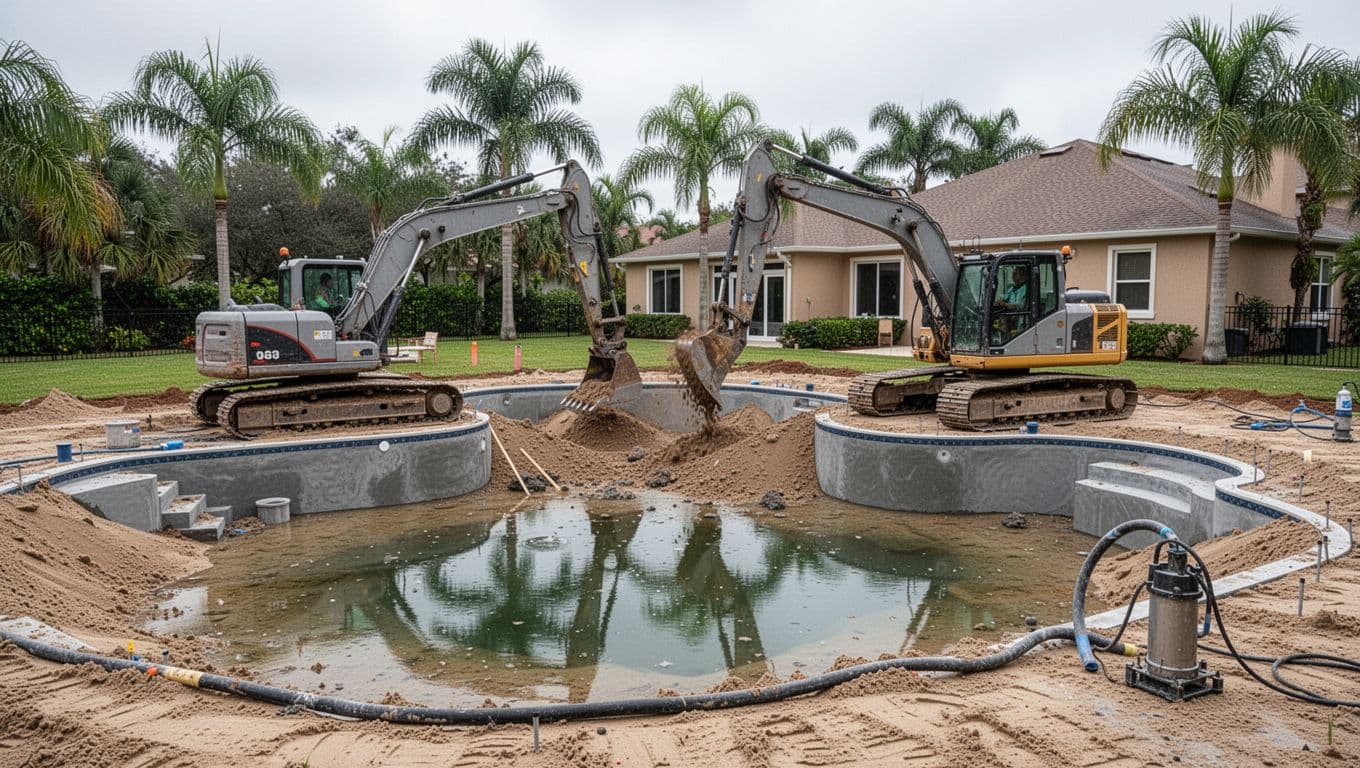
Ask the contractor how the crew will respond if rain enters the excavation or groundwater rises. Southwest Florida's flat terrain and wet-season storms can leave an open hole soft, muddy, or difficult to keep stable.
A high water table may require a written plan for temporary water management. That plan should identify where water will go, what equipment the contractor will use, and how discharge will avoid damaging your yard or sending runoff toward a neighbor.
Sandy soil can drain quickly, but loose or variable layers still deserve attention. The contractor should review the site conditions as excavation progresses and explain what happens if the soil differs from the assumptions in the pool plans.
An excavation plan that works in dry weather may need changes after a major rainstorm. Confirm the weather response before the crew arrives.
Confirm equipment access and property protection
Measure the narrowest point between the street, fence, house, air-conditioning equipment, and proposed pool area. A pool contractor needs enough room for the excavator, deliveries, spoil removal, and safe operator visibility.
Tight access may require temporary fence removal, gate changes, tree trimming, or a different equipment size. Put every agreed protection or restoration item in writing before work starts.
Also identify septic tanks, irrigation systems, wells, buried conduits, pavers, retaining features, and neighboring improvements. Mark areas that equipment must avoid. Clarify whether excavated soil will remain on the property, move to another location, or leave by truck.
For related site preparation concerns, review this Southwest Florida lot preparation checklist before approving the excavation schedule.
Confirm permits, plans, and underground utilities
A pool excavation shouldn't begin because the contractor has an open calendar. The permit path and approved construction documents need to match the pool being built.
Verify the correct permitting jurisdiction
Your property may fall under the City of Fort Myers or Lee County, depending on its location. The responsible building department should have the approved pool plans, site plan, setbacks, easements, and required inspection stages on record.
The City of Fort Myers pool checklist requires inspections before the pool is filled with water. It also lists final electrical and pool inspections. Lee County's pool guide identifies inspections such as pool steel and bonding, plus pool deck and bonding.
Keep the permit, approved drawings, manufacturer specifications, and inspection information available at the job site. The City of Fort Myers says the inspection record board and approved drawings must remain on site.
You can contact Fort Myers Building, Permitting & Inspections at (239) 321-7925. Lee County inspection requests can be handled through eConnect or by calling 239-533-8997.
Review the Fort Myers pool setback requirements if the pool sits near property lines, fences, easements, or a new home.
Locate public and private utility lines
Call 811 before excavation so public utility companies can mark their lines. However, 811 generally covers public utilities, not every privately owned line on a residential property.
Private irrigation, pool plumbing, low-voltage wiring, septic connections, propane lines, and other homeowner-installed services may require separate locating. Ask who will locate those lines and request the markings before equipment enters the yard.
The contractor should also compare utility markings with the site plan. If a line appears in an unexpected location, stop and resolve it before digging.
Protect drainage, grades, and neighboring property
Your pool changes the shape of the yard, even before the deck and landscaping are installed. Review how the excavation affects existing swales, drainage routes, downspout discharge, finished grades, and water movement around the house.
A pool plan should coordinate with the home's grading plan. Water from the roof, deck, driveway, and yard needs a clear path that doesn't create ponding beside the pool shell or push runoff toward a neighboring lot.
Lee County floodplain rules may require review when development occurs in a mapped flood hazard area. Ask whether the property needs floodplain approval, elevation information, or additional drainage documentation before excavation.
The excavation area should also stay clear of the house foundation, screen enclosure, walls, fences, and neighboring structures. Ask whether the contractor has identified any required shoring, temporary barriers, or restricted equipment zones. The project engineer or pool contractor should determine the appropriate method for the actual site.
Read about Southwest Florida site drainage costs when drainage work, grading, fill, or pumps may affect your budget.
Schedule around Florida's wet season
August falls within Atlantic hurricane season, so rain delays and storm conditions need to appear in the schedule. Don't approve excavation immediately before a forecast storm unless the contractor has explained how the open site will be protected.
Ask how the crew will secure fencing, cover materials, maintain safe access, and protect the excavation during a weather delay. A storm can also affect inspection timing, soil conditions, hauling, and concrete-related work that follows the dig.
Printable pre-excavation sign-off checklist
Print this list and review each item with the pool contractor:
- The approved pool plans match the proposed location, dimensions, and finished grades.
- The correct City of Fort Myers or Lee County permit is issued and available.
- Setbacks, easements, property lines, and floodplain requirements are confirmed.
- Public utilities have been marked through 811.
- Private irrigation, electrical, septic, gas, and other lines have been located.
- The equipment route has been measured and approved.
- Fence removal, tree trimming, gate access, and restoration responsibilities are written down.
- The soil and groundwater response plan is documented.
- The temporary drainage and water-discharge plan is clear.
- Excavated soil disposal, hauling, and cleanup costs are included.
- Existing structures, slabs, pavers, landscaping, and neighboring property are protected.
- Rain and hurricane-season delay procedures are agreed upon.
- Inspection stages and job-site documents are confirmed.
- The homeowner and contractor have signed the excavation start approval.
Questions to ask your pool contractor
Before signing off, ask:
- What will you do if groundwater enters the excavation?
- Where will stormwater and pumped water go?
- What soil conditions would change the plan or price?
- How will you protect the house, fence, driveway, landscaping, and neighboring property?
- Which private utility lines have been located?
- Who pays for access changes, spoil hauling, dewatering, or additional fill?
- What weather conditions will postpone excavation?
- Which inspections must happen before the next construction stage?
- What documents will remain posted at the site?
- Who will restore fences, gates, grass, pavers, or irrigation after access work?
Conclusion
A Fort Myers pool excavation checklist should cover permits, utilities, access, soil, groundwater, drainage, property protection, and weather. Confirming those details before soil work begins gives the crew a safer plan and gives you a clearer budget.
Take photos of the yard before excavation, keep written answers from the contractor, and don't allow digging until the permit, markings, access route, and drainage plan are ready. A careful start protects the pool project long after the excavator leaves.