Why Gunite Pool Plaster Feels Rough in Cape Coral
Explore Our Services
Contact Us Today!
(239) 322-9295
Rough pool plaster can come from normal surface aging, calcium scale, unbalanced water, or problems during application and curing. The texture alone doesn't identify the cause, but where the roughness appears and what it looks like can help narrow down what's happening.
Cape Coral pools are exposed to sun, rain, evaporation, and regular use, all of which make routine water care important. Here's how to read the surface, choose a sensible next step, and tell when a repair may be more practical than resurfacing.
Key Takeaways
- Roughness has several possible causes. Worn plaster, mineral deposits, water chemistry, and installation conditions can all affect the feel of a gunite pool finish.
- A chalky crust, a widespread sandpaper-like texture, and isolated rough patches point to different possibilities, but appearance alone can't confirm a diagnosis.
- Test and balance the water before choosing a treatment. Brushing may clear loose material, but it won't repair worn plaster or correct every kind of scale.
- Resurfacing is worth discussing when the finish is rough across large areas, has extensive damage, or needs repairs in multiple places.
What rough pool plaster can tell you
Gunite pools have a concrete shell covered by an interior finish, often plaster or a plaster-based product. That finish can feel smooth, textured, or somewhere in between, depending on its material and condition. A change in texture matters most when it's new, spreading, uncomfortable, or accompanied by visible damage.
Run your hand lightly over the affected area rather than scraping at it. Note whether the texture is widespread or limited to one patch, and whether you see pale deposits, pits, flaking, or cracks. These clues help describe the problem, but they don't prove its cause.
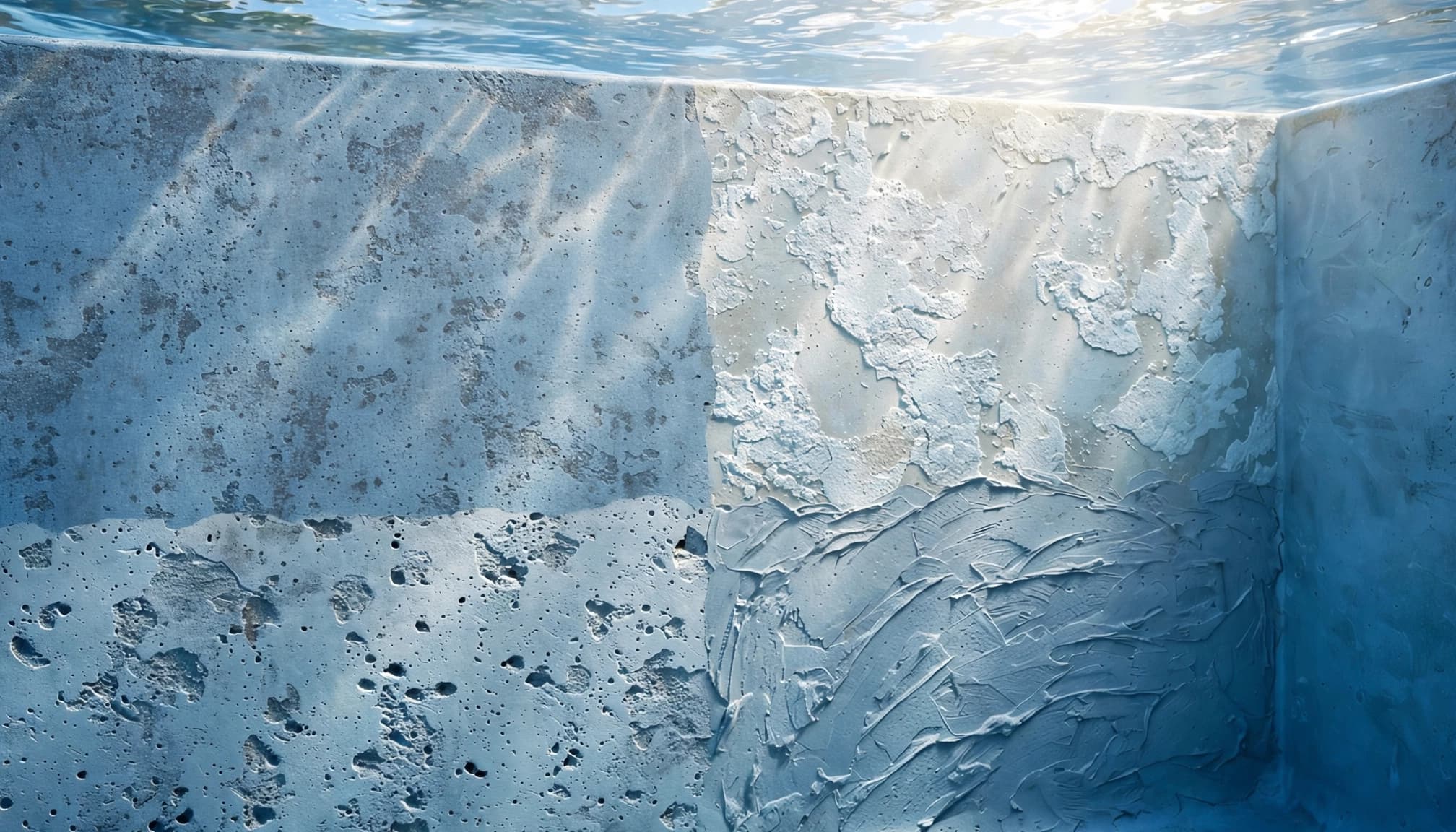
A few rough spots may call for a different response than a finish that feels abrasive across the floor and walls. Sharp edges, loose pieces, or visible cracks deserve prompt attention, especially if swimmers could scrape themselves.
Common reasons gunite plaster feels rough
Surface age and mineral deposits are two frequent possibilities. The difference often shows in how the texture is distributed and what's visible on top of the finish.
Aging and wear across the finish
As plaster ages, its surface can lose its even feel. Some pools develop a generally coarse texture, while others show worn areas where the finish has changed more noticeably. Look for a broad pattern rather than one isolated patch, and note whether the color or surface appearance has changed too.
Wear doesn't automatically mean the pool needs a new finish. However, when roughness appears across the pool or continues to spread, a pool professional can assess whether the surface remains serviceable or needs repair.
Calcium scale and hard deposits
Calcium scale can feel like a crust or hard buildup attached to the finish. It may collect around the waterline or appear in scattered patches. A deposit sitting on the surface differs from plaster that feels rough throughout, though both can occur at the same time.
Don't try to chip deposits off with a sharp tool. That can scratch the finish or remove material that isn't scale. First identify whether the roughness is a deposit, then choose a removal method suited to the finish and the extent of buildup.
Water chemistry and rough plaster in Cape Coral
Pool water can affect plaster over time. When the water balance is outside the appropriate range, it may contribute to surface etching or mineral deposits. In broad terms, aggressive water can draw material from a cement-based finish, while scale-forming conditions can leave deposits behind.
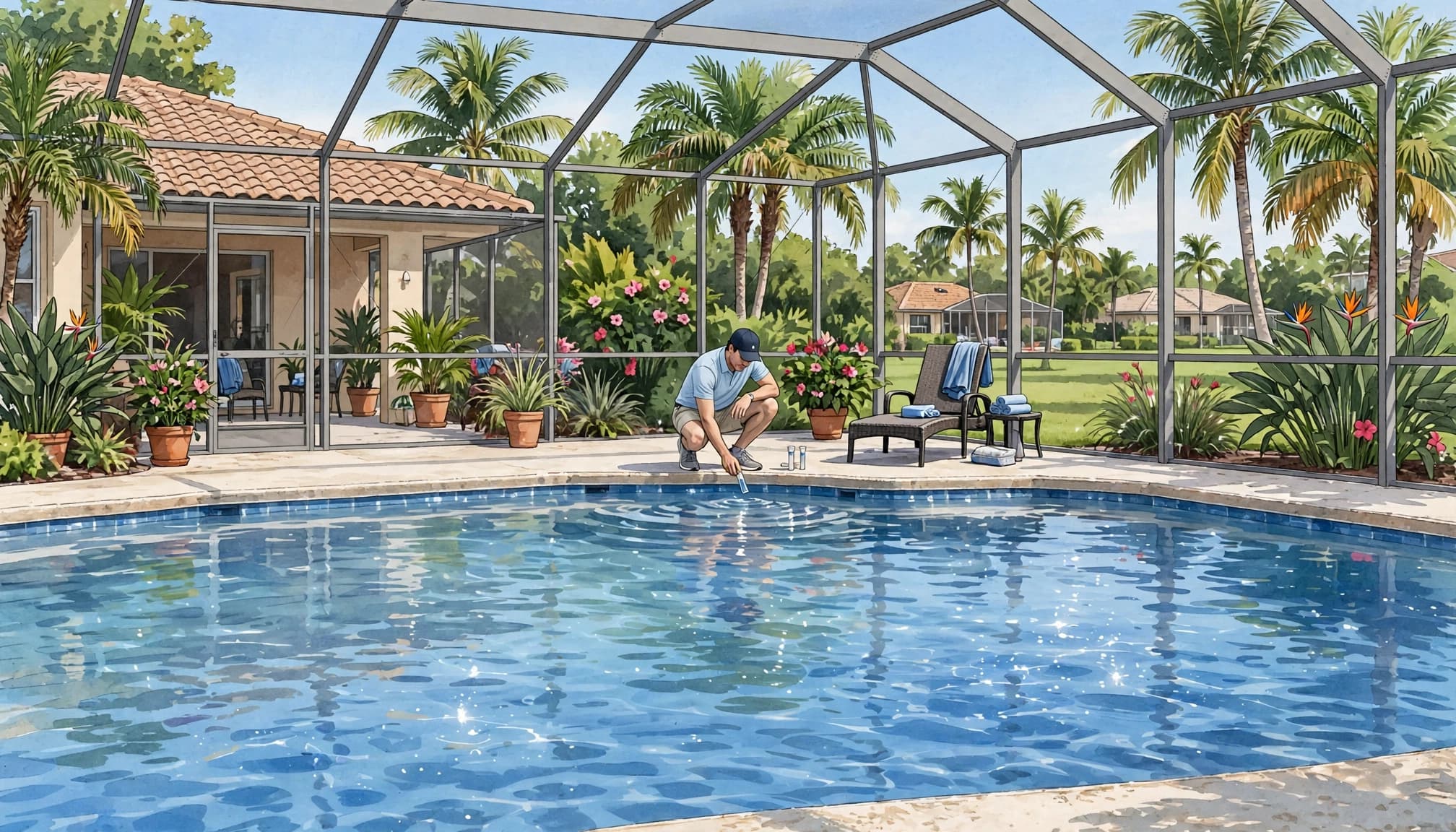
Because Cape Coral pools sit outdoors, rainfall, evaporation, and added fill water can change what's in the pool. Test the water rather than assuming the balance is unchanged. At minimum, regular testing should cover pH, total alkalinity, calcium hardness, and free chlorine.
Etching and deposits are different problems
A uniformly dull or pitted texture may be consistent with surface etching, while crusty or raised areas may indicate deposits. Those descriptions are clues, not a diagnosis. Water test results and an inspection of the finish help determine whether chemistry is part of the problem.
A brush can remove loose debris, but it won't restore plaster affected by etching. Likewise, adding chemicals without knowing the readings can make a water-balance problem worse.
New plaster needs careful startup care
Fresh plaster has different care needs from an established pool. For a new gunite pool, the water should be tested as the pool reaches operating level, and fill-water results should guide adjustments. The fresh plaster pool water chemistry guide covers startup testing and explains why a reliable drop-based kit or qualified pool professional can be useful.
The National Plasterers Council emphasizes testing fill water before making adjustments. Test strips can offer a quick indication, but they may not provide enough accuracy for fresh-plaster adjustments.
Application and curing can affect the finish
A rough finish isn't always the result of years of use or water care. The condition of the shell, the plaster application, and the startup process can all matter. If roughness appeared soon after construction or resurfacing, make note of when it started and whether it covers the whole pool or only certain areas.
Application may leave uneven texture
A surface that feels rough in isolated areas may reflect an uneven finish or localized application issue. Trowel marks or distinct patches can help describe the pattern, but they aren't enough to establish what happened during installation. A qualified pool professional can examine the finish and consider its age, material, and visible condition.
Before plaster covers a new gunite shell, visible cavities and loose material should be assessed. Rough gunite alone doesn't prove the shell is defective. A Cape Coral gunite shell honeycombing checklist explains why shell assessment is a separate step from choosing the interior finish.
Startup and curing deserve attention
If a new surface turns rough early, water-care records may help clarify the timeline. Keep test results and notes on when the pool was filled and when symptoms appeared. Those details give a professional more context than texture alone.
Don't use aggressive cleaners or improvised acid treatments on a new finish. Fresh plaster needs startup care suited to its material, and the installer's instructions should guide brushing, testing, and chemical adjustments.
Match the symptoms to the likely cause
No single symptom confirms the cause, but this comparison can help you describe what you see before arranging an assessment.
| What you notice | Possible explanation | Useful next step |
|---|---|---|
| Hard, raised or crusty patches | Calcium scale or another deposit | Test the water and have the deposit identified |
| Broad, uniformly coarse texture | Surface aging or wear | Note the affected areas and ask for a finish assessment |
| Dull, pitted or etched areas | Possible water-balance effects or finish wear | Review test history and inspect the surface |
| Roughness limited to a few spots | Localized damage or application variation | Photograph the areas and have them assessed |
| Roughness soon after plastering | Startup, curing, or application issue | Gather startup records and contact a pool professional |
Compare several details at once: how widespread the texture is, whether material is raised or missing, and when the change began. If the surface is sharp or pieces are coming loose, keep swimmers away from that area until it's assessed.
Maintenance and repair options
Start with the least invasive steps. Testing helps distinguish a water-balance issue from a surface problem, and gentle brushing can clear loose dirt or debris. Use a brush appropriate for the pool finish, since overly abrasive tools can scratch some surfaces.
Address the cause before the texture
If test results show a water-balance issue, correct it based on the readings and appropriate pool-care guidance. Then monitor the surface. A change in water chemistry may help prevent further damage or deposits, but it won't rebuild worn or etched plaster.
For suspected scale, avoid scraping or applying acid without a clear plan. The right treatment depends on the finish, the amount of buildup, and whether the roughness is actually a deposit. A professional can help prevent a surface treatment from damaging the plaster beneath it.
Repair isolated damage when practical
When roughness is limited to one small area, a targeted repair may be possible. The pool's age, finish type, and condition around the damaged spot affect whether a patch will hold and how closely it will match. Repairs can look different from the surrounding finish, particularly as the pool continues to age.
If multiple problems appear together, such as rough plaster plus loose tile or visible cracks, consider the full condition of the pool rather than treating each spot separately. That gives you a clearer basis for comparing a small repair with a larger renovation.
When resurfacing may be appropriate
Resurfacing may make sense when the plaster feels rough over broad areas, the finish is visibly worn, or repeated localized repairs no longer address the problem. It's also an opportunity to evaluate whether the shell needs repairs before a new finish goes on.
A rough feel by itself doesn't settle the decision. Look at the overall surface condition, the amount of damage, and whether water-balance changes or a focused repair can address the cause. A contractor can inspect the finish and explain what preparation and repairs the work would involve.
Compare the finish options
Standard plaster can reduce the initial finish expense compared with some alternatives. Pebble often costs more upfront, while quartz pricing depends on the product and installation details. Long-term value also depends on water care and how long the finish meets your expectations.
Before deciding, compare the materials and the complete scope of work, including surface preparation and any repairs. Our guide to comparing plaster, quartz, and pebble pool finishes can help you weigh those choices.
Plan the work as a pool renovation
Resurfacing may be part of a broader renovation if tile, coping, or other pool features also need attention. The scope can vary widely, so an inspection should identify which work addresses damage and which items are optional upgrades.
For homeowners considering a larger project, our Cape Coral pool resurfacing and renovation page describes local pool renovation services. The right scope depends on the pool's condition and the repairs needed beneath the finish.
Frequently Asked Questions
Can rough plaster hurt swimmers?
It can. A coarse or sharp area may scrape skin or catch on swimwear, especially on the pool floor or steps. Keep swimmers away from any spot with sharp edges or loose material until it's assessed.
Can brushing make the plaster smooth again?
Brushing can remove loose debris, but it won't restore aged, etched, or missing plaster. Use a brush suited to the finish, and avoid aggressive scrubbing that could scratch the surface.
Does a rough patch always mean calcium scale?
No. A hard raised crust can be consistent with scale, but roughness may also come from wear, etching, or a localized finish issue. Check the water and have the surface evaluated before choosing a treatment.
Should I resurface the pool if the plaster feels rough?
Not necessarily. Resurfacing is more likely to be appropriate when roughness is widespread, the finish is visibly deteriorated, or repairs are needed in several places. A focused repair may suit isolated damage.
Keep the cause in view
Rough plaster is a symptom, not a complete diagnosis. The texture, its location, water test results, and the pool's history all help guide the next step.
For Cape Coral homeowners, regular testing can help catch water-balance changes, while a surface assessment can separate deposits from wear or installation concerns. Match the repair to the cause, and consider resurfacing when the finish's overall condition calls for it.